

Carved Wood Brass Table
A carved wood brass table brings together dense timber and bright metalwork across nineteenth-century and early twentieth-century periods.
Carved Wood Brass Table
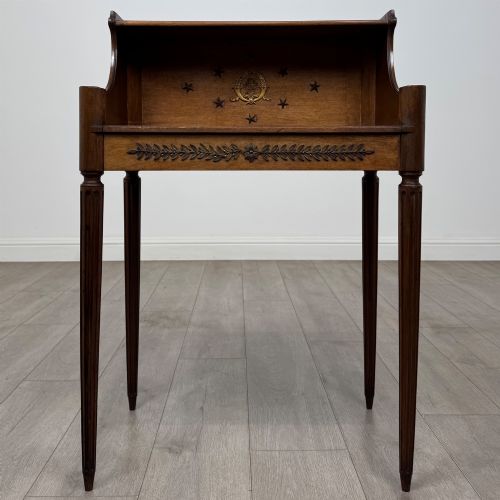
When you search for a carved wood brass table, you encounter a mix of formal British furniture and distinct regional work from international trade routes. The selection spans card tables, side tables, and coffee tables alongside occasional pieces.
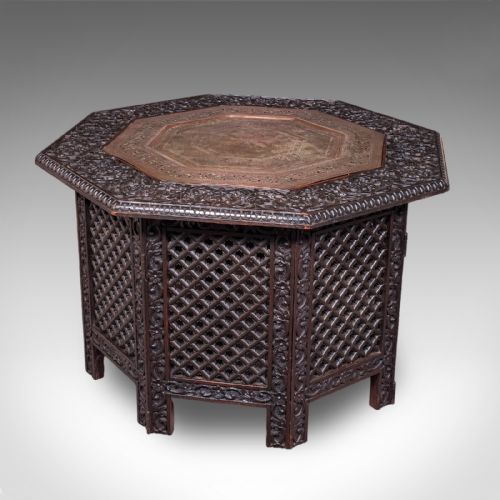
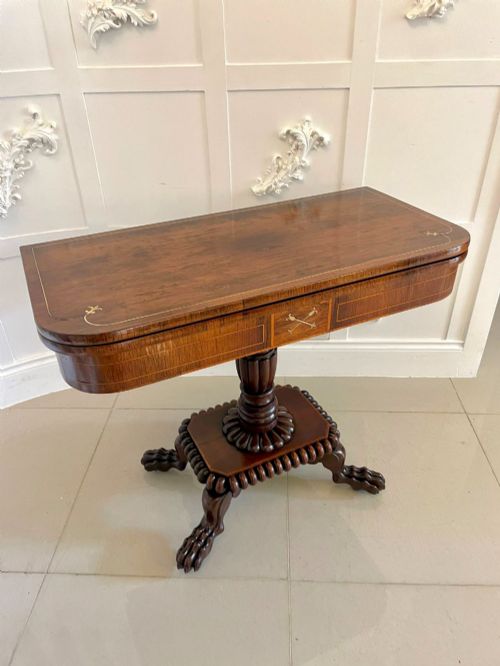
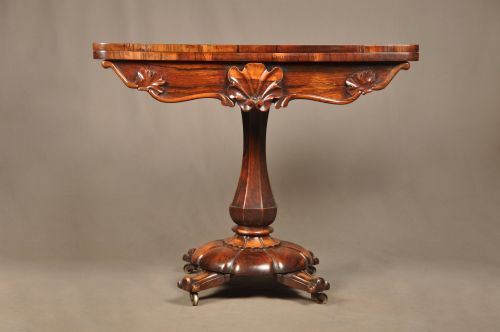
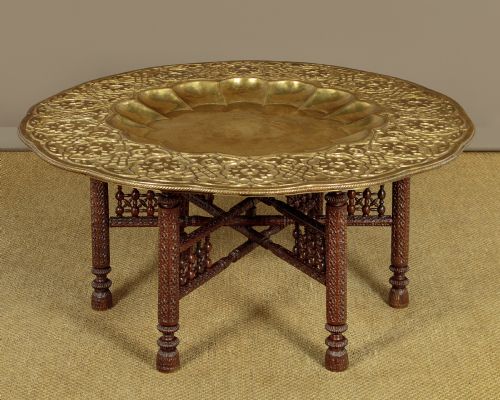
You are most likely to meet two main streams on this page. One comprises Regency and Victorian rosewood and mahogany tables featuring brass inlay, while the other consists of Anglo-Indian and Middle Eastern folding, octagonal, or tray-top tables combining carved hardwood with brass work.
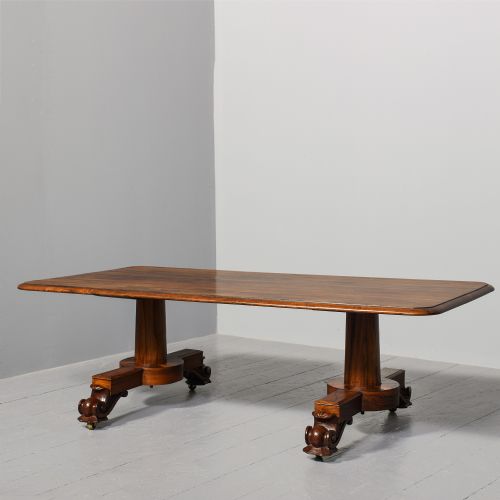
Earlier nineteenth-century examples often use rosewood with precise brass stringing or marquetry, whereas later pieces from around nineteen hundred lean towards heavy carving in teak or hardwood paired with extensive brass wire and sheet inlays.
How they were made
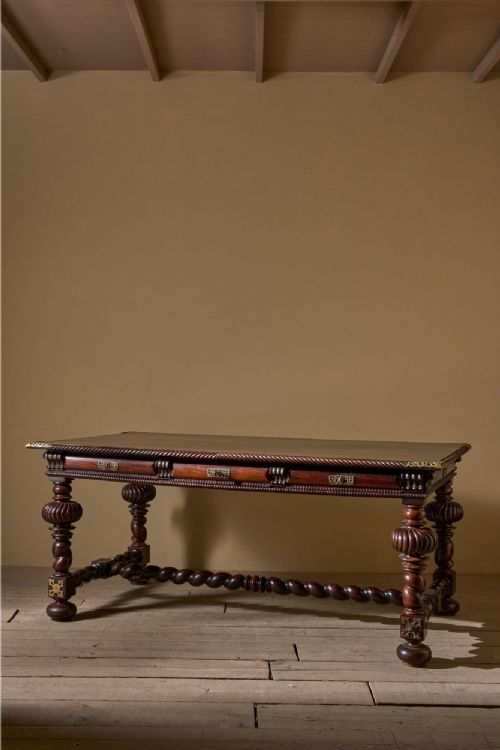
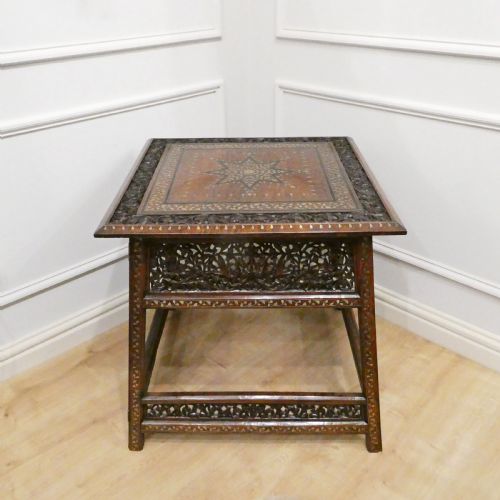
Maker's workshops built these tables using dense timbers such as mahogany, rosewood, teak, and various hardwoods as the structural base. Artisans carved intricate floral or geometric motifs directly into the wooden surfaces, or routed channels to receive thin sheets of brass.
Brass elements appear as cast components, applied stringing, or hammered sheet work secured with tiny pins. The combination relies on the contrast between the dark grain of polished wood and the bright reflection of polished metal.
Several tables fold away entirely so you can tuck them behind a sofa when an elephant needs more floor space.
What varies in quality
The standard of a carved wood brass table depends on the crispness of the woodwork and the precision with which the brass is fitted into the timber. Superior pieces show sharp, deep carving where the grain remains stable and the metal sits completely flush with the surrounding surface.
Lower quality examples display shallow, mechanical carving and gaps around the brass inlay where filler has shrunk or metal pins protrude. The weight of the timber and the complexity of the brass patterns also dictate the level of craftsmanship achieved.
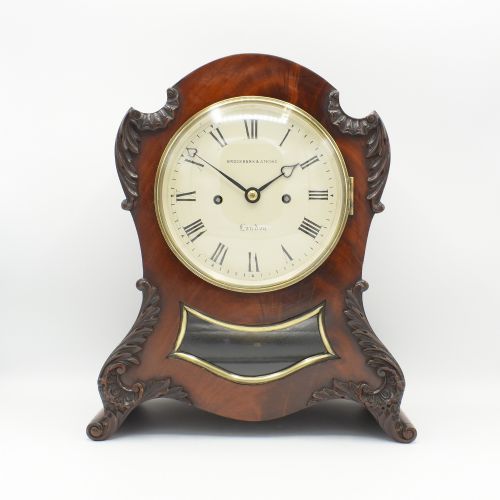
Brockbanks & Atkins·Mappin & Webb
The Carved Wood Brass Table Glossary
- Brass inlay
- The technique of embedding thin strips or cutouts of brass flush into the surface of wood to form decorative patterns. This method appears frequently on Regency and Anglo-Indian pieces.
- Card table
- A folding table designed with a hinged top that opens to reveal a baize-lined surface for playing games. Many nineteenth-century versions incorporate brass inlay along the frieze and edges.
- Hardwood
- Dense timber derived from broad-leaved trees, including mahogany, rosewood, and teak. These woods provide the necessary strength for detailed carving and stable brass mounting.
- Tray top
- A removable or fixed table top with a raised rim, often associated with Anglo-Indian occasional tables. The rim is frequently carved from a single piece of wood or decorated with brass work.
- Occasional table
- A small, light table intended for flexible placement within a room. The archive and current listings include folding and octagonal variations of this form.
Carved Wood Brass Table: Frequently Asked Questions
How do I care for a carved wood brass table?
Clean the wooden sections using a dry or slightly damp cloth, avoiding harsh chemical polishes that can seep under brass inlays. Feed the rosewood or mahogany periodically with a suitable wax to maintain the finish.
Keep the brass elements bright with a gentle metal cleaner applied sparingly so it does not stain the surrounding timber. Position the table away from direct heat sources and strong sunlight to prevent the wood from warping or shrinking.
Were these tables used for dining?
Most pieces listed under this description function as side tables, coffee tables, or card tables rather than primary dining furniture. Their smaller dimensions and delicate brass or carved decoration suit them for sitting rooms and parlours.
Folding variants and occasional tables were designed to be moved easily around the home for tea or games. Larger breakfast or centre tables provide more robust surfaces but remain distinct from dedicated dining suites.
How do I date a brass inlaid table?
Examine the timber species, the style of the carving, and the method used to secure the brass. Regency and early nineteenth-century pieces typically feature fine brass stringing set into dark rosewood or mahogany with restrained classical motifs.
Tables from around nineteen hundred, particularly Anglo-Indian examples, tend to feature denser overall carving in teak or hardwood paired with more elaborate sheet brass inlay. Construction marks and the type of screws or fixings underneath also help confirm the period.
What is an Anglo-Indian table?
An Anglo-Indian table is a piece manufactured in India during the nineteenth or early twentieth centuries, often specifically for the British export market. These items combine traditional Indian carving techniques with European furniture forms such as octagonal tops or folding bases.
They frequently utilise teak or native hardwoods heavily decorated with intricate floral carvings and detailed brass wire inlay. Their distinctive construction often allows the base to fold flat for transport.