





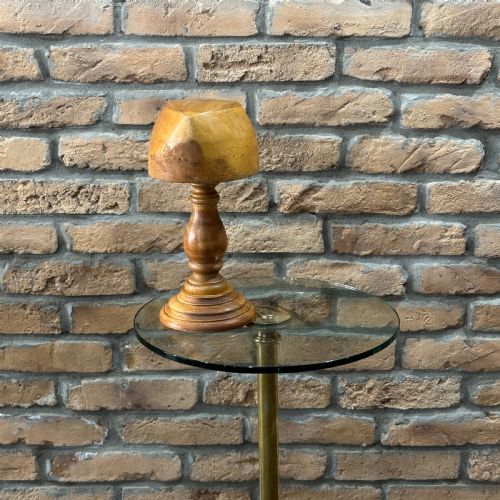


Carved Wood Block
These carved wood block pieces are functional utility items and industrial tools repurposed as characterful decor, offering tangible links to historical trades.
Carved Wood Block
When you search for a carved wood block, you are looking at utilitarian objects originating from diverse historical trades, primarily printing, hat making, and food preparation. The items span the eighteenth, nineteenth, and early twentieth centuries, reflecting practical workshop use rather than decorative production.
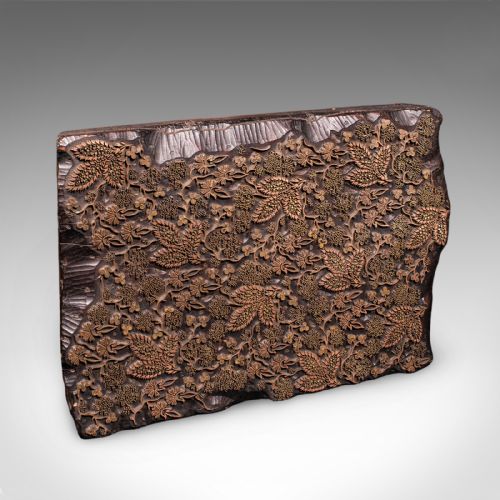
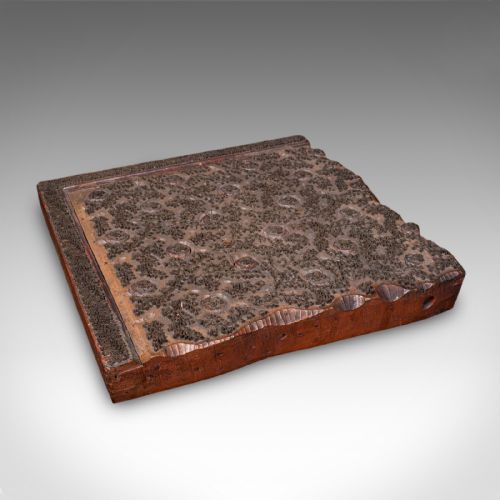
The most common versions met on this page include millinery hat blocks shaped from hardwood or fruitwood, printing blocks inset with carved brass for textiles and wallpaper, and heavy butchers blocks in elm, beech, or oak. These survivals carry the physical marks of daily commercial labour.
How they were made
Makers shaped these objects using dense native hardwoods such as elm, beech, fruitwood, and mahogany to withstand heavy repetitive impact or pressure. Hat blocks and chopping blocks rely on solid turned or joined timber construction, while printing blocks combine carved wooden bases with inset brass stripwork to form intricate repeating patterns.
Metal components such as iron, brass, and bronze mounts appear on industrial tables and butchers blocks to reinforce high-stress joints and working surfaces. The craftsmanship prioritises structural endurance and precise utility over ornamentation, leaving tool marks visible across the timber.
What varies in quality
Quality in a carved wood block rests upon the integrity of the timber, the depth and clarity of any hand-carved detail, and the degree of original surface wear. Pieces that retain their authentic working patina and maker stamps sit clearly apart from heavily refinished examples.
Ralph Turnbull·Liberty of London·Trussant & Cie·Hennes France
The Carved Wood Block Glossary
- Millinery block
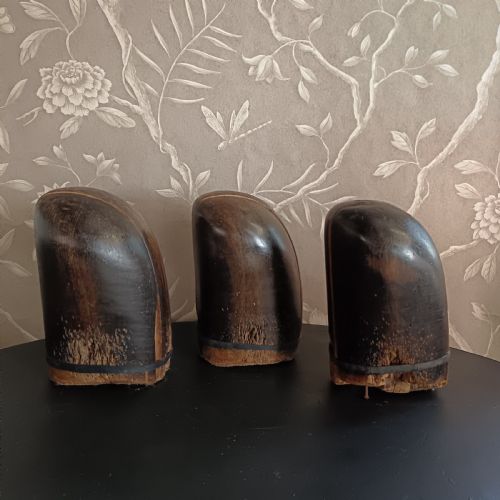
- A carved wooden form used by hatters to shape and size millinery items during manufacture. These sculptural forms often mirror human heads or specific cap profiles.
- Printing block
- A carved wooden stamp, frequently reinforced with brass stripwork, utilised to transfer repeated patterns onto textiles or wallpaper. They demonstrate precise handcrafting.
- Butchers block
- A heavy utilitarian chopping surface constructed from thick timbers like elm, beech, or oak. They were built to endure heavy cleaver work in commercial kitchens.
- Fruitwood
- Dense timber gathered from fruit-bearing trees such as pear or apple, prized by makers for its smooth grain and stability. It resists splitting under repeated pressure.
- Parquetry
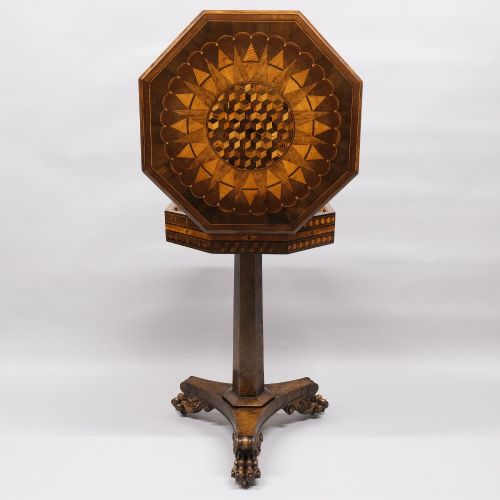
- A geometric mosaic of wood pieces used for decorative surfaces on tables and cabinetry. It showcases skilled woodworking and contrasting timber tones.
Carved Wood Block: Frequently Asked Questions
What were hat blocks used for?
Millinery blocks served as solid forms upon which hatters stretched, shaped, and dried wet felt or straw to create specific hat styles.
They ensured uniform sizing and allowed makers to replicate fashionable headwear designs accurately in the workshop.
How do I date a printing block?
Dating relies on examining the wood species, the complexity of the carved pattern, and the integration of the brass pinwork.
Nineteenth-century examples often display distinct Victorian motifs or maker stamps associated with textile and wallpaper production.
Can I use an antique butchers block today?
These heavy timber blocks remain structurally robust and function well as kitchen islands or prep tables in modern homes.
Their thick wooden construction handles everyday domestic use while displaying decades of authentic working patina.
How should I clean a wooden printing block?
Maintenance requires gentle dusting with a dry cloth to preserve the fragile brass pins and aged timber surface.
Avoid applying harsh liquid cleaners or water, which can loosen inset metal components and dry out the historic wood.