

Carved Wood Beds
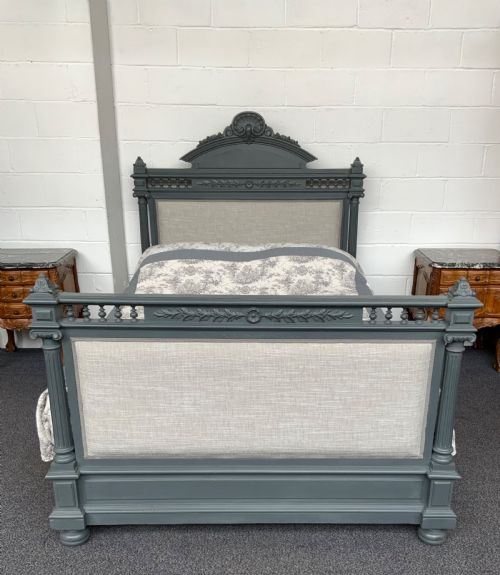
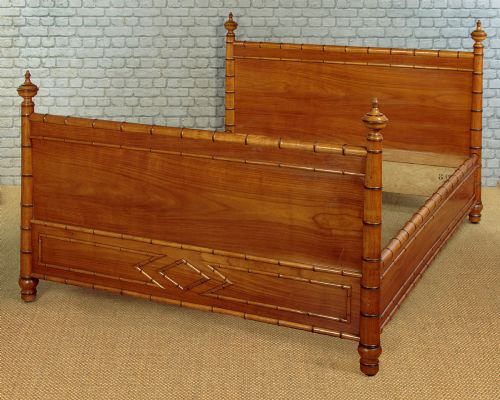
Carved wood beds bring substantial timber presence and period character into a bedroom, offering a focal point built from walnut, oak, and mahogany.
Carved Wood Beds
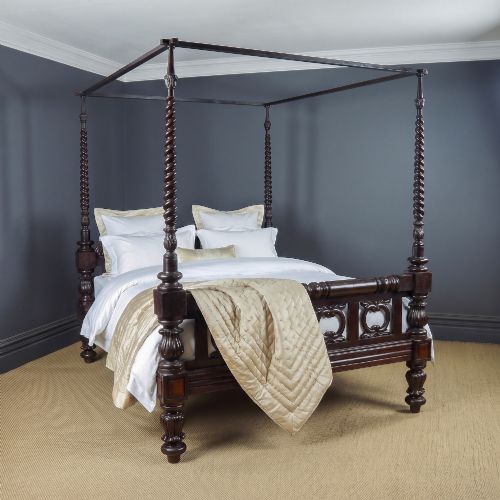
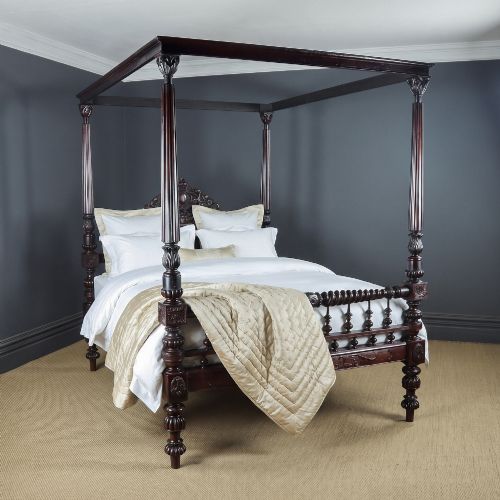
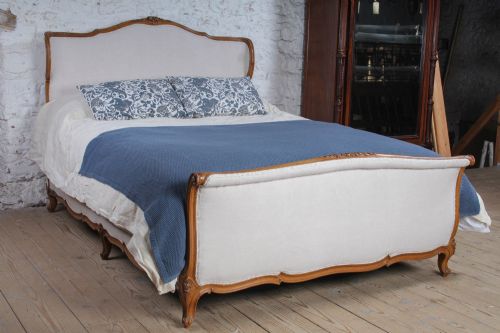
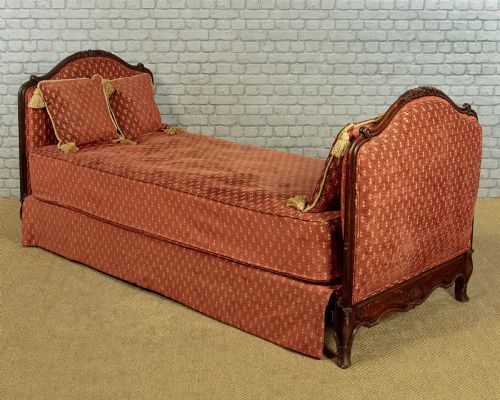
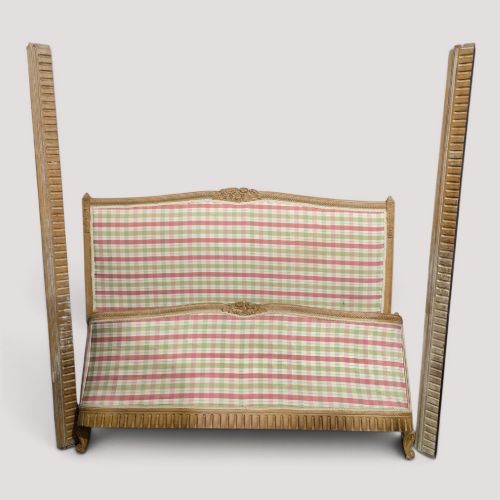
When you search for carved wood beds, you encounter a selection spanning the eighteenth, nineteenth, and twentieth centuries, featuring monumental four poster frames alongside French provincial styles and low-end bedsteads. These pieces range from grand Victorian tester beds in mahogany and walnut to simpler painted wooden frames and daybeds.
The domestic forms appearing here include standard double and king size proportions, alongside occasional single beds and daybeds suited to smaller rooms. Stylistic influences draw heavily on French Rococo Revival, Louis XV and XVI designs, and Jacobean revivals executed in solid oak and hardwood.
Materials and construction
Cabinetmakers constructed these frames using dense hardwoods like oak, walnut, and mahogany, selecting timber for its grain and stability in large structural forms. Joinery relied on traditional framing and pegging methods to support heavy testers and tall headboards.
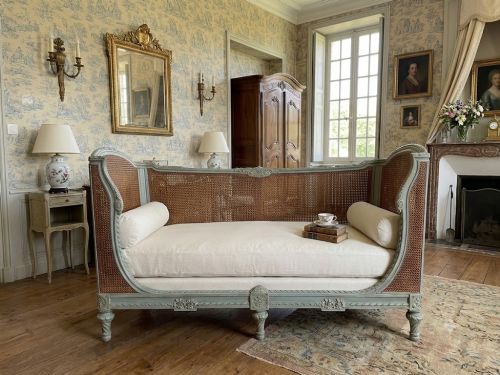
Hand carving defined the surface decoration, utilising chisels and gouges to render foliate motifs, linenfold panels, and structural mouldings directly into the solid timber. Painted and gilt finishes were also applied over wood surfaces, particularly on French provincial styles and Louis-inspired daybeds.
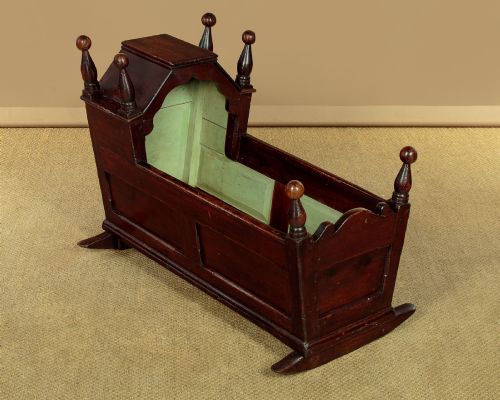
Among the heavy oak coffers and towering tester frames, a diminutive eighteenth-century rocking cradle waits quietly for a very small occupant.
Quality variations
The standard of carving marks the primary distinction between simpler commercial frames and superior workshop output, with crisp, deep relief work showing greater manual skill than shallow machine routing. The choice of primary timber also dictates tier, where dense burr walnut or figured mahogany commands higher regard than standard painted softwood or mixed hardwoods.
Proportion and structural integrity separate exceptional survivals from altered or assembled pieces, as original proportions ensure the bed functions correctly with modern mattresses. The handling of secondary details, such as integrated cane panels or applied giltwood accents, indicates the original maker's investment in the commission.
Waring & Gillows
The Carved Wood Beds Glossary
- Four poster bed
- A bed with four vertical columns supporting a canopy or tester frame above. These grand architectural pieces often feature elaborate cornice carvings and hangings.
- Tester
- The wooden canopy or ceiling structure suspended above a four poster bed. It is frequently panelled and heavily carved along the outer frieze.
- Coffer
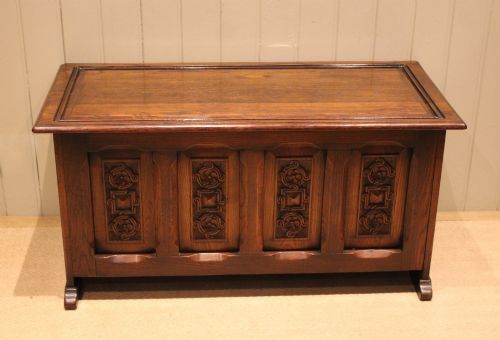
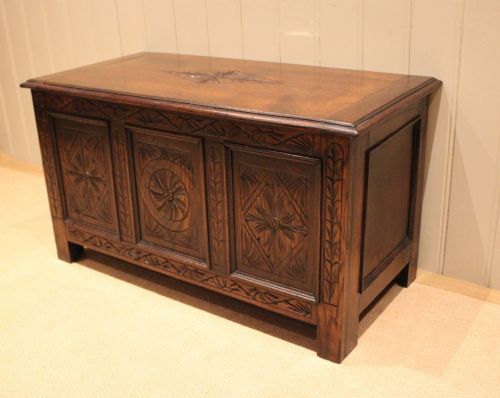
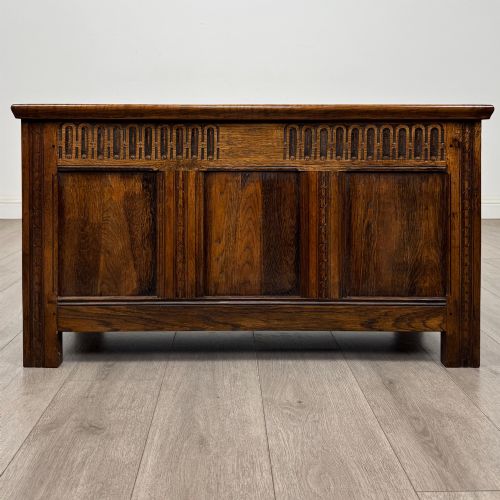
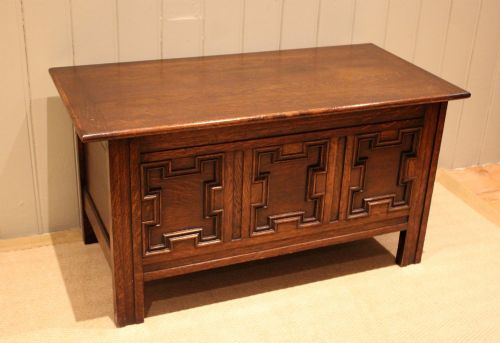
- A large wooden chest with a hinged lid, often carved with panels and used for storage. Many examples share the decorative vocabulary of contemporary bedframes.
- Daybed
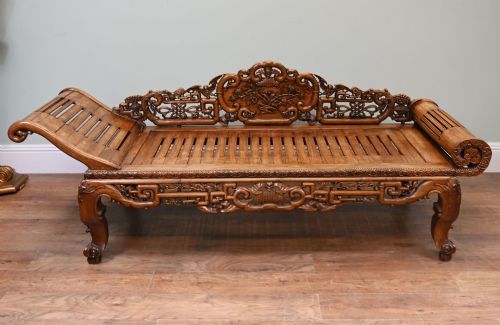
- An elongated seat or form of couch intended for resting, combining upholstered elements with carved wooden frames. Styles range from French Louis XV designs to faux bamboo.
- Giltwood
- Wood that has been coated with thin gold leaf or gilt paint to simulate solid gold enrichment. This technique highlights carved rococo scrollwork and decorative mouldings.
Carved Wood Beds: Frequently Asked Questions
How do I choose the right size?
Check the internal mattress dimensions against modern standard sizes rather than relying solely on period terminology like double or king. Many older frames require custom mattresses or minor adjustments to slats and side rails for daily comfort.
Measure your bedroom ceiling height if you are considering a four poster or tester bed, ensuring adequate clearance above the canopy structure.
Are these beds suitable for daily use?
Most antique wooden bedframes are robustly constructed from solid hardwoods like oak, walnut, or mahogany, making them entirely viable for regular sleeping arrangements. Modern support systems can usually be integrated discreetly within the historic side rails.
Inspect the side rail joints and overall squareness of the frame to ensure it handles modern mattress weights without structural strain.
How do I date a carved wooden bed?
Examine the style of the carving, the choice of primary timber, and the construction methods used in the headboard and footboard. Victorian and Edwardian pieces often revive earlier Georgian or French motifs, so joint details help separate original eras from later revival work.
Reference the specific proportions and hardware fixtures, as hand-forged screws or pegged joints point firmly towards earlier manufacturing dates.
How do I care for antique wood furniture?
Maintain a stable indoor climate away from direct heat sources and strong sunlight to prevent the solid timber from splitting or warping. Dust regularly with a dry cloth and apply a quality beeswax sparingly to nourish the polished surface.
Avoid commercial silicone sprays or abrasive cleaners that can damage historic French polish or waxed finishes over time.