

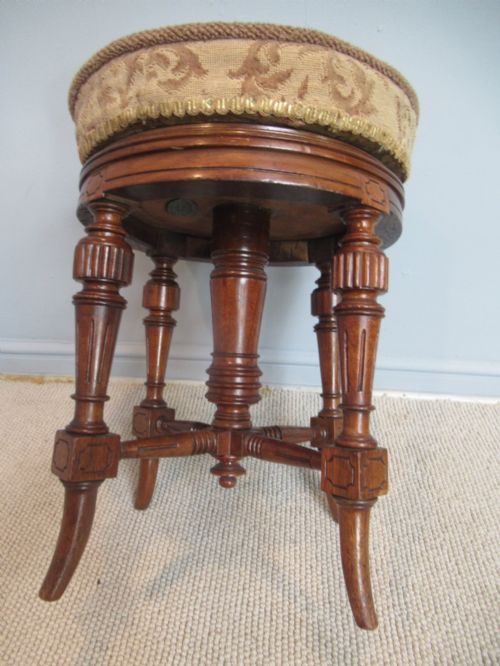
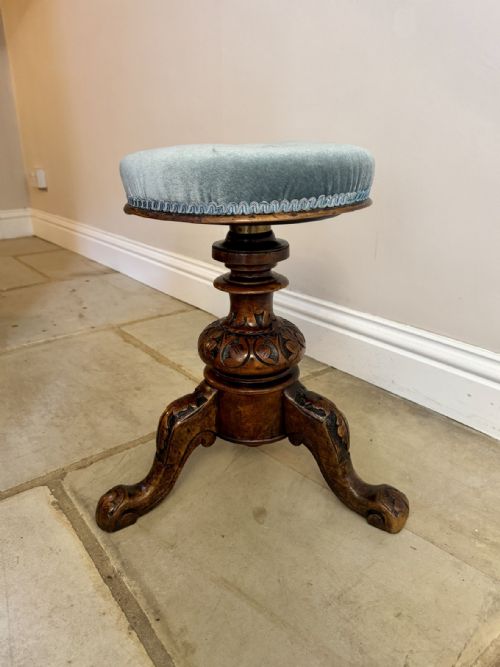
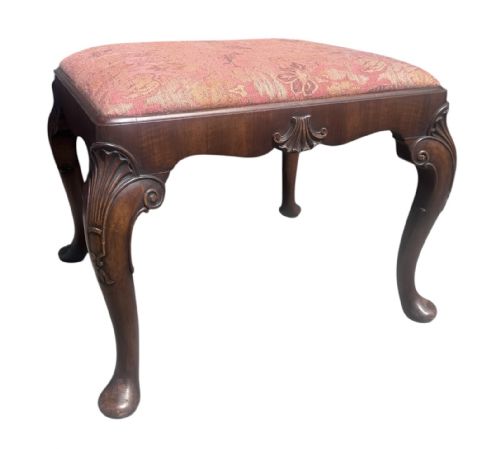
Carved Walnut Vanity Stool
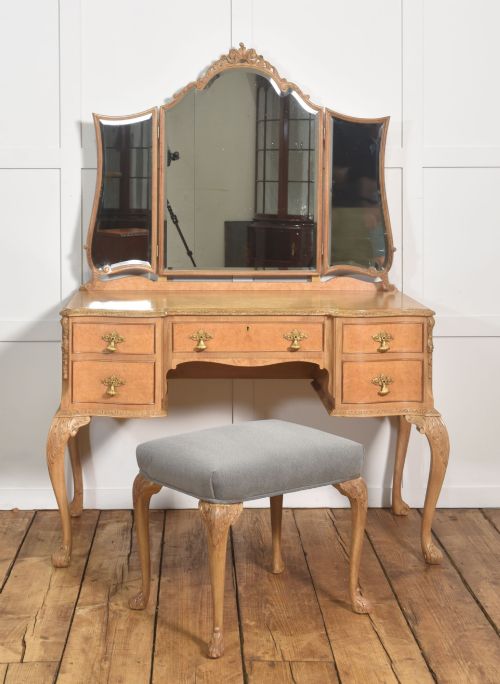
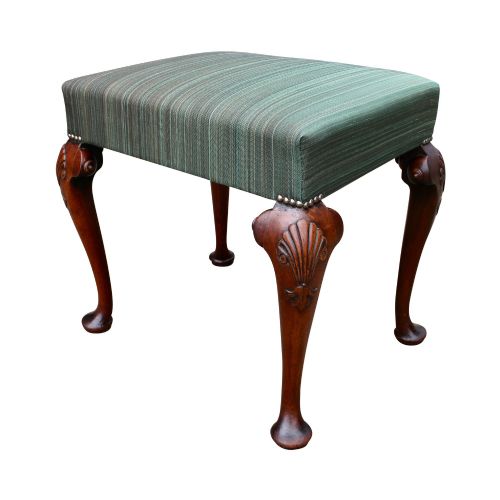
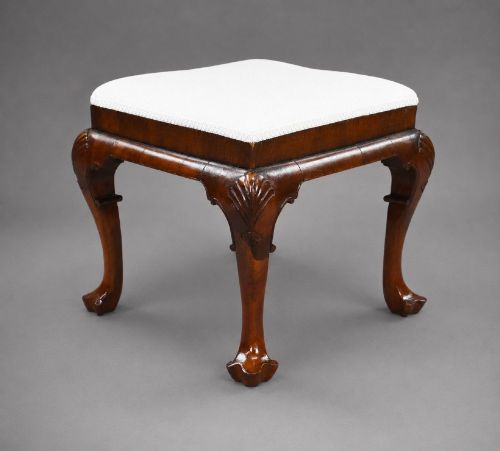
A carved walnut vanity stool brings tactile warmth to a dressing area, combining rich timber frames with textured textile seats.
Carved Walnut Vanity Stool
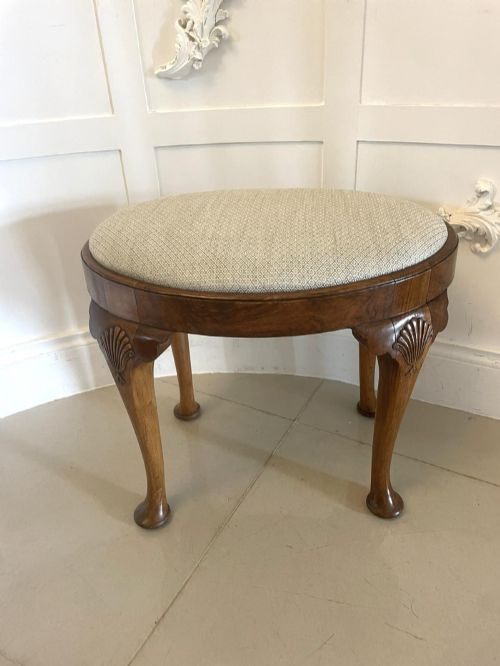
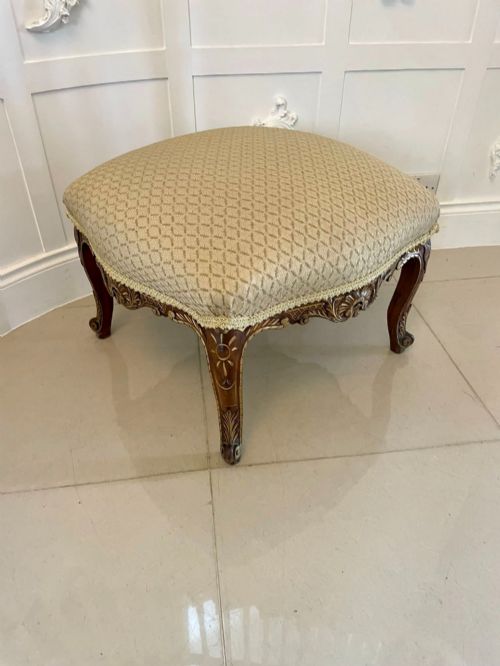
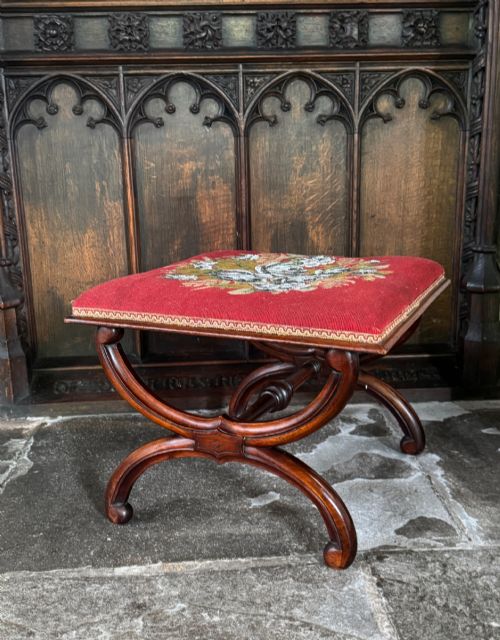
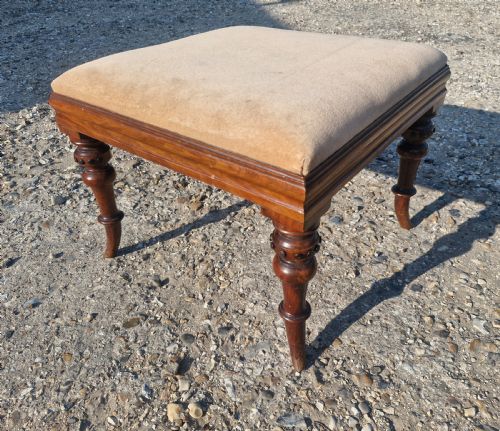
A carved walnut vanity stool is a compact seating piece designed for use at a dressing table or vanity unit. The selection centres on Victorian and early twentieth-century examples, spanning the mid-nineteenth century through to the 1930s.
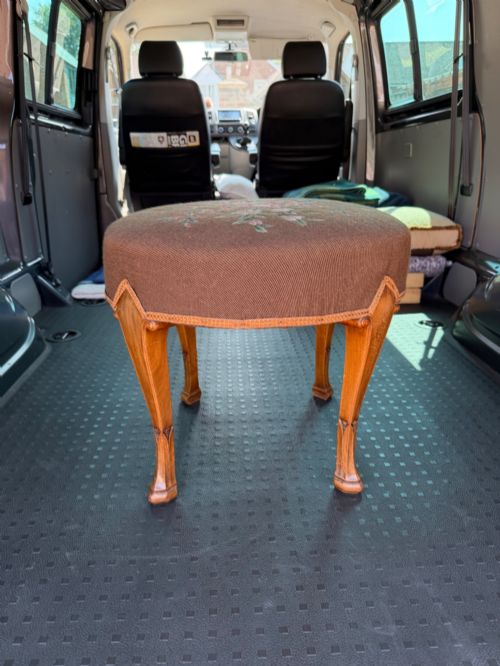
Most pieces on this page emerge from Victorian workshops, alongside revivals drawing on Queen Anne, Georgian, and William and Mary styles. You will encounter oval shapes, revolving mechanisms, and X-frame supports alongside standard four-legged designs.
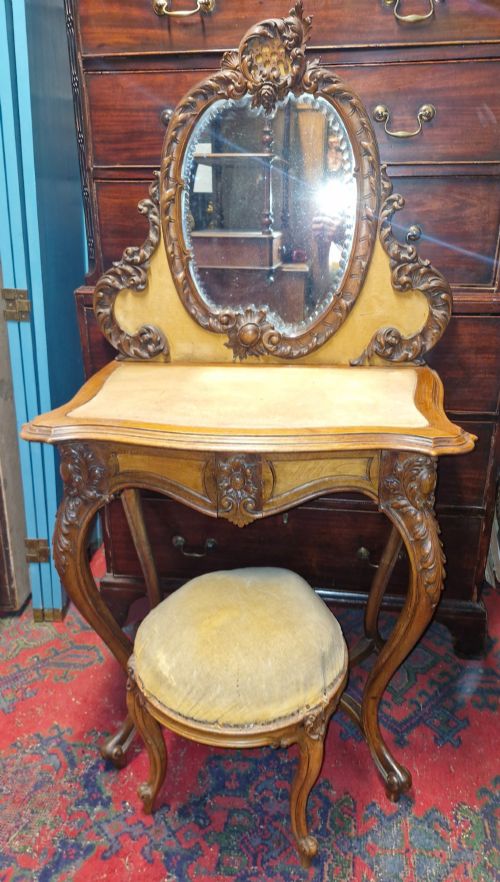
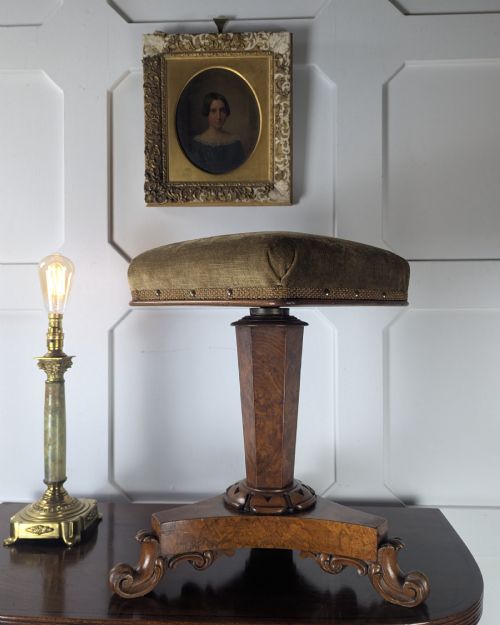
Makers of the period often paired these stools with matching dressing tables, though many survive independently. They serve equally as piano stools or small footstools depending on their height and mechanical adjustments.
Assessing craftsmanship
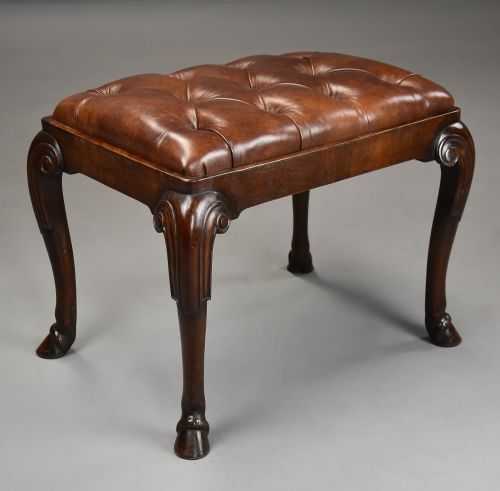
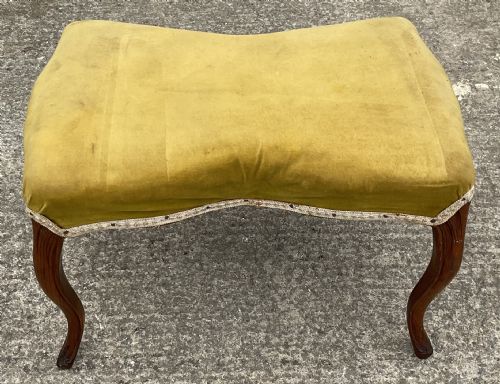
Quality rests in the depth and crispness of the hand-carving upon the walnut frame, distinguishing fluid cabriole legs from stiff, mechanical shaping. Heavier gauge timber and well-figured grain mark the superior examples.
The integrity of the structural joinery and the authenticity of the upholstery materials dictate the standing of a piece. Original needlepoint, leather, or period tapestry elevates a stool above later replacement covers.
Some Victorian dressing stools possess hidden screw mechanisms that allow the sitter to twirl endlessly while perfecting their curls.
The Carved Walnut Vanity Stool Glossary
- Cabriole leg
- A furniture leg that bends outward in a convex curve and tapers inward to a foot, typical of Queen Anne and Victorian revival pieces.
- Burr walnut
- Timber taken from a tree growth or knot, displaying intricate swirling grain patterns highly prized for decorative veneer and solid surfaces.
- X-frame
- A structural base formed by two intersecting diagonal members supporting the seat, often seen in grander nineteenth-century designs.
- Needlepoint
- Stitched textile work using canvas as a base, frequently employed for durable and decorative seat covers on period stools.
Carved Walnut Vanity Stool: Frequently Asked Questions
How do I date a walnut stool?
Examine the timber finish, construction joints, and upholstery tack types beneath the frame.
Nineteenth-century pieces often display hand-cut joinery and period textiles that match the recorded Victorian and Edwardian manufacturing eras.
Can I use a vanity stool as a piano stool?
Many surviving examples served a dual purpose for both dressing tables and keyboard instruments.
Check for a rise-and-fall mechanism or an adjustable height screw if you intend to sit at a piano.
What is the difference between Queen Anne and Victorian styles?
Queen Anne style relies on smooth walnut surfaces, pad feet, and graceful cabriole legs originating from the early eighteenth century.
Victorian interpretations absorb these curves but often add heavier carving, scrollwork, or buttoned leather upholstery typical of the nineteenth century.
How do I care for walnut wood?
Keep wooden frames away from direct sunlight and sudden temperature shifts to prevent the timber from drying out.
Apply a traditional beeswax polish sparingly to maintain the natural lustre of the walnut grain.