





Carved Walnut Trunk
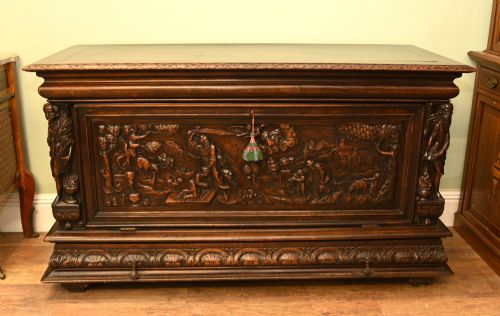
A carved walnut trunk brings deep grain and centuries of hand-carved detail into a room, offering both substantial storage and striking period presence.
Carved Walnut Trunk
A carved walnut trunk encompasses heavy timber chests, boarded coffers and grand cassoni dating from the sixteenth century through the nineteenth century. These forms span diverse regional traditions, appearing in Italian Renaissance, Spanish Baroque, and English country house aesthetics.
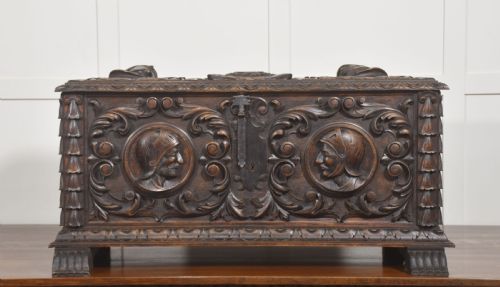
The versions most commonly met on this page are substantial coffers and chests fashioned from solid walnut, often embellished with figural medallions, carved panels, or gilt Gothic decoration. Alongside traditional lidded chests, the selection includes related storage boxes and lift-top commodes sharing the same dense timber construction.
Makers and workshops across continental Europe and Britain utilised walnut for its rich colour and reliable grain, shaping these trunks to serve functional storage roles in grand halls and domestic chambers alike.
How they were made
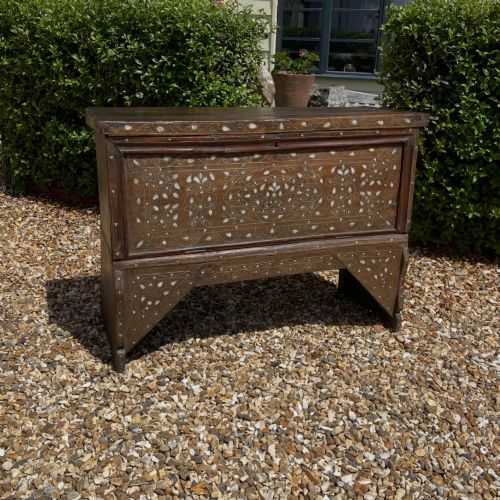
Carpenters constructed these trunks primarily from solid walnut timber, frequently incorporating secondary woods such as oak for internal framing and structural support. Iron hinges, brass lock plates, and occasional bone or mother-of-pearl inlay provided both mechanical function and decorative contrast.
Carvers shaped the exterior surfaces using gouges and chisels to produce deep relief panels, figural medallions, and architectural mouldings. Surface finishing often relied on natural oils and waxes to feed the grain, while certain Italian cassoni received layers of gesso and gilding.
Carved Walnut Trunk Retail Price Guide 2026
Typical asking prices for carved walnut trunk among the pieces listed under this phrase on Sellingantiques today, from the lower quarter to the upper quarter. They describe what is for sale here now, not the wider market.
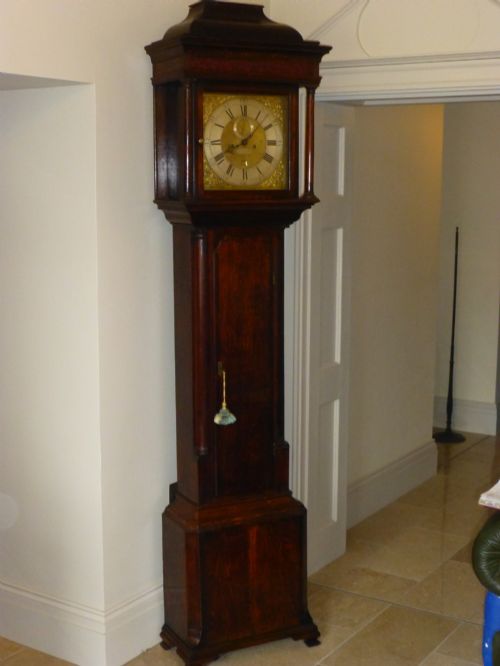
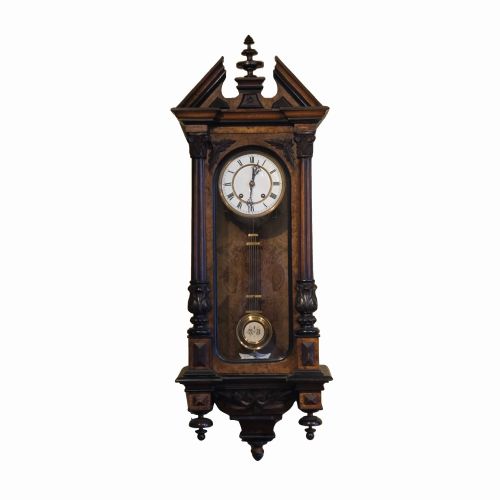
Several seventeenth-century chests share marketplace space with nineteenth-century wall clocks and longcase timepieces, proving that carpenters and clockmakers were equally busy.
What varies in quality
The standard of a carved walnut trunk rests upon the depth and crispness of the hand-carving across the panels and friezes. Finer examples display confident, sharply defined figural work and integration of decorative motifs, whereas lesser pieces show shallower, mechanical carving.
Integrity of construction and timber selection also divide the range, with superior pieces retaining their original boarded lids, authentic iron or brass hardware, and stable joints without excessive replacement timber.
Richard Corless of Stockport·Edward East
The Carved Walnut Trunk Glossary
- Cassone
- A large Italian chest or coffer traditionally used for storing wedding trousseau items and valuables. These pieces frequently exhibit elaborate carving, gilding, or painted decoration.
- Coffer
- A heavy wooden chest with a hinged or lift-off lid, used historically for storing precious goods, documents, or textiles. They often feature robust boarded construction and iron strapwork.
- Renaissance Revival
- A nineteenth-century design movement that drew inspiration from sixteenth-century Italian and French architecture and furniture. Pieces in this style utilise classical motifs, heavy cornices, and prominent relief carving.
- Gesso
- A plaster-like mixture applied to wooden surfaces as a smooth base for gilding or paint. It appears on heavily decorated continental cassoni.
- Serpentine
- A furniture front or top curving outward in the centre and inward at the ends. This contour adds movement to the silhouette of chests and commodes.
Carved Walnut Trunk: Frequently Asked Questions
How were these trunks used historically?
These trunks served primarily for storing valuable household goods, garments, linens, and documents in domestic interiors and grand halls. Their sturdy construction also allowed them to function as benches or tables when covered with textiles.
In wealthier households, large cassoni held bridal trousseaus and were displayed publicly to signal the status and wealth of a family during marriages.
How do I distinguish sixteenth-century pieces from nineteenth-century revivals?
Sixteenth-century pieces display authentic tool marks, hand- forged ironwork, and timber shrinkage consistent with centuries of age. Construction methods rely on pegged joints and hand-boarded panels characteristic of early workshops.
Nineteenth-century Renaissance Revival pieces often employ more uniform machine-sawn elements, standardised hardware, and cleaner internal surfaces while imitating earlier decorative vocabularies.
Where should I place a carved walnut trunk at home?
A carved walnut trunk sits well at the foot of a bed, beneath a window, or along a primary hallway wall where its timber grain can be appreciated. The flat top surface accommodates books, textiles, or decorative objects while keeping the interior storage accessible.
Keep these pieces away from direct heat sources and strong sunlight to prevent the walnut timber from drying out or splitting over time.
What maintenance does walnut furniture require?
Maintenance requires occasional application of quality furniture wax to nourish the walnut grain and maintain a soft protective sheen. Avoid using modern aerosol sprays or silicone polishes that can build up on historic wood surfaces.
Maintain stable room humidity levels to prevent the solid timber and carved panels from expanding or contracting too rapidly.