



Carved Walnut Side Chest
These carved walnut side chest pieces offer rich timber grain and compact storage, bringing timeless character and practical surface space to any room.
Carved Walnut Side Chest
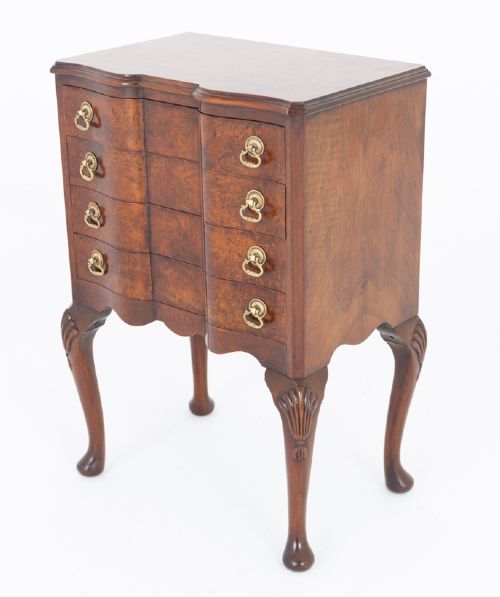
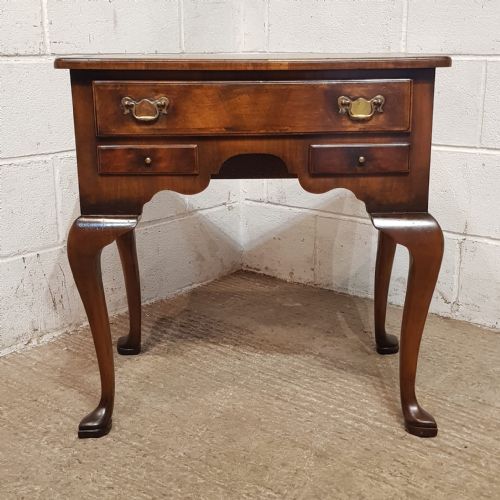
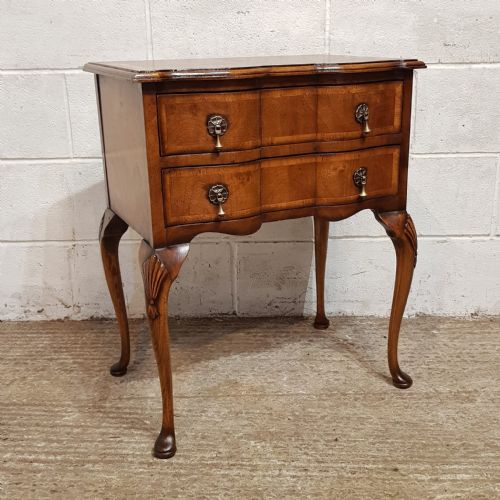
A carved walnut side chest combines useful drawer storage with decorative presence, frequently appearing as lowboys, bedside cabinets, and compact commodes. Buyers searching for a carved walnut side chest will find examples spanning from the eighteenth century through to the Edwardian period and nineteen-twenty.
How they were made
Cabinet makers utilised solid walnut, fruitwood, and burr elm timbers, frequently applying burr walnut veneers to create striking grain patterns across drawer fronts and tops. Iron and brass hardware provided functional handles and key escutcheons.
Construction techniques include traditional joinery adapted for serpentine fronts, side cabinets, and compact chests of drawers. Marquetry inlay added intricate surface decoration to specific styles such as Louis XV Provincial and Queen Anne revivals.
Carved Walnut Side Chest Retail Price Guide 2026
Typical asking prices for carved walnut side chest among the pieces listed under this phrase on Sellingantiques today, from the lower quarter to the upper quarter. They describe what is for sale here now, not the wider market.
Some nineteenth-century teapoys double unexpectedly as lamp stands, adapting polite tea-drinking furniture for modern corner illumination.
What varies in quality
The selection of timber grain, particularly the depth and figure of burr walnut veneers, separates standard items from exceptional examples. Cabinet work and the precision of carved details across drawer fascias and legs indicate the level of craftsmanship involved.
Period authenticity and the preservation of original brass fittings and marquetry inlay heavily influence the character of each piece. Proportion and the integration of stylistic elements like Queen Anne cabriole legs determine the visual balance of the furniture.
Shoolbred and Co
The Carved Walnut Side Chest Glossary
- Lowboy
- A small table with drawers, typically standing on four legs and functioning as a dressing table or side table.
- Wellington Chest
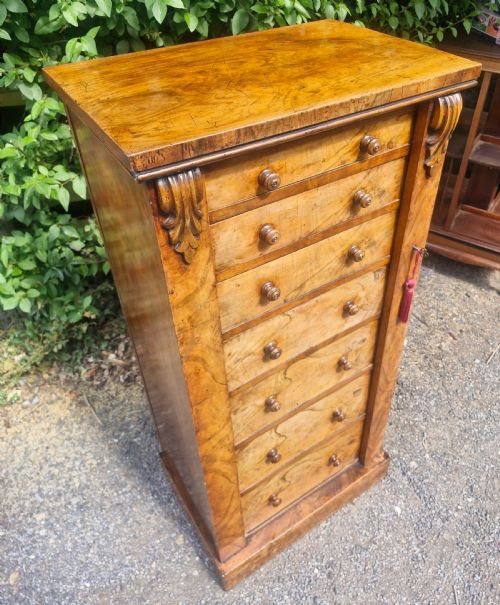
- A tall, narrow chest of drawers secured by a hinged locking side flap that fastens with a key.
- Commode
- A low chest of drawers or cabinet, often of French origin, used for storage in bedrooms or living spaces.
- Teapoy
- A small stand or table designed originally to hold tea caddies, later utilised as an occasional table.
- Marquetry
- Decorative inlay work using various coloured woods to form geometric or floral patterns on furniture surfaces.
Carved Walnut Side Chest: Frequently Asked Questions
What is a lowboy?
A lowboy is a compact table fitted with one or more rows of drawers, traditionally used as a dressing table or side table.
These pieces typically stand on slender legs and offer a convenient surface for lamps or decorative objects while adding storage to smaller rooms.
How do I identify a Wellington chest?
A Wellington chest is recognised by its tall, narrow proportions and a distinctive vertical locking bar hinged to one side.
This wooden flap secures all the drawers simultaneously when locked with a key, a design popular during the Victorian era.
Where should I place a side chest?
A carved walnut side chest suits hallways, living rooms, and bedrooms as a bedside table or lamp stand.
Their compact footprints allow them to fit into alcoves and tight spaces while providing enclosed drawer storage.
What is burr walnut?
Burr walnut is taken from a tree growth or burl, producing highly figured, swirling grain patterns across the timber surface.
Cabinet makers valued this veneer for creating decorative focal points on drawer fronts and tabletops.