
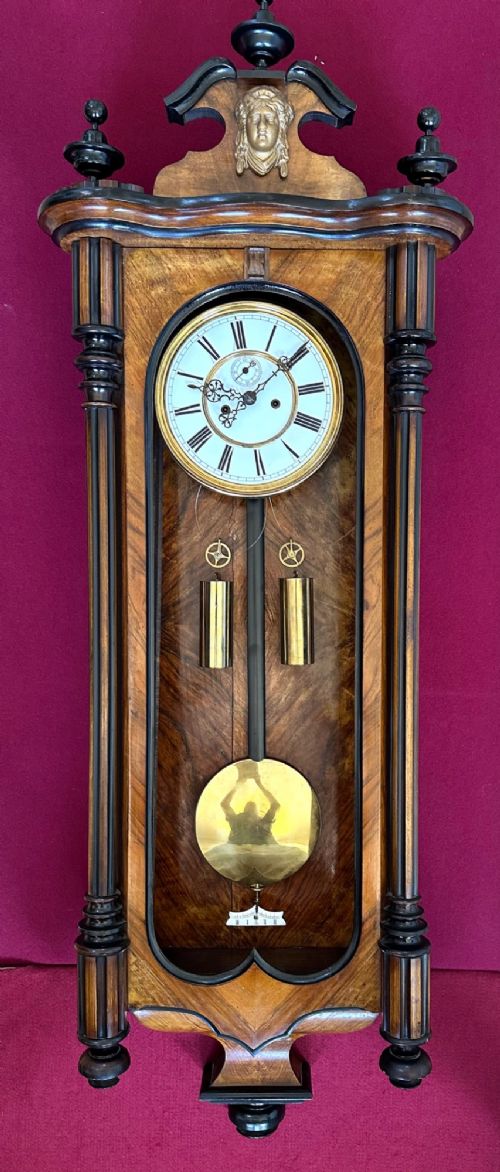

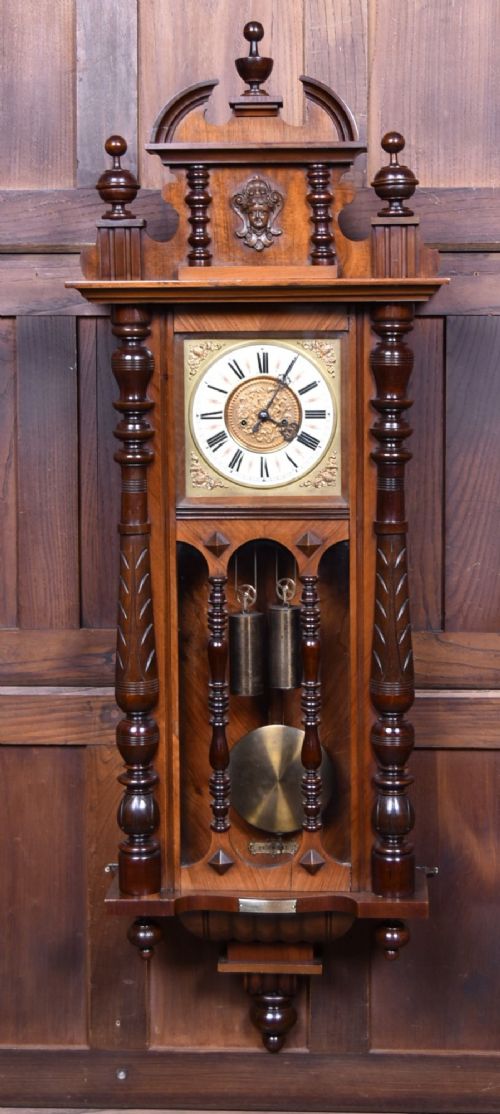
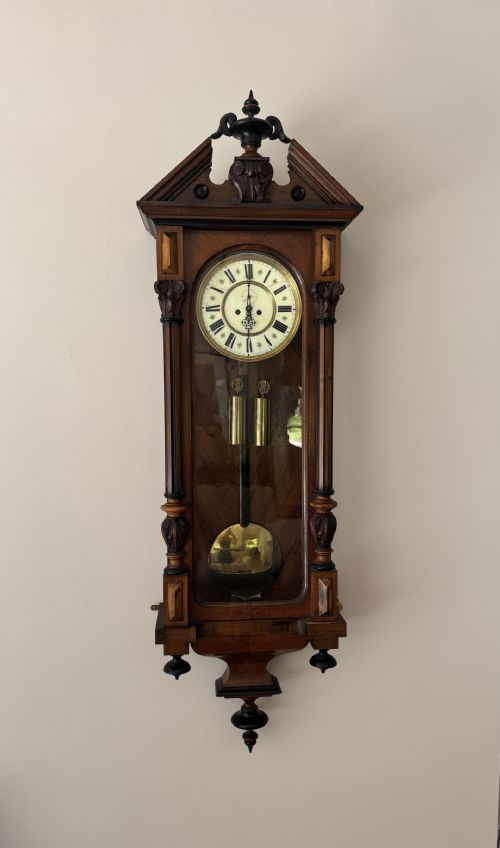
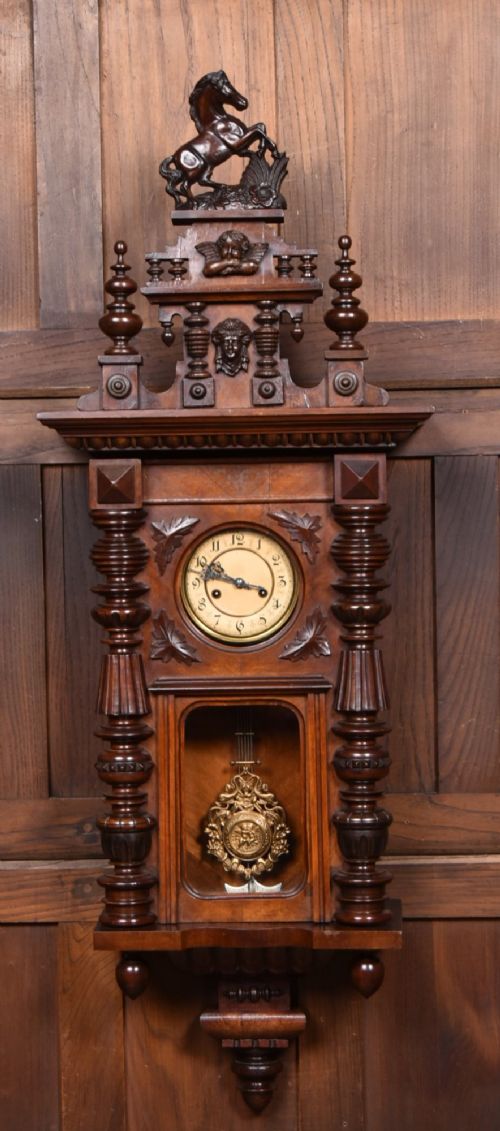
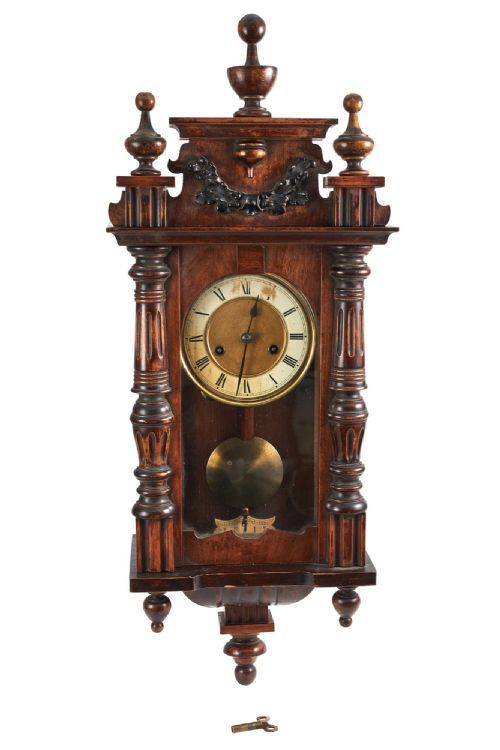

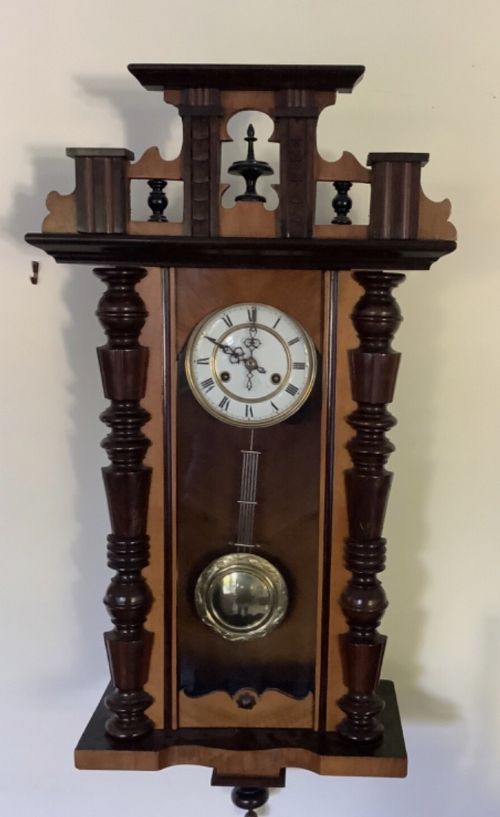


Carved Walnut Regulator
A carved walnut regulator is a precision timepiece designed to hang upon the wall, offering both mechanical accuracy and a commanding presence.

Carved Walnut Regulator
A carved walnut regulator represents a significant achievement in horology, designed primarily as a wall clock to measure time with high precision. Buyers seeking this phrase encounter large architectural cases that house intricate movements, often incorporating weighted drives and visible pendulums.
The pieces available on this page span the Victorian era and the late nineteenth century, alongside occasional mid-twentieth-century examples such as Italian automation clocks. Most items adopt the Vienna style or originate from German and Austrian workshops, reflecting a tradition of meticulous clockmaking.
Forms range from double-weight and triple-weight wall clocks to drop dial designs and Grande Sonnerie striking mechanisms. The typical format mounts a detailed dial behind glass, framed by carved timber and ebonised highlights.
How they were made
Cabinetmakers utilised solid walnut and burr walnut veneers over secondary timbers, often applying ebonised wood to create sharp contrasts and architectural depth. Carving was executed by hand to ornament the pediments, columns, and lower finials of the tall cases.
Internal movements combine brass wheels, plates, and arbors with steel pinions, driving either pendulum suspensions or spring-driven mechanisms. Dials incorporate white enamel with black Roman or Arabic numerals, frequently protected behind bevelled or flat glass doors.
Listings feature walnut, burr walnut, and ebonised wood combined with brass and enamel across Victorian and nineteenth-century wall clocks.
What varies in quality
The standard of a carved walnut regulator is largely determined by the complexity of its movement, such as whether it operates on twin weights, triple weights, or a Grande Sonnerie striking train. Finer examples feature signed movements by established makers and sophisticated automation or chiming capabilities.
Cabinetwork creates another clear distinction, separating standard production from pieces with deeply sculpted ornamentation, burr walnut veneers, and crisp ebonised mouldings. The integration of well-preserved enamel dials and original matching hardware further elevates the standing of an individual wall clock.
Gustav Becker·Johann Baptist Beha·Odo
The Carved Walnut Regulator Glossary
- Regulator
- A precision pendulum clock designed to keep exceptionally accurate time. These clocks often served as reference timepieces in public spaces or workshops.
- Vienna regulator
- A style of high-quality wall clock originating in Austria during the nineteenth century. They typically feature long glass-panelled cases and weight-driven movements.
- Grande sonnerie
- A complex striking mechanism that chimes the hours and the quarters automatically on every quarter hour. It represents a high level of horological skill.
- Burr walnut
- Timber taken from the wart or growth on a walnut tree, showing intricate and swirling grain patterns. It is sliced into veneers to ornament prominent parts of the case.
- Ebonised wood
- Timber treated with a dark stain or finish to imitate ebony. This technique provides stark visual contrast against the lighter brown tones of walnut.
Carved Walnut Regulator: Frequently Asked Questions
How do I wind a weight-driven wall clock?
Weight-driven wall clocks require you to pull the chains or wind the cords using a specific key to raise the heavy metal weights back toward the top of the case.
Care must be taken not to overwind the mechanism and to ensure the weights hang freely without catching the pendulum or interior case walls.
Where should I hang a heavy wall clock?
A heavy regulator must be secured directly into solid masonry or substantial wooden wall studs using appropriate heavy-duty fixings. Hanging the case firmly prevents vibrations from interfering with the accurate swing of the pendulum.
Position the clock away from direct sunlight, damp areas, and heavy foot traffic that might cause the building structure to tremble.
How do I tell an 1880 regulator from a later copy?
Nineteenth-century regulators exhibit traditional joinery methods, hand-cut timber components, and period-specific brass movement construction with distinct patination. Examination of the dial, movement plates, and case backboards reveals the natural ageing of materials.
Later reproductions often use modern machine screws, synthetic glues, and uniform timber finishes that lack the depth of nineteenth-century examples.
What does a double weight movement mean?
A double weight movement uses two separate hanging weights inside the case to power the timekeeping train and the striking train independently. This arrangement removes the need for spring barrels and provides a steady, even pull as the weights descend.
Such systems are characteristic of higher-grade wall clocks designed for sustained accuracy over multi-day periods.