

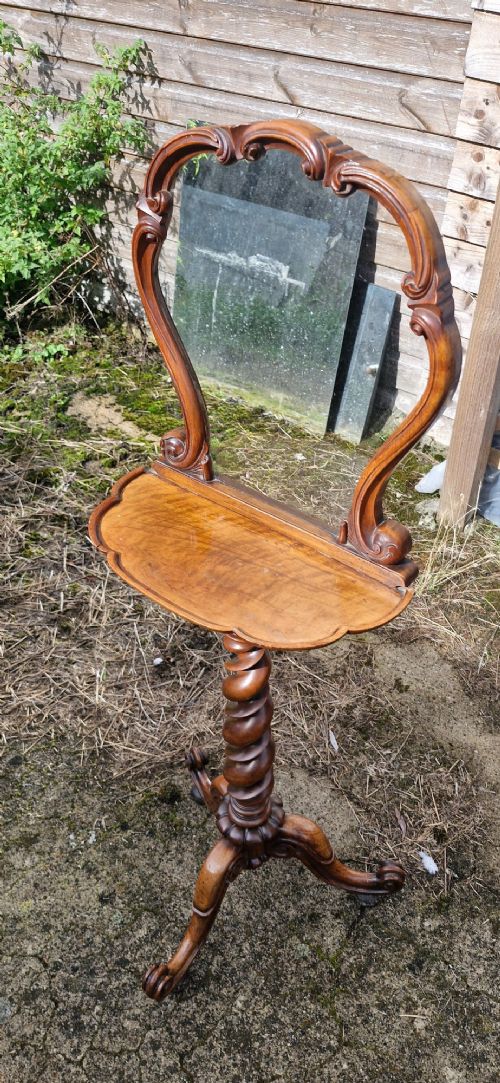
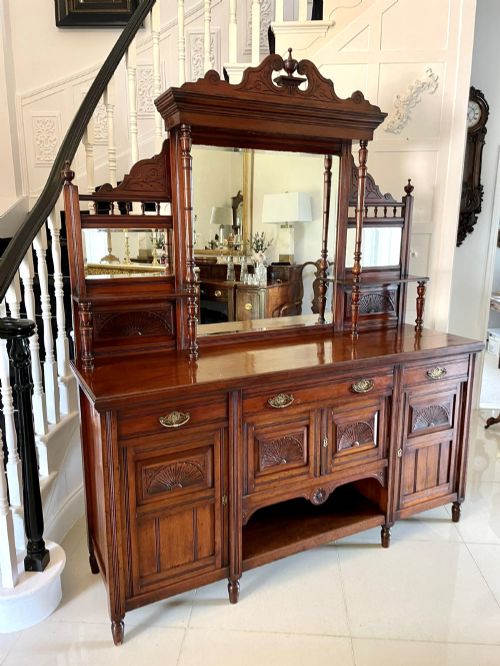
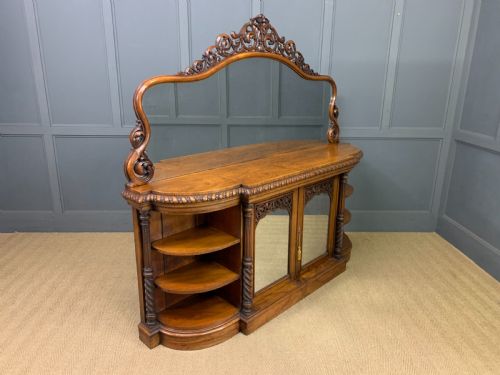


Carved Walnut Mirror Back
A carved walnut mirror back brings grand Victorian presence into a room, reflecting light while offering substantial display and storage space.
Carved Walnut Mirror Back
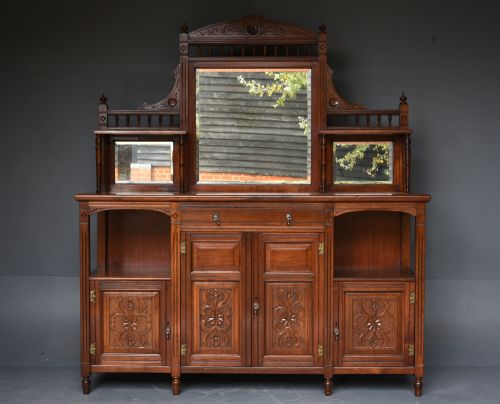
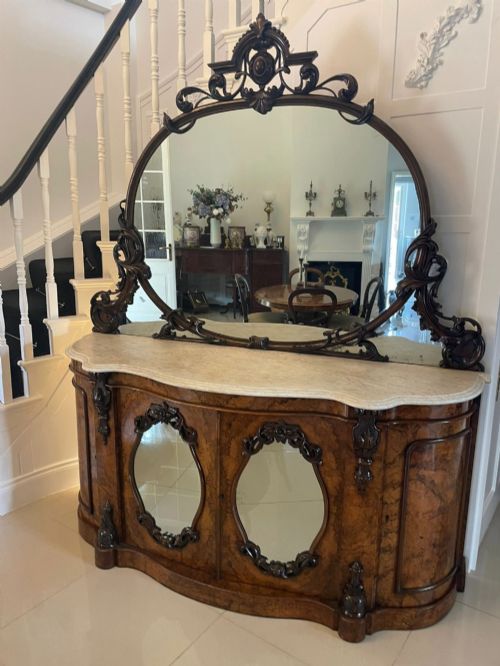
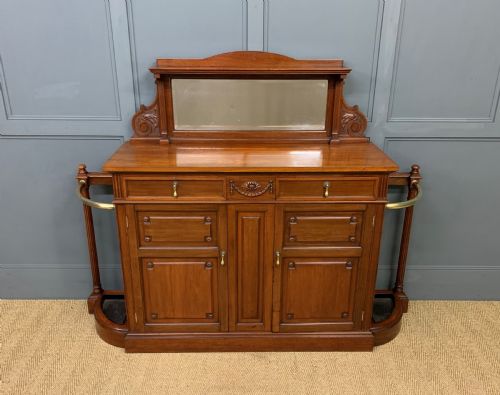
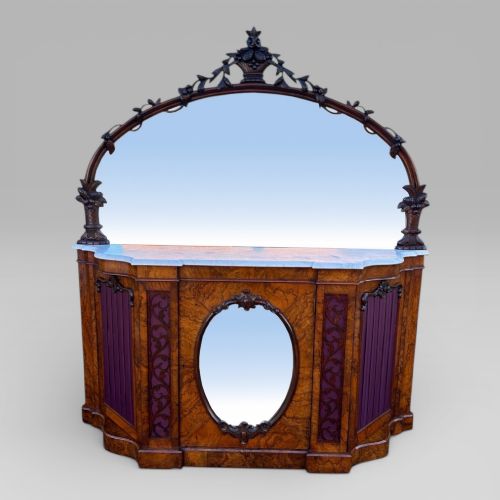
When you search for a carved walnut mirror back, you are looking at substantial Victorian dining room and parlour furniture designed to anchor a formal interior. The most common form on this page is the credenza or sideboard, combining a lower cabinet base with an upper tier supporting a carved wooden frame and a central mirror plate.
These pieces emerge principally across the nineteenth century, with strong representation from the 1850s through to the 1880s, alongside later Victorian and Edwardian iterations. Alongside large sideboards, the selection occasionally includes smaller side cabinets, chiffoniers, and display furniture sharing the same characteristic timber and mirrored superstructure.
Makers and cabinetmakers of the period utilised rich timber veneers to create formal architectural focal points for grand homes. The combination of reflective glass and deep brown wood gave these large items a dual purpose of brightening dark Victorian interiors while displaying prized possessions.
How they were made
Cabinetmakers constructed these forms using solid walnut and figured varieties such as burr walnut, applying choice veneers over sturdy secondary timbers to achieve striking decorative grain patterns. Carved elements like leaves, acorns, and scrolling motifs were worked directly into the solid timber sections framing the glass.
The superstructure typically integrated bevelled mirror glass secured within shaped wooden frames, often accompanied by polished marble tops on the lower credenza bases. Brass hardware, ormolu mounts, and delicate marquetry inlay frequently completed the detailed construction of the more elaborate examples.
Carved Walnut Mirror Back Retail Price Guide 2026
Typical asking prices for carved walnut mirror back among the pieces listed under this phrase on Sellingantiques today, from the lower quarter to the upper quarter. They describe what is for sale here now, not the wider market.
Materials documented across the pieces include burr walnut, figured walnut, white marble, brass hardware, and mirror glass.
What varies in quality
The distinction between standard cabinetwork and exhibition standard pieces rests in the depth of the carving and the selection of the walnut veneer. Heavily figured burr walnut and intricate serpentine shaping demand greater joinery skill than plain flat panels.
Superior examples demonstrate meticulous attention to the integration of the mirror back with the lower sideboard base, utilising robust structural supports and refined brass or ormolu mounts. The crispness of the hand-carved foliage and the quality of the marble top further divide the ordinary items from exceptional London-quality pieces.
Shoolbred & Co.
The Carved Walnut Mirror Back Glossary
- Credenza
- A formal low sideboard or cabinet, frequently featuring a mirror back and enclosed cupboards, designed for principal reception rooms. It developed significantly in popularity during the Victorian era.
- Burr Walnut
- A highly decorative timber veneer taken from the warted excrescences of a walnut tree, prized for its swirling, mottled grain patterns. Cabinetmakers reserved this material for the most prestigious nineteenth-century facades.
- Chiffonier
- A low sideboard or cabinet with a set of shelves or a mirror back superstructure above. It served smaller drawing rooms for displaying ornaments and storing table linen.
- Ormolu
- Gilded bronze ornamentation applied to furniture mounts, hinges, and decorative panels. It provides bright metallic contrast against dark walnut surfaces.
- Marquetry
- The art of applying thin pieces of wood veneer to a structure to form decorative patterns and pictures. In these pieces, it frequently adorns the cabinet doors and friezes.
Carved Walnut Mirror Back: Frequently Asked Questions
What rooms suit a carved walnut mirror back?
These large nineteenth-century pieces suit spacious dining rooms, grand hallways, or high-ceilinged drawing rooms where their height and presence command the space.
Positioning them opposite a window allows the mirror plate to bounce natural light deep into the interior, echoing their original Victorian domestic function.
How do I care for antique walnut?
Maintain the timber by applying traditional beeswax sparingly and buffing gently with a soft cloth to preserve the natural lustre of the French polish.
Keep these items away from direct sunlight and heat sources to prevent the burr walnut veneers from drying and lifting over time.
Are marble tops original to these sideboards?
White and coloured marble slabs were frequently fitted to high-end Victorian credenzas and console tables to provide a durable, cooling surface for serving food and drinks.
They sit directly upon the timber base, secured by their own considerable weight and the precise rebate of the surrounding mouldings.
How do I tell early Victorian from late Victorian pieces?
Early Victorian examples, particularly those from the 1850s, often feature exuberant serpentine shaping and deep relief carvings of naturalistic motifs like acorns and leaves.
Later Victorian pieces from the 1880s and 1890s sometimes lean into structured revival styles or simpler architectural lines while retaining the essential mirror back format.