

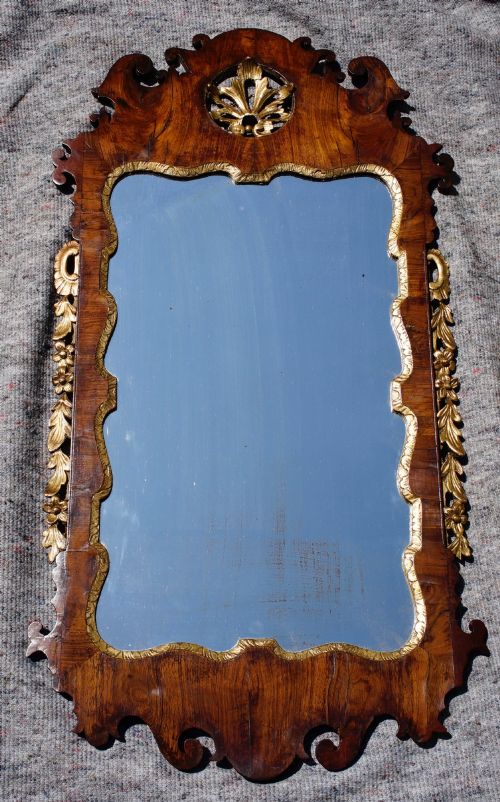

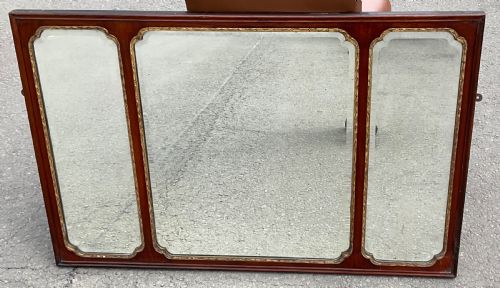


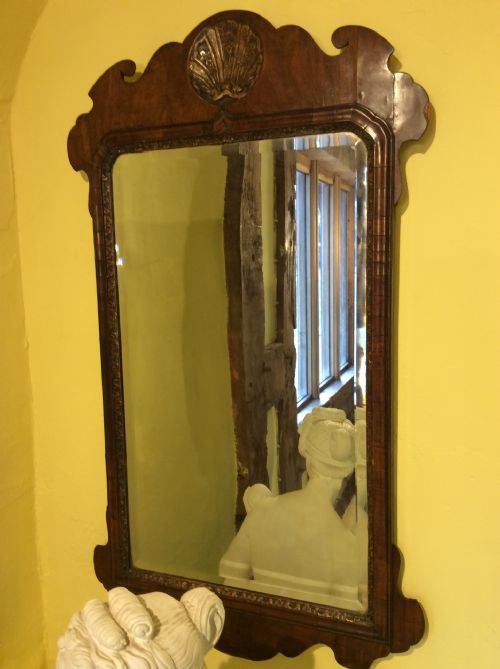


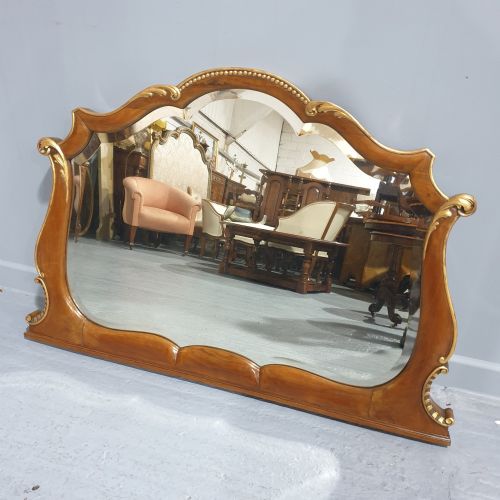

Carved Walnut Gilded Mirror
A carved walnut gilded mirror brings depth and warmth to a room through its rich timber tones and bright gilding.
Carved Walnut Gilded Mirror
A carved walnut gilded mirror is a framed reflective glass piece combining dark timber with gold leaf accents. When you search for a carved walnut gilded mirror, you encounter wall mirrors, overmantel mirrors, and tall cheval mirrors spanning the eighteenth and nineteenth centuries alongside later revivals.
The eighteenth-century examples lean towards George II, Queen Anne, and Georgian Rococo styles, often featuring fretwork and parcel gilding. Nineteenth-century pieces bring French Louis Philippe influences and later Chippendale revivals into the selection.
Wall mirrors dominate the available forms, ranging from compact hanging pieces to large pier glasses and triple overmantels. Walnut timber provides the primary dark carcase, while gesso and gold leaf supply the gilded highlights.
What varies in quality
The depth and crispness of the hand-carved fretwork dictate the visual weight of the frame. Sharp detailing in the scrolling foliage and pediments separates finer Georgian production from later revival interpretations.
The preservation of the original mercury glass and the integrity of the giltwood surfaces determine the character of each piece. Gradations in the quality of the walnut veneer and the application of the gold leaf influence the overall harmony of the timber and metal.
Carved Walnut Gilded Mirror Retail Price Guide 2026
Typical asking prices for carved walnut gilded mirror among the pieces listed under this phrase on Sellingantiques today, from the lower quarter to the upper quarter. They describe what is for sale here now, not the wider market.
The selection spans from eighteenth-century Georgian origins through Victorian revivals into nineteen-hundreds production, utilising walnut, gesso, and gold leaf.
The Carved Walnut Gilded Mirror Glossary
- Parcel Gilt
- Partially gilded, where gold leaf highlights specific carved details while leaving the surrounding walnut timber exposed. This technique creates a distinct contrast between the dark wood and bright metal.
- Gesso
- A plaster-like mixture applied to wood surfaces as a base for gilding. Artisans carve and smooth this layer before laying the gold leaf.
- Fretwork
- Openwork ornamentation carved in thin wood panels, frequently seen on eighteenth-century wall mirrors. The intricate pierced designs provide lightness to heavy timber frames.
- Overmantel Mirror
- A large mirror designed to hang above a fireplace mantel. These pieces often feature wide horizontal proportions and triple glass panels.
- Cheval Mirror
- A freestanding full-length mirror mounted on a pivoting frame. The tall walnut structure allows the glass to tilt for dressing.
Carved Walnut Gilded Mirror: Frequently Asked Questions
Where should I hang a walnut mirror?
These mirrors suit principal reception rooms, hallways, and above bedroom mantelpieces where their reflective glass and gilded details catch natural light.
Position the frame at eye level to maximise its decorative impact and to bounce light deeper into smaller spaces.
How do I date an older walnut mirror?
Examine the construction methods, timber grain, and secondary woods used at the back of the frame. Eighteenth-century pieces typically show hand-cut joinery and period glass characteristics.
Revival pieces from the nineteenth and early twentieth centuries often adopt earlier Georgian styles while utilising different backing boards and modern fixings.
What is parcel gilding?
Parcel gilding is the method of applying gold leaf to specific raised portions of a carved wooden frame. This leaves the natural walnut grain visible on the flat surfaces.
The technique highlights carved scrollwork and architectural pediments without overwhelming the warmth of the dark timber.
Are these mirrors heavy to hang?
Solid walnut frames combined with thick glass and gesso layers carry substantial weight. Secure wall fixings into masonry or structural studs are essential for safe hanging.
Consult a professional installer if you are mounting large overmantel or tall cheval variations.