
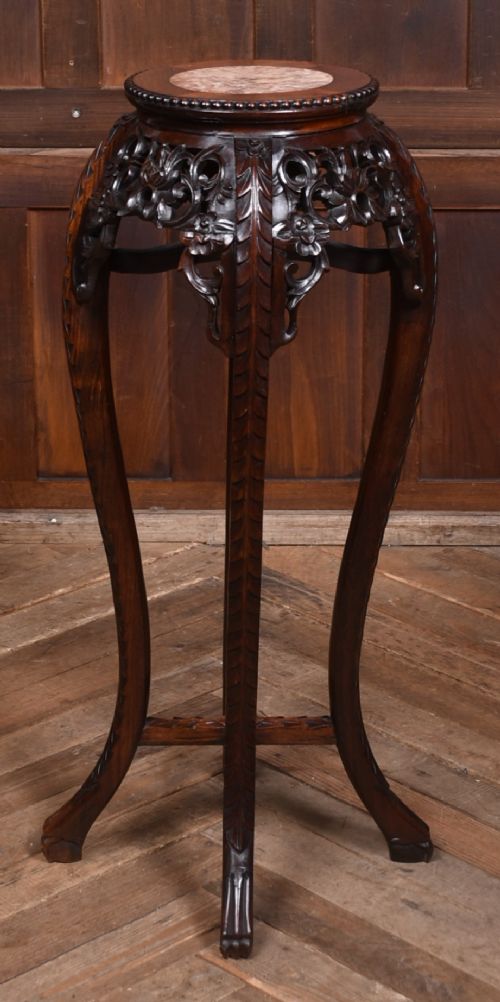


Carved Urn Top Pedestals
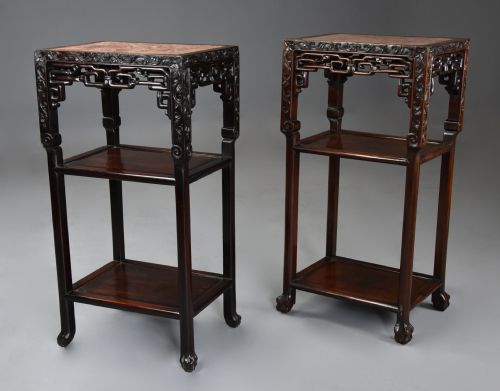
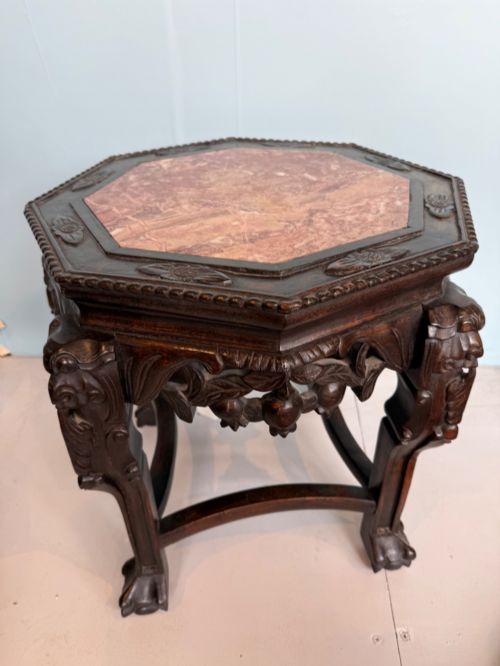
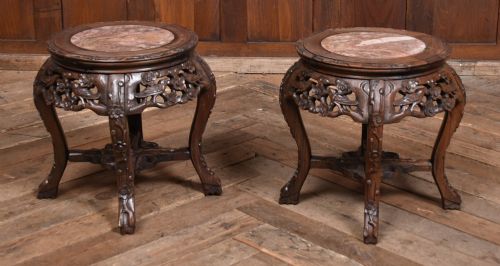
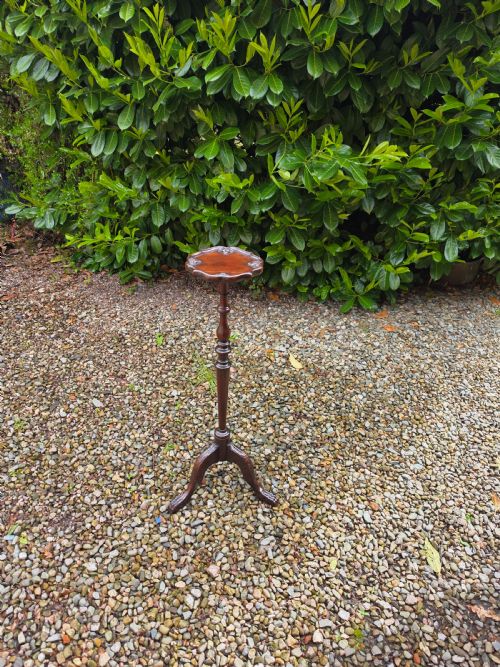
These carved urn top pedestals provide elevated display surfaces for plants, vases, and lamps, combining architectural form with intricate decorative carving.
Carved Urn Top Pedestals
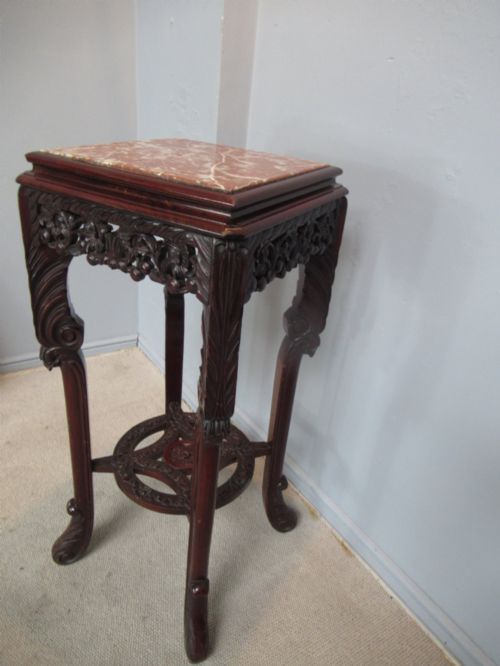
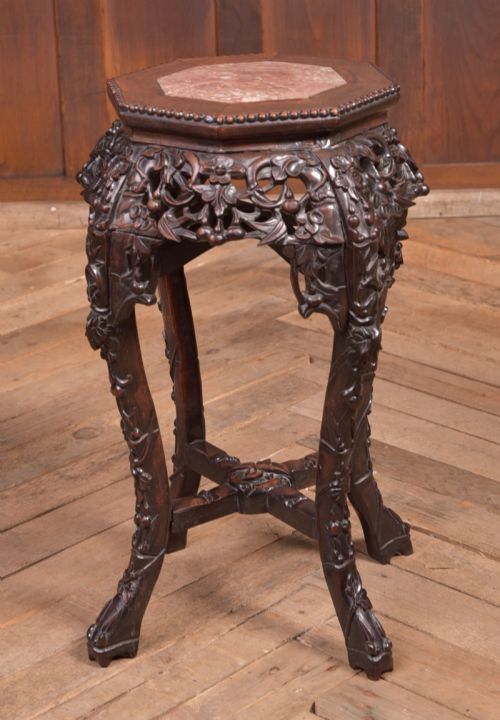
Carved urn top pedestals serve primarily as plant stands, jardiniere stands, and torcheres to elevate decorative objects within a room. The selections on this page draw heavily from nineteenth-century Chinese export workshops, alongside Victorian and Edwardian English examples.
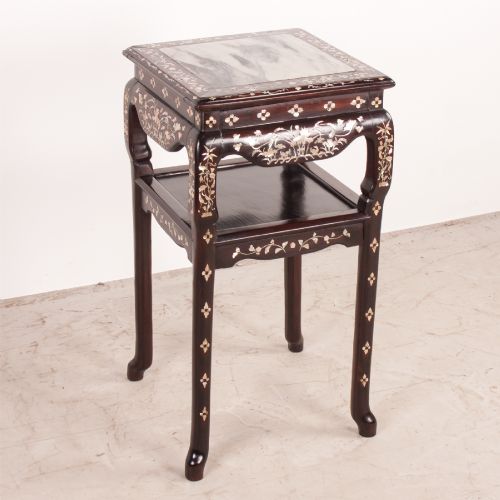
Most pieces encountered here take the form of freestanding plant stands or vase stands featuring inset marble tops. The physical footprint ranges from compact square and rectangular tables to taller columnar supports designed for display in reception rooms and parlours.
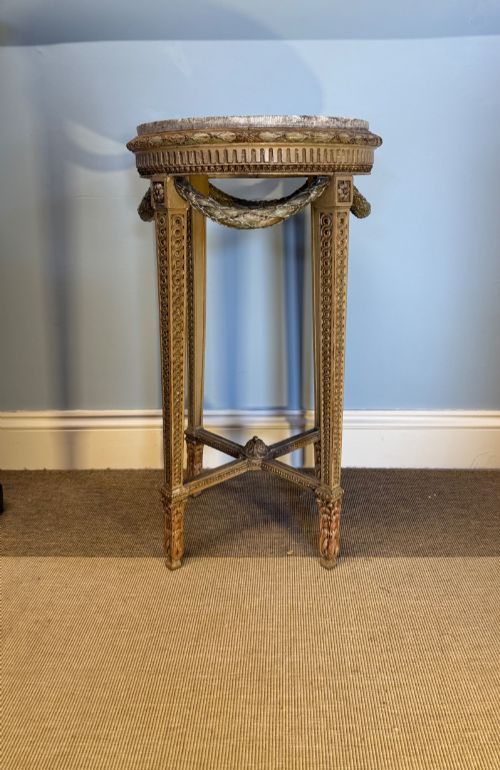
Origins span diverse cultural traditions, encompassing Qing Dynasty Chinese hardwoods, Anglo-Indian rosewood, and French or English walnut and mahogany. This international variety gives buyers a choice between heavily carved exotic timbers and restrained European period designs.
Assessing Craftsmanship and Quality
Quality rests significantly on the depth and crispness of the hand-carving across the frame and legs. Superior examples display undercut floral or organic motifs with sharp definition, whereas lesser pieces show softer, shallower moulding.
The selection and fit of the inset marble top distinguish finer works from standard production. A tight, flush fit within the wooden rebate and an attractive natural stone grain indicate higher standards of manufacturing.
Several stands feature subtle mother-of-pearl inlay designed to catch the flickering glow of an oil lamp by night.
The Carved Urn Top Pedestals Glossary
- Jardiniere stand
- A tall piece of furniture designed specifically to hold an ornamental flower pot or planter. These stands often feature water-resistant tops such as marble to protect the wood beneath.
- Torchere
- A slender standalone pedestal or candle-stand originating in the seventeenth century for lighting purposes. By the nineteenth century, these forms frequently served to display vases or sculptural plants.
- Padouk
- A heavy, durable tropical hardwood noted for its reddish-brown colour and stability. It was widely utilised by nineteenth-century cabinetmakers for intricate carved furniture.
- Qing Dynasty
- The last imperial dynasty of China, spanning from sixteen forty-four to nineteen twelve. Pieces from this era often display traditional flora and fauna motifs executed in dense local hardwoods.
Carved Urn Top Pedestals: Frequently Asked Questions
What were carved urn top pedestals used for?
These pieces served as functional display furniture in nineteenth-century drawing rooms and parlours. Households placed heavy ceramic planters, bronze urns, and oil lamps upon them to elevate decorative items above floor level.
Over time, their role expanded to include holding tea sets, books, and smaller table lamps. They acted as versatile mobile surfaces that could be repositioned easily within domestic interiors.
How do I distinguish Chinese export stands from English ones?
Chinese export stands typically utilise dense exotic timbers like padouk or rosewood combined with inset marble tops and heavily undercut floral carving. They reflect traditional Qing Dynasty design motifs.
English variants from the Victorian and Edwardian eras more commonly employ native or European woods such as mahogany, walnut, or ebonised timber. Their stylistic vocabulary draws upon Gothic, classical, or regional revival patterns rather than East Asian iconography.
How do I care for a marble top stand?
Clean the stone surface regularly with a soft, damp cloth and dry it immediately to prevent water spotting. Avoid acidic household cleaners that can etch or dull the polished marble finish.
Treat the wooden base using appropriate furniture wax applied sparingly with a soft brush. Keep the stand away from direct heat sources and drastic humidity changes to protect the timber joints and prevent the marble from shifting.
Can these stands support heavy plants?
Most nineteenth-century stands were engineered specifically to bear the substantial weight of large ceramic planters filled with wet soil. The combination of dense hardwoods and inset stone provides a sturdy load-bearing platform.
Buyers should nevertheless inspect the leg joints and lower stretchers for stability before placing exceptionally heavy items on slender torchere forms. Distributing weight evenly across the centre of the marble top ensures the long-term structural integrity of the piece.