
Carved Upholstered Stool
A carved upholstered stool brings tactile warmth and period character to any room, offering versatile seating grounded in centuries of craftsmanship.
Carved Upholstered Stool
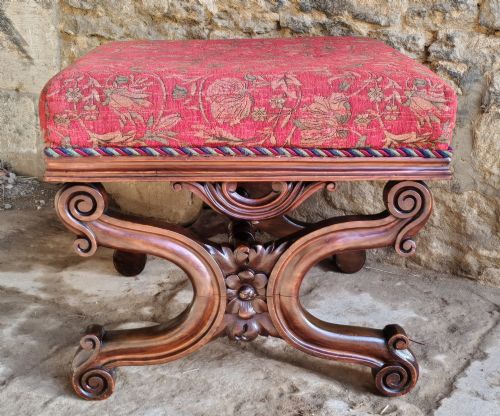
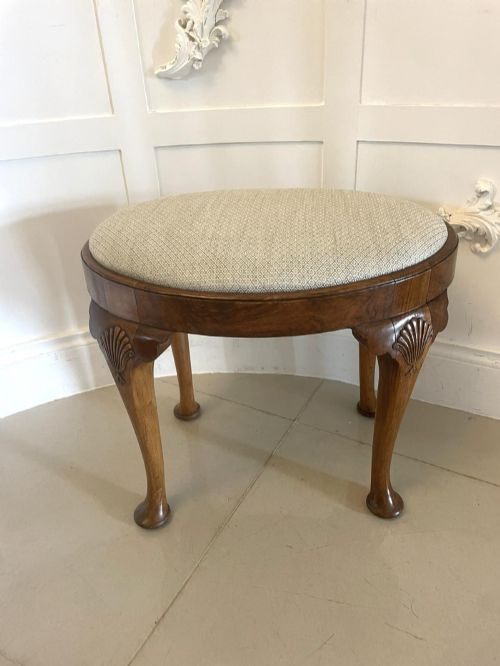
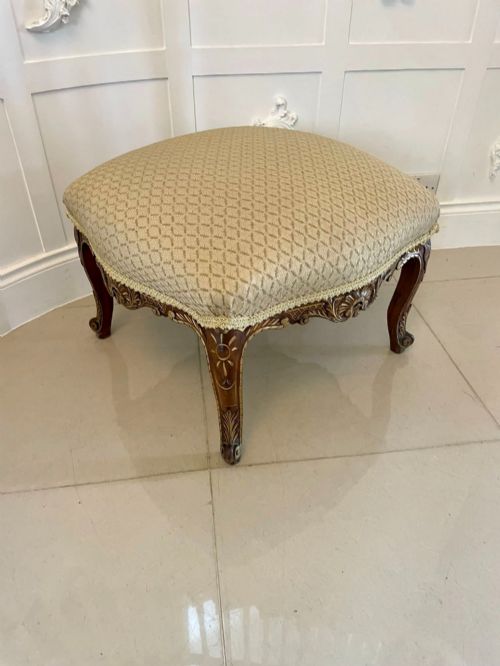
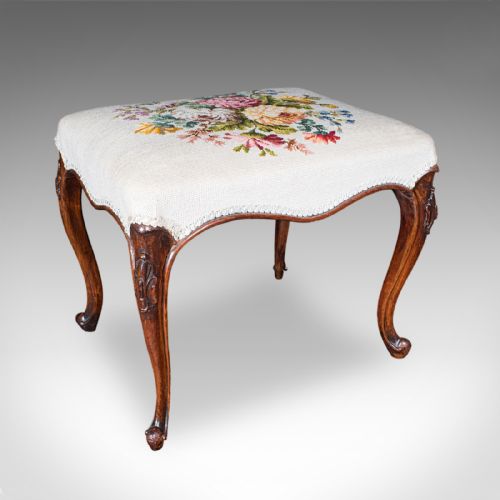
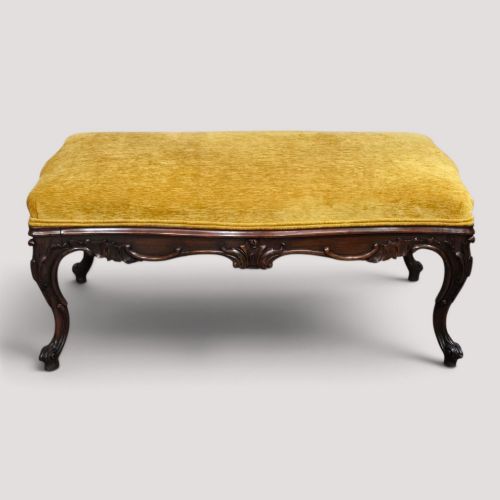
A carved upholstered stool is a low, movable seat combining a carved wooden frame with a padded, fabric-covered top. You will most frequently encounter Victorian examples alongside pieces spanning the Regency and early twentieth-century periods.
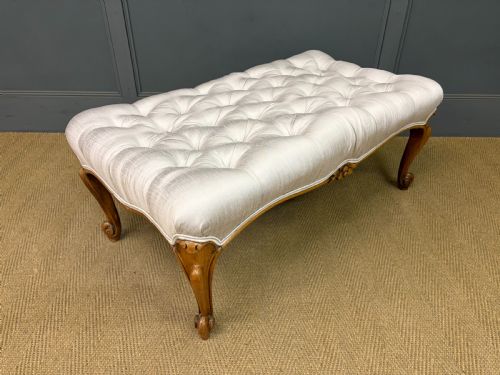
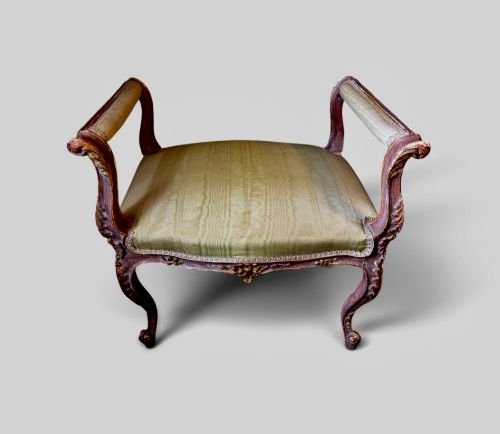
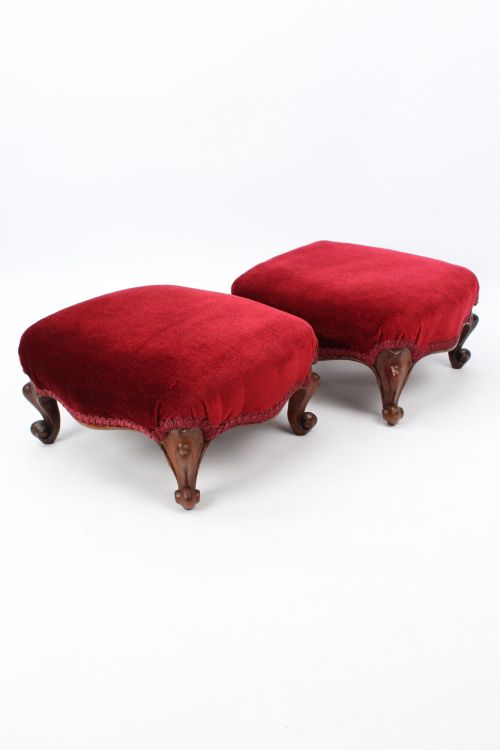
The selection ranges from compact footstools and dressing table seats to larger window seats and piano stools. These diverse forms reflect varied domestic uses across nineteenth-century and revival interiors.
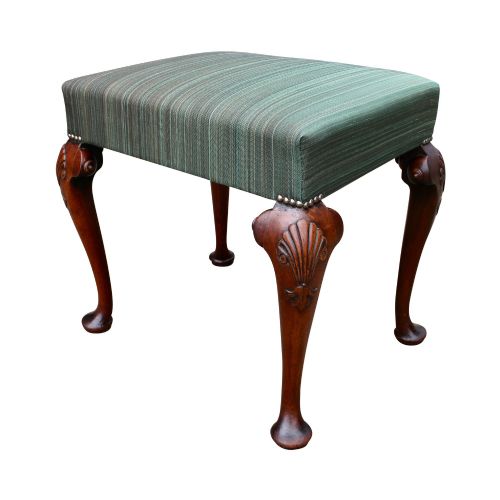
Frames draw upon historical design languages including Queen Anne, Chippendale, and Rococo styles, executed in woods such as walnut, mahogany, and rosewood.
How they were made
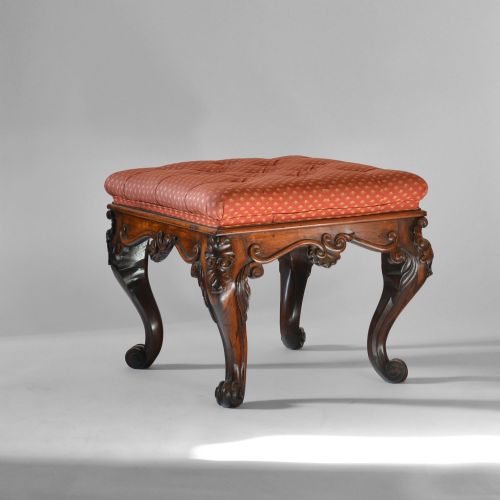
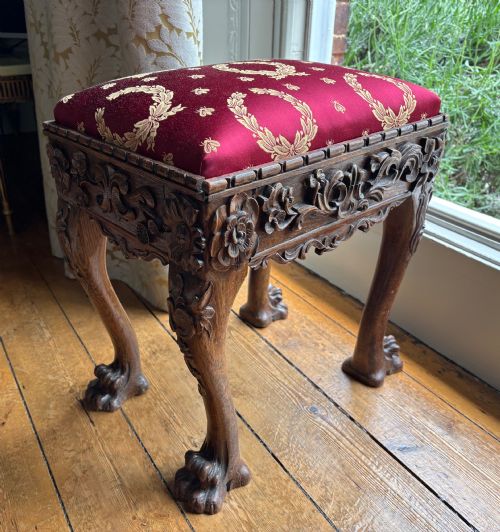
Cabinetmakers shaped dense hardwoods such as walnut, mahogany, rosewood, and oak into robust frames, often embellishing the timber with deep relief carving, cabriole legs, or twist turning. Giltwood and painted finishes also appear, applied to both beech and pine frames for grander decorative schemes.
Upholstery techniques relied on traditional textile coverings including velvet, silk, needlepoint, tapestry, and buttoned hide. These were secured over supportive padding to create resilient, comfortable seats designed for daily drawing room or bedroom use.
The inventory spans functional piano stools and dressing seats to elaborate Scottish Baronial and French-influenced seating forms.
What varies in quality
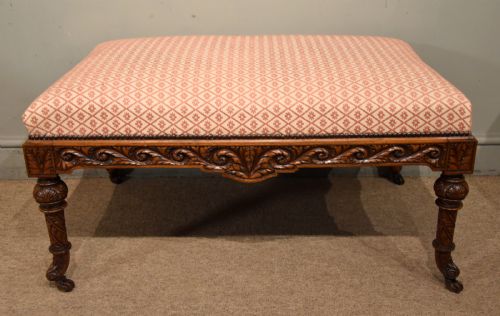
The standard of carving defines the distinction between standard production and exceptional workmanship, with crisp, deeply undercut foliage and balanced proportions elevating a piece. Timber selection and grain figuring further separate simpler utility seating from ambitious parlour and dressing room items.
The integrity of the original frame construction and the sympathetic choice of upholstery textiles dictate the enduring character of a piece. Finer examples retain their original structural joinery and period-appropriate coverings that complement the timber.
Miles & Edwards
The Carved Upholstered Stool Glossary
- Cabriole leg
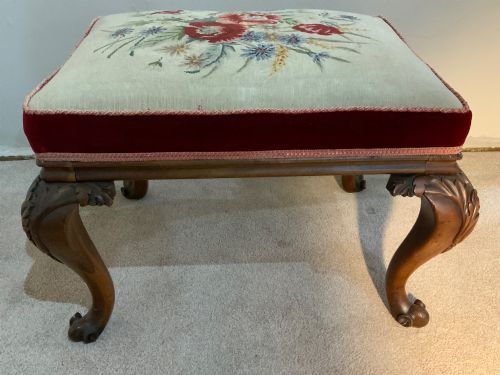
- A furniture leg that curves outward at the knee and tapers inward to an ankle, frequently terminating in a pad or claw and ball foot. This form originates from ancient motifs and became a defining feature of eighteenth-century and revival seating.
- X-frame
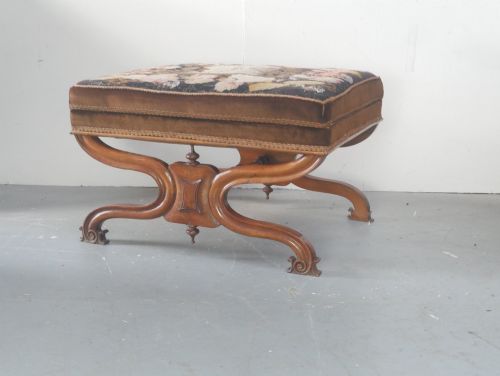
- A structural furniture base formed by intersecting curved or straight wooden members resembling the letter X. It provides inherent strength and underpins formal curule and ceremonial stool designs.
- Needlepoint
- A form of canvas work embroidery executed with wool yarn using various counted stitches. It provides durable and decorative patterning traditionally utilised for historic footstool tops.
- Giltwood
- Timber that has been coated with a thin layer of gold leaf or gilt pigment. This finish was applied to decorative frames intended for formal reception rooms.
- Window seat
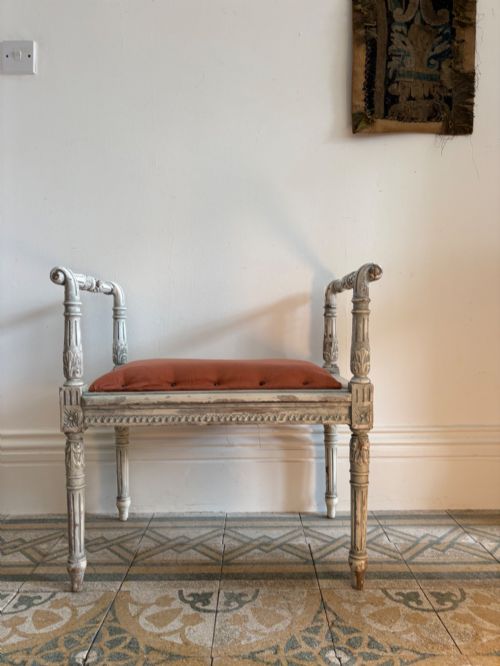
- An elongated stool or bench designed specifically to fit within the architectural recess of a window. These pieces often feature upholstered tops and supportive end arms.
Carved Upholstered Stool: Frequently Asked Questions
Where were these stools used in the home?
These pieces served practical and decorative functions across multiple domestic spaces, including dressing rooms, drawing rooms, and beside pianos. Smaller footstools provided comfort near firesides, while larger window seats occupied architectural recesses.
Their movable nature allowed owners to reposition them easily according to daily social needs and interior arrangements.
How do I distinguish Victorian pieces from earlier styles?
Victorian examples often display heavier timber dimensions, robust cabriole legs, and varied revival ornament drawing on Rococo or Queen Anne vocabulary. Examining the construction methods and wood types helps clarify the manufacturing era.
Many nineteenth-century pieces deliberately reinterpreted earlier historical aesthetics while utilising contemporary workshop practices.
What textiles were used for the upholstery?
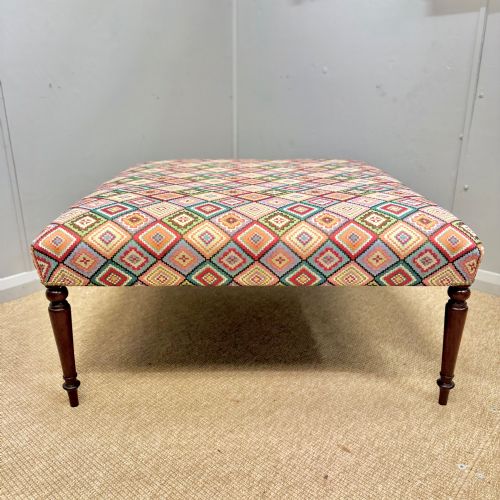
Original coverings encompassed durable woven tapestries, plush velvets, needlepoint canvases, and robust leather hides. Textures varied from simple geometric woven wools to fine silks suited for formal parlour settings.
Upholstery choices frequently reflect the intended social function and period of the furniture piece.
How should I care for a wooden framed stool?
Maintain the timber by keeping the piece away from direct heat sources and sudden humidity changes to protect the structural joints. Regular dusting with a soft cloth preserves the finished surface of woods like walnut and mahogany.
Protect delicate historic textiles by avoiding direct sunlight and handling the upholstered sections with care.