


Carved Two Door Chiffonier
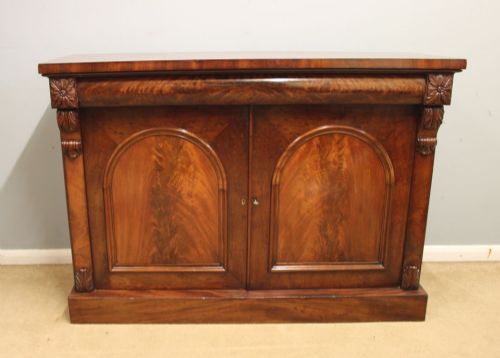
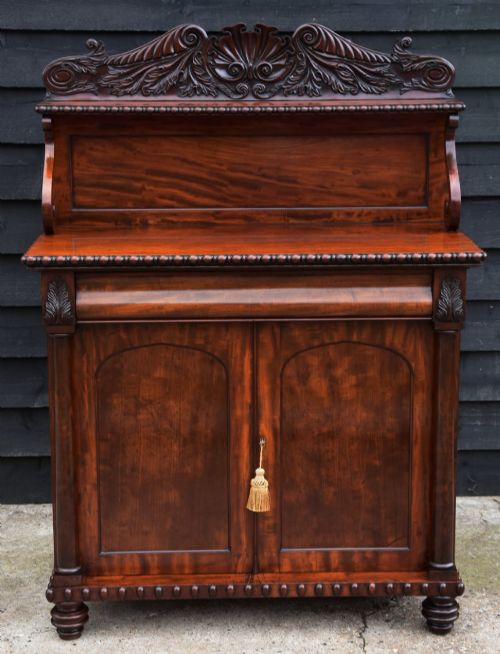
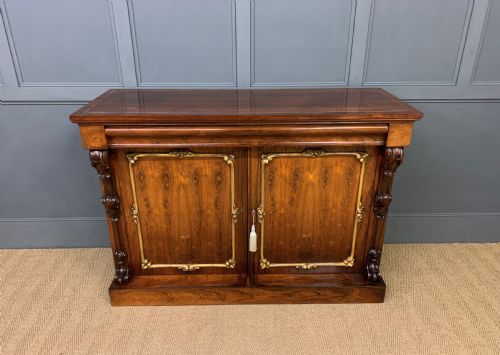
A carved two door chiffonier brings architectural presence to a dining room or hallway, offering concealed storage topped by display space.
Carved Two Door Chiffonier
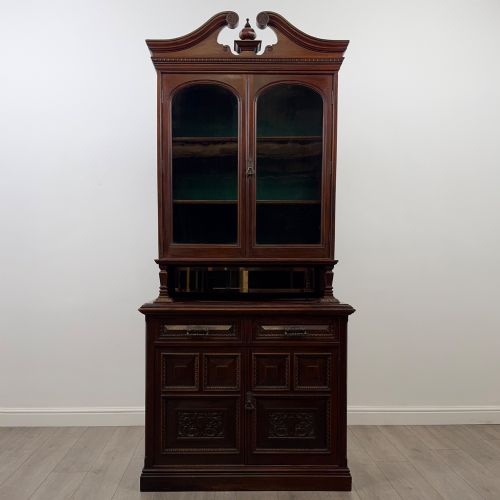
A carved two door chiffonier is a low sideboard or side cabinet developed primarily during the nineteenth century to serve dining and entertaining needs. These pieces combine a double-door enclosed cupboard base with upper surfaces designed for serving or display, often appearing under related headings like side cabinets and sideboards.
The versions most commonly found here date from the Regency, William IV, and Victorian periods, reflecting the shift from formal classical lines to heavier, highly figured timber constructions. Most examples are executed in mahogany, rosewood, or walnut, sometimes incorporating glazed doors or bookcase tiers above the main cupboard body.
How they were made
Cabinetmakers constructed the carcase using solid timbers and carefully selected veneers, frequently employing flame mahogany, pollard oak, or burr walnut across the principal door panels to create striking natural patterns. Structural frames relied on dense hardwoods like mahogany and rosewood, joined with traditional cabinetmaking techniques to support heavy stone or timber tops.
Carved ornamentation, such as barley twist columns or applied scrollwork, was executed by hand directly onto the solid timber members or applied moulding strips. Brass mounts, glass panes, and occasionally palisander or satinwood accents completed the hardware and decorative scheme.
Object forms grouped under this heading range from dedicated sideboards and serving servers to compact side cabinets and glazed bookcases.
What varies in quality
The grade of timber selection marks the primary division between standard utility pieces and high-status examples, particularly in the symmetry and depth of figure found within flame mahogany and burr veneers. Superior workshops utilised heavy, dense stock throughout the internal framing rather than relying on secondary softwood linings.
The crispness and depth of hand-carving distinguish finer cabinet work, where details like barley twists or applied capitals retain sharp profiles rather than softened edges. Proportions also govern value, with narrower, balanced side cabinets commanding attention for their restrained architectural presence.
The Carved Two Door Chiffonier Glossary
- Chiffonier
- A low sideboard or cabinet, typically featuring a two-door enclosed base below a serving surface or shelf tier.
- Flame Mahogany
- A veneer cut from the branch junction of the mahogany tree, producing a distinctive flickering flame pattern across door panels.
- Barley Twist
- A spiral turning carved into furniture legs, columns, or vertical supports, popular during the nineteenth century.
- Regency
- A British design period spanning the early nineteenth century, characterised by classical restraint and refined proportions.
- Palisander
- A dense, dark exotic hardwood resembling rosewood, frequently utilised for high-end nineteenth-century cabinet veneers.
Carved Two Door Chiffonier: Frequently Asked Questions
How do I date a chiffonier?
Dating relies on combining timber choice, hardware style, and structural proportions observed across the piece.
Regency and William IV examples display crisper classical lines and rosewood or early mahogany stocks, whereas later Victorian versions often present heavier mouldings and walnut.
Where should I place a chiffonier?
These low cabinets suit dining rooms, living spaces, or wide hallways where surface display is desired alongside concealed shelving.
Their shallow depth allows them to sit comfortably against walls without dominating the floor area.
What is the difference between a chiffonier and a sideboard?
A chiffonier is generally more compact and frequently incorporates a raised shelf or bookcase superstructure above the main cabinet.
Sideboards are traditionally longer, designed specifically for dining room service without upper tiers.
How do I care for mahogany veneer?
Mahogany requires stable indoor humidity away from direct sunlight and heat sources to prevent veneer lifting or timber splitting.
Routine maintenance involves gentle dusting with a dry cloth and occasional application of traditional wax polish.