
Carved Turned Leg Desk
A carved turned leg desk is a solid wood workspace built with lathe-shaped supports and detailed chisel work, offering surface space and character.
Carved Turned Leg Desk
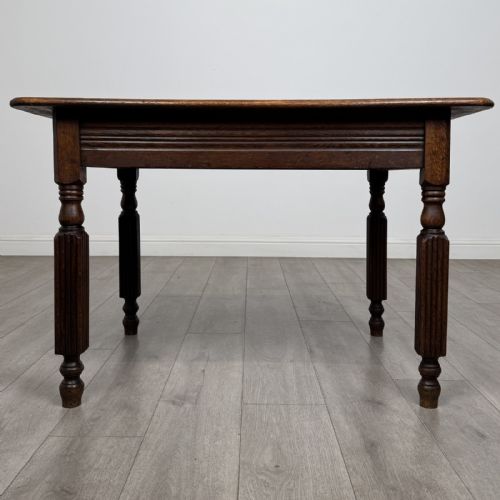
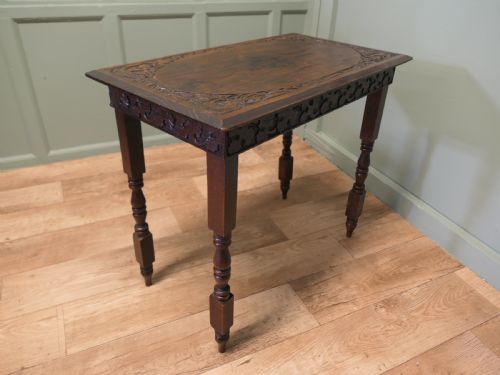
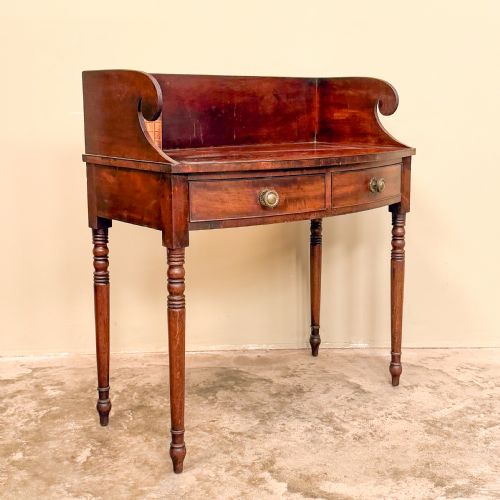
A carved turned leg desk combines a flat writing surface with lathe-shaped wooden supports and hand-chiseled detailing. When you search for this phrase, you find pieces originating from the eighteenth, nineteenth, and early twentieth centuries, spanning periods such as the Georgian, Victorian, and Edwardian eras.
The version most likely to meet you on this page is constructed from mahogany or oak, often incorporating functional drawers or leather-lined writing surfaces. These tables and desks reflect regional styles ranging from French Provincial to English and Scottish cabinet-making traditions.
How they were made
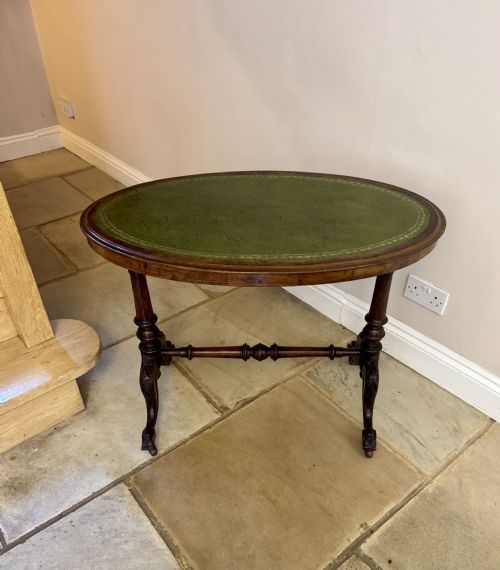
Makers built these pieces using dense hardwoods like mahogany, walnut, and oak, often pairing them with secondary timbers for internal framing. Surfaces frequently incorporated applied inserts of leather, fabric, or velvet to provide a suitable writing plane.
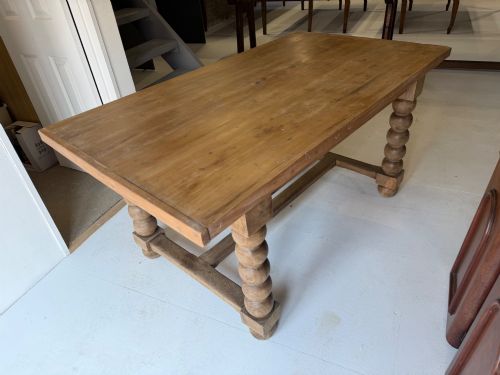
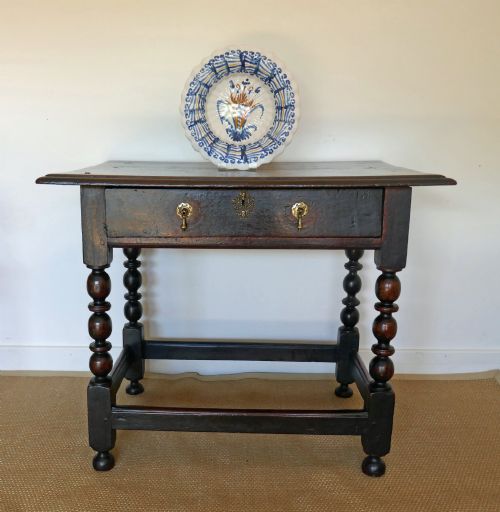
Turned components were shaped on a lathe to create profiles like bobbin or spindle supports, while decorative motifs were carved by hand into the timber. Brass hardware, including handles and drawer pulls, completed the assembly.
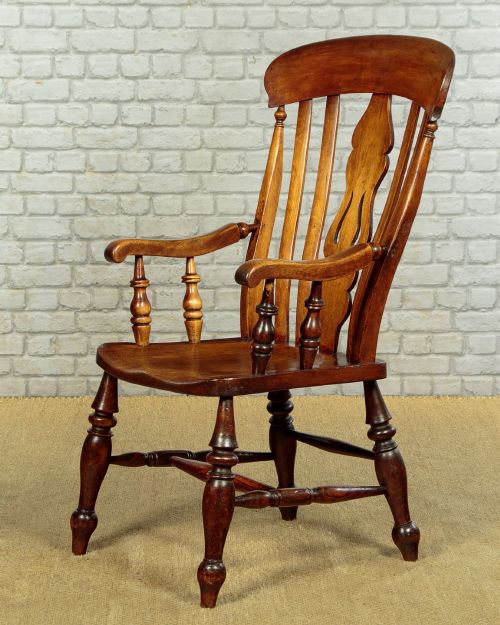
Bobbin-turned legs, shaped to resemble strings of wooden beads, give these desks a wonderfully tactile texture.
What varies in quality
The standard of a carved turned leg desk depends on the crispness of the hand-chiseled ornamentation and the selection of figured timber veneers. Superior examples display precise joinery, balanced proportions, and substantial weight in the primary hardwood.
Lesser pieces show mechanical rather than hand-carved detailing, simpler secondary woods, or uninspired turning work on the legs. The integration of original brass fittings and intact leather inserts also elevates the standing of a desk.
The Carved Turned Leg Desk Glossary
- Turned leg
- A wooden support shaped on a lathe by rotating the timber against cutting tools. This technique produces symmetrical profiles such as spindles, bobbin shapes, and columns.
- Mahogany
- A durable, reddish-brown tropical hardwood favoured for high-end furniture. Its stability and fine grain made it the primary choice for eighteenth and nineteenth-century desk makers.
- Writing table
- A freestanding desk designed with a finished back so it could sit away from a wall. These pieces typically feature one or more drawers beneath the top surface.
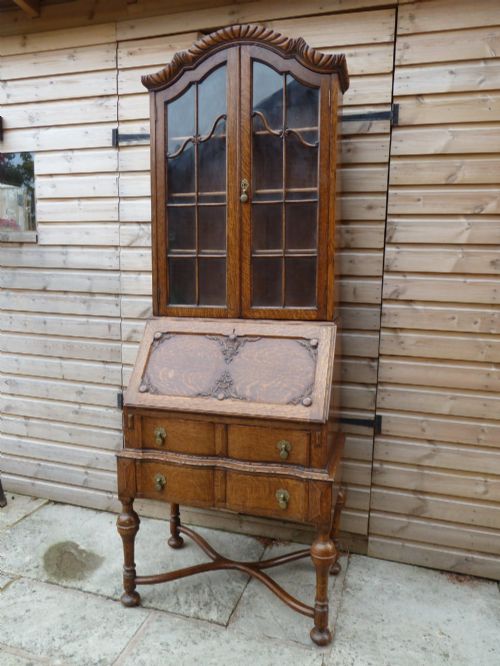
- Bureau bookcase
- A combination storage unit featuring a sloping flap that drops down to form a writing surface, surmounted by shelving. This dual-purpose form maximises utility in domestic interiors.
- Fauteuil
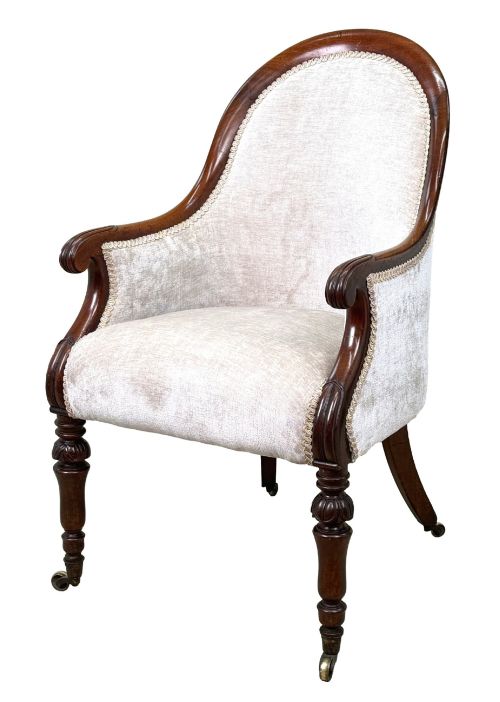
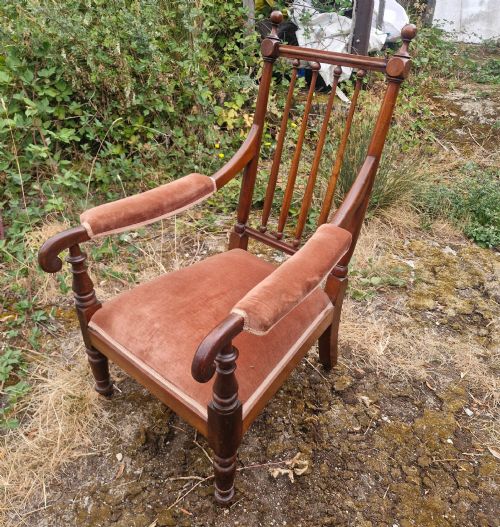
- An open-armed French armchair featuring upholstered sides and an exposed wooden frame. These chairs frequently appear in revival styles referencing earlier European periods.
Carved Turned Leg Desk: Frequently Asked Questions
What is a carved turned leg desk?
A carved turned leg desk is a traditional wooden writing table featuring legs shaped on a lathe alongside manual chisel work. These pieces combine a flat writing surface with structural supports that display decorative profiles.
They appear across various periods, including the Victorian and Edwardian eras, constructed primarily from timbers such as mahogany and oak.
How were these desks used originally?
These desks served as dedicated spaces for correspondence, household administration, and business management in period homes. Placed either against a wall or freestanding in the centre of a room, they provided a stable surface for writing.
Drawers incorporated into the design held writing implements, inkwells, and important documents.
How do I live with an antique desk?
Integrating an antique desk into a modern interior requires careful placement away from direct heat sources and strong sunlight, which can dry out hardwood and fade leather inserts. Regular dusting with a dry cloth helps preserve the finish.
Using coasters and felt pads protects the antique wood and leather top from daily wear.
How can I tell the period of a desk?
Dating a desk involves examining the timber selection, secondary woods, and the style of the turning and carving. Different eras favoured specific woods, such as early oak use giving way to widespread mahogany and walnut adoption later on.
Construction methods, drawer dovetailing, and hardware styles also provide clear indicators of whether a piece dates to the eighteenth, nineteenth, or early twentieth century.