

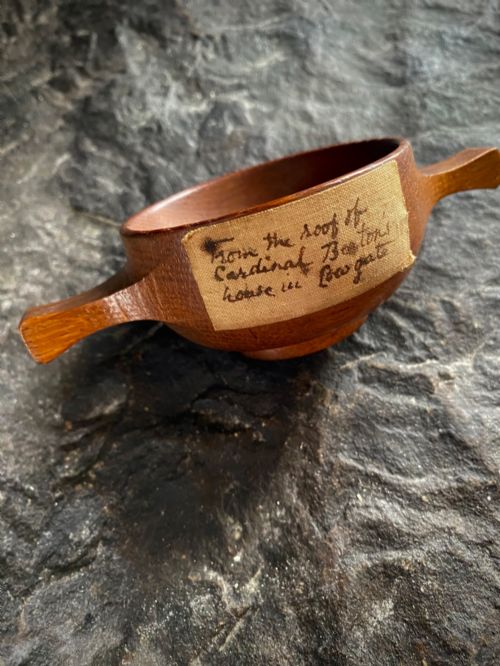
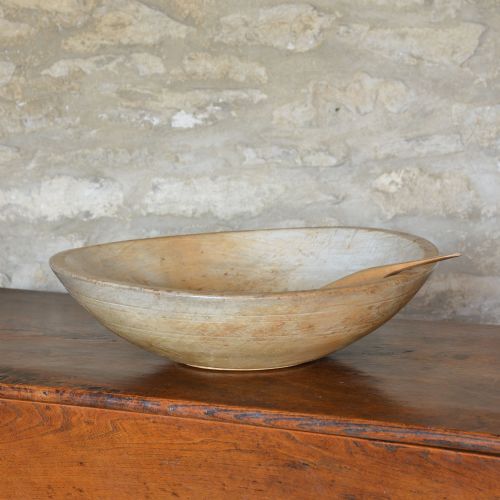
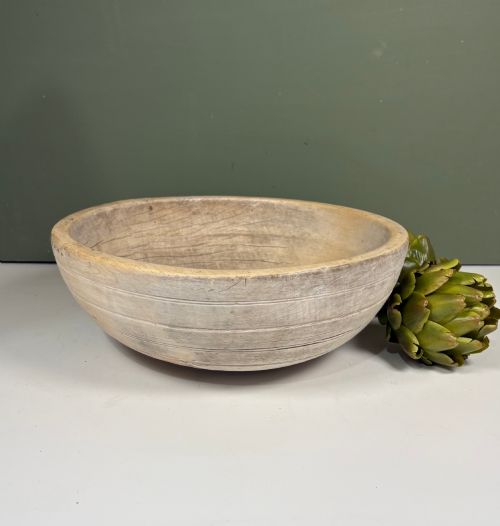
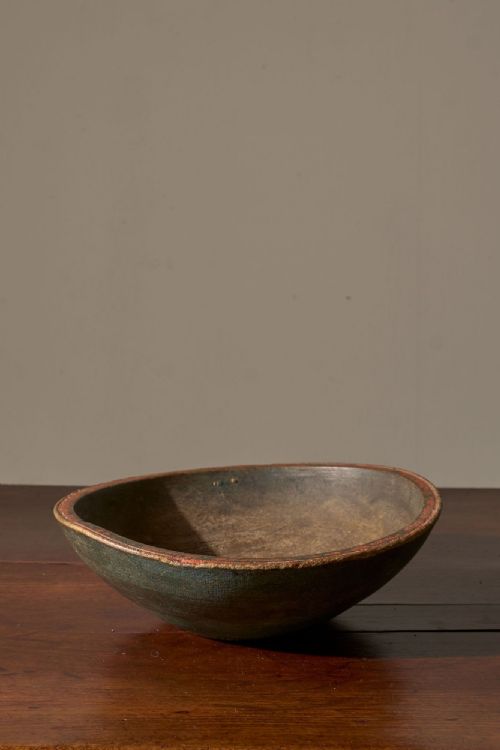
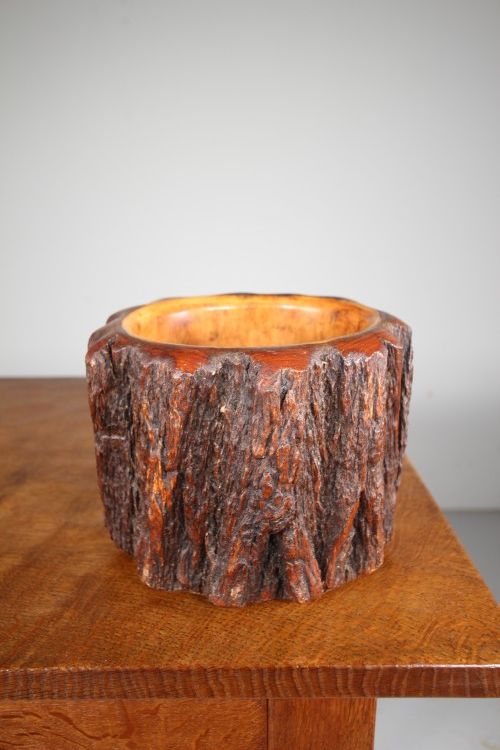


Carved Treen Bowl
These carved treen bowl examples are historic domestic turned and worked vessels shaped by hand from native timbers for daily household service.
Carved Treen Bowl
A carved treen bowl represents the domestic woodenware produced across British, Scandinavian and European kitchens from the seventeenth century through to the early twentieth century. When searching for a carved treen bowl, buyers encounter utilitarian dairy bowls, turned mortars, dug-out vessels and country scoops fashioned for practical rural life.
The material record on this page leans heavily toward domestic dairy bowls and serving vessels shaped in sycamore and pine, alongside harder turned specimens in lignum vitae and coquilla nut. Most examples reflect vernacular traditions such as Welsh country, Swedish country and rustic folk art, prioritizing functional utility over ornamentation.
How they were made
Maker operations utilised local hardwoods like sycamore, fruitwood and birch, turning green wood on pole lathes or gouging out large blocks by hand to form dug-out vessels. The evidence shows metal additions on specific functional pieces such as ladles and mortars, combining turned timber with silver or iron components.
Surface treatments range from plain scrubbed timber showing heavy wear to historic painted finishes in Swedish country styles, occasionally retaining natural bark edges or primitive tool marks left by the maker's gouge.
Carved Treen Bowl Retail Price Guide 2026
Typical asking prices for carved treen bowl among the pieces listed under this phrase on Sellingantiques today, from the lower quarter to the upper quarter. They describe what is for sale here now, not the wider market.
Materials represented across the current selection include sycamore, pine, birch, fruitwood, lignum vitae and coquilla nut alongside historic paint and silver.
What varies in quality
Quality rests in the integrity of the original form and the honesty of the timber's surface wear from decades of kitchen use. Pieces retaining their early tool marks and uncompromised proportions command greater interest among collectors of vernacular treen.
The distinction between ordinary utility items and superior examples lies in the balance of the turning, the choice of dense hardwoods like lignum vitae, and the survival of early painted or scrubbed patinations.
The Carved Treen Bowl Glossary
- Treen
- Small handmade wooden domestic objects and utensils. This broad term covers everything from bowls and spoons to mortars and scoops.
- Sycamore
- A pale hardwood traditionally favored for dairy vessels and kitchen bowls. Its fine grain resists splitting and imparts no taste to foodstuffs.
- Lignum Vitae
- A dense, heavy tropical hardwood used for turned mortars and pestles. It sinks in water and withstands heavy impact without splintering.
- Searce
- A fine strainer or sieve used in domestic food preparation. These historic implements often incorporate turned wooden frames with woven mesh.
Carved Treen Bowl: Frequently Asked Questions
What woods were used for these bowls?
Makers selected local timber based on availability and function, utilising sycamore and fruitwood for dairy bowls alongside dense exotics like lignum vitae for heavy mortars.
Softer woods like pine and birch appear in larger dug-out vessels and platters, reflecting regional woodland resources across Britain and the Continent.
How do I care for antique treen?
Keep wooden vessels away from direct heat sources and dramatic humidity shifts to prevent the timber from splitting or warping.
Feed dry surfaces sparingly with neutral natural waxes or oils if the wood appears parched, avoiding modern liquid polishes entirely.
Are these pieces food safe?
Most historic treen has absorbed decades of dairy fats, liquids or medicinal powders during its working life in domestic kitchens and dairies.
Treating them as decorative display pieces rather than active tableware preserves the historic dry surfaces and accumulated patina.
How do I date a wooden bowl?
Dating relies on tool marks left by the lathe or adze, the choice of timber species, and the style of the rim profile.
Earlier seventeenth and eighteenth-century examples often display irregular hand-dug contours, whereas later nineteenth-century pieces show uniform machine turning.