

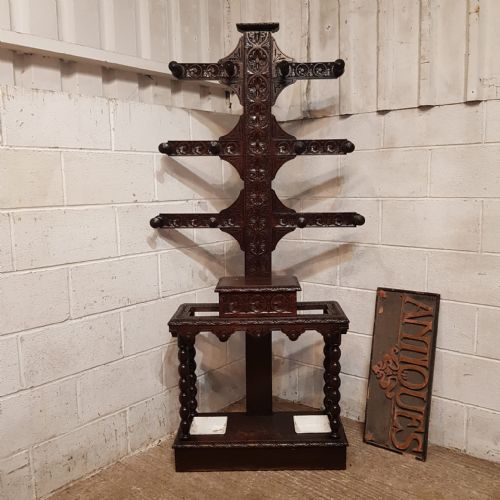
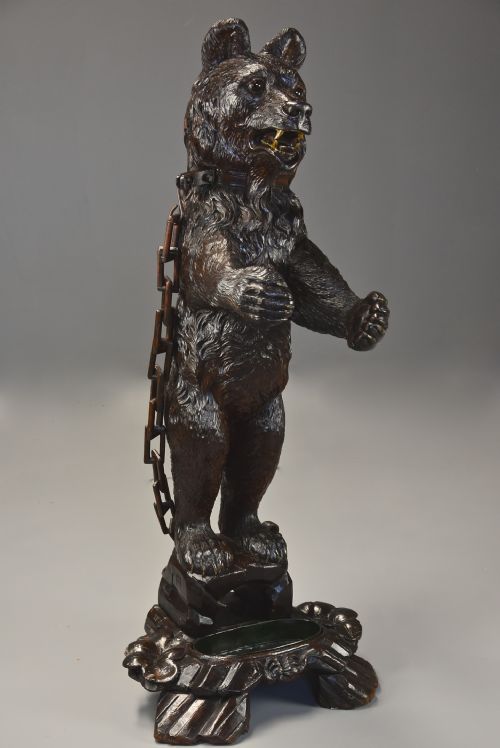
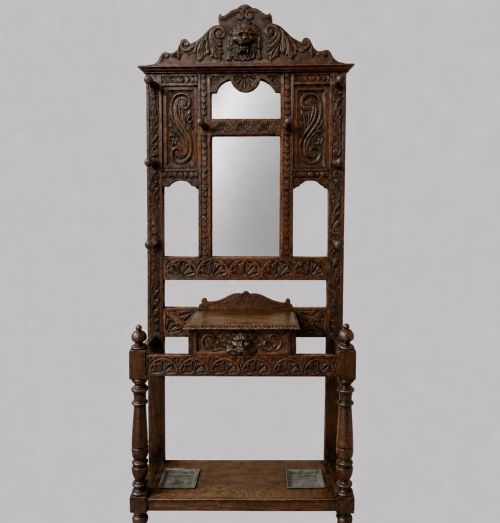
Carved Tree Coat Stand
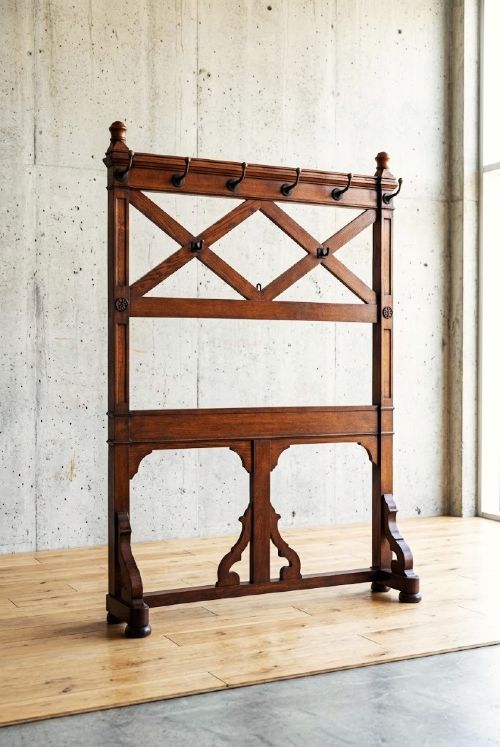
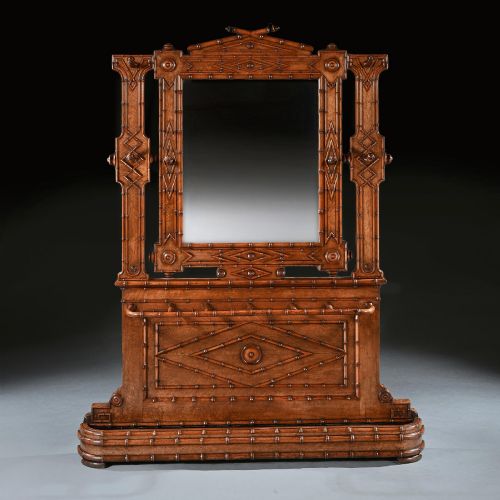
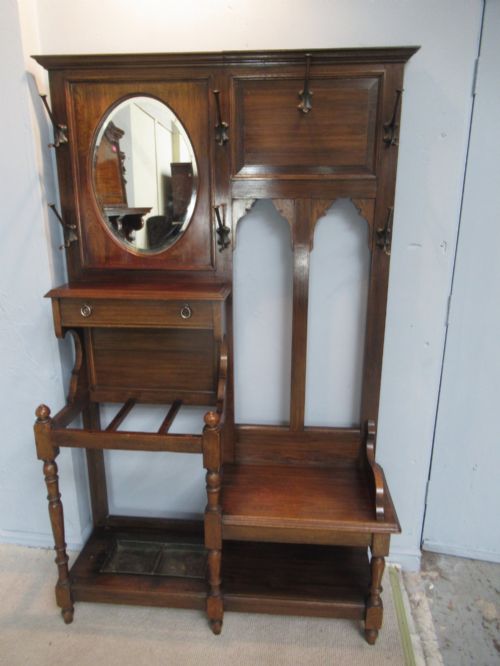
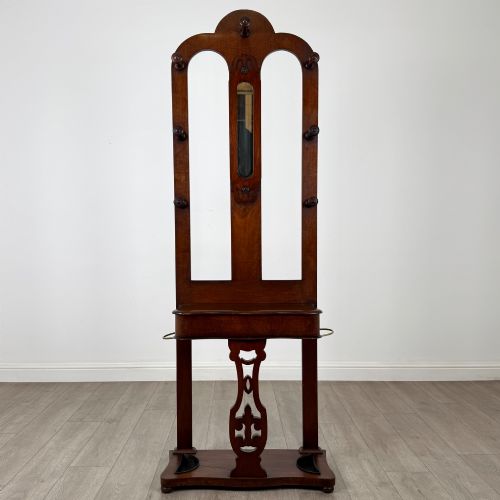
These carved tree coat stand pieces combine functional hallway storage with elaborate organic wood carving from the Victorian and Edwardian eras.
Carved Tree Coat Stand
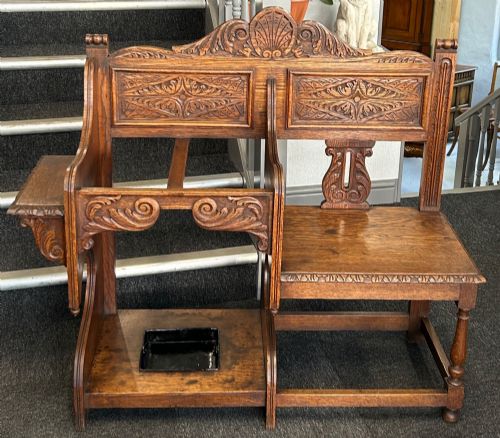
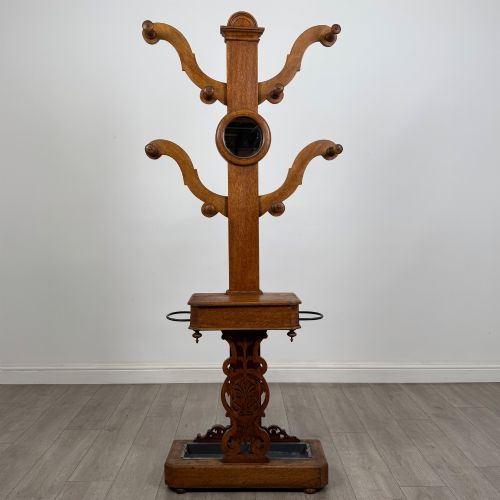
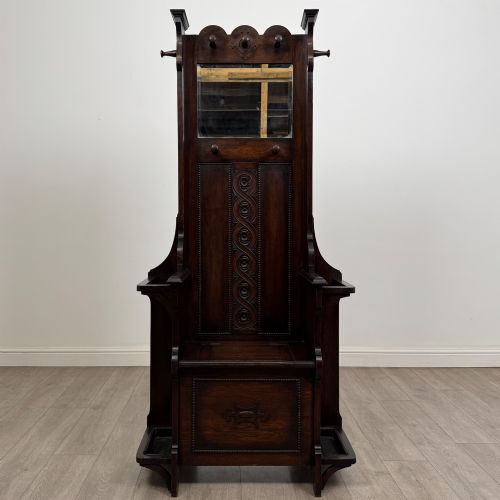
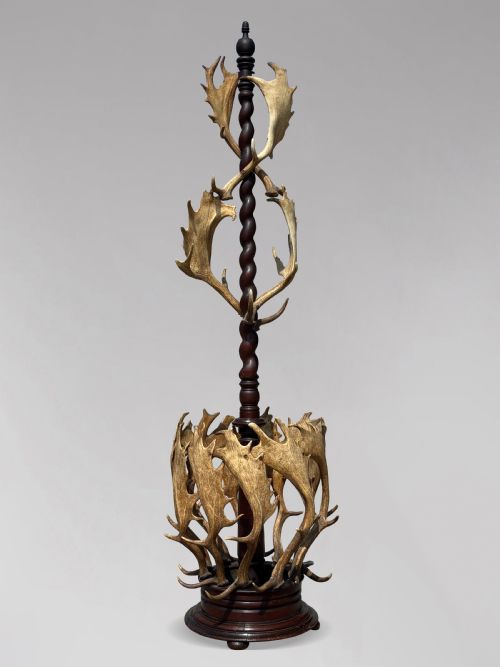
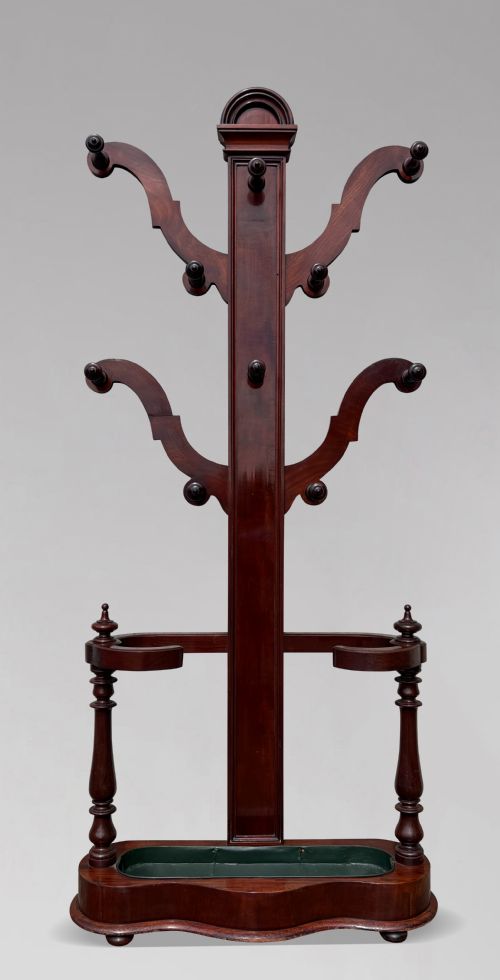
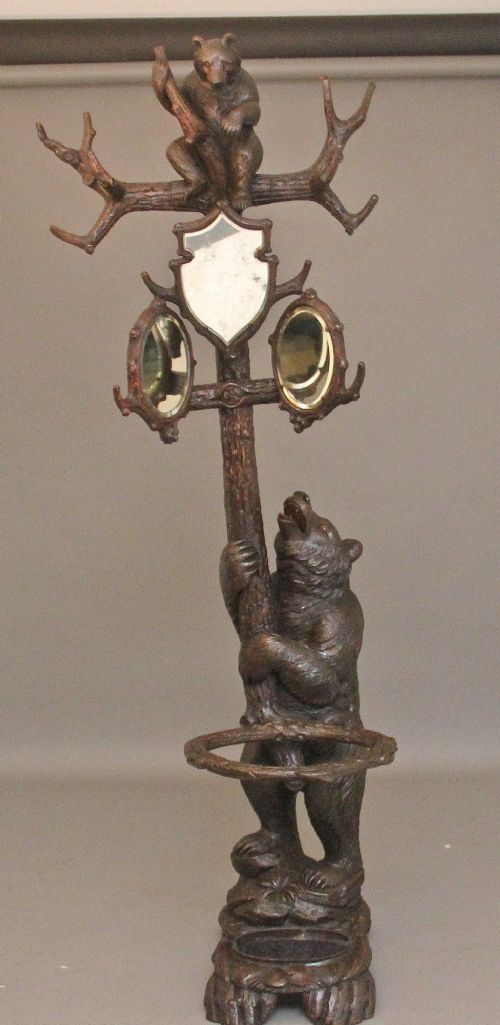
A carved tree coat stand serves as a substantial piece of entrance hall furniture designed to hold hats, coats, and umbrellas. Buyers seeking this specific form encounter grand Black Forest bear trees and rustic carved oak hall stands.
The pieces span the nineteenth century through the early twentieth century, incorporating periods like the Victorian, Edwardian, and Gothic Revival eras. Oak and mahogany dominate the structural forms, alongside specialised Black Forest animal carvings.
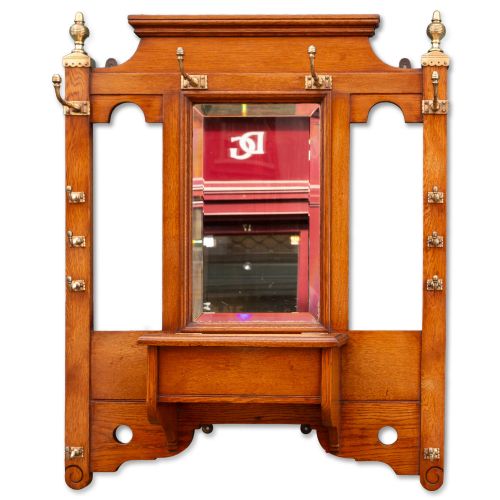
Many examples double as hall seats or integrate brass hooks, marble shelves, and central mirrors. The tree motif appears directly in naturalistic branch formations and through figurative German bear carvings.
Materials and construction
Makers utilised solid timbers including oak, mahogany, walnut, and birdseye maple to build the primary framework of each stand. These dense woods provided the structural integrity required to support heavy coats and umbrellas without tipping.
Carvers employed hand chisels to render naturalistic tree bark, branches, and figurative subjects such as bears, foxes, and Green Man masks. Brass and iron fixtures were integrated alongside marble inserts to handle wet umbrellas and provide durable hanging points.
Periods represented across the pieces span the Victorian era, the Edwardian period, and the Regency style.
Distinctions in quality
Quality rests upon the depth and ambition of the carving rather than simple utilitarian construction. Naturalistic Black Forest pieces with detailed animal subjects and exhibition-grade proportions sit at the upper end of the scale.
Materials dictate distinction, where figured golden oak, rich walnut, and solid mahogany outclass plain secondary timbers. The inclusion of original brass hardware, intact mirror plates, and fitted marble drip pans separates superior examples from simpler hall furniture.
J Parker of Woodstock·William Whiteley
The Carved Tree Coat Stand Glossary
- Black Forest
- A nineteenth-century German style of woodwork originating in the mountainous region, famous for realistic animal carvings including bears holding card trays or umbrella rings.
- Green Man
- A sculptural architectural motif depicting a human face carved from or entwined with leaves and vines, frequently seen on Victorian oak hall stands.
- Japonisme
- A late nineteenth-century artistic style influenced by Japanese art, visible in pieces utilising faux bamboo turnings and exotic veneers.
- Gothic Revival
- An architectural and decorative style drawing on medieval forms, characterised by pointed arches, heavy tracery, and solid carved oak.
- Hall Stand
- A piece of entrance furniture combining coat hooks, a mirror, umbrella storage, and occasionally a bench seat or glove drawer.
Carved Tree Coat Stand: Frequently Asked Questions
What is a carved tree coat stand?
A carved tree coat stand is a substantial piece of hallway furniture designed to hold garments and umbrellas, featuring naturalistic branch forms or animal carvings.
These pieces emerged strongly during the nineteenth century in oak, walnut, and mahogany, often incorporating mirrors and marble shelves.
How were these stands used originally?
Victorian and Edwardian households placed these stands in entrance halls to receive visitors and store outdoor wear.
Hats hung from the upper branches, coats secured to sturdy wooden or brass hooks, and wet umbrellas rested in fitted metal or marble wells at the base.
How do I live with a hall stand?
Living with a carved hall stand requires adequate floor space and a suitable high-ceilinged hallway to accommodate its vertical proportions.
Regular dusting of the deep carvings and occasional wax polishing preserve the natural finish of the antique timber.
How do I tell periods apart?
Early examples from the mid-nineteenth century often display heavy Gothic Revival motifs or intricate Black Forest animal carvings.
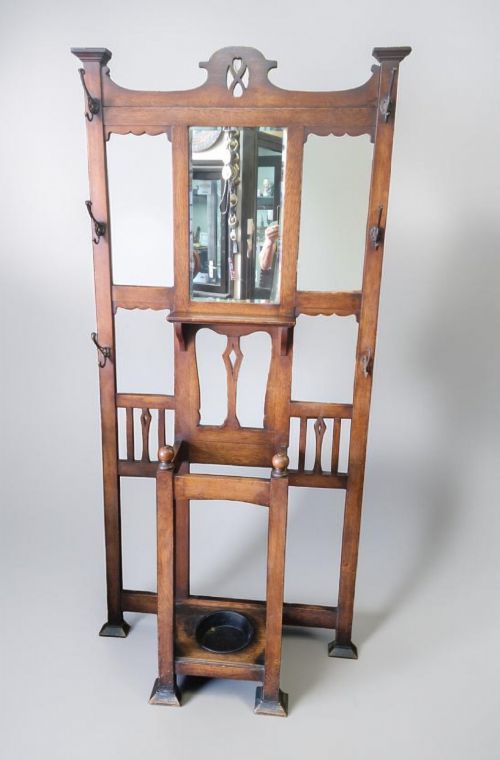
Later pieces from the Edwardian period tend towards lighter oak construction, simpler lines, and softer Arts and Crafts or Art Nouveau influences.