


Antique Umbrella Stand Bear
An antique umbrella stand bear brings character and practical storage to a hallway, carved in timber to hold canes and sticks.
Antique Umbrella Stand Bear
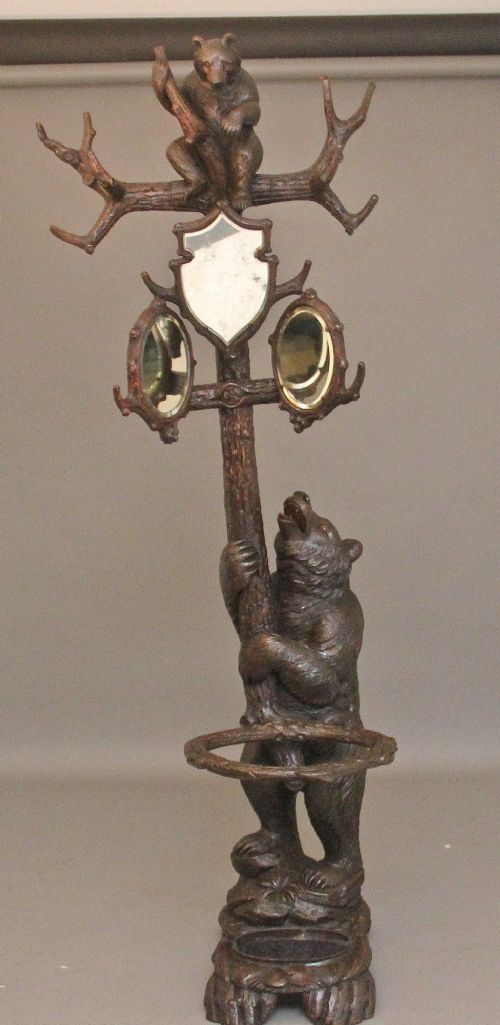
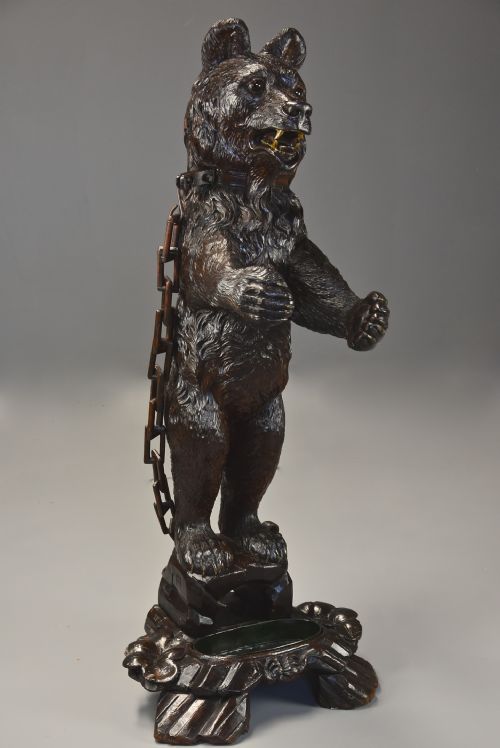
An antique umbrella stand bear takes the form of a carved wooden animal holding a trough or tray, designed to stand in a hallway for walking sticks and wet brollies. You meet these primarily in the Black Forest style, spanning the nineteenth and early twentieth centuries from eighteen sixty through to nineteen twenty.
The forms on offer range from single stick stands to large hall stands incorporating mirror glass and integrated seating or multiple tiers. Oak tree motifs and naturalistic forest elements frequently accompany the carved bears, combining hall furniture with animal sculpture.
Most examples date to the nineteenth century, executed in carved hardwoods, lindenwood, and walnut with varying degrees of scale and detail. Buyers encounter everything from compact umbrella holders to monumental exhibition quality hall stands.
How they were made
Carvers shaped these pieces from timber such as lindenwood, walnut, and carved hardwood, utilising hand chisels and gouges to render the fur and anatomy of the bears. Lindenwood provided a fine grain suitable for intricate carving, while heavier hardwoods supported the weight of wet umbrellas and walking sticks.
Makers integrated functional metal drip pans beneath the wooden framework to catch rainwater from sticks and brollies, protecting the wood from rot. Mirror glass panels also appear in the taller hall stands, held within carved wooden frames behind the bear figures.
Every bear stand holds your wet brollies with a stern wooden grimace that somehow improves your Monday morning.
What varies in quality
The distinction between standard items and exhibition quality pieces lies in the depth and naturalism of the carving. Master carvers rendered muscle structure, facial expression, and fur texture with precision, whereas simpler workshops produced more rigid, schematic animal forms.
Scale and complexity also divide the range, moving from straightforward stick stands to large multi-functional hall stands featuring oak tree designs, mirrors, and substantial proportions. The choice of timber affects the finish, with finer lindenwood and rich walnut displaying crisper detail than coarser woods.
The Antique Umbrella Stand Bear Glossary
- Black Forest
- A regional style of woodwork originating from the mountainous region of central Europe, renowned for carved animal figures and foliage. Pieces in this category typically feature bears, deer, and naturalistic forest motifs.
- Hall Stand
- A piece of entrance hall furniture combining multiple domestic functions such as umbrella storage, coat hooks, and mirror glass. These items often incorporate the carved bear motif as a structural support or sculptural element.
- Lindenwood
- A pale, fine-grained timber favoured by woodcarvers for its uniform texture and lack of pronounced grain pattern. It allows crisp detail work without splintering.
- Drip Pan
- A metal tray positioned at the base of a stick or umbrella stand to catch moisture from wet items. This practical component prevents water damage to the surrounding wooden floor or base.
Antique Umbrella Stand Bear: Frequently Asked Questions
What is a Black Forest bear stand?
A Black Forest bear stand is a hall piece carved from wood to resemble a bear, designed to hold walking sticks and umbrellas.
These items originated in European woodland regions and combine animal sculpture with functional entryway furniture.
How were these stands used?
Households placed them in entrance halls and vestibules to store walking canes, umbrellas, and parasols after outdoor excursions.
The integrated metal pans caught dripping rainwater to keep hallway floors dry.
What woods were used for carving?
Carvers utilised lindenwood, walnut, and various carved hardwoods to construct these animal figures and hall stands.
Lindenwood was particularly popular for its soft texture and ease of detailed hand carving.
How do I date these pieces?
Dating relies on stylistic markers, construction methods, and the presence of nineteenth or early twentieth century materials like mirror glass.
Exhibition pieces often date to the mid nineteenth century, while simpler forms extend into the twentieth.