


Carved Timber End Table
These carved timber end table examples bring heavy oak, rosewood and elm into a room, offering practical surface space with distinct regional carving.
Carved Timber End Table
A carved timber end table takes many forms across different periods, appearing as side tables, occasional tables, nests of tables, and chopping blocks. Buyers seeking a carved timber end table will most frequently encounter Edwardian and nineteenth-century examples alongside earlier eighteenth-century French provincial pieces.
The materials span oak, hardwood, rosewood, elm, and huali hardwood, often shaped into distinct regional styles. These range from French provincial and Edwardian work to Anglo-Indian and Chinese Qing Dynasty production.
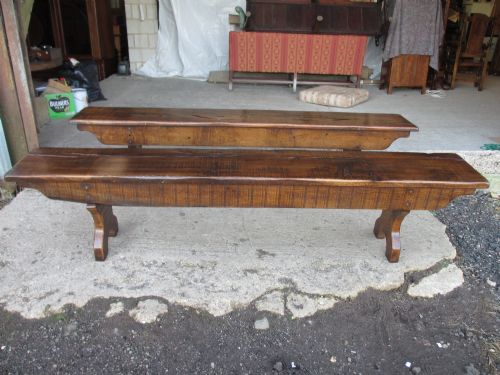
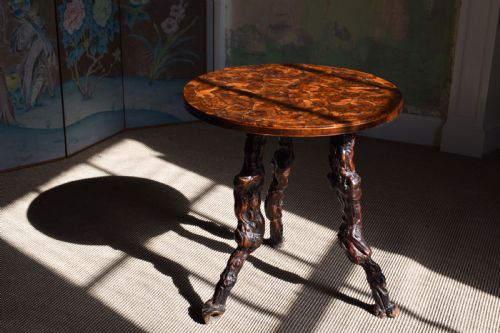
Workmanship crosses several utilitarian and decorative functions, taking shape as small occasional furniture or heavier structural blocks. Pieces include sculptural grapevine wood, nested sets, and heavy benches with shaped trestle ends.
How they were made
Makers utilised solid timbers such as oak, rosewood, elm, and huali hardwood, shaping the material with hand tools to create structural frames and solid tops. Construction often relied on traditional joinery techniques suited to heavy daily use.
Carving was applied directly to the timber surface, producing decorative motifs, sculptural forms, and shaped trestle ends. Brass fittings occasionally appear on specific pieces to complement the primary wood.
Styles represented include Edwardian, French provincial, Qing Dynasty, and arts and crafts traditions across various table forms.
What varies in quality
Quality rests in the selection of the timber and the depth and precision of the carving across the surface. Dense hardwoods like rosewood and huali hold crisper detail than softer or more rustic woods.
The integrity of the construction and the harmony of the proportions separate standard utility items from finer decorative examples. Finer pieces display careful attention to joint work and the balance of sculptural elements.
The Carved Timber End Table Glossary
- Huali Hardwood
- A dense Asian timber prized for its rich grain and durability, frequently utilised in Qing Dynasty furniture. It takes fine detail during carving.
- Occasional Table
- A small, movable table designed for specific, intermittent use rather than central placement in a room. These pieces often feature two tiers or decorative carving.
- Trestle End
- A structural support system where upright members are joined to a horizontal base or foot. This form provides stable load-bearing capacity for heavy benches and tables.
- French Provincial
- A rural style of domestic furniture originating in France, known for unpretentious utility and local timber construction. Elm and oak are typical materials in this tradition.
- Nest of Tables
- A set of graduated tables designed to fit neatly beneath one another when not in use. They maximise surface area while occupying minimal floor space.
Carved Timber End Table: Frequently Asked Questions
What periods do these tables come from?
The selection spans several centuries, ranging from eighteenth-century French provincial pieces to nineteenth-century and Edwardian examples. Twentieth-century works from around nineteen-thirty also appear.
Each period brings distinct stylistic traits, from the heavy oak trestles of the Edwardian era to earlier continental and Asian regional designs.
What woods were used for these tables?
Makers utilised a variety of timbers including oak, elm, rosewood, and huali hardwood, alongside specialised materials like grapevine wood. Each timber offers a different density and grain.
Hardwoods were chosen for their durability and capacity to hold detailed hand carving across the surface.
How can I tell different regional styles apart?
Regional styles reveal themselves through the carving motifs and the choice of primary timber. Chinese Qing Dynasty pieces utilise huali hardwood with specific decorative traditions, while French provincial items rely on elm or oak.
English Edwardian work frequently displays heavy oak construction with shaped trestle ends rather than continental decorative vocabulary.
Were these tables meant for daily use?
Many of these pieces served practical functions in domestic spaces, acting as kitchen chopping blocks, sturdy benches, or occasional tables for holding objects. Their solid timber construction suited them to active environments.
Over time, utilitarian items like butcher blocks transitioned into decorative focal points while retaining their original heavy build.