

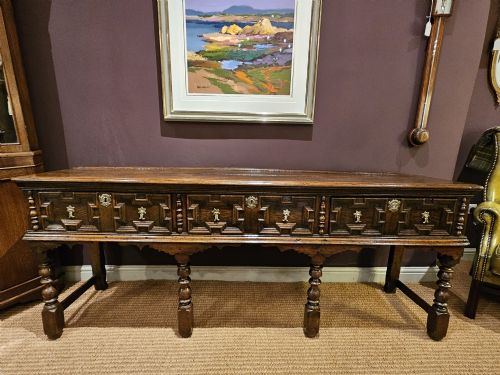
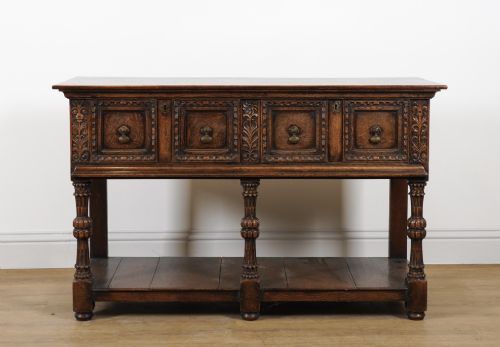
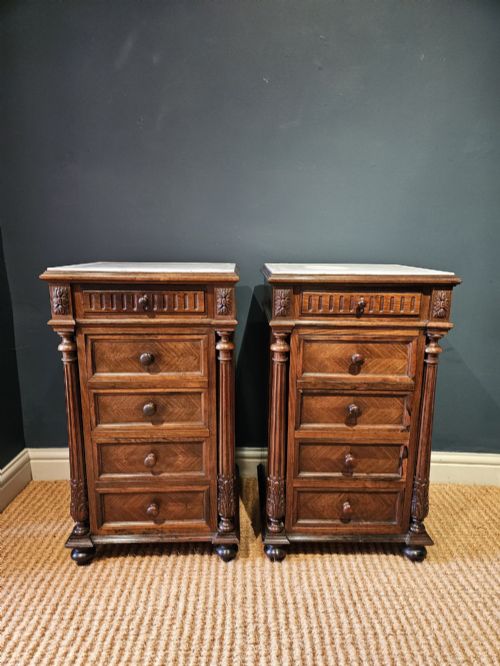
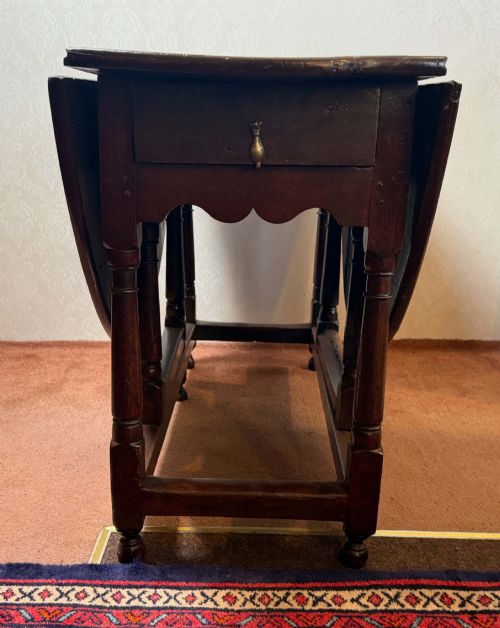
Carved Table with Drawer
A carved table with drawer brings centuries of craftsmanship into a room, offering practical storage alongside distinctive period detail.
Carved Table with Drawer
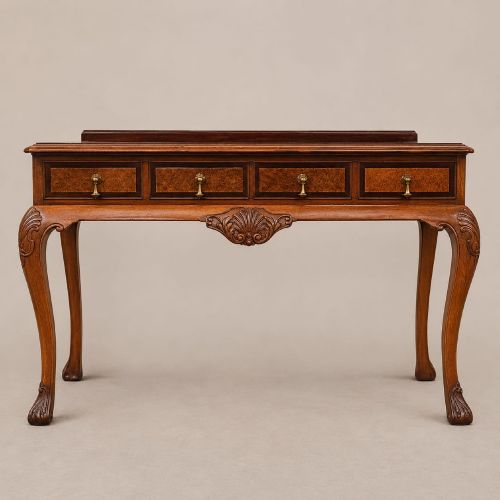
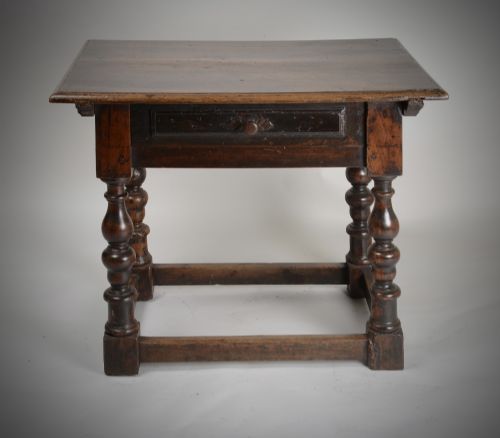
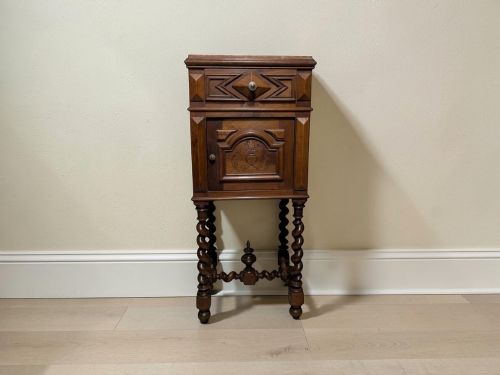
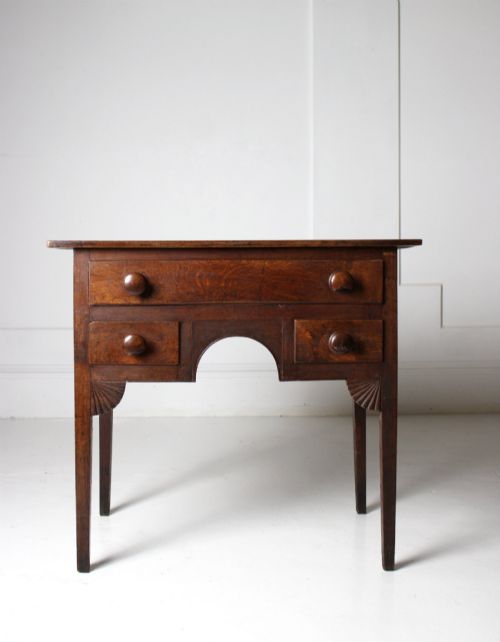
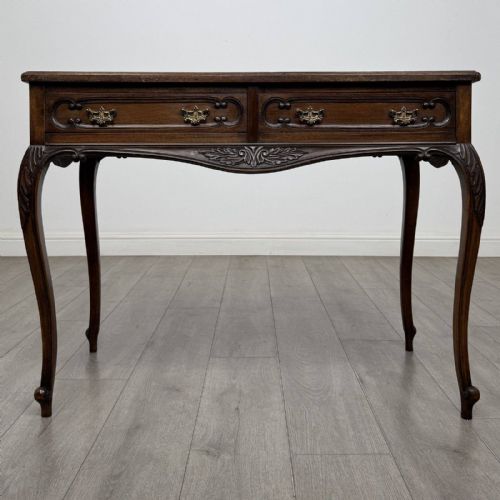
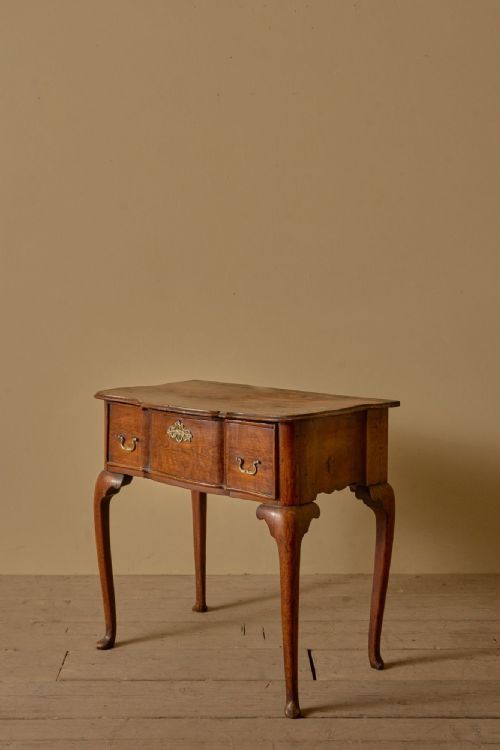
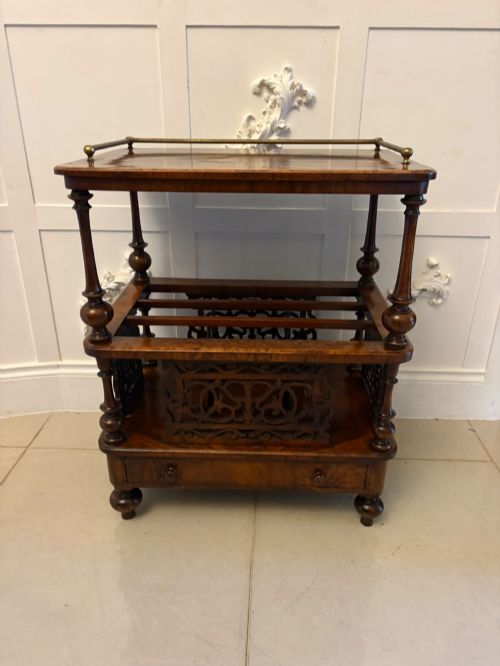
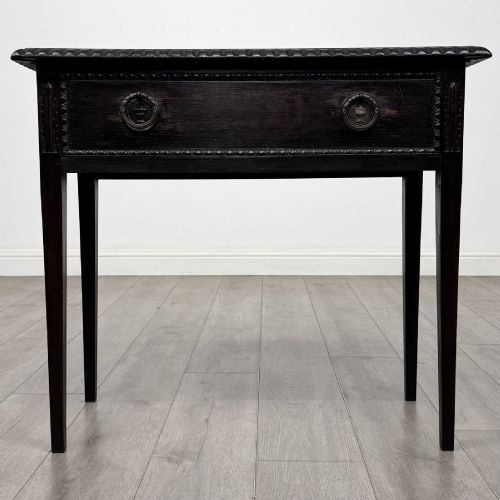
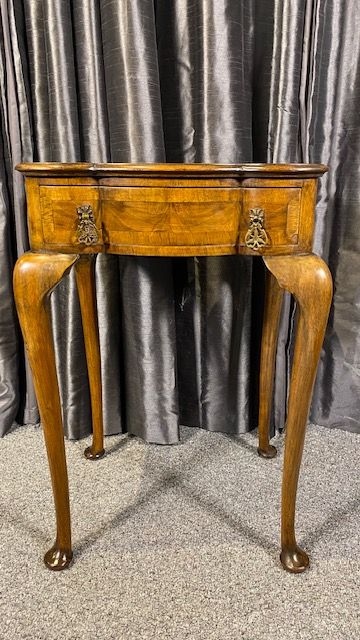
A carved table with drawer encompasses a wide array of functional domestic furniture, from seventeenth-century oak lowboys to Edwardian writing tables and Victorian pedestal desks. The forms vary according to their original domestic use, taking shape as side tables, dressing tables, coffee tables, and compact workstations.
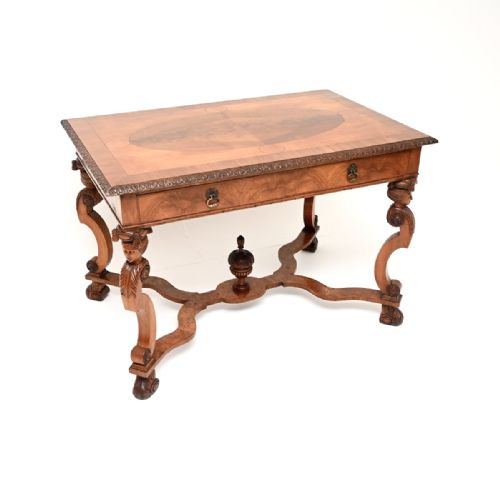
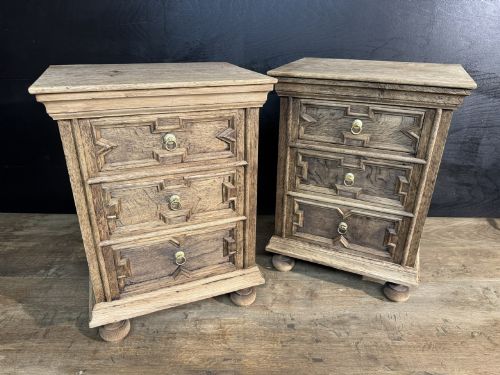
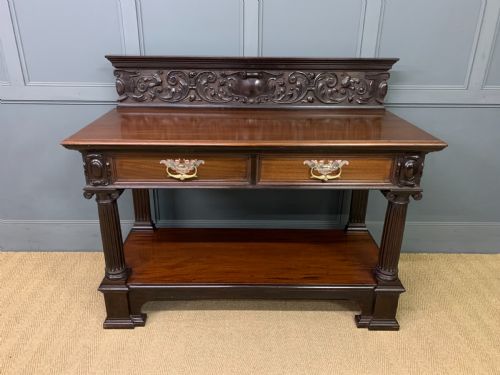
The version most commonly encountered in these listings is constructed from oak or mahogany, typically dating from the nineteenth or early twentieth centuries. These pieces combine a sturdy surface for daily use with one or more fitted drawers for storage, often enriched with carved motifs reflecting the prevailing taste of their period.
How they were made
Makers utilised solid timbers such as oak, mahogany, and walnut, frequently selecting burr walnut veneers to create decorative patterns across tabletops and drawer fronts. Secondary woods provided structural support within the drawer linings and internal framing.
Construction relied on traditional joinery methods, incorporating hand-cut dovetails for the drawers and pegged mortise and tenon joints for the frames. Carving was executed by hand directly into the solid timber or onto applied mouldings, adding texture and depth to the borders and pillars.
Carved Table with Drawer Retail Price Guide 2026
Typical asking prices for carved table with drawer among the pieces listed under this phrase on Sellingantiques today, from the lower quarter to the upper quarter. They describe what is for sale here now, not the wider market.
Listings span multiple centuries, ranging from seventeenth-century oak pieces to twentieth-century Continental styles and Art Nouveau designs.
What varies in quality
Quality rests primarily in the selection of materials and the crispness of the carving, where deep, sharply defined motifs indicate a more skilled hand than shallow, machine-cut decoration. The integration of the drawer within the overall design also matters, with superior examples showing tight, even gaps and smooth operation.
The integrity of the timber and the preservation of original surfaces distinguish finer specimens from heavily restored ones. Retaining original brass hardware and untouched patination elevates a piece, whereas replacements and excessive sanding diminish its historical character.
Beresford & Hicks London·Blyth & Son London
The Carved Table with Drawer Glossary
- Lowboy
- A small oak or walnut table with one or more drawers, originating in the late seventeenth century and often used as a dressing or side table. These pieces typically stand on slender legs.
- Dovetail
- A joint used in drawer construction formed by interlocking wedge-shaped fingers. Hand-cut dovetails are a hallmark of older cabinet making.
- Crossbanded
- A technique where veneer is applied to the borders of a tabletop in a direction running perpendicular to the central panel. This adds a neat decorative frame to the piece.
- Cabriole leg
- A furniture leg that curves outward at the knee and tapers inward toward the ankle, often ending in a pad or foot. The shape derives from animal limbs and gained popularity in the eighteenth century.
- Pedestal desk
- A large writing table supported by two banks of drawers or columns rather than standard legs. These provide substantial workspace and enclosed storage.
Carved Table with Drawer: Frequently Asked Questions
What rooms suit these tables?
These tables adapt well to various spaces, serving as compact desks in home offices, practical hallway consoles, or bedside storage units.
Their varied dimensions allow them to fit into narrow corridors or sit beside larger upholstery items in a living room.
How do I care for the wood?
Maintain timber surfaces by dusting regularly with a soft, dry cloth and avoiding placement near direct heat sources or strong sunlight.
Applying a traditional beeswax polish periodically helps nourish the grain and protect the historical finish without building up residue.
How do I date these tables?
Dating relies on observing construction methods, timber choices, and stylistic details such as hardware and leg shapes.
Earlier pieces often feature hand-sawn boards and pegged joints, whereas later Victorian and Edwardian examples incorporate machine-sawn elements and factory-produced handles.
Are the drawers original?
Inspect the interior construction of the drawer box, checking the dovetails and the wood species used for the linings.
Matching timber age and consistent wear patterns between the drawer and the main carcase generally indicate that the components belong together.