
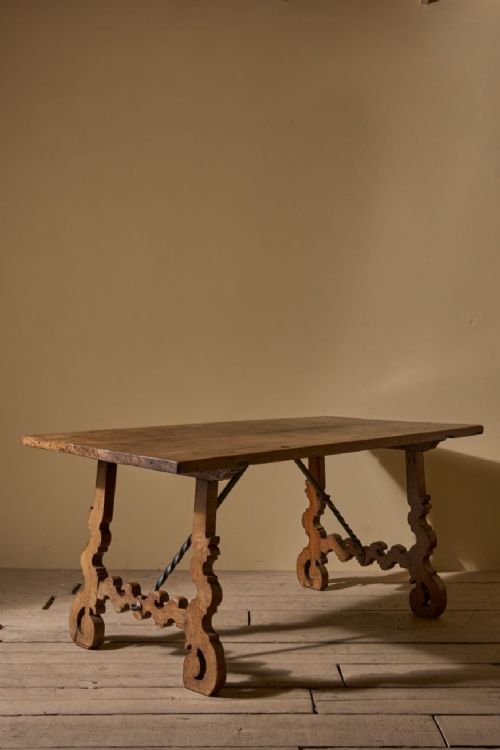
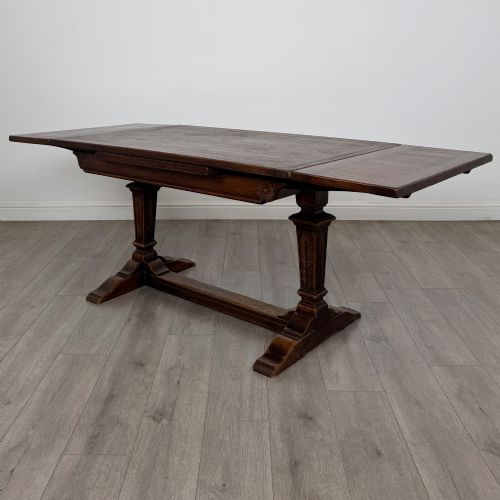
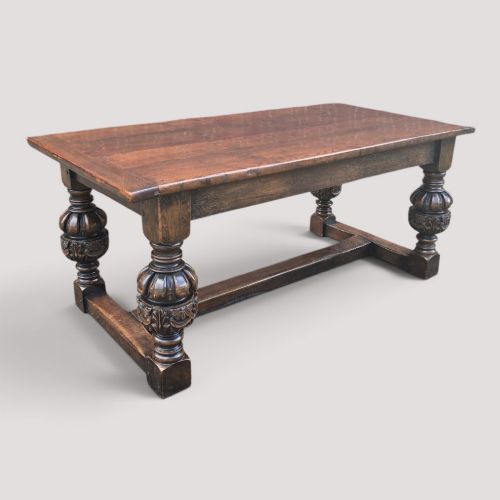
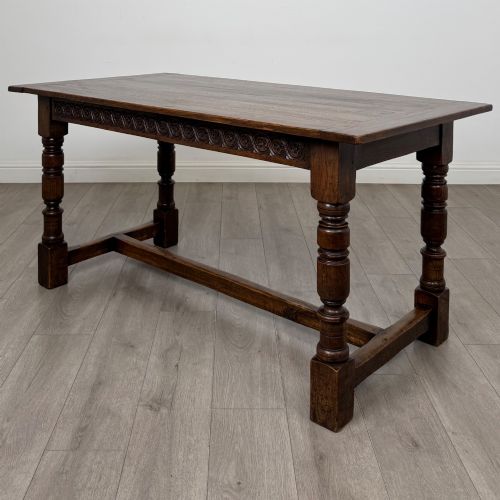
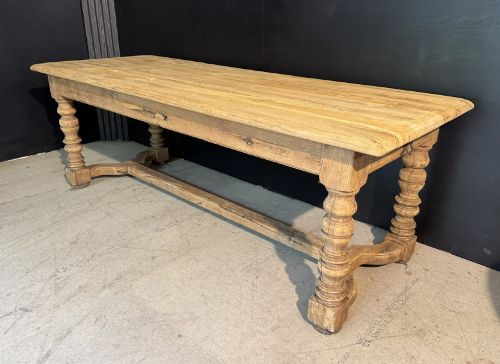


Carved Stretcher Dining Table
A carved stretcher dining table brings sturdy timber and historic joinery straight into the modern dining room, offering both generous surface space and architectural character.
Carved Stretcher Dining Table
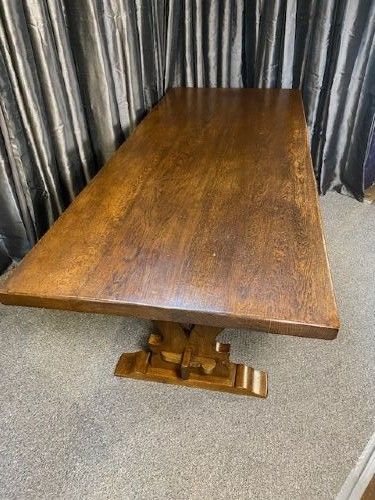
A carved stretcher dining table is a solid timber board resting upon a robust trestle or refectory base, secured by a lower rail or stretcher. These pieces span centuries of craftsmanship, ranging from authentic seventeenth-century oak examples to later revival pieces and continental farmhouse tables.
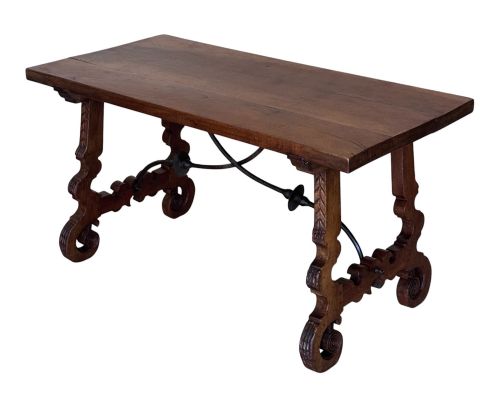
You are most likely to encounter twentieth-century Edwardian interpretations alongside robust nineteenth-century oak and walnut iterations. French and Spanish influences appear frequently, often rendered in walnut or fruitwood with characteristic centre stretchers.
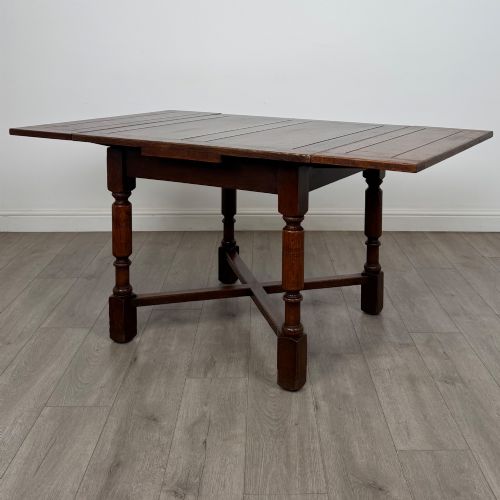
Forms vary from classic refectory and draw-leaf configurations to smaller centre tables and gateleg formats. Oak dominates the selection, accompanied by walnut, chestnut, and pine.
The aesthetic bridges rustic utility and formal revivalism, displaying carved details along the bases while maintaining practical surfaces for daily dining.
How they were made
Makers constructed these tables primarily from solid hardwoods such as oak, walnut, and fruitwood, often selecting thick planks for the top surface. The structural framework relies on traditional joinery methods, including pegged mortise and tenon joints.
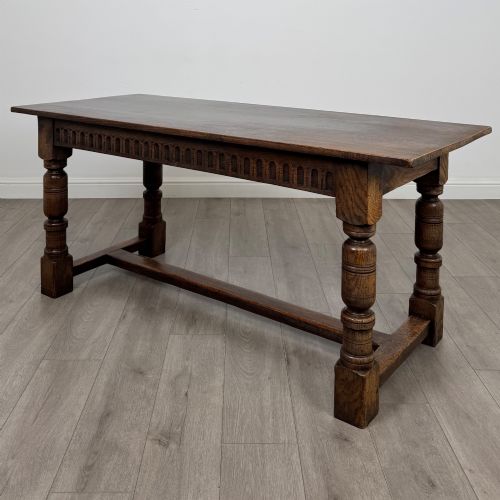
Stretchers positioned low between the legs provide lateral stability, frequently secured by wooden wedges or through-tenons. Carving adorns the legs, stretchers, and aprons, executed by hand with gouges and chisels to create geometric, floral, or strapwork motifs.
Some French farmhouse variants arrive with hidden drawers ready to harbour stray cutlery from centuries past.
What varies in quality
Quality rests upon the integrity of the timber selection and the fidelity of the period construction. Tables retaining their original plank tops paired to authentic period bases command greater appreciation than later married assemblies.
The execution of the hand-carved detailing on the stretcher and legs reveals the hand of a skilled artisan. Crisp, deep relief carving distinguishes superior workshops from mechanical or later imitation work.
Sir Robert Lorimer
The Carved Stretcher Dining Table Glossary
- Stretcher
- A horizontal timber connecting the legs of a table to provide structural rigidity. These rails often feature hand-carved decoration or central bracing.
- Refectory table
- A long, narrow dining table traditionally used in monasteries and large halls. They are characterised by substantial timber legs united by a low floor stretcher.
- Draw-leaf table
- An extending table featuring two sliding leaves hidden beneath the main top. Pulling these leaves outward extends the surface area seamlessly.
- Gateleg table
- A drop-leaf table where the hinged flaps are supported by hinged legs that swing outward like a gate. This form allows the table to fold down compactly when not in use.
- Plank top
- A table surface constructed from multiple parallel boards joined edge to edge. Earlier examples often utilise fewer, wider planks of solid oak.
Carved Stretcher Dining Table: Frequently Asked Questions
What is a carved stretcher dining table?
A carved stretcher dining table is a heavy wooden dining surface supported by legs connected with a decorated horizontal rail. These tables derive their form from historic refectory and farmhouse designs.
They combine practical dining space with decorative woodwork along the base. The stretcher element ensures stability while offering a canvas for period-specific carving.
How do I choose the right size?
Consider both the length of the room and the number of people you wish to seat comfortably. Refectory and draw-leaf variants offer flexibility for accommodating larger gatherings.
Measure the clearance around the stretcher to ensure chairs tuck in properly. Trestle and H-stretcher bases influence how diners position their legs underneath.
How do I care for antique timber?
Protect the wood by using placemats and coasters to prevent moisture rings and heat damage. Regular dusting with a dry, soft cloth maintains the natural lustre.
Apply a traditional beeswax polish occasionally to nourish the grain. Avoid placing solid wood tables near direct heat sources or in fluctuating humidity.
Are these tables suitable for daily use?
These robust tables were originally built for heavy daily service in halls and kitchens. Solid hardwoods like oak and walnut endure regular family meals.
Patina accumulated over generations adds character rather than detracting from utility. Modern living benefits from their sturdy construction and enduring materials.