





Carved Stone Inlay
Carved stone inlay defines these striking decorative objects, uniting hard minerals and expert craftsmanship to bring rich texture and colour into a room.
Carved Stone Inlay
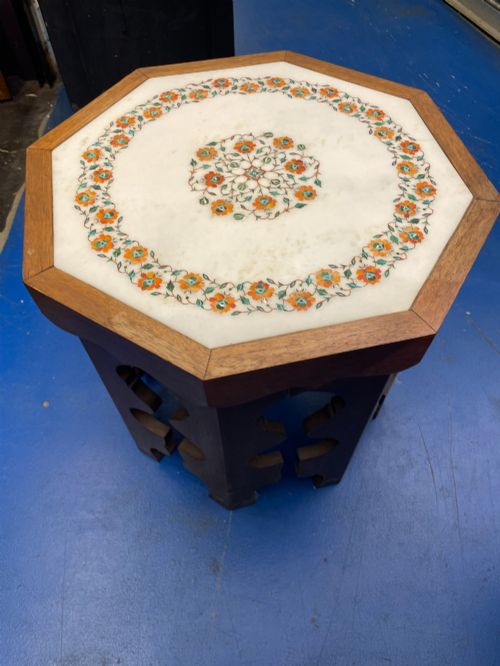
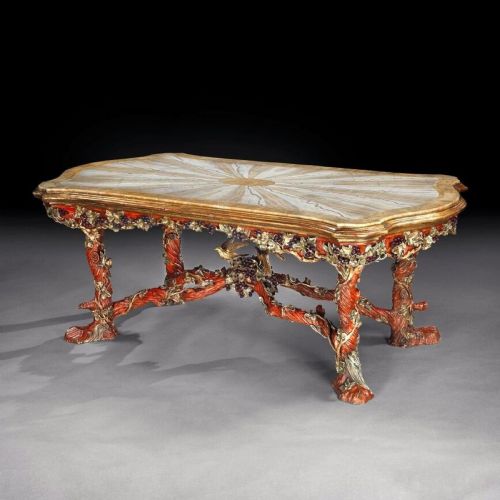
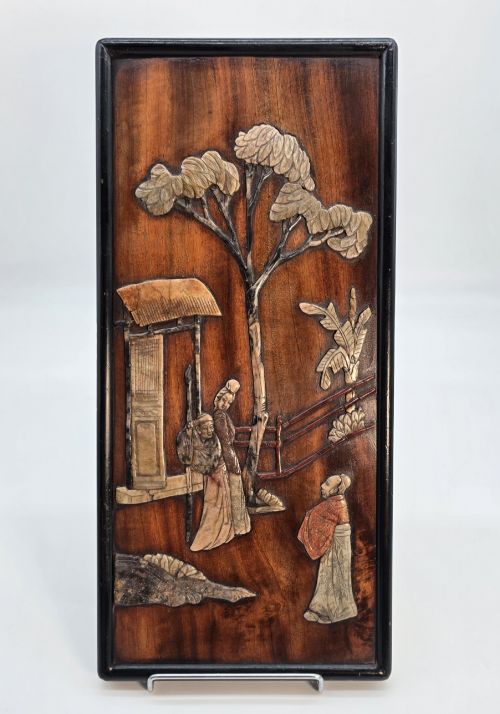
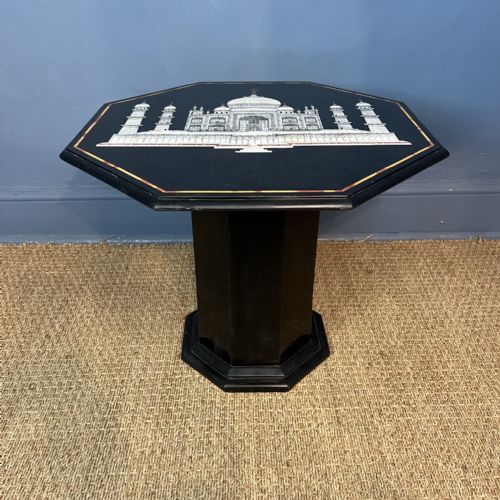
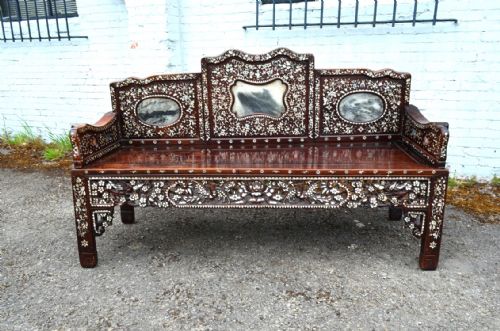
Carved stone inlay pieces encompass a diverse range of items including tables, boxes, inkstands, and wall art spanning the nineteenth and early twentieth centuries. These works draw upon design traditions from Qing Dynasty China, Anglo-Indian workshops, Victorian Britain, and Italian revival movements.
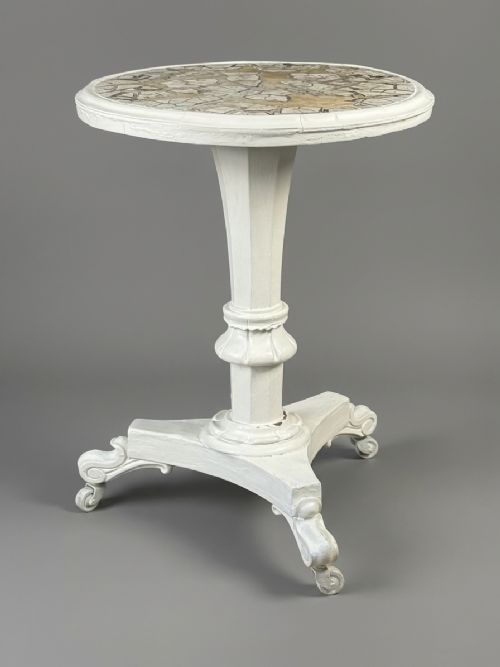
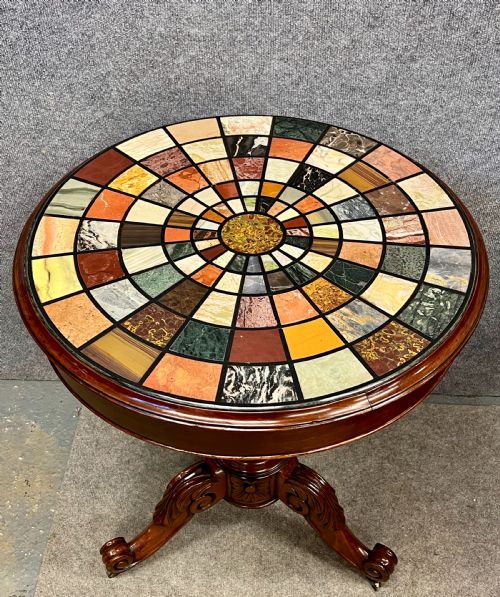
Buyers frequently encounter tables featuring inset marble, onyx, or mosaic panels alongside smaller desk pieces, coffers, and sculptural items like carved stone horses. The geographic origins vary widely from Chinese export workshops to Florentine ateliers and North African makers.
The objects serve both decorative and functional purposes, ranging from large centre and dining tables to small powder flasks and paperweights. Each piece demonstrates the integration of carved supports made from hardwood or silver with precise mineral insertions.
Materials and construction
Makers utilised supportive structures of hardwood, marble, and silver to house intricate mineral decorations. These bases provide durability and contrast against the smooth, polished surfaces of the inserted stones.
Craftsmen embedded lapis lazuli, onyx, white jade, rose quartz, and various specimen marbles into carved recesses using specialised adhesives and precise fitting techniques. The surface was then ground down and polished to create a seamless pictorial or geometric panel.
Carved Stone Inlay Retail Price Guide 2026
Typical asking prices for carved stone inlay among the pieces listed under this phrase on Sellingantiques today, from the lower quarter to the upper quarter. They describe what is for sale here now, not the wider market.
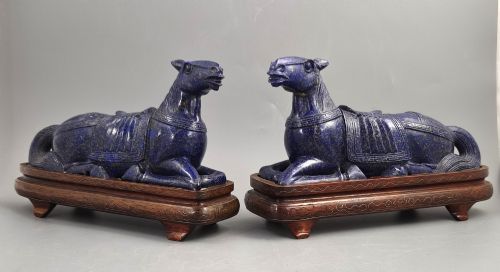
Among the stone and mineral creations, a pair of recumbent horses carved from lapis lazuli stand guard on silver inlaid stands.
Judging quality in inlay work
The standard of a piece rests upon the precision of the stone fitting and the complexity of the design. Tighter joints between the inlaid minerals and the surrounding matrix indicate superior workshop execution.
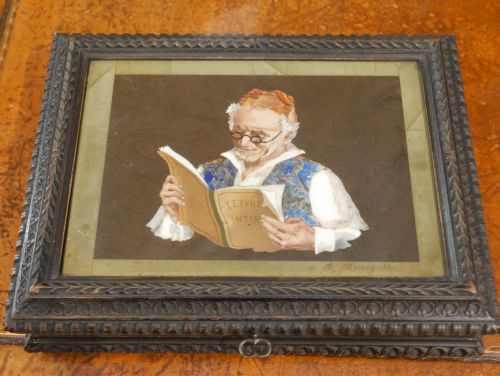
Amleto Bertoni
The Carved Stone Inlay Glossary
- Pietra dura
- An artistic technique of using cut and fitted polished coloured stones to create images. This Florentine method relies on precise stone matching to form floral or geometric scenes.
- Specimen marble
- A term for decorative items assembled from various types of natural marble. Collectors prize these for displaying a broad geological palette within a single surface.
- Chinese Export
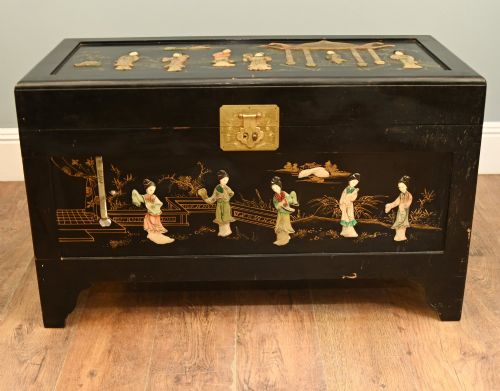
- Goods produced in China specifically for Western markets during the Qing Dynasty and later periods. These items often combine traditional Eastern forms with motifs tailored to European tastes.
- Mother of pearl
- An iridescent inner layer of shells utilised for ornamental inlay work. It provides a luminous contrast against dark wood surfaces on boxes and furniture.
Carved Stone Inlay: Frequently Asked Questions
What is carved stone inlay?
Carved stone inlay refers to decorative objects where pieces of hard mineral, marble, or semi-precious stone are set flush into a carved wooden, stone, or metal base.
Items range from large furniture tops and architectural panels to small desk accessories and boxes, uniting mineral texture with structural craftsmanship.
How do I care for marble and stone inlay?
Maintain stone inlay surfaces by dusting regularly with a soft, dry cloth and avoiding harsh chemical cleaners that can etch polished marble or loosen adhesives.
Keep pieces away from direct heat sources and moisture to protect both the natural stone elements and the underlying wooden or metal frames.
How are different periods identified?
Dating relies on combining stylistic evidence from the supporting woodwork, such as Art Deco lines or Victorian revival carving, with the specific mineral palette typical of an era.
Geographic markers like Florentine workshop methods or Chinese export styles further anchor an object to its specific historical period and origin.
Were these tables used daily?
Tables featuring stone and marble inlay were primarily intended for formal display within nineteenth and early twentieth-century drawing rooms and reception spaces.
While structurally sound for normal use, their decorative surfaces required careful management to prevent scratching the polished mineral panels.