
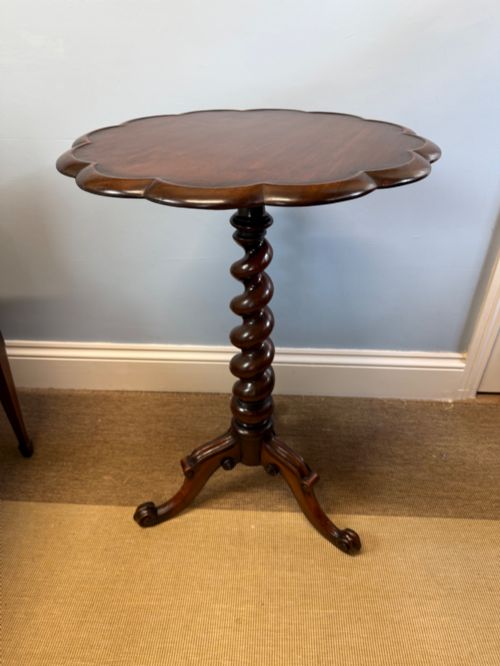
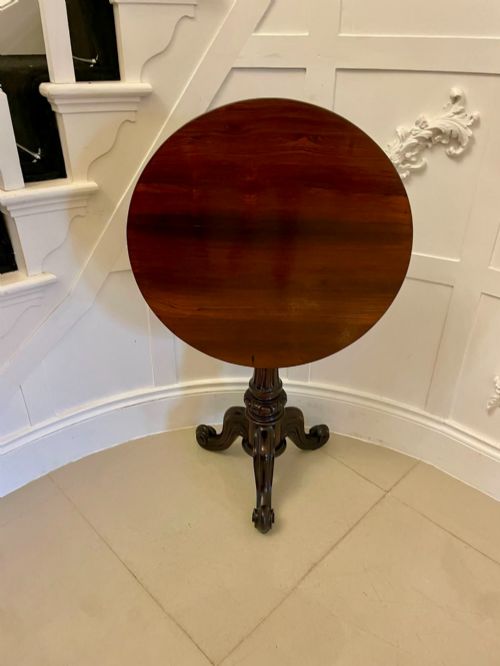
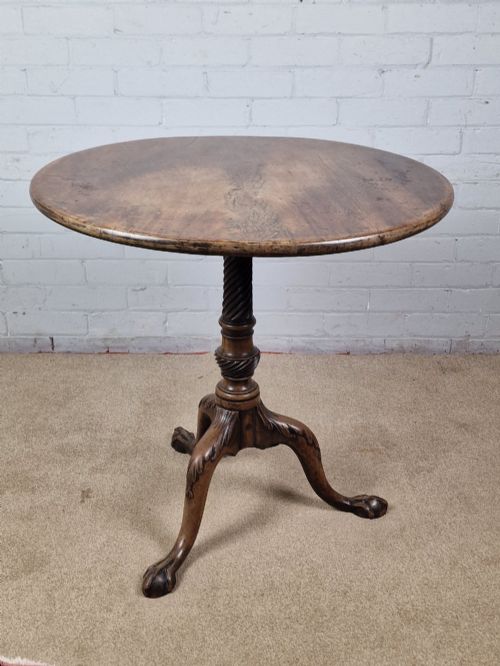
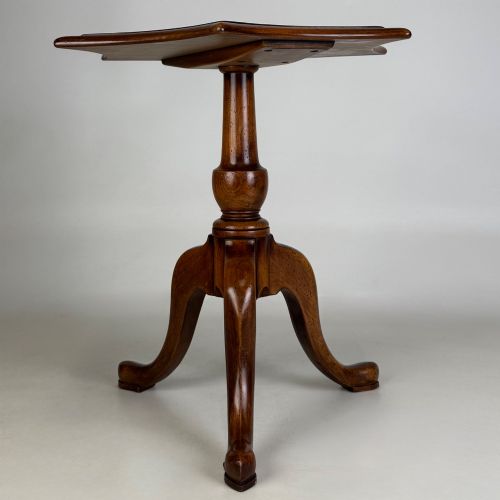


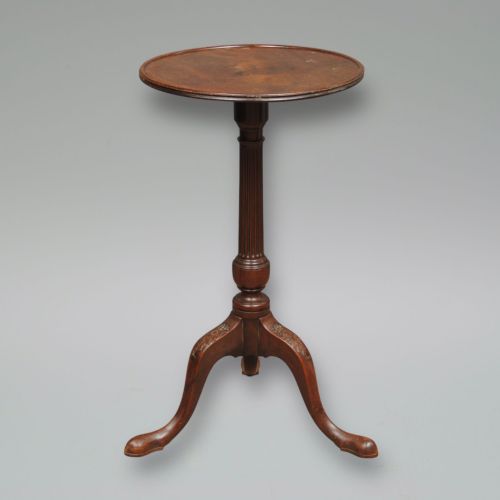


Carved Stem Wine Table
A carved stem wine table is a compact pedestal piece designed to hold a single glass or bottle near a chair.
Carved Stem Wine Table
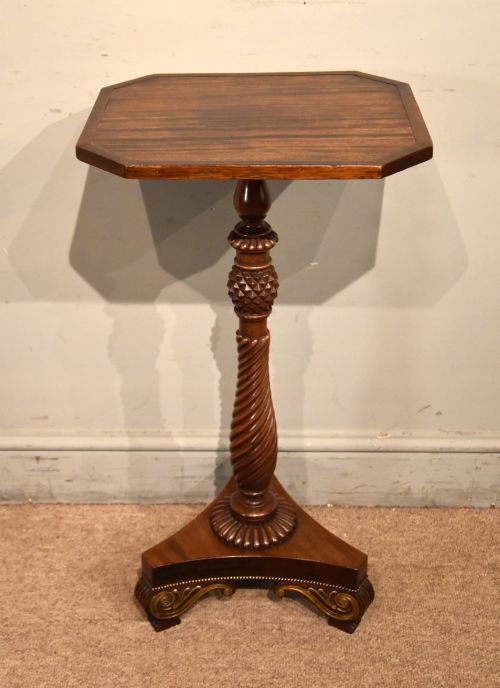
A carved stem wine table is a small, portable pedestal piece designed to sit beside a chair for drinks or small items. When searching this phrase, buyers encounter forms ranging from simple 18th century tripod tables to ornate Victorian examples.
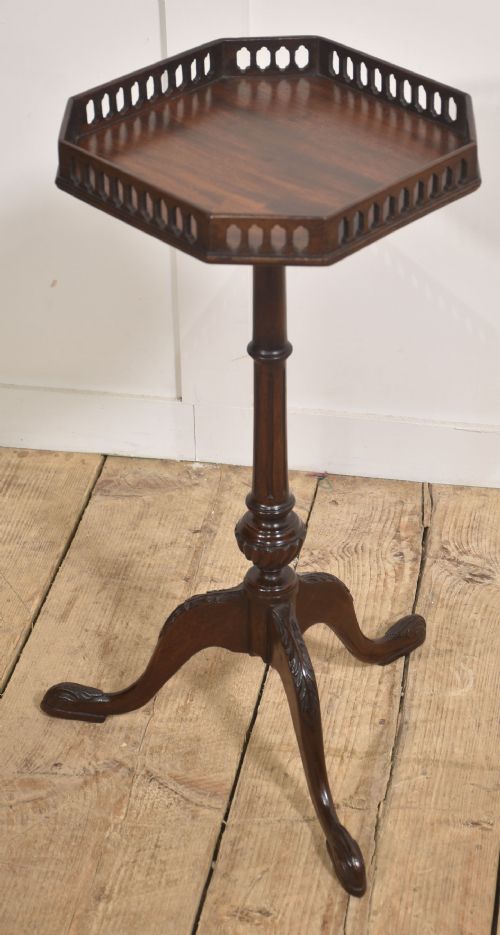
The pieces listed on this page span several periods, including Georgian, Regency, Victorian, and Edwardian eras. They appear as wine tables, side tables, occasional tables, tilt top tables, and kettle stands.
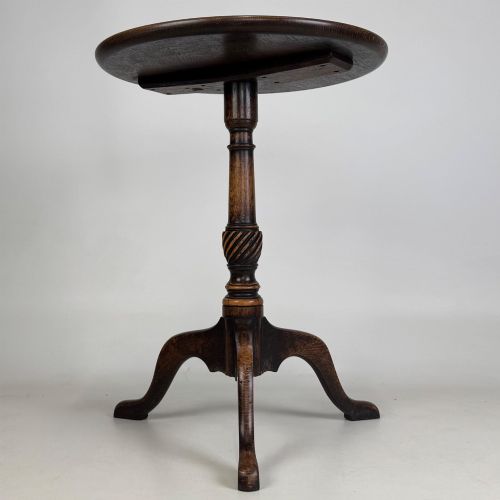
Most examples rely on traditional timber construction with circular tops supported by a central pillar and three legs. Buyers are most likely to meet mahogany versions, alongside pieces fashioned from oak, walnut, rosewood, palm wood, and pollard oak.
How they were made
Cabinet makers utilised dense hardwoods such as mahogany, oak, walnut, and rosewood to ensure the slender stems and supporting legs could bear weight without snapping. Some workshops employed exotic timbers like palm wood and pollard oak for decorative contrast on table tops.
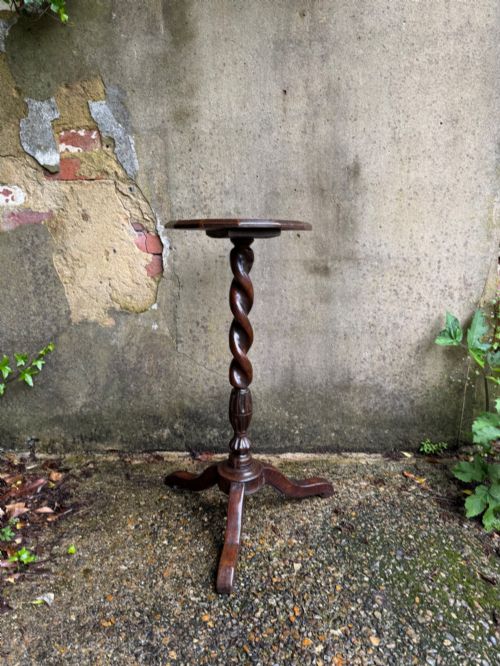
Stems were shaped on lathes to create turned or spiral fluted profiles, often featuring carved detail just above the tripod legs. Tabletops were sometimes hinged as tilt top mechanisms, allowing the table to stand flat against a wall when not in use.
Some tilt top tables spent centuries folded flat against drawing room walls, behaving more like wall panels than furniture.
What varies in quality
The crispness of the carving on the stem and the choice of timber figure determine the distinction between standard and superior pieces. Finer tables exhibit well-proportioned tripod bases with clean jointing where the legs meet the central pillar.
Makers who selected timber with rich grain patterns and applied careful hand-polishing created pieces with greater visual depth. The integration of functional elements, such as smooth tilt top hinges or precise spiral fluting, marks the upper tier of these tables.
The Carved Stem Wine Table Glossary
- Tripod base
- A three-legged support system common on small pedestal tables. This configuration ensures stability on uneven floors.
- Tilt top table
- A table with a hinged top that pivots to a vertical position. This design saves floor space when the furniture is idle.
- Spiral fluted stem
- A central column decorated with a twisting carved channel. It adds textural detail to the vertical support of the table.
- Kettle stand
- A small auxiliary table traditionally used to hold a hot water kettle for tea. These pieces share similar heights and proportions with wine tables.
- Pollard oak
- Oak timber taken from trees that were cut back to encourage dense branching, producing a mottled grain pattern. Cabinet makers used veneers of this wood for decorative surfaces.
Carved Stem Wine Table: Frequently Asked Questions
What was a wine table used for?
These small tables were placed beside seating to hold wine glasses, bottles, or small cups during social gatherings.
Their compact size allowed servants to move them easily around a drawing room as guests shifted position.
How do I know the period of a table?
Dating relies on observing the timber species, construction methods, and decorative styles characteristic of specific eras like the Georgian or Victorian periods.
Leg profiles and turning styles on the central stem often point directly to the prevailing fashion of the decade.
Can I use a wine table daily?
Sturdy hardwood construction makes these tables suitable for holding drinks, lamps, or books in a modern living space.
Care should be taken with placement near direct heat sources or strong sunlight to protect the polished wood surfaces.
What is a tilt top mechanism?
A catch and hinge assembly under the tabletop allows the surface to fold flat against the central pillar.
This historical feature enabled people to store multiple tables compactly against the perimeter of a room.