
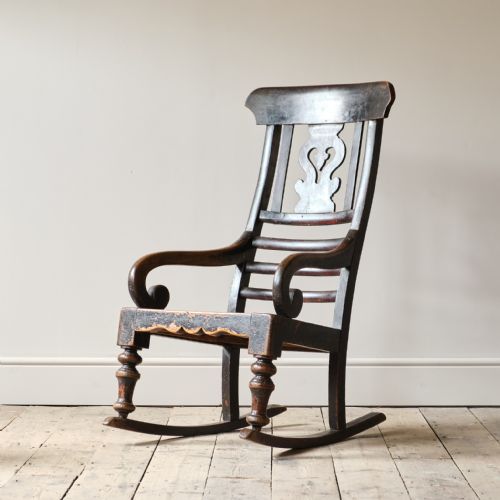

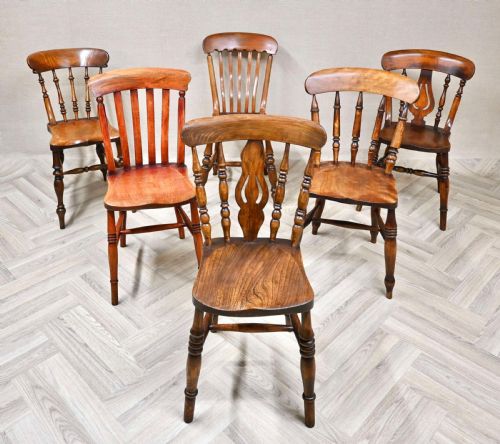


Carved Splat Windsor Chair
These carved splat windsor chair selections offer traditional country seating crafted from native timbers across the Georgian, Victorian and Edwardian eras.
Carved Splat Windsor Chair
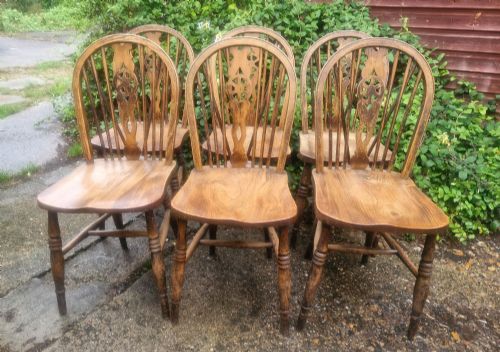
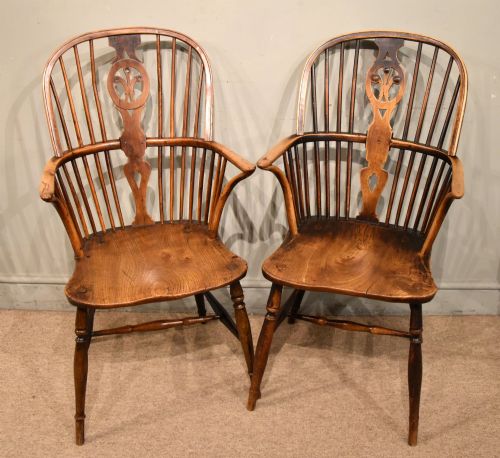
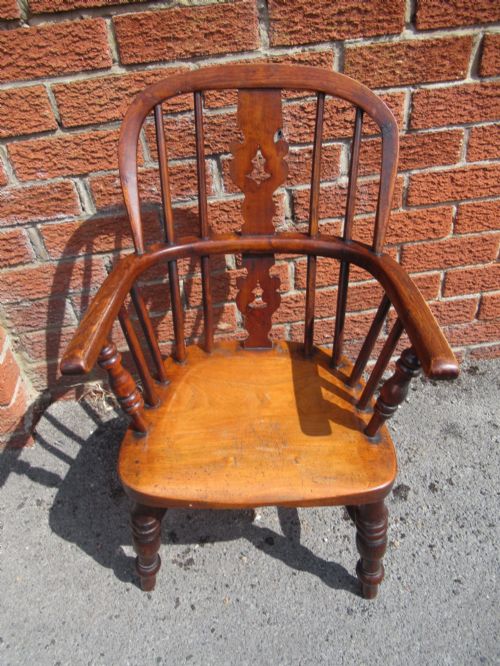
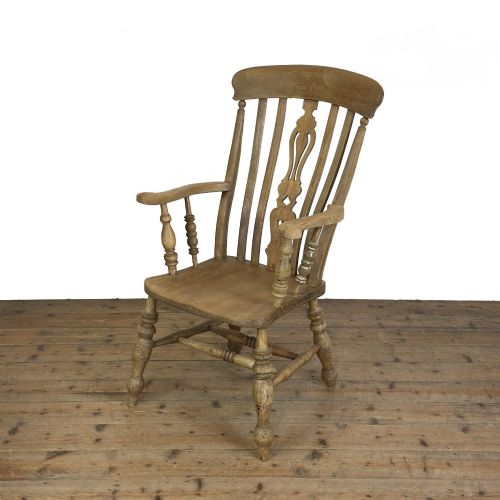
A carved splat windsor chair brings traditional vernacular seating into the home, combining a solid wooden seat with stick legs and a distinct central back splat. The carved splat windsor chair examples on this page span several centuries, including Georgian, Victorian and Edwardian periods.
Makers utilised native hardwoods to build these rustic forms, resulting in dining chairs, armchairs, rocking chairs and low back designs. A carved splat windsor chair often appears in formats such as wheel backs or broad arm variants suitable for farmhouse kitchens and country parlours.
How they were made
Craftsmen shaped elm, ash, beech, yew, oak, fruitwood and laburnum using traditionalbodging and carpentry techniques. Seats were typically hollowed out from a single thick slab of elm to receive the turned legs and back spindles.
Constructed without standard box frames, the uprights and stretchers relied on wedged tenon joints driven directly through the seat board for structural stability.
Carved Splat Windsor Chair Retail Price Guide 2026
Typical asking prices for carved splat windsor chair among the pieces listed under this phrase on Sellingantiques today, from the lower quarter to the upper quarter. They describe what is for sale here now, not the wider market.
Listings feature elm, ash, beech, yew, oak, fruitwood and laburnum timbers across the 19th Century, Victorian, Georgian and Edwardian periods.
What varies in quality
The choice of timber creates a distinct hierarchy, with richly figured yew and complex multi-wood primitive combinations commanding greater visual interest than standard beech or plain ash. Timber selection directly influences the depth of grain and the overall patina achieved over centuries of use.
Proportion and structural retention separate standard workshop output from exceptional examples. A well-balanced high back or broad arm configuration maintains its original rake and stance without heavy timber replacement.
Fred Walker Rockley·Worksop Made
The Carved Splat Windsor Chair Glossary
- Splatted back
- A central vertical wooden slat incorporated into the chair back, often pierced or shaped for decorative effect.
- Comb-back
- A low back windsor variation where the top rail resembles the teeth of a comb, with spindles rising directly from the arm bow.
- Elm seat
- A thick, resilient wooden base carved into a saddle shape to ensure comfortable seating.
- Stretcher
- A horizontal wooden brace connecting the legs to provide rigidity and prevent splaying under weight.
Carved Splat Windsor Chair: Frequently Asked Questions
What is a windsor chair?
A windsor chair is a form of wooden seating where the legs and back spindles are tenoned directly into a solid carved wooden seat.
Unlike framed chairs, this construction method provides robust stability through individual turned components.
How are different periods identified?
Periods are identified through timber combinations, turning profiles on the legs, and the height of the backrest.
Earlier Georgian examples often feature yew or high elm backs, whilst later Victorian versions utilise ash and beech in broader farmhouse proportions.
Where were these chairs used?
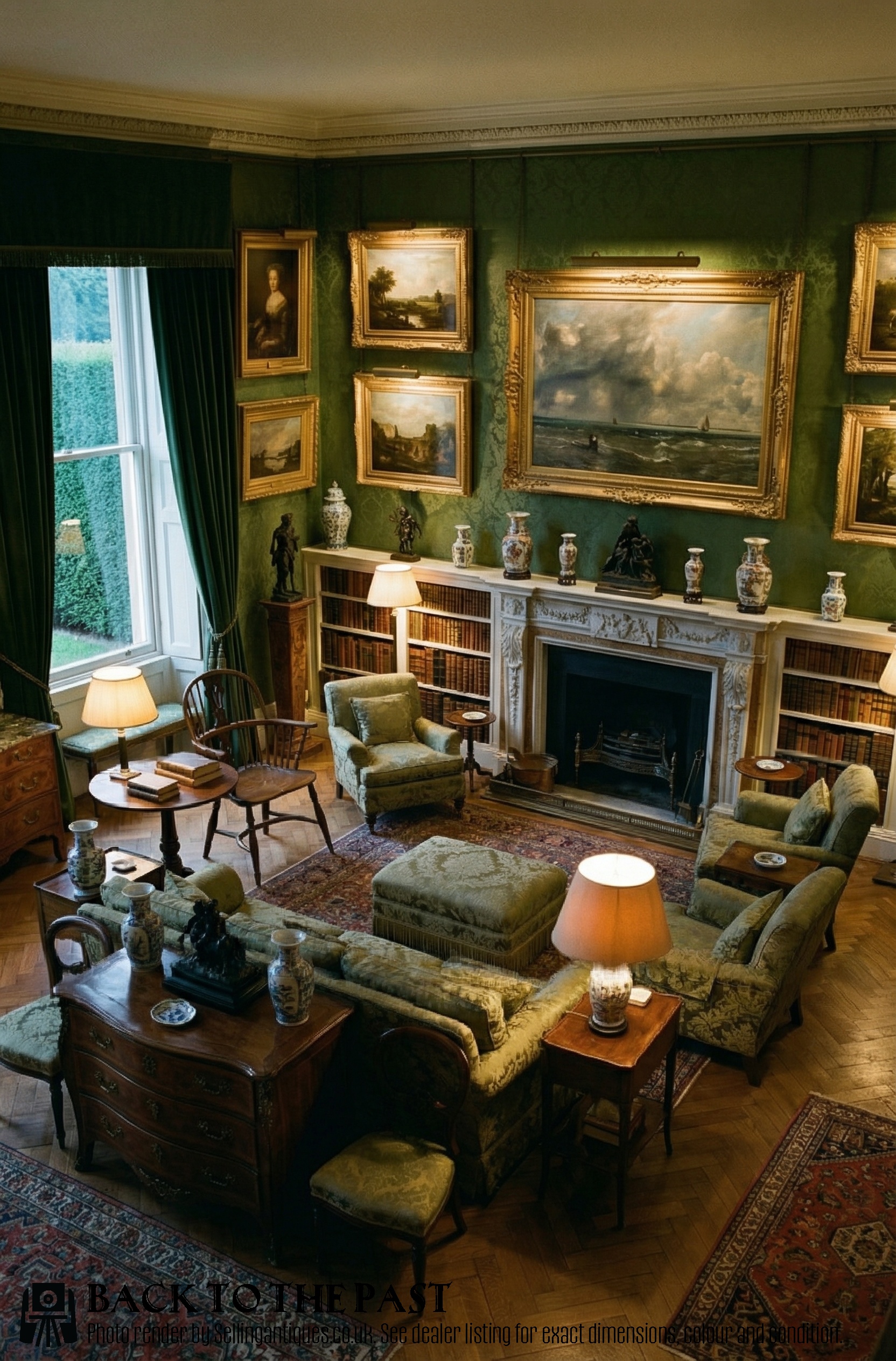
These chairs served primarily in farmhouse kitchens, cottages and country houses as durable everyday seating.
Armchairs and rocking variants were also placed by hearths or in parlours for domestic comfort.
How do I care for antique timber?
Care for antique timber involves maintaining stable indoor humidity levels and avoiding direct heat sources that cause wood to split.
Applying occasional natural wax helps preserve the historic surface sheen without damaging the underlying patina.