





Carved Soapstone Ornament
A carved soapstone ornament brings the tactile weight of steatite and Shoushan stone into your study through centuries-old Chinese and Anglo-Indian tradition.
Carved Soapstone Ornament
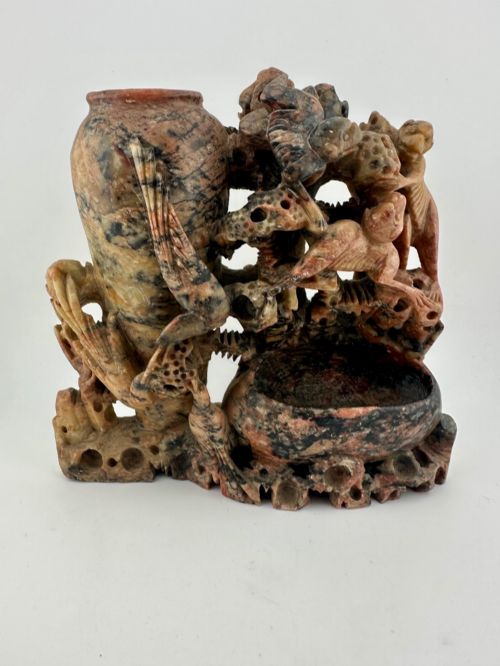
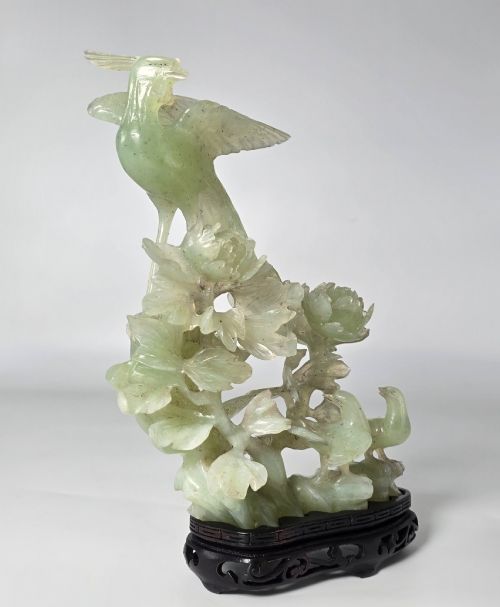
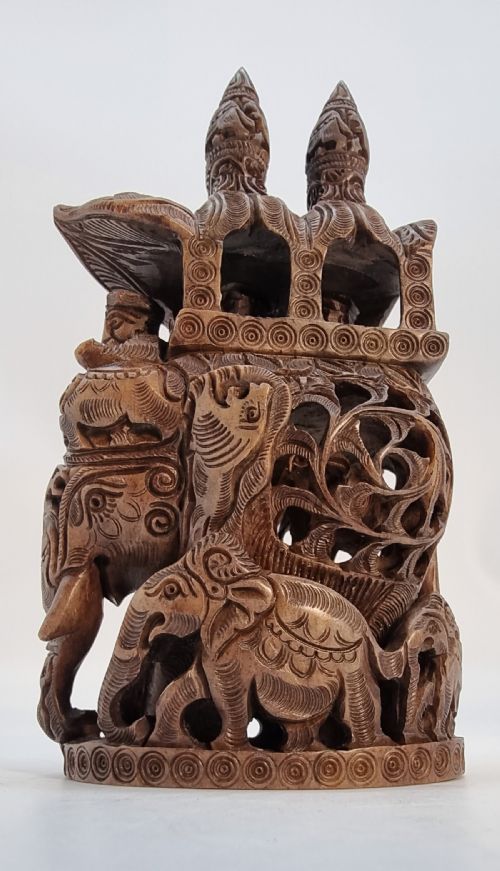
The pieces on this page span from the nineteenth century into the early decades of the twentieth century, reflecting traditional Chinese decorative arts alongside Anglo-Indian production. Sculptures range from matched pairs of Shi Shi desk seals to studies of ceremonial elephants and continuous wooded landscapes.
Makers shaped these soft stones into intricate subjects such as monkeys, dragons with pearls, Buddha figures, and sows with piglets. Each carving demonstrates how artisans utilised the natural colour variations within the material to define the composition.
How they were made
Many sculptures are mounted on fitted hardwood bases, combining the soft mineral with a contrasting dark timber to anchor the composition. The stone surfaces often receive a smooth polish that accentuates the subtle hues of the mineral, whether pale green or variegated brown.
Carved Soapstone Ornament Retail Price Guide 2026
Typical asking prices for carved soapstone ornament among the pieces listed under this phrase on Sellingantiques today, from the lower quarter to the upper quarter. They describe what is for sale here now, not the wider market.
Listings feature pieces spanning the nineteenth century, the Republic Period, and the nineteen-twenties, incorporating both soapstone and hardwood.
What varies in quality
Quality rests upon the depth of the carving and the ambition of the composition, moving from simple single figures to complex groupings like continuous wooded landscapes. The skill of the artisan determines whether animals such as monkeys, Foo Dogs, and elephants possess anatomical conviction and lively postures.
The natural variation of the stone dictates part of the appeal, with superior examples using shifts in colour to highlight specific elements of a dragon, bird, or human figure. Integration with fitted hardwood bases also separates standard items from more substantial sculptural groups.
The Carved Soapstone Ornament Glossary
- Soapstone
- A metamorphic rock composed largely of talc, known for its soapy feel and softness. This material allows carvers to achieve high levels of fine detail.
- Steatite
- A dense, compact variety of soapstone often used for Asian carvings and desk seals. It takes a smooth polish while remaining easy to shape with hand tools.
- Shoushan Stone
- A specific type of Chinese soapstone sourced from the mountains of Fujian province. It is prized for its wide palette of natural colours and translucency.
- Shi Shi
- A traditional guardian lion or Foo Dog sculpture placed to ward off evil spirits. These mythical beasts frequently appear in pairs guarding desk seals and entrances.
- Desk Seal
- A carved stamp or scholarly accessory bearing a handle shaped as an animal or deity. Scholars used these to stamp documents and paintings with personal ciphers.
Carved Soapstone Ornament: Frequently Asked Questions
What is soapstone?
Soapstone is a tactile, magnesium-rich metamorphic rock that feels smooth to the touch. Its soft composition makes it ideal for intricate hand carving.
Artisans have utilised this material for centuries to produce detailed sculptures, desk accessories, and figural groups.
How do I care for soapstone?
Keep these carvings out of direct sunlight and away from excessive moisture to preserve the polished surface of the stone. Dust them gently with a soft, dry cloth.
If the stone appears dry over time, a very light application of mineral oil can restore its deep lustre.
What are Foo Dogs?
Foo Dogs, or Shi Shi, are traditional Chinese guardian lions symbolising protection and prosperity. They often appear seated on plinths or guarding sacred items.
In sculpture, they are carved with elaborate mannes, flowing tails, and paws resting upon brocade balls.
Are these pieces hand carved?
The items listed on this page originate from periods when artisans used hand tools to shape steatite and Shoushan stone. Each sculpture displays individual chisel and knife marks unique to the maker.
Natural variations in the stone ensure that no two carvings share identical colour patterns.