



Carved Settle
A carved settle offers substantial seating with integrated storage, combining architectural presence with practical utility in a hallway or living space.
Carved Settle
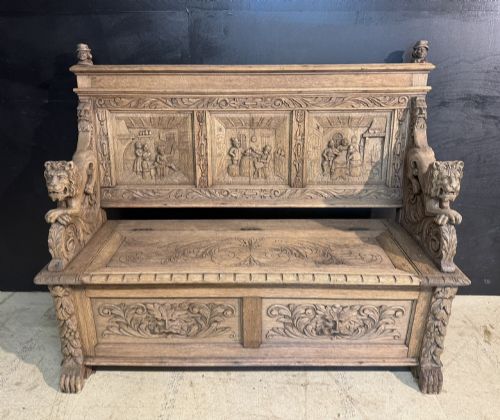
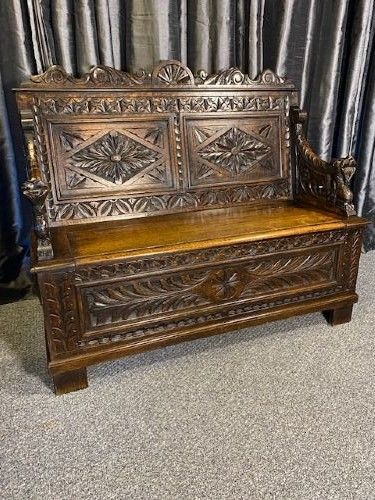
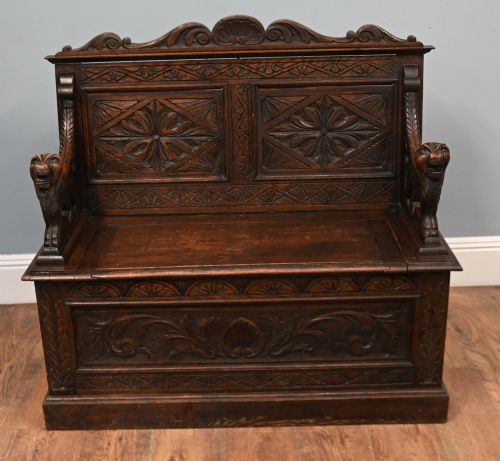
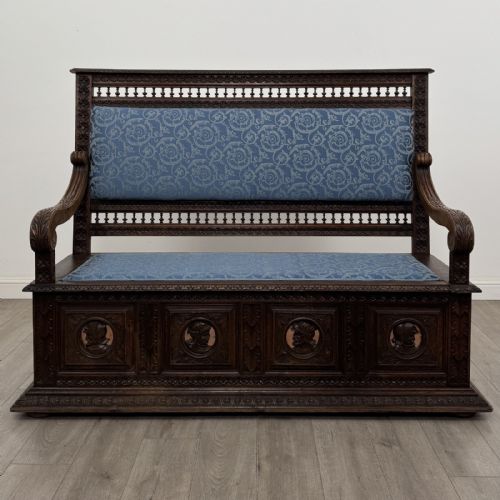
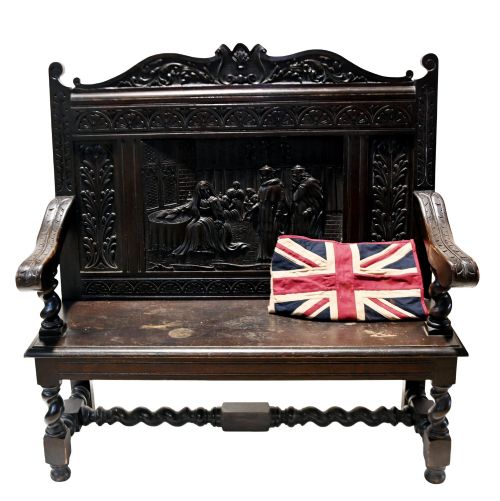
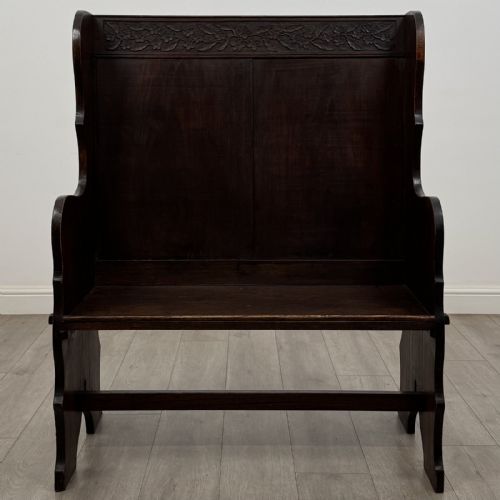
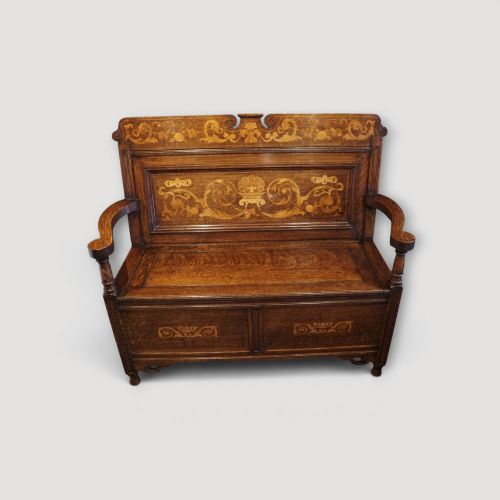
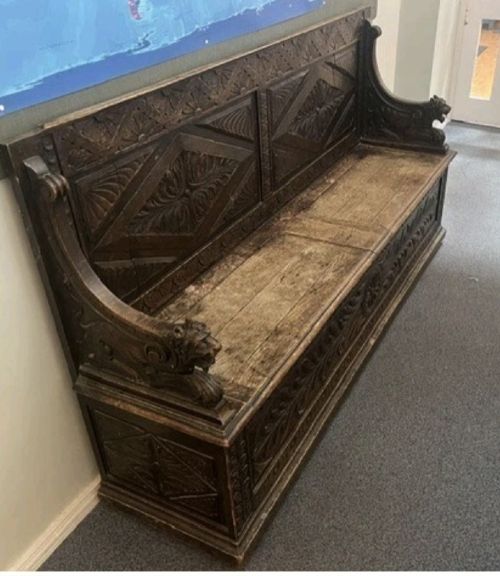
A carved settle is a traditional wooden bench with a high back and solid arms, frequently incorporating a box seat for storage beneath the hinged lid. When you search for this phrase, you encounter forms ranging from high-backed oak box seats originating in the seventeenth and eighteenth centuries to later revival pieces and continental variations.
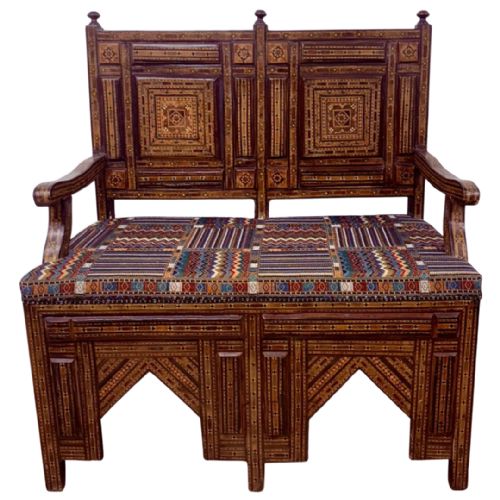
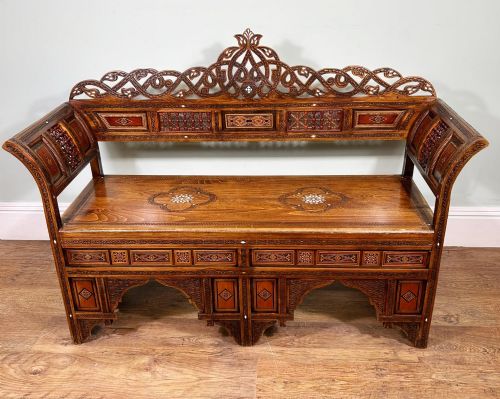
The pieces on this page span several centuries, including examples from the seventeenth, eighteenth, nineteenth, and early twentieth centuries. Oak forms the backbone of these listings, alongside walnut, mahogany, and exotic hardwoods from Indian, Syrian, and Chinese traditions.
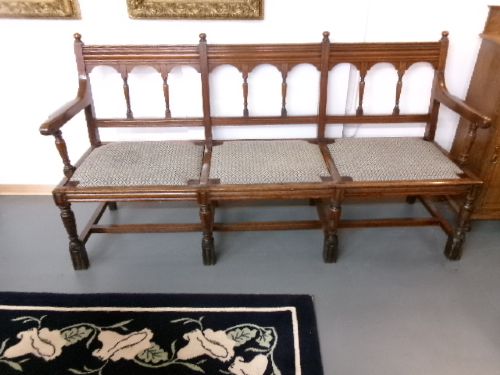
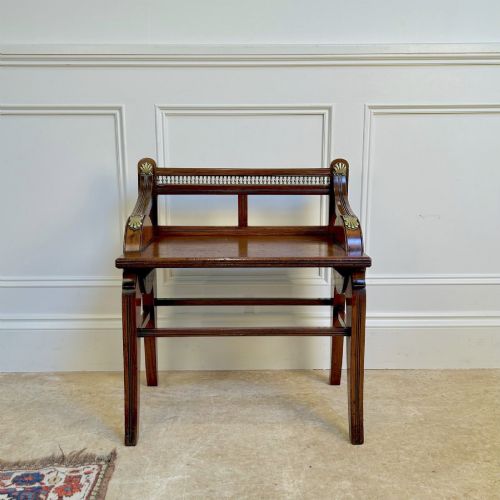
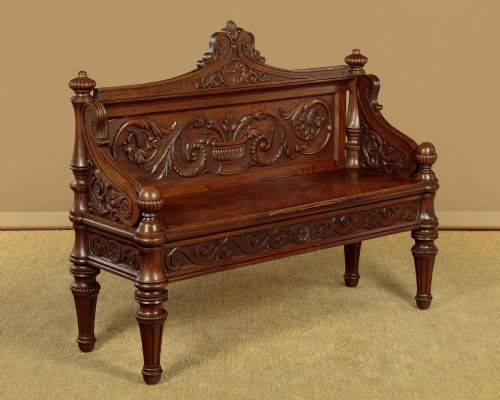
Functional variants include hall benches, monks benches with fold-over tops, lambing chairs, and elaborate cassapanca benches. The typical version met here is an oak or hardwood hall bench displaying floral, linenfold, or figural relief carving.
Materials and Construction
Solid timber forms the primary construction, with European oak dominating domestic English and continental pieces. Hardwoods such as walnut and mahogany appear alongside imported timbers in Syrian, Indian, and Chinese examples.
Joinery methods rely on traditional framing, panel construction, and pegged joints to support the high back and weight-bearing seat. Carving is executed directly into the solid wood panels, sometimes augmented with boxwood inlay, mother-of-pearl, brass mounts, or fabric upholstery.
Carved Settle Retail Price Guide 2026
Typical asking prices for carved settle among the pieces listed under this phrase on Sellingantiques today, from the lower quarter to the upper quarter. They describe what is for sale here now, not the wider market.
The inventory includes hall seats, monks benches, lambing chairs, and architectural box settles with integrated storage.
Judging Quality
Quality rests in the crispness and depth of the timber carving and the architectural integrity of the frame. Superior pieces retain their original proportional balance and structural timber without extensive replacement.
The choice of wood and the complexity of decorative details, such as integrated panel work or specialised inlay, distinguish standard utility furniture from pieces produced by notable makers or specialised workshops.
James Shoolbred·Gillows
The Carved Settle Glossary
- Box Settle
- A bench featuring a storage compartment situated directly beneath the seat boards, enclosed by the front and side panels. This design kept users elevated above cold draughts while providing household storage.
- Cassapanca
- An Italian wooden bench incorporating a large chest base and a backrest, often constructed from walnut during the Renaissance and later revival periods. These grand seats served as both furniture and decorative focal points in formal halls.
- Lambing Chair
- An enclosed wooden armchair or settle featuring high wings and a hooded top designed to shield the sitter from fire draughts. They frequently include a small side compartment for storing personal items or warming bricks.
- Monks Bench
- A convertible piece of furniture featuring a hinged back that folds forward over the arms to form a flat table surface. This dual-purpose design offered practical utility in compact living quarters.
Carved Settle: Frequently Asked Questions
Where should I place a settle?
A carved settle fits naturally in an entrance hall or boot room where its high back provides a windbreak and the internal storage holds outdoor gear.
They also work well against a large wall in a living room or dining space, acting as a structural anchor for the room.
How do I use the storage seat?
The seat panel is typically hinged at the back or sides to lift upward, granting access to the compartment below. This space suits bulky items like blankets, cushions, or boots.
Care should be taken not to overload the interior with excessive weight that might stress the historical timber joints.
How do I distinguish regional styles?
English pieces rely heavily on solid oak with restrained linenfold or geometric panels, whereas continental versions often display Renaissance walnut carving or Spanish architectural detailing.
Imported examples from Syria or China incorporate distinct regional motifs such as mother-of-pearl inlay or cinnabar lacquerwork alongside native hardwoods.
How do I care for antique wood?
Maintain the timber by keeping the piece away from direct heat sources and sudden temperature shifts that cause wood to split. Regular dusting with a dry cloth and occasional application of appropriate wax preserves the finish.