





Carved Rococo Commode
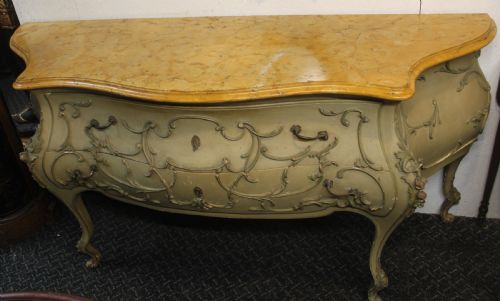
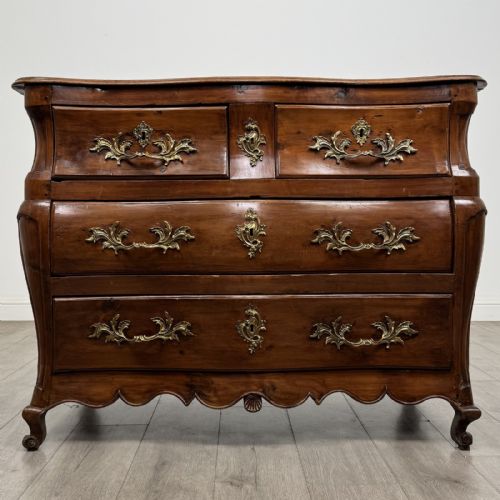
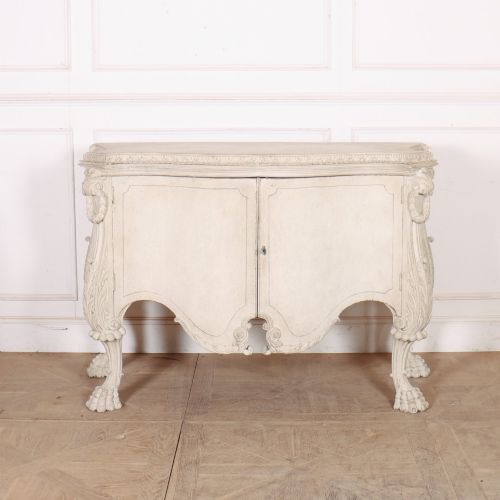
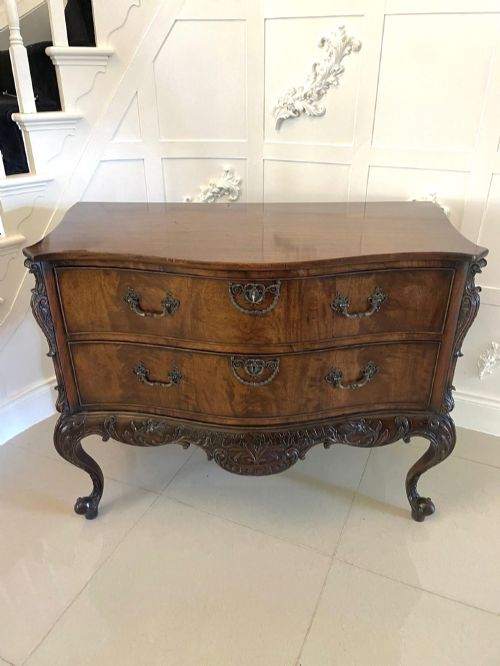
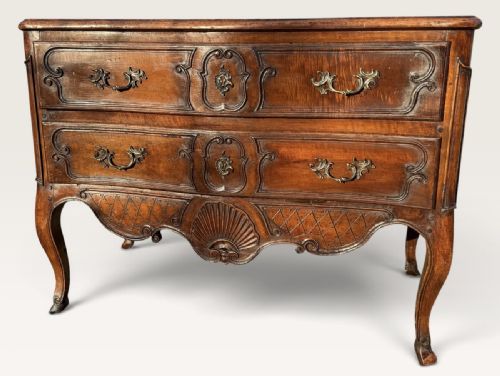
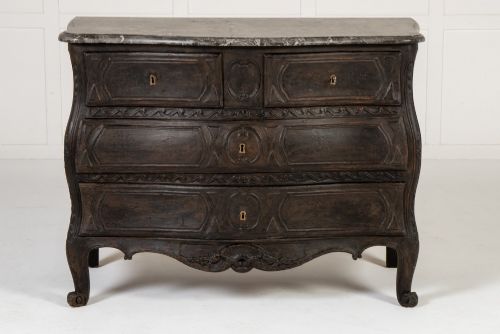
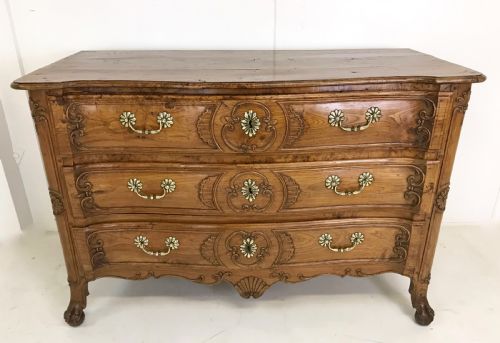
These carved rococo commode pieces bring sweeping serpentine lines and rich walnut or painted timbers into a room, offering substantial storage with undeniable presence.
Carved Rococo Commode
A carved rococo commode functions as a low chest of drawers or storage cabinet, defined by asymmetrical curves, exuberant floral carving and serpentine fronts. When searching for this phrase, buyers encounter examples ranging from authentic eighteenth-century French and Italian origins to later nineteenth-century revivals and provincial interpretations.
The form relies heavily on the bombé silhouette, where the sides and front bulge outward in swelling contours. Walnut, mahogany and fruitwood provide the primary carcasses, frequently topped with heavy slabs of shaped marble.
Regional variations appear across French, Italian, Portuguese and Swedish pieces, shifting between natural polished woods, painted surfaces and intricate marquetry. Eighteenth-century examples sit alongside Victorian revivals and early twentieth-century interpretations.
Markers of distinction
Quality rests in the fluidity of the carved lines and the integrity of the timber selection, particularly where burr veneers or detailed marquetry wrap around curved drawer fronts. Superior execution shows seamless alignment between the wooden carcass and heavy marble tops.
The depth and crispness of the hand-carved detailing separate provincial utilitarian items from high-style urban commissions. Construction methods inside the drawers, including hand-cut dovetails, indicate the level of workshop care.
Carved Rococo Commode Retail Price Guide 2026
Typical asking prices for carved rococo commode among the pieces listed under this phrase on Sellingantiques today, from the lower quarter to the upper quarter. They describe what is for sale here now, not the wider market.
Periods represented span from the eighteenth century through the Victorian era and into the early twentieth century.
The Carved Rococo Commode Glossary
- Bombe
- A swelling, outward-curving profile on the front and sides of a chest of drawers. This contour requires advanced carpentry to achieve harmonious proportions.
- Serpentine
- A wave-like front contour that curves inward at the centre and outward at the ends. It defines the profile of many eighteenth and nineteenth-century pieces.
- Marquetry
- The art of applying pieces of veneer to a structure to form decorative patterns and pictorial designs. Craftsmen use various tinted woods to create contrast.
- Giltwood
- Timber that has been coated with a thin layer of gold leaf or gold paint. This finish highlights carved ornamentation on high-status European furniture.
Carved Rococo Commode: Frequently Asked Questions
What is a commode?
A commode is a low chest of drawers or cabinet developed in France during the seventeenth century. It evolved into a decorative centrepiece for reception rooms and bedrooms.
Over time, regional workshops across Italy, Portugal and England adopted the form, incorporating local timbers and distinct carving styles.
How do I style a commode?
These pieces command visual attention, making them suitable as sideboards in dining areas, statement storage in hallways or dressing tables in bedrooms. Their decorative fronts and marble surfaces require minimal additional styling.
Pairing them with simple walls allows the natural wood grain, paintwork or carved contours to remain the focal point of the room.
Are these pieces eighteenth century?
The selection includes authentic eighteenth-century examples alongside later nineteenth-century revivals and early twentieth-century interpretations. Examining the timber construction, hardware and joinery helps determine the exact period.
Revival pieces often replicate the exuberant curves of earlier eras while utilising nineteenth or twentieth-century workshop techniques.
What is French provincial furniture?
French provincial pieces are items made in regional workshops outside Paris, often interpreting high-style court designs with simpler local materials like fruitwood or oak. They balance functional utility with rustic charm.
These cabinets display modest carving and robust construction suited to country homes rather than royal palaces.