


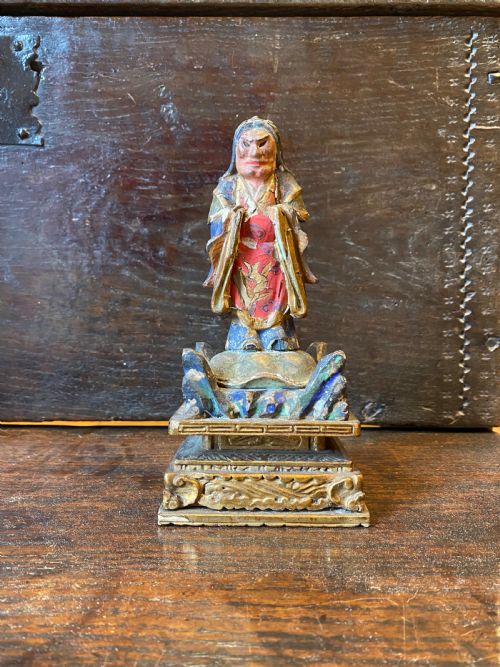


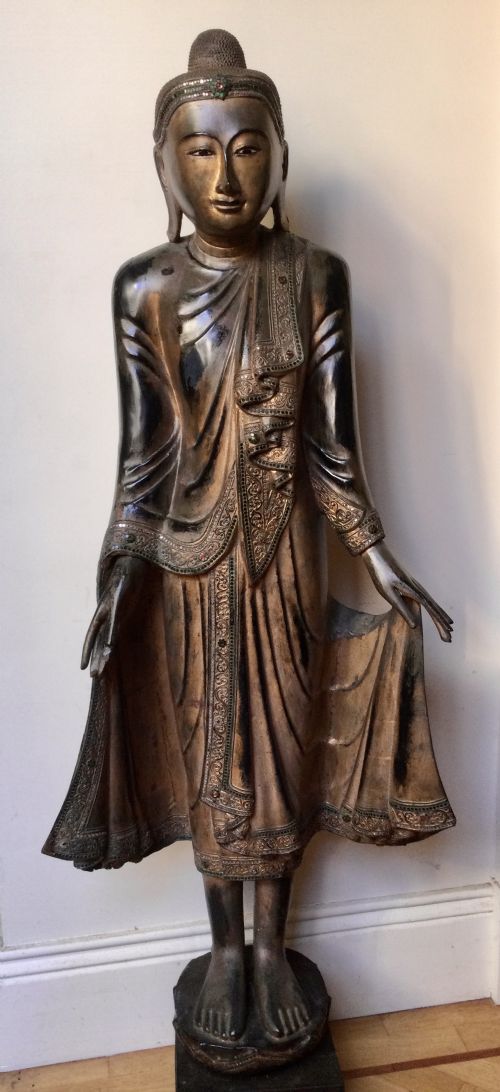
Carved Religious Altar Statue
A carved religious altar statue brings centuries of devotion, ritual presence, and masterful regional handcraft directly into a domestic interior.
Carved Religious Altar Statue
When you search for a carved religious altar statue, you encounter sacred figures and shrines created for private worship and devotional spaces. These pieces span multiple traditions, encompassing European ecclesiastical figures alongside Asian deities and temple statues.
The most common examples you meet on this page are nineteenth-century figures, including Italian angels, Spanish folk art home altars, and gilt wood Buddhas. They range from small tabletop shrines to substantial sculptural figures intended for veneration.
Makers produced these statues to anchor spiritual life within homes and religious institutions. Their survival offers a tangible link to the devotional practices of past centuries.
Materials and construction methods
Artisans carved these statues primarily from wood, shaping timber with hand tools to achieve expressive drapery and lifelike anatomy. Master craftsmen then applied gesso as a smooth foundation layer for subsequent decoration.
Surface finishes defined the visual impact, frequently utilising gold leaf or intricate gilding to catch candlelight in dim interiors. Polychrome paint brought flesh tones and garments to life, while specific pieces integrated glass inlay for added brilliance.
Carved Religious Altar Statue Retail Price Guide 2026
Typical asking prices for carved religious altar statue among the pieces listed under this phrase on Sellingantiques today, from the lower quarter to the upper quarter. They describe what is for sale here now, not the wider market.
Listings on this site feature carved wood, gold leaf, and polychrome paint across nineteenth-century European and Asian traditions.
Factors of quality and execution
Quality rests in the anatomical command of the carver and the expressive depth of the face. Superior statues display fluid drapery folds and confident chisel work that breathe vitality into wood.
The preservation of original surface treatments distinguishes finer examples from heavily restored pieces. Intact polychrome paint and well-preserved gold leaf retain the intended devotional dignity of the work.
The Carved Religious Altar Statue Glossary
- Gesso
- A plaster mixture used as a base coat on wood. It provided a smooth surface for subsequent gilding and painting.
- Santos
- A carved figure representing a saint or divine personage. These sculptures served central roles in domestic and church devotion, particularly within Hispanic traditions.
- Shrine
- An enclosure or housing for sacred relics and images. These structures directed focus during prayer and ritual observance.
Carved Religious Altar Statue: Frequently Asked Questions
How were these statues used originally?
Believers placed these figures on home altars, shrines, or church altars to aid in daily prayer and contemplation. They served as focal points for spiritual devotion.
Many housed sacred relics or stood as solitary protectors within domestic spaces. Their presence marked the importance of faith in daily life.
How do I style an altar statue at home?
Integrate these statues into contemporary interiors by placing them on plain surfaces where their carved details can be appreciated. Avoid overcrowding them with competing ornaments.
Allow adequate lighting to highlight the aged wood, paint, or gilding. Let the historical and sculptural qualities speak for themselves within the room.
How do I tell different periods apart?
Distinguish periods by examining the stylistic cues of the carving, such as the dramatic folds of Italian Baroque figures or the folk art simplicity of Spanish pieces. Tool marks and construction techniques also provide clues to age.
Surface finishes like nineteenth-century gesso and gold leaf exhibit distinct ageing patterns compared to earlier work. Comparing regional conventions helps narrow down the origin and date.