
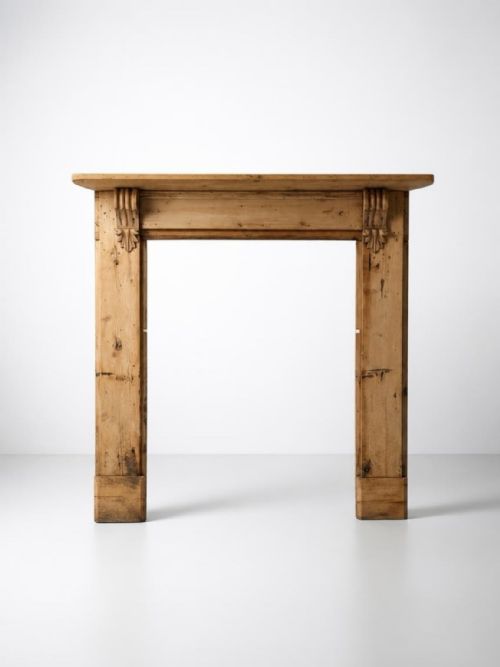
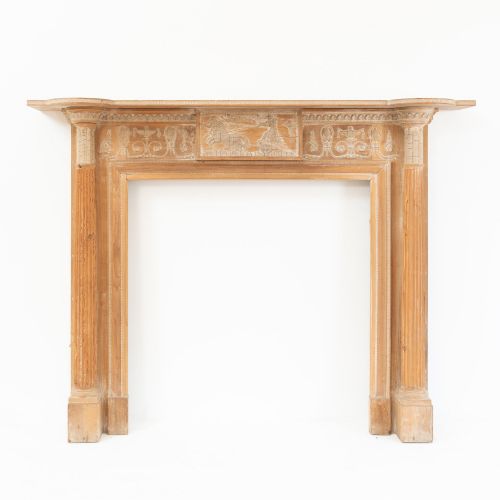
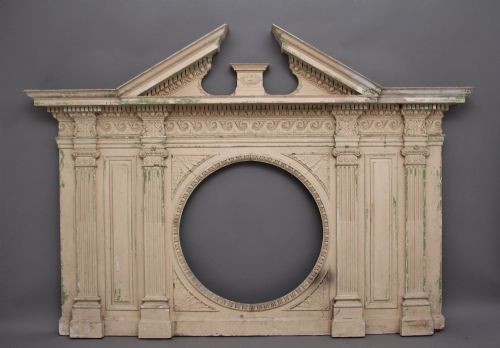
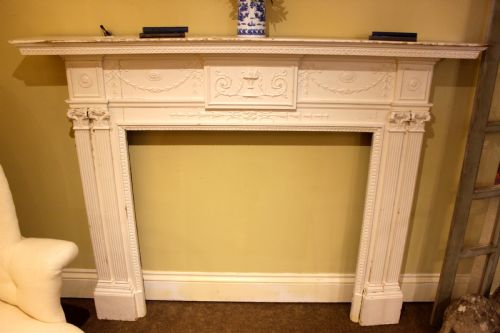
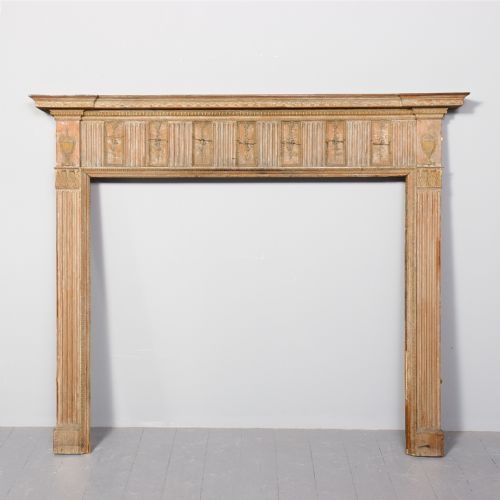
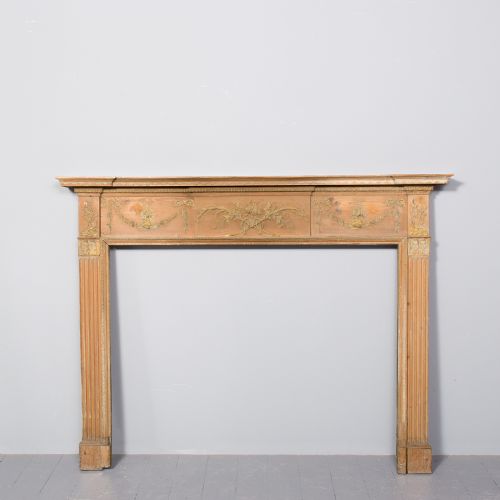
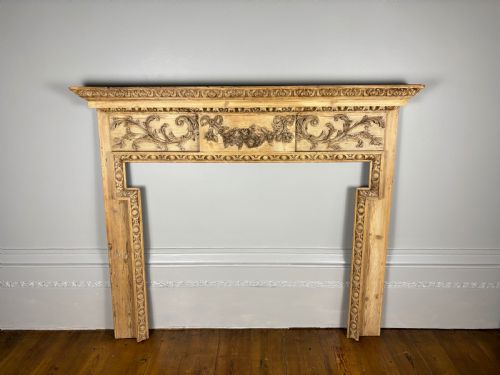


Carved Pine Fireplace Surround
A carved pine fireplace surround brings architectural warmth and period character to a room, offering adaptable timber surfaces that suit both historic and modern interiors.
Carved Pine Fireplace Surround
A carved pine fireplace surround frames the hearth with architectural timberwork, appearing across Georgian, Regency, and Victorian eras in forms ranging from simple mantels to elaborate chimney pieces. These pieces utilise soft timber that historically accepted intricate embellishment.
The versions most commonly met on this page span the eighteenth and nineteenth centuries, incorporating architectural elements like overmantels or simpler surrounds. They reflect classic British design periods from George III interpretations to nineteenth-century vernacular styles.
How they were made
Makers fashioned these surrounds from native pine and pitch pine, selecting straight-grained softwoods that allowed deep carving by hand. Workshops frequently applied gesso or paint directly to the timber surface to achieve crisp architectural mouldings.
Applied composition ornament, commonly known as compo, was moulded separately and fixed to the pine base to create repeating neoclassical motifs. This technique gave the appearance of carved wood at a fraction of the labour time.
Some Edinburgh mantelpieces carry traces of Scottish coal smoke trapped deep within their nineteenth-century gesso enrichment.
What varies in quality
Depth and sharpness in the wood carving separate superior surrounds from simpler examples, showing the confidence of the original hand. Crisp execution in applied gesso ornament also marks out finer execution.
The integrity of the original pine timber and surviving historic paint layers dictate the structural and historical standing of a surround. Pieces retaining early paint surfaces hold greater decorative authenticity.
The Carved Pine Fireplace Surround Glossary
- Gesso
- A plaster-like mixture applied to timber as a smooth base for ornamentation or painting. It accepts fine detail for decorative mouldings.
- Pitch pine
- A resinous North American pine used for its durability and strong grain pattern. It appears frequently in nineteenth-century joinery.
- Overmantel
- A decorative framework or mirror placed directly above the mantelpiece shelf. It unifies the fireplace surround with the wall elevation above.
- Composition ornament
- A moulded mixture of whiting, resin, and glue pressed into decorative shapes while hot. Makers applied these details to timber surrounds to simulate carved woodwork.
Carved Pine Fireplace Surround: Frequently Asked Questions
How do I install a pine surround?
Professional fitting ensures the timber clears existing hearths and flue regulations safely. Wall fixings are typically concealed behind structural mouldings.
Carpenters generally anchor the heavy timber frame securely to brickwork using discreet brackets.
Can I paint a pine surround?
Historic surrounds often carry early layers of paint that contribute to their decorative character. Stripping or repainting depends on whether the finish is original.
Modern primers and paints adhere well to bare pine if a contemporary colour scheme is preferred.
How do I clean antique pine?
Gentle dusting with a dry cloth prevents the accumulation of grime on delicate gesso and carved details. Avoid harsh liquid cleaners that strip historic finishes.
Wax polish can be applied sparingly to bare timber to maintain a soft sheen.
How do I date a surround?
Stylistic clues such as neoclassical urns or Victorian proportions point directly to specific design periods. Construction techniques and tool marks visible on the reverse also reveal the era of manufacture.
Comparing moulding profiles helps distinguish an eighteenth-century piece from a later nineteenth-century interpretation.