


Carved Pedestal Teapoy
A carved pedestal teapoy is a designated container for dry tea leaves mounted on a central pillar, offering both storage and sculptural presence in a room.
Carved Pedestal Teapoy
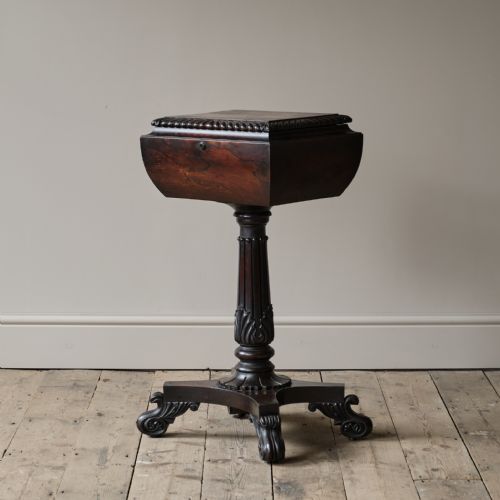
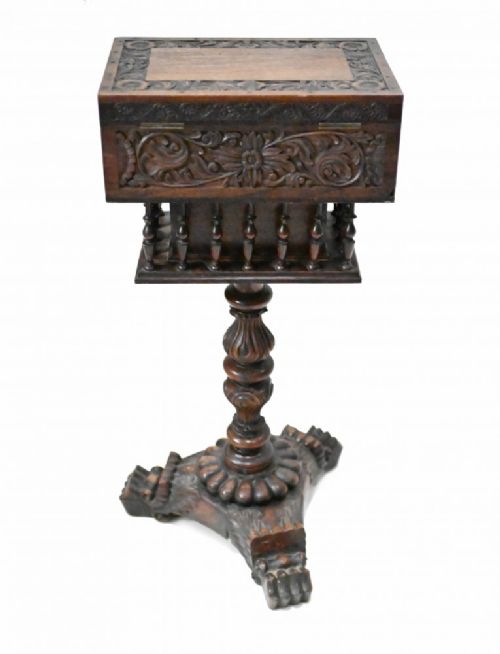
A carved pedestal teapoy functions as a specialised standalone box designed to hold tea, resting on a central column and a stable footed base. These pieces emerge from the Georgian, Regency, William IV, and Victorian periods, often taking forms such as a sarcophagus box or a tailored cabinet on a stand. Buyers encounter examples executed in mahogany, rosewood, walnut, and burr maple, alongside Anglo-Indian colonial variations in padouk.
The design frequently incorporates internal compartments and tea canisters, reflecting the high value placed on dry tea in earlier centuries. Alongside traditional teapoys, the category intersects with occasional tables, side tables, and work tables that share the characteristic pedestal construction. Surviving items demonstrate both standard British cabinet-making and distinct regional interpretations, such as carved colonial furniture.
Materials and construction
Cabinet-makers utilised dense timbers including mahogany, rosewood, and walnut, frequently selecting figured veneers like burr walnut and burr maple for the visible surfaces. Structural support relies on a central pedestal column rising from a carved base, often set upon four carved feet or a platform. Secondary woods and brass fittings support the internal mechanisms and hinges of the storage boxes.
Carving adorns the pedestal bases, feet, and box edges, executed by hand to impart depth and texture to the timber. Joinery methods secure the heavy lidded boxes to their stands, while interior fittings are constructed to house removable canisters and mixing bowls securely.
Listings feature examples from the Georgian, Regency, William IV, and Victorian periods, executed in mahogany, rosewood, walnut, burr maple, and padouk.
Distinctions in quality
Quality rests in the selection of timber veneers, such as flame mahogany or burr walnut, and the crispness of the hand-carved details on the pedestal and feet. Superior examples exhibit balanced proportions between the box and the supporting column, alongside intact internal compartments and original canisters.
Attribution to established makers like Gillows elevates an item through documented craftsmanship and maker stamps, distinguishing standard production from high-tier commissions. The retention of original hardware, brass mounts, and stable pedestal joints further separates refined survivals from later alterations.
Gillows
The Carved Pedestal Teapoy Glossary
- Sarcophagus
- A box shape characterised by a sloping, panelled lid resembling a stone coffin, popular in Regency and early nineteenth-century design. This form provides deep storage capacity within the upper compartment.
- Burr walnut
- A highly figured timber harvested from the wart-like growths on walnut trees, prized for its swirling grain patterns. Cabinet-makers used it as a veneer on prominent surfaces to create decorative visual impact.
- Padouk
- A heavy, durable tropical hardwood with reddish tones, utilised in Anglo-Indian colonial furniture for intricate carving. It withstands varied climates while offering a dense medium for detailed ornamentation.
Carved Pedestal Teapoy: Frequently Asked Questions
What is a carved pedestal teapoy used for today?
Modern interiors repurpose these pedestal boxes as occasional tables, side tables, or lamp tables, capitalising on their compact footprint and decorative presence. The internal compartments can still store small items while the surface holds lighting or decorative objects.
Their substantial construction allows them to function reliably as functional furniture in sitting rooms or studies, blending historical utility with contemporary display needs.
How do I distinguish between Regency and Victorian teapoys?
Regency pieces often display classical architectural influences, restrained lines, and precise brass inlays or mounts, reflecting early nineteenth-century taste. Victorian examples frequently present heavier proportions, bolder carving, and darker timbers like rosewood or walnut.
Examining the foot style, carving depth, and overall silhouette helps determine whether a piece aligns with the earlier Georgian and Regency eras or the later Victorian period.
What are tea canisters inside a teapoy?
Tea canisters, or caddies, are individual lidded containers fitted inside the main box to separate different varieties of precious tea leaves. They were constructed from matching timbers or metals to preserve the aroma and freshness of the contents.
Finding a teapoy with its original canisters intact is notable, as many were removed or replaced over centuries of use.
Are all pedestal teapoys made of mahogany?
While mahogany is common across nineteenth-century examples, makers also utilised rosewood, walnut, burr maple, and padouk. Each timber imparts a distinct colour and grain texture, influencing the overall visual weight of the piece.
Exotic woods like padouk point towards Anglo-Indian colonial production, whereas burr walnut and flame mahogany reflect fashionable British metropolitan preferences.