

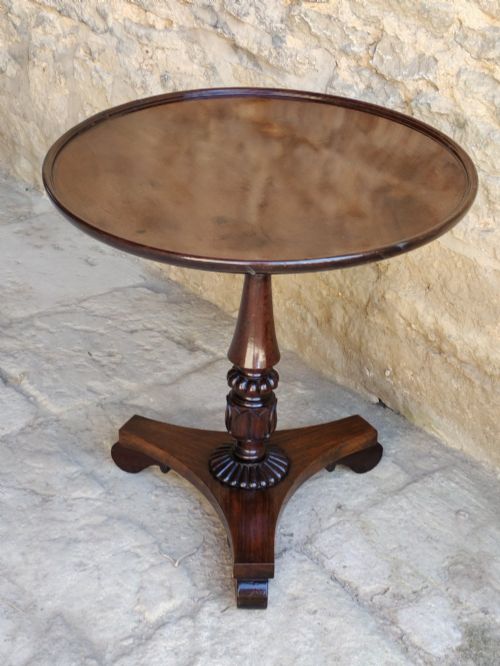
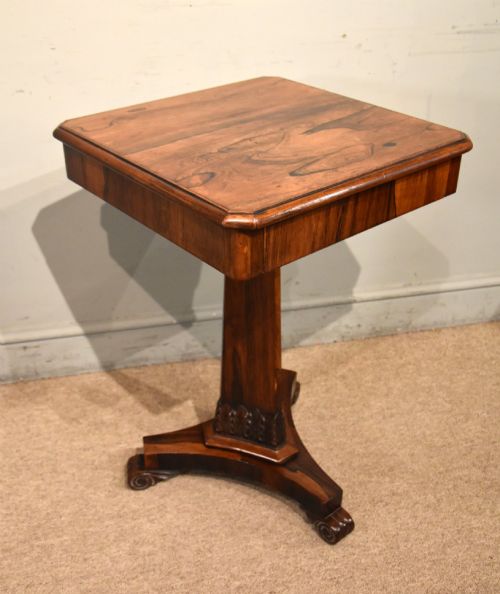
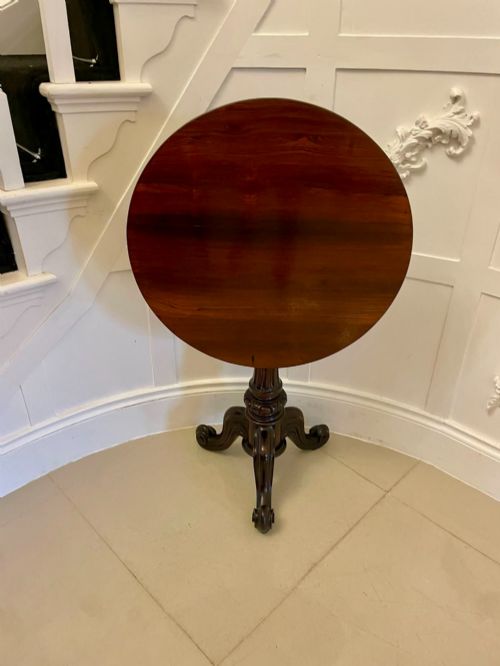
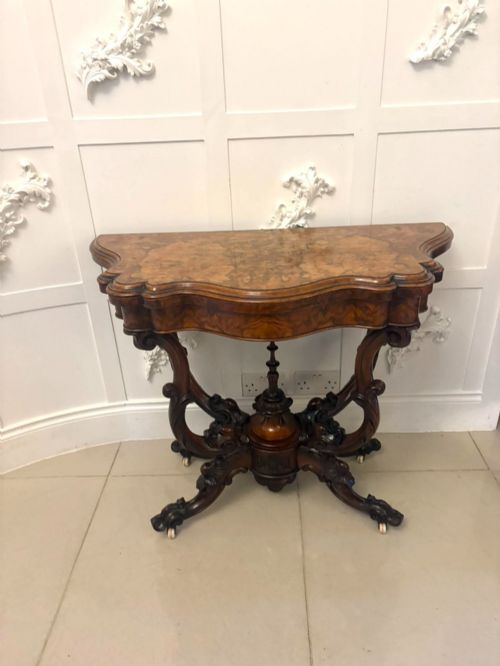

Carved Pedestal Base
A carved pedestal base anchors tables and stands with sculptural weight, turning functional furniture into centrepieces of traditional rooms.
Carved Pedestal Base
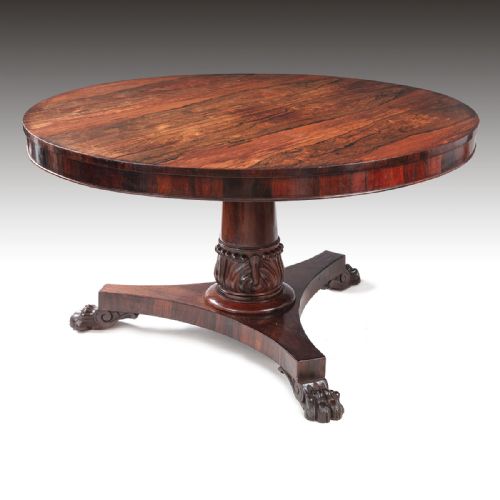
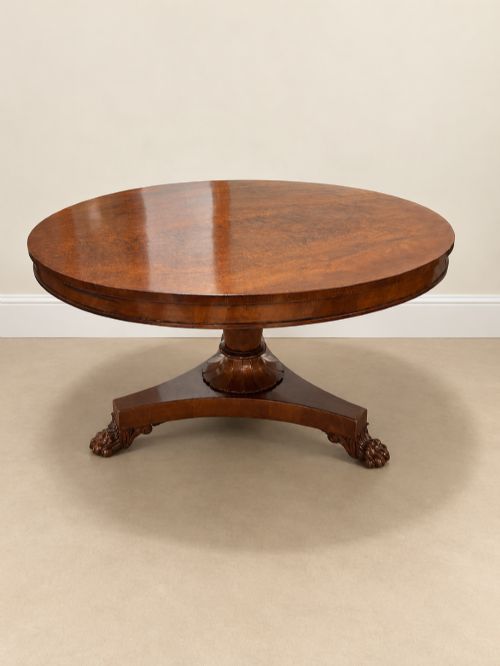
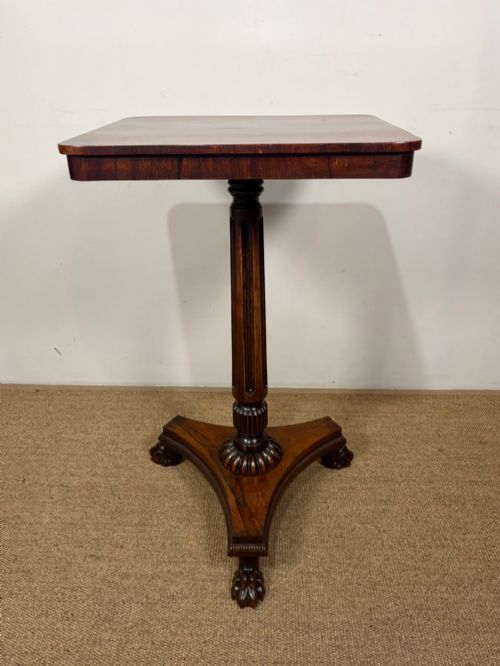
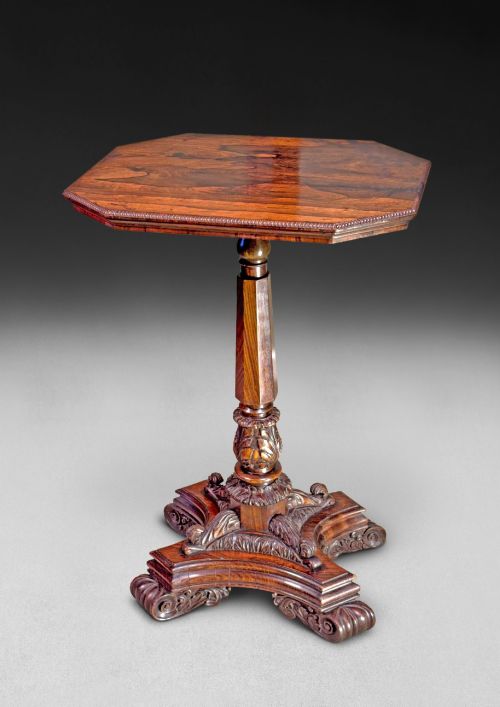
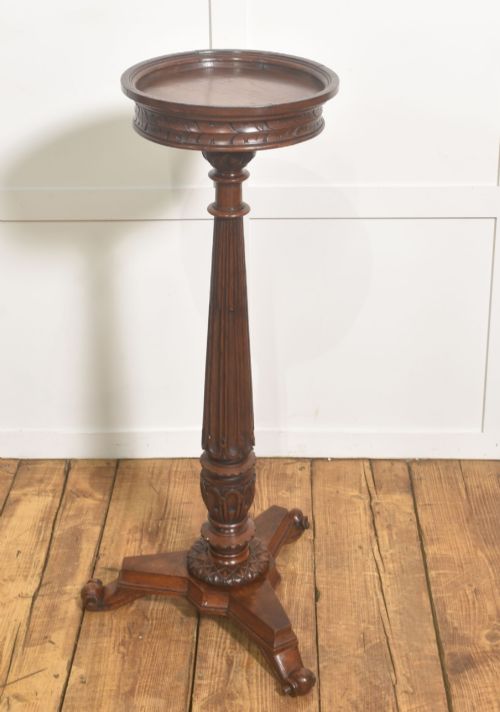
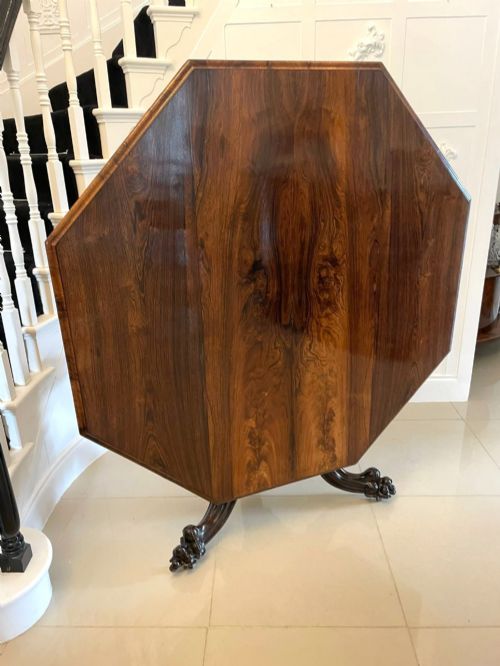
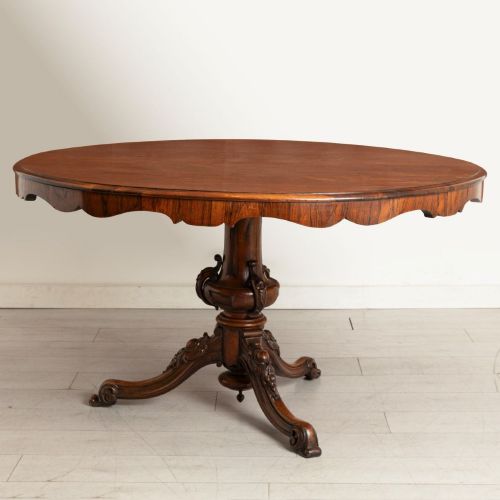
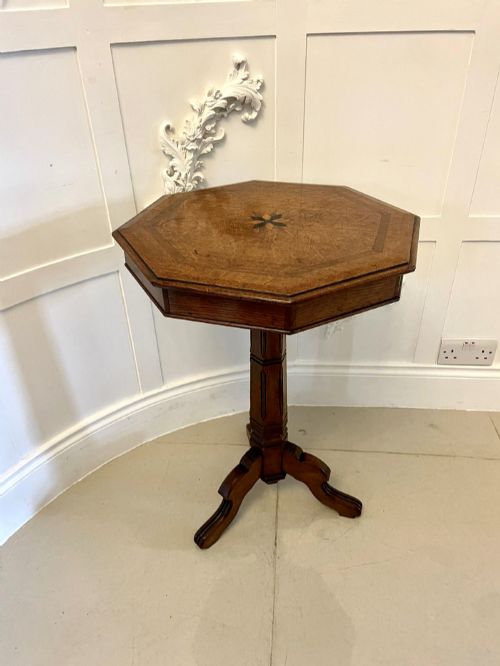
A carved pedestal base supports dining tables, centre tables, and plant stands, lifting the top surface on a central column or pillar rather than four standard corner legs. These supports appear frequently on Regency, William IV, and Victorian pieces.
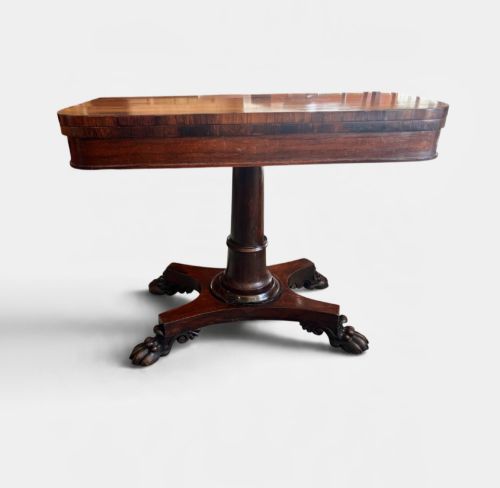
The form spans breakfast tables, card tables, and occasional wine tables where the central support allows maximum legroom around the perimeter. Solid timber or veneered columns often terminate in tripartite or quadruped feet.
Makers utilised this structural design to display elaborate scrollwork, acanthus carving, and turned detail directly beneath the surface. The resulting silhouette defines the heavy character of nineteenth-century reception rooms.
Materials and construction
Cabinetmakers constructed these supports primarily from dense hardwoods like rosewood, mahogany, walnut, and oak, often applying figured veneers to circular tops while carving the central pillar from solid timber. Heavy brass castors frequently conceal beneath the feet of larger breakfast and dining tables.
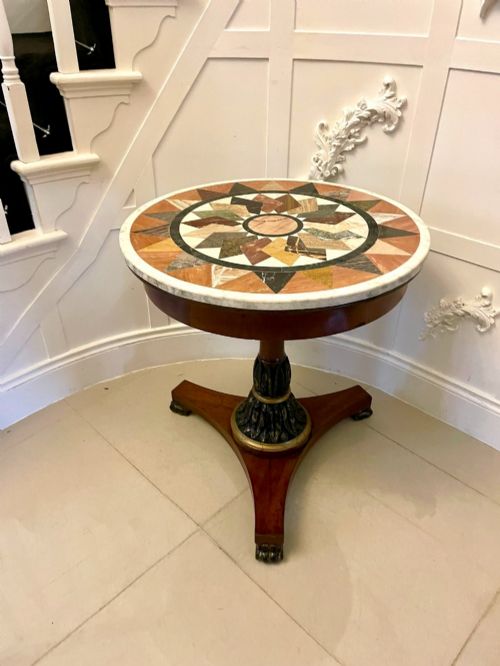
Carvers shaped the central columns and legs by hand, executing complex motifs such as basket bases, triform scrolls, and animal figures. Joinery relied on sturdy tenons and iron bolts to bear the substantial weight of marble or timber tops.
Carved Pedestal Base Retail Price Guide 2026
Typical asking prices for carved pedestal base among the pieces listed under this phrase on Sellingantiques today, from the lower quarter to the upper quarter. They describe what is for sale here now, not the wider market.
Listings feature woods including rosewood, mahogany, walnut, burr walnut, padauk, and oak alongside marble and cast stone.
Quality and execution
Depth and crispness of the hand-carved detail distinguish finer examples from standard production, as skilled artisans produced sharper acanthus leaves and more fluid scrollwork. The choice of timber also dictates grade, with highly figured burr walnut and rich rosewood marking out superior workshop output.
Structural stability depends on the integrity of the central joint where the pillar meets the base, since heavy tabletops exert constant downward pressure. Superior pieces maintain absolute rigidity without tilt or sway in the column assembly.
Gillows
The Carved Pedestal Base Glossary
- Triform base
- A three-sided support platform typically resting on three feet. This configuration provides steady balance for circular breakfast and centre tables.
- Quadruped base
- A four-way supporting structure branching from the central column. It frequently appears on larger Victorian oval and round dining tables.
- Tilt-top
- A mechanism allowing the table top to pivot to a vertical position when not in use. This clever design saved valuable floor space in nineteenth-century homes.
- Specimen marble
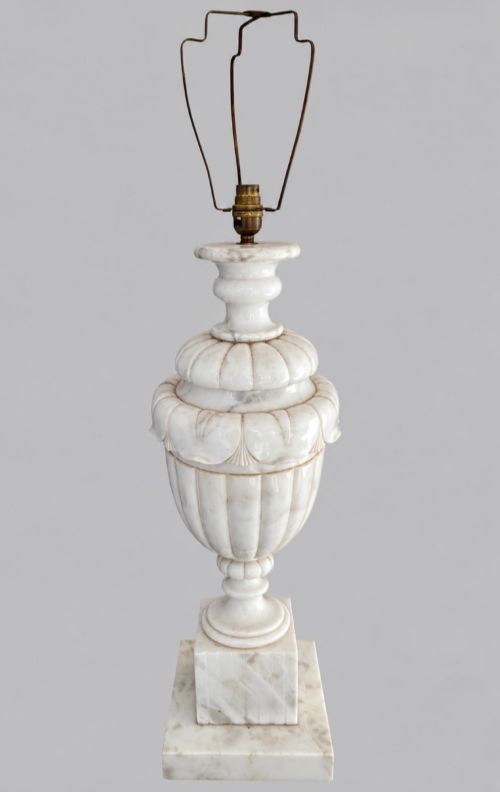
- A polished stone top composed of various geometric or botanical marble samples fitted together. It demonstrates high craftsmanship on Victorian lamp and centre tables.
- Torchiere
- A tall decorative stand originally designed to hold a candle or torch. Antique versions often feature elaborate carved wooden pillars or figural supports.
Carved Pedestal Base: Frequently Asked Questions
What is a carved pedestal base?
A carved pedestal base is the central supporting column of a table or stand, decorated with hand-cut wood ornamentation.
These supports hold up heavy dining tables, occasional wine tables, and plant stands while freeing up floor space around the perimeter.
How do I date a pedestal table?
Dating relies on identifying the timber species, secondary woods, and the specific style of the carving and base configuration.
Regency and William IV pieces often display bold rosewood grain and triform scrolling, whereas Victorian examples frequently feature heavy burr walnut and quadruped platforms.
Can I use a pedestal table for dining?
Pedestal tables serve dining rooms exceptionally well because the central column eliminates corner legs that obstruct seating.
Round and oval breakfast tables with sturdy triform or quadruped bases offer comfortable legroom for everyday family meals and gatherings.
How do I care for rosewood and mahogany?
Maintaining these dense hardwoods involves keeping them away from direct heat sources and sudden humidity changes to prevent timber splitting.
Regular dusting with a dry cloth and occasional application of traditional wax preserve the natural sheen of the polished surface.