





Carved Panelled Bench
A carved panelled bench brings substantial timber joinery and historic domestic function into modern hallways and living spaces.
Carved Panelled Bench
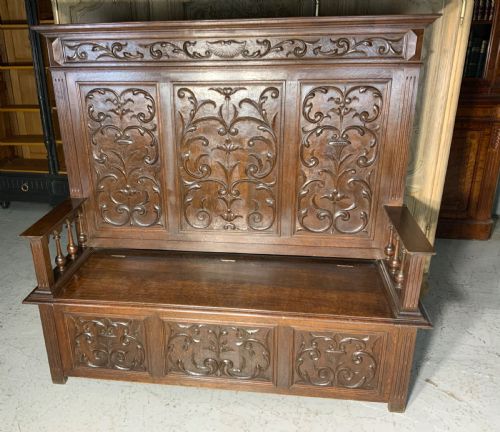
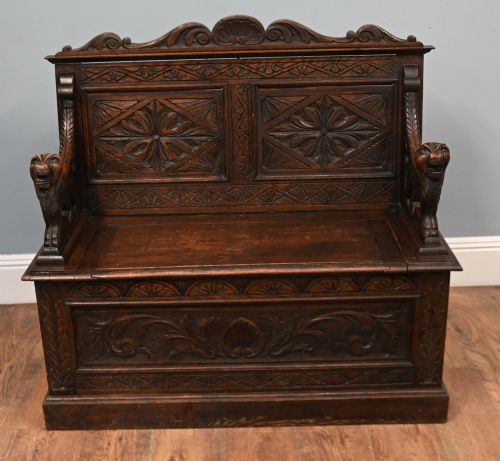
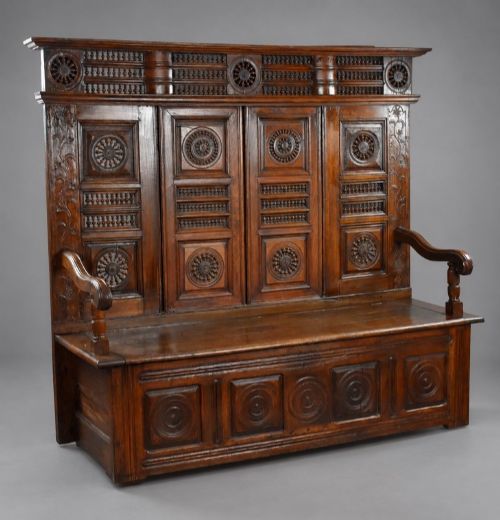
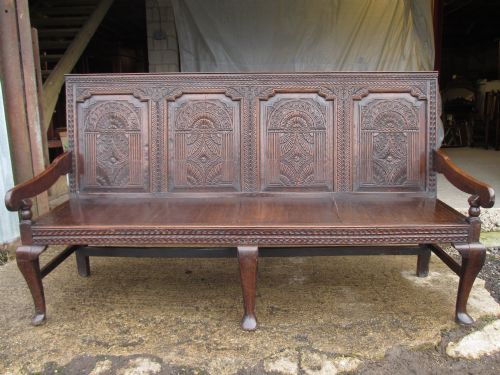
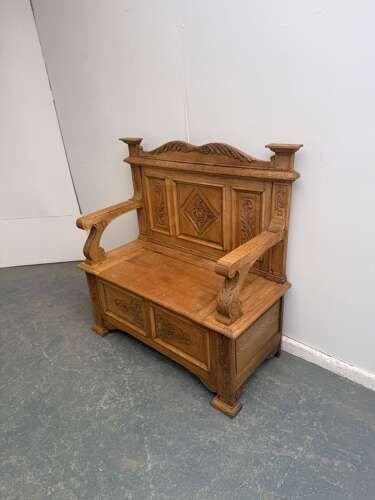
A carved panelled bench combines seating with timber construction, appearing in forms such as high-back box settles, hall benches, and window seats. These pieces originate from periods spanning the seventeenth through to the early twentieth century, reflecting domestic seating habits of past centuries.
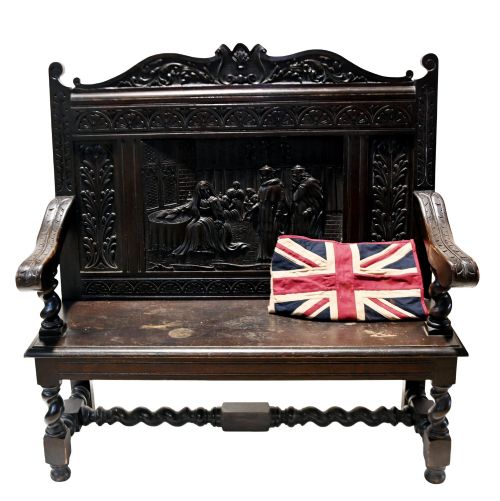
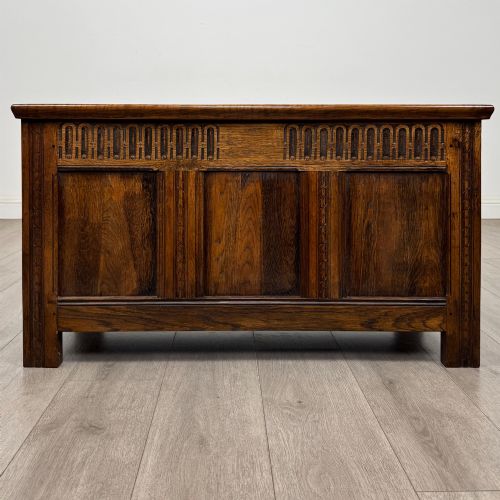
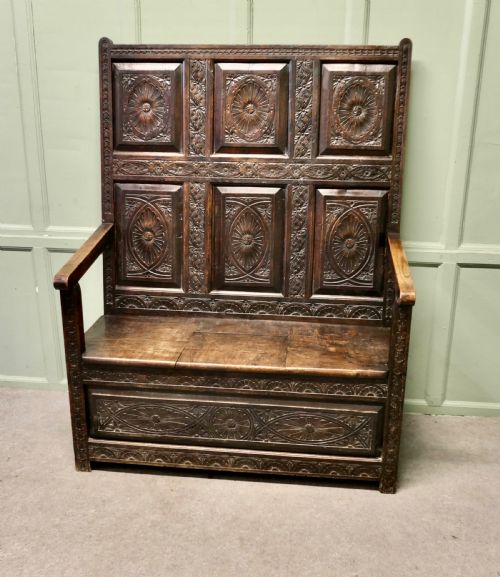
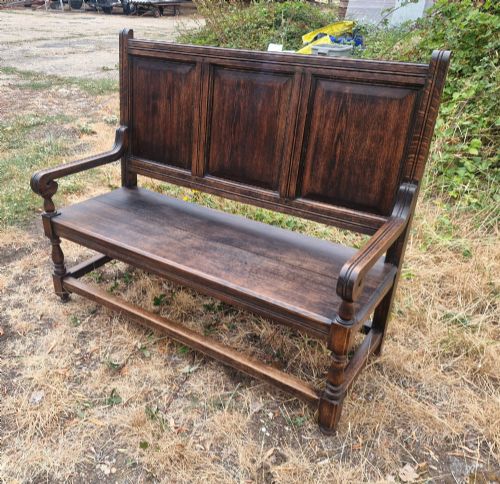
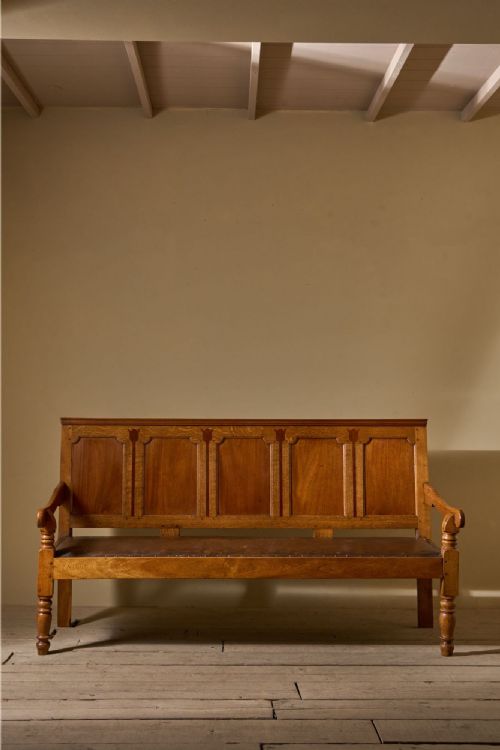
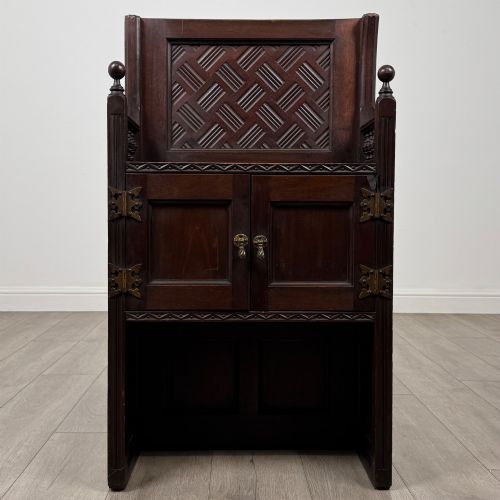
The most common examples encountered on this page are constructed from oak and take the form of settles or hall benches featuring panelled backs. Pieces range from seventeenth-century box settles to Victorian revivals and Edwardian hallway seating.
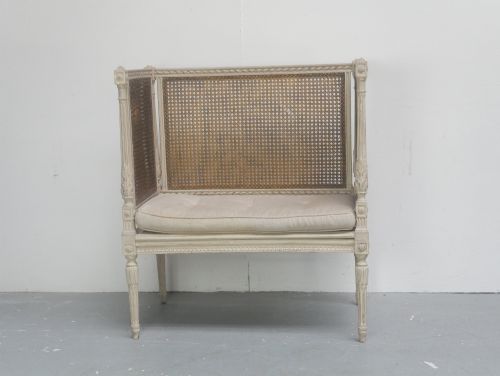
Variants include narrow window seats, armchair-style settles, and pieces incorporating storage compartments beneath the seat. Each form serves the practical purpose of hallway or fireside seating while displaying surface ornamentation.
Materials and construction methods
Oak dominates the construction of these items, selected for its strength and availability, though walnut, fruitwood, and mahogany also appear in specific pieces. Timber boards are joined using traditional methods such as mortise and tenon joints, creating stable frames capable of supporting daily use.
Surface decoration relies on hand-carved panels, incorporating motifs that range from geometric strapwork to figurative and floral patterns. Finish treatments involve wax or polish applied to the timber, preserving the grain while establishing a traditional sheen.
Carved Panelled Bench Retail Price Guide 2026
Typical asking prices for carved panelled bench among the pieces listed under this phrase on Sellingantiques today, from the lower quarter to the upper quarter. They describe what is for sale here now, not the wider market.
One listed pew originates directly from St. Paul's Church in Tiverton, bringing ecclesiastical woodwork into domestic circulation.
Assessing quality in historical seating
Quality reveals itself in the crispness of the hand-carving and the thickness of the timber utilised for the panels and seat boards. Superior examples exhibit tightly fitted joinery that remains stable without modern reinforcement.
The proportion of the piece and the retention of its original structural components, including the arm supports and feet, dictate its integrity. Alterations to the height or the replacement of base timbers alter the original character of the seat.
The Carved Panelled Bench Glossary
- Settle
- A wooden bench with a high solid back, solid arms, and often a box base intended to keep draughts away from the sitter. This form was common in domestic halls and farmhouses.
- Box settle
- A settle featuring a storage compartment beneath the hinged seat, combining seating with chest utility. The enclosed base prevented cold air from circulating underneath.
- Panelling
- Framework composed of stiles and rails enclosing thin wooden inserts, used here to form the decorative and structural backrests of benches. This method allowed timber to expand and contract with humidity changes without splitting.
- Jacobean Revival
- A nineteenth-century style copying seventeenth-century English furniture characteristics, heavily utilised in Victorian interpretations of earlier bench designs. Pieces in this style typically display deep geometric carving and dark polished oak.
- Frieze
- The horizontal decorative band situated along the upper portion of a bench back or panelled chest. Carvers often utilised this space for floral motifs or dating.
Carved Panelled Bench: Frequently Asked Questions
Where were settles placed in historic homes?
Historically, settles stood near hearths in the principal rooms of farmhouses and cottages to block draughts from doors. Their high backs and solid sides trapped heat from the fire around the person seated.
In later periods, similar forms moved into entrance halls to serve as seating for visitors removing outerwear.
How do I care for an antique oak bench?
Maintain the timber by applying a traditional beeswax polish occasionally to nourish the dry wood and protect the surface. Avoid placing wooden furniture near direct heat sources or in areas subject to rapid humidity fluctuations.
Dust the carved recesses regularly with a soft brush to prevent dirt accumulation in the detailing.
How can I tell an older settle from a revival piece?
Examine the construction marks, tool traces on the timber, and the nature of the wear around the foot and arm areas. Seventeenth and eighteenth-century examples display hand-tooling and pegged joints consistent with period workshop practices.
Revival pieces from the Victorian era often utilise machine-sawn components alongside hand-carving, accompanied by timber patination that reflects nineteenth-century finishing techniques.