

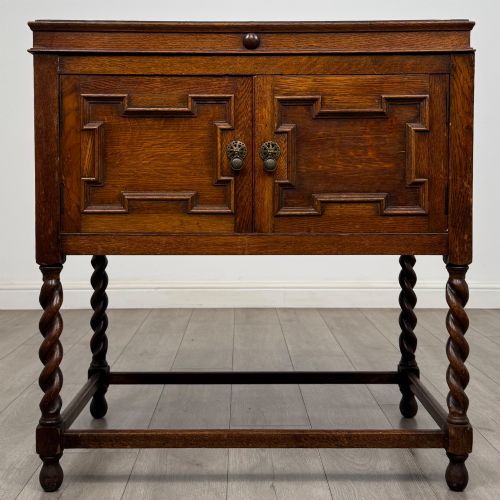
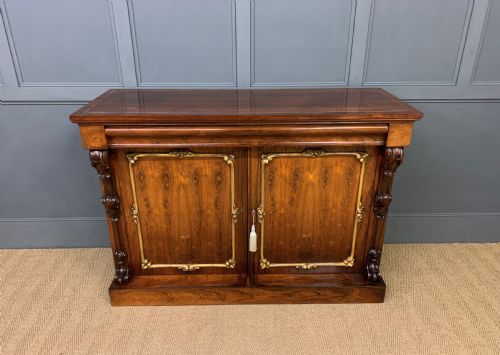
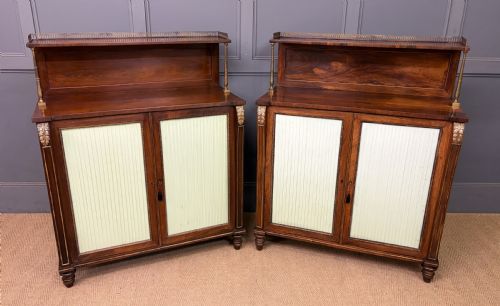
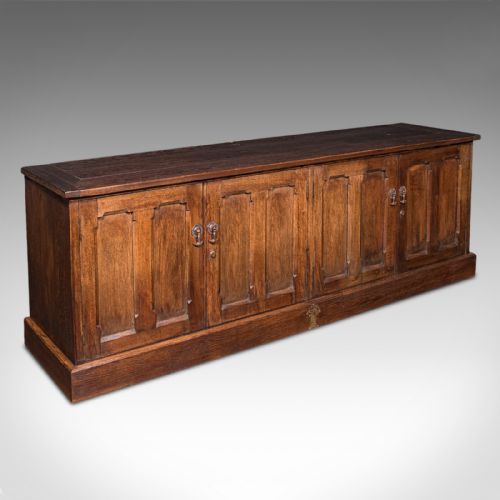
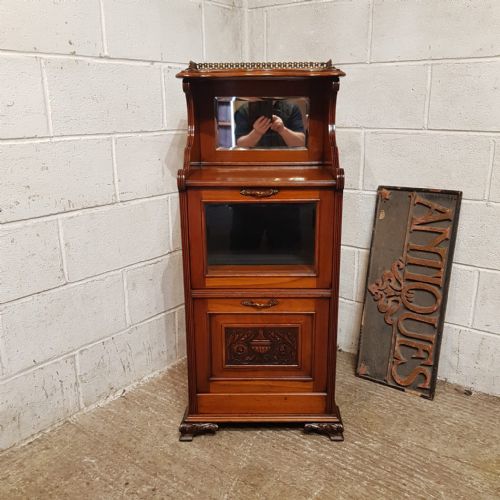


Carved Panel Side Cabinets
Carved panel side cabinets bring texture and history to a room, offering practical storage through beautifully worked woodwork.
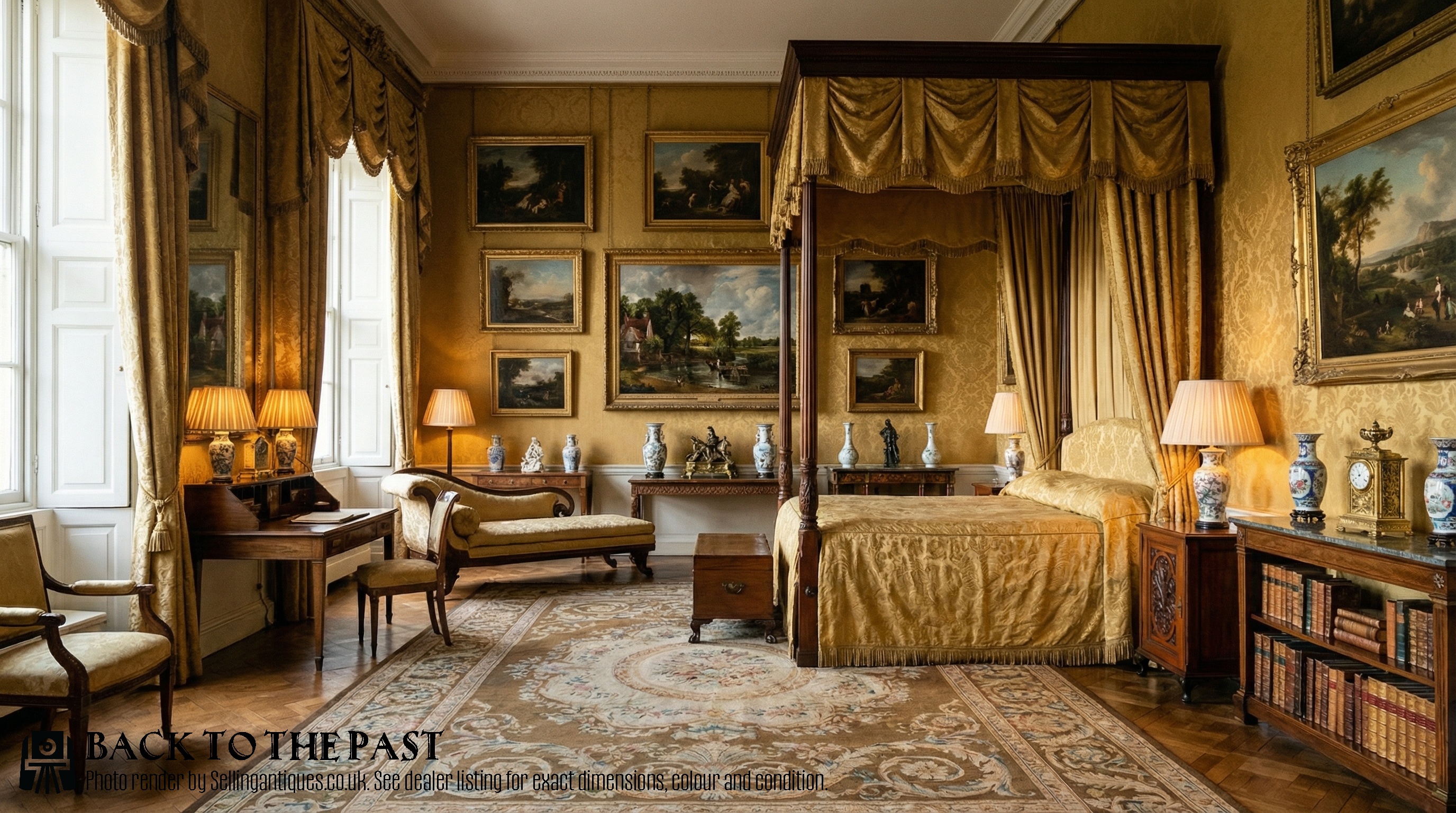
Carved Panel Side Cabinets
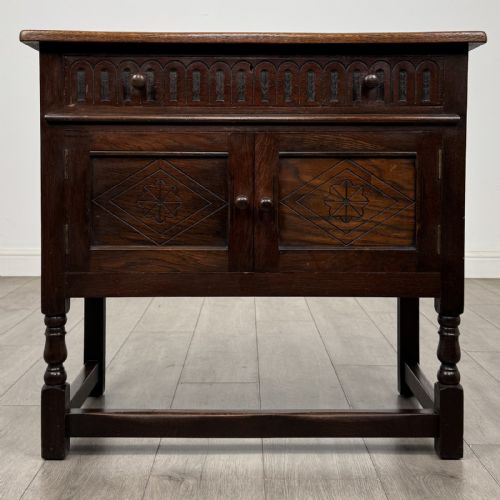
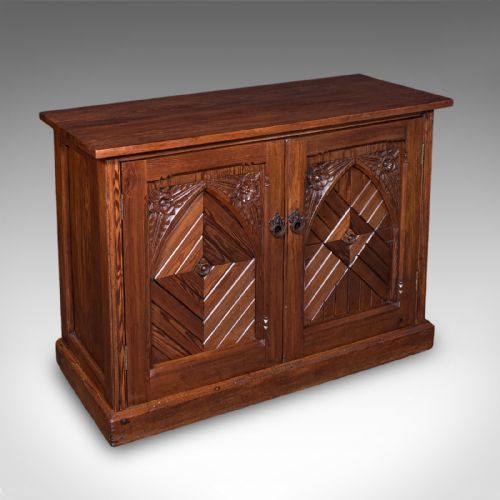
Carved panel side cabinets are solid storage furniture pieces featuring ornamented wooden doors or sides. They appear across various historic periods, ranging from the eighteenth century to the early twentieth century.
The versions most commonly met on this page span Victorian and Edwardian periods alongside earlier revival styles. These pieces function as sideboards, cupboards, and bedside units in rooms requiring compact or low-profile storage.
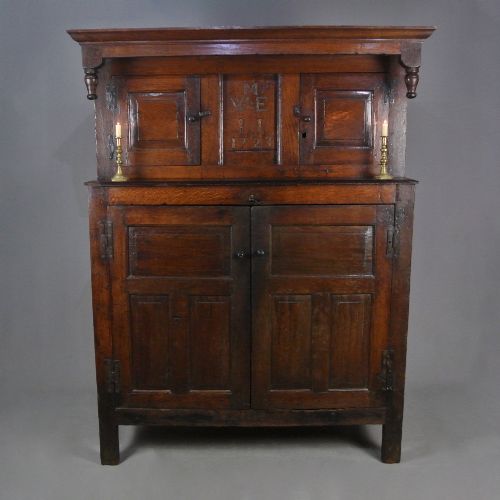
Makers shaped these cabinets in oak, mahogany, walnut, and rosewood, often applying detailed relief carving to the front panels. Regional examples range from English oak court pieces to French provincial commodes and side units.
How they were made
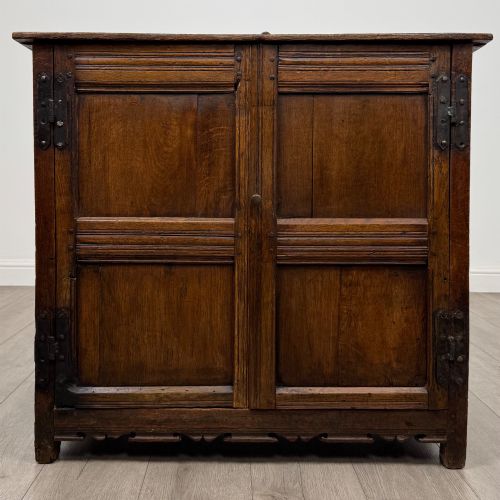
Carpenters constructed these cabinets primarily using solid oak, mahogany, walnut, and rosewood, supported by internal framing and panel-and-frame joinery. This traditional method allowed the timber to expand and contract naturally without splitting.
Surface ornamentation relied on hand chisels and gouges to cut motifs directly into the wooden panels. Metal hardware such as brass handles and iron hinges were fitted to secure the doors and drawers.
Carved Panel Side Cabinets Retail Price Guide 2026
Typical asking prices for carved panel side cabinets among the pieces listed under this phrase on Sellingantiques today, from the lower quarter to the upper quarter. They describe what is for sale here now, not the wider market.
Listings feature oak, mahogany, walnut, rosewood, and limewood alongside iron and brass hardware.
What varies in quality
Quality rests primarily in the crispness of the hand-carved detail and the selection of timber figures. Superior examples show deep, undercut relief work rather than shallow machine routing.
Construction methods also separate standard items from finer works, evident in the thickness of the timber, dovetailed drawer boxes, and original brass or iron fittings.
The Carved Panel Side Cabinets Glossary
- Court Cupboard
- A traditional English enclosed piece of furniture used for storing food and displaying plate, often featuring heavy turned supports and carved panels.
- Commode
- A low French cabinet or chest of drawers designed for domestic storage, frequently ornamented with elaborate carvings or mounts.
- Dresser Base
- A heavy low wooden table fitted with drawers and cupboards underneath, used historically for food preparation and serving.
- Rosewood
- A dense, dark timber featuring distinct grain patterns, utilised extensively for high-status nineteenth-century cabinets.
- Jacobean Revival
- A nineteenth-century stylistic movement imitating the geometric panels, heavy turnings, and dark finishes of the early seventeenth century.
Carved Panel Side Cabinets: Frequently Asked Questions
Where should I put a side cabinet?
These cabinets suit hallways, living rooms, and dining spaces where surface space and enclosed storage are both needed. Their compact footprints allow them to fit against walls without dominating the room.
They also function effectively as bedside units or serving surfaces depending on their height and proportion.
How do I date an oak cabinet?
Dating relies on examining the construction methods, tool marks, and hardware used on the piece. Hand-cut joinery and pegged joints often point towards earlier centuries.
Later revival pieces replicate these historic styles while utilising machine-sawn timber and different interior framing.
Are these cabinets made of solid wood?
The pieces listed utilise solid timbers such as oak, mahogany, walnut, rosewood, and pine. Traditional construction ensures the primary panels and frames are solid material.
Carpenters selected these dense hardwoods for their durability and suitability for deep relief carving.
How do I clean carved wood panels?
Dust the carved recesses regularly using a soft bristle brush to prevent dirt accumulation in the grain. Apply a traditional beeswax sparingly to nourish the timber surface.
Avoid modern liquid polishes containing silicones, which can build up and dull the carved details over time.