
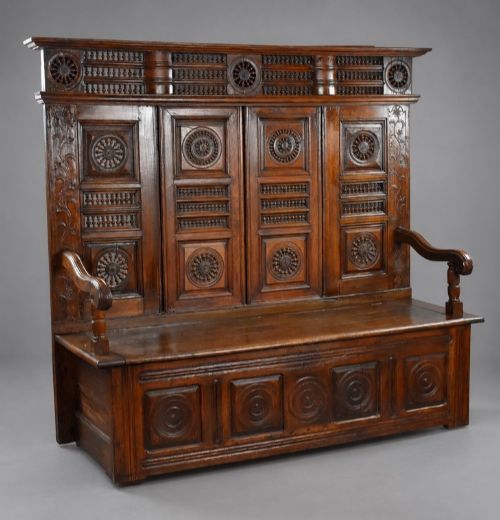
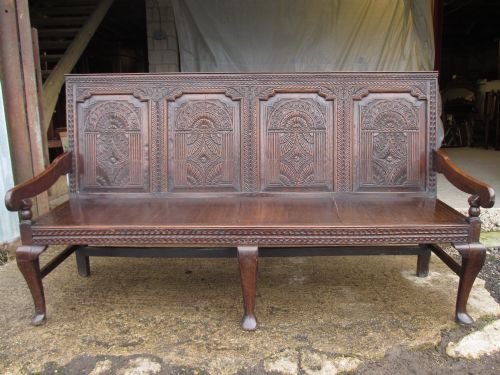
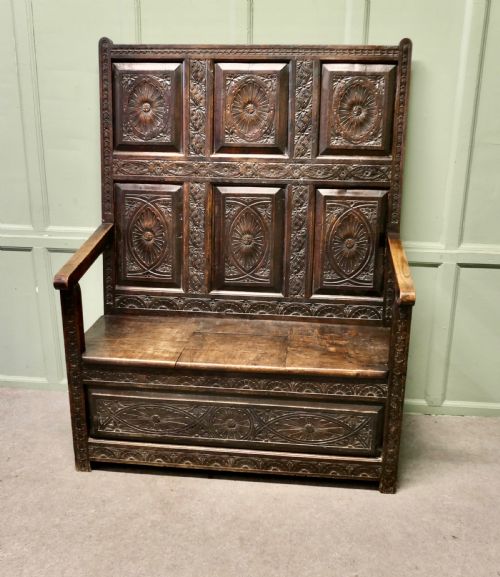
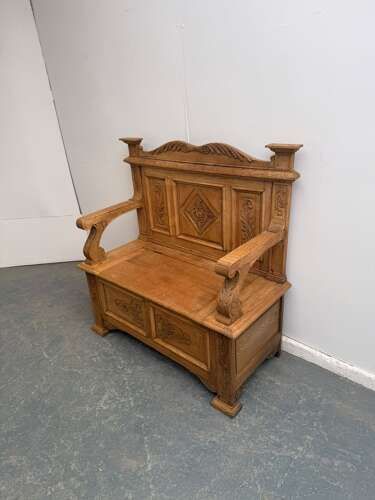


Carved Panel Oak Settle
These heavy wooden seats bring centuries of craftsmanship indoors, offering high backs and panelled storage that anchor an entire room.
Carved Panel Oak Settle
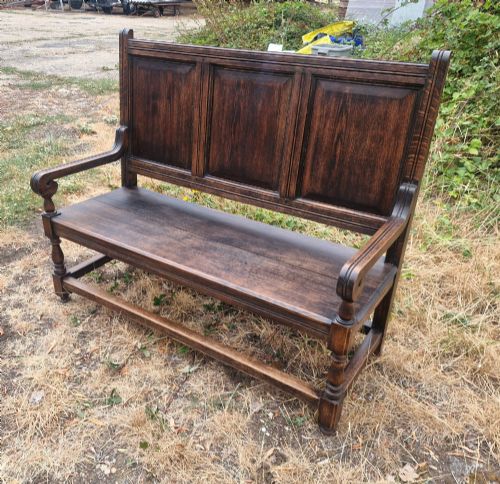
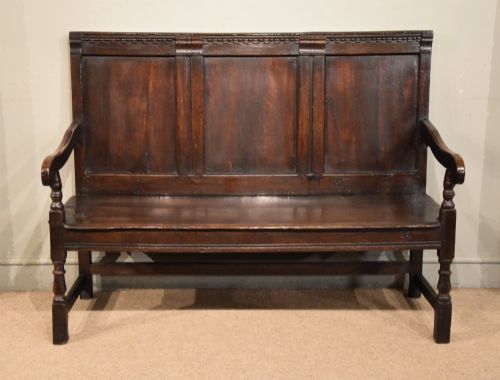
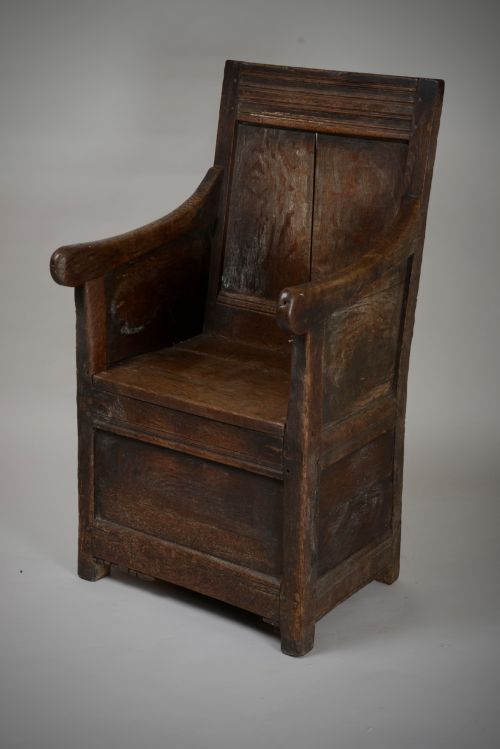
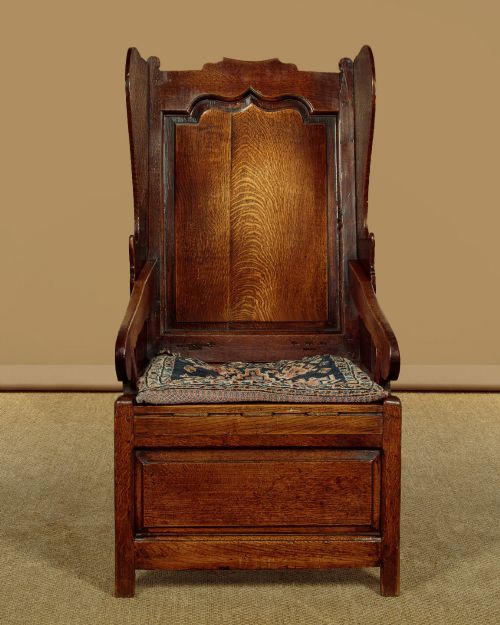
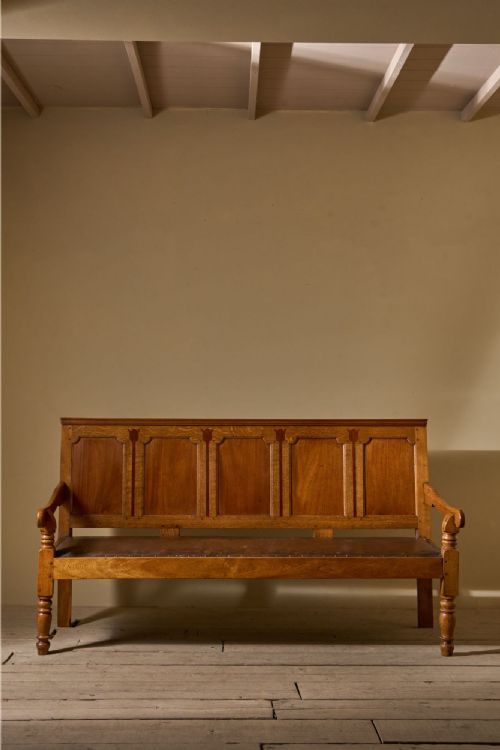
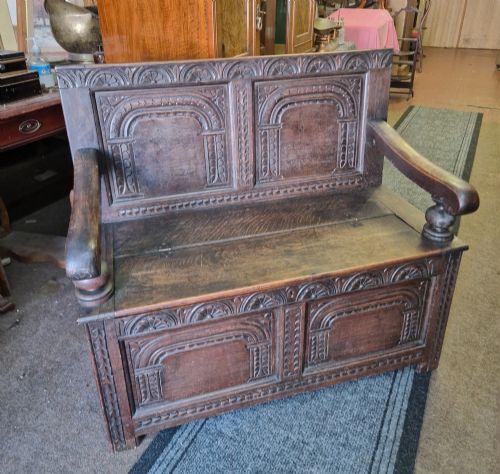
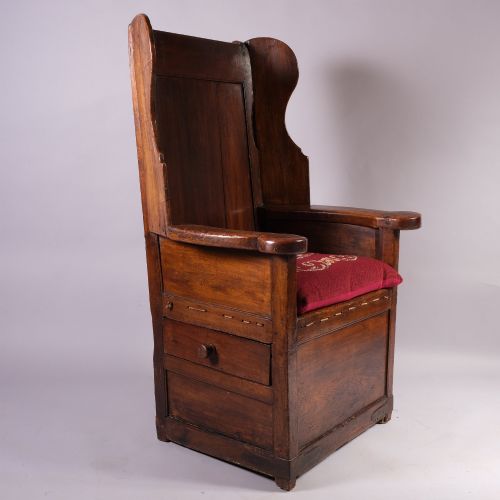
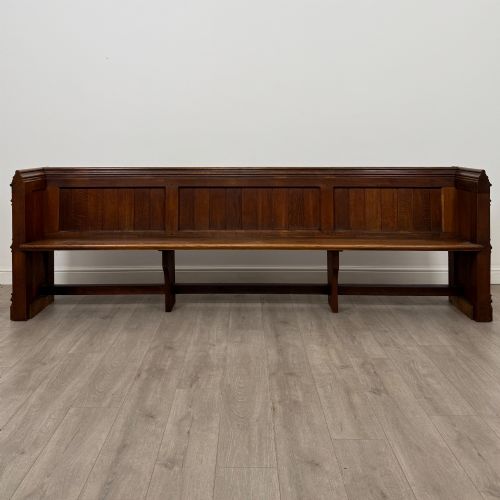
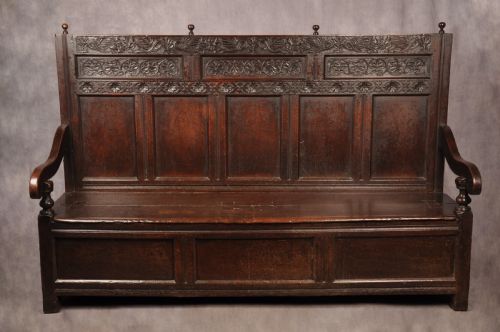
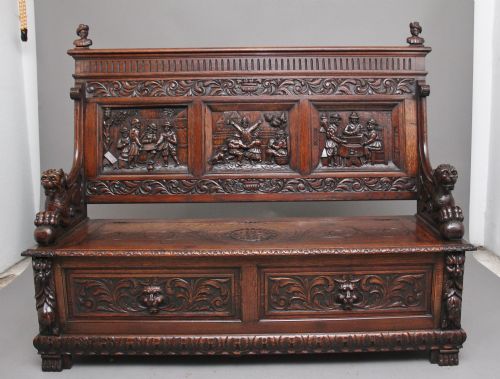
When you search for a carved panel oak settle, you are looking at substantial seating designed to keep draughts at bay in older homes. The forms range from high-back box settles with integrated storage beneath the seat to open benches and lambing chairs.
The versions you meet most often on this page date from the eighteenth and nineteenth centuries, though earlier seventeenth-century examples and later revivals appear regularly. These pieces function as benches, hall seats, and box settles.
Originating primarily from English, Welsh, and regional country workshops, they combine practical seating with expressive carved panelling across the backrests and front boards.
Materials and Joinery
Solid oak provides the primary structural material, worked with traditional hand tools to form thick panels, upright stiles, and sturdy rails. Secondary woods like fruitwood appear occasionally in regional pieces.
Joinery relies on mortise and tenon joints secured with wooden pegs, allowing the heavy frames to withstand generations of daily use without metal fasteners. Carved decoration is chipped or gouged directly into the solid timber panels, often featuring geometric patterns, floral motifs, or figurative elements.
Listings feature pieces spanning from the 16th century through the 1930s, constructed predominantly in oak with occasional examples in fruitwood and walnut.
Evaluating the Build and Carving
Quality rests in the integrity of the timber and the depth of the carving. Superior examples display crisp, hand-carved detail on the panels rather than shallow machine work, and retain their original board seats and box storage lids.
Proportion and surface finish also distinguish better pieces. A well-proportioned settle maintains balanced height and depth, while a desirable surface shows a deep, warm patina developed through decades of waxing and natural wear.
The Carved Panel Oak Settle Glossary
- Box settle
- A high-backed wooden bench featuring a concealed storage compartment beneath the lift-up seat. This design kept users elevated above cold stone floors while storing household blankets or items.
- Lambing chair
- An enclosed wooden armchair featuring high wings and solid sides designed to shield the occupant from drafts. They often include a small drawer or compartment beneath the seat.
- Panel
- A flat piece of timber fitted within a grooved frame to allow for natural wood movement. Carved panels form the decorative backrests of traditional seats.
- Stile
- An upright vertical member in a panelled frame. These structural posts support the weight of the high back and arms.
Carved Panel Oak Settle: Frequently Asked Questions
Where were settles placed in historic homes?
These seats traditionally stood near the hearth in the main living room to block cold draughts from sweeping across the flagstone floors. Their high panelled backs trapped heat from the fire around the occupant.
Over time, smaller versions and hall benches migrated to entranceways and corridors to provide seating for putting on boots or waiting visitors.
How do I care for an old oak settle?
Maintain the wood by applying a quality beeswax polish periodically to nourish the dry timber and preserve the historic surface sheen. Avoid placing the seat near direct heat sources or radiators, which can cause the aged oak panels to split.
Keep the piece out of direct sunlight to prevent the colour of the wood from fading unevenly across the carved surfaces.
Are box settles comfortable to sit on?
These wooden seats were built for utility and upright posture rather than deep lounging. Many owners add loose squabs, fabric cushions, or textiles to the seat base for added comfort.
The high wooden back and enclosed arms provide excellent physical support and create a remarkably cosy spot despite the firm wooden base.
How can I tell an eighteenth-century settle from a Victorian revival?
Examine the construction marks, timber grain, and wear patterns across the joints and seat boards. Eighteenth-century examples typically show adze marks, pegged joinery, and irregular hand-chamfered edges.
Victorian revival pieces often feature machine-sawn components, uniform timber colour, and deep, crisply defined carving styles inspired by earlier Jacobean motifs.