

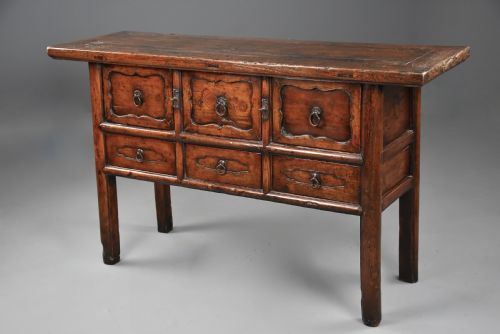
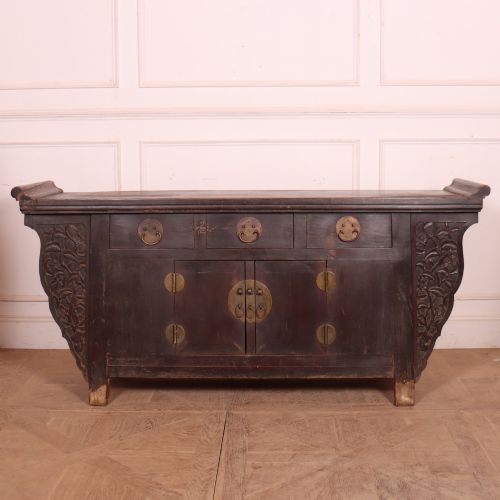


Carved Oriental Credenza
A carved oriental credenza offers substantial storage with striking detail, drawing on Chinese elm, padauk, and lacquer traditions to anchor a room.
Carved Oriental Credenza
A carved oriental credenza encompasses large storage furniture spanning sideboards, cupboards, and cabinets originating from the nineteenth and early twentieth centuries. These pieces reflect diverse aesthetics including Qing Dynasty, Chinese Provincial, Chinoiserie, and nineteenth-century colonial styles like Anglo-Burmese and Anglo-Indian.
The most common forms on this page are Chinese elm sideboards and cupboards, alongside intricately carved padauk pieces from Burma and India. Buyers frequently encounter red lacquered cabinets on stands and darker walnut examples bearing Aesthetic Movement or Japonism influences.
Dated pieces cluster heavily around the late nineteenth century and the early decades of the nineteen hundreds, often displaying traditional regional joinery or hybrid Western-colonial forms. This mix provides sturdy, practical furniture defined by deep carving and regional timber choices.
Materials and construction
Makers relied on dense regional timbers such as Chinese elm, padauk wood, and walnut to build robust carcasses for these cabinets and sideboards. These woods support deep relief carving and hold structural integrity over generations of heavy domestic use.
Surfaces frequently receive layers of red or black lacquer, sometimes paired with gilding, bone inlay, or brass hardware. Joinery employs traditional framing and panel techniques suited to the movement and settling of substantial tropical and temperate hardwoods.
Carved Oriental Credenza Retail Price Guide 2026
Typical asking prices for carved oriental credenza among the pieces listed under this phrase on Sellingantiques today, from the lower quarter to the upper quarter. They describe what is for sale here now, not the wider market.
Judging the quality of execution
Quality rests primarily in the crispness and depth of the hand carving, which ranges from flat, schematic incisions to deeply undercut relief figures and foliage. Superior examples integrate the decorative carving seamlessly into the structural rails and stiles of the cabinet rather than applying it as mere surface veneer.
The integrity of the timber and the finish dictate the lasting impression, with fine patinas on elm or padauk outlasting flaking or poorly restored lacquer. Original brass mounts, bone details, and well-fitted doors indicate a higher standard of original workshop production.
Gabriel Viardot
The Carved Oriental Credenza Glossary
- Padauk wood
- A heavy, dense tropical timber prized for its rich reddish-brown colour and durability in carved colonial furniture. It takes a fine finish and supports intricate detail.
- Elm
- A resilient hardwood utilised extensively in regional Chinese furniture for its tough grain and resistance to splitting. It forms the structure of many rustic sideboards.
- Lacquer
- A durable resin finish applied in multiple layers to wood, often in red or black, to create a smooth, glossy protective surface. It provides the base for Chinoiserie decoration.
- Aesthetic Movement
- A late nineteenth-century design style emphasising visual beauty over narrative content, drawing heavily on Japanese and Chinese artistic motifs. It influenced European cabinets with oriental themes.
- Qing Dynasty
- The final imperial dynasty of China, spanning from the seventeenth to the early twentieth century. Pieces from this era often feature traditional motifs and formal joinery.
Carved Oriental Credenza: Frequently Asked Questions
What is a carved oriental credenza?
A carved oriental credenza is a large storage piece, typically a sideboard, cupboard, or cabinet, featuring hand-carved ornamentation from Asian or colonial-inspired traditions. They combine functional shelving and cupboard space with decorative surfaces.
Most examples date from the nineteenth or early twentieth centuries, utilising native timbers like elm, walnut, and padauk.
How were these cabinets used originally?
These pieces served as primary storage furniture for dining rooms, halls, and reception rooms to hold porcelain, linen, and household provisions. Their substantial tops also provided display space for decorative objects.
In colonial and trading contexts, they reflected global trade routes and the cross-cultural exchange of furniture designs.
How do I care for a lacquered wood cabinet?
Keep lacquered and polished wood surfaces away from direct sunlight and extreme humidity fluctuations to prevent cracking or fading. Dust gently with a dry, soft cloth without applying harsh chemical polishes.
Maintaining a stable indoor climate preserves the integrity of both the timber substrate and the delicate surface finish.
How can I tell the period of a piece?
Dating relies on examining construction methods, tool marks, wood shrinkage, and the specific decorative vocabulary of styles like the Qing Dynasty or the Aesthetic Movement. Hardware styles and the wear patterns on internal timbers also offer clues to age.
Comparing the joinery to documented examples from the nineteenth and early twentieth centuries helps confirm the era of manufacture.