

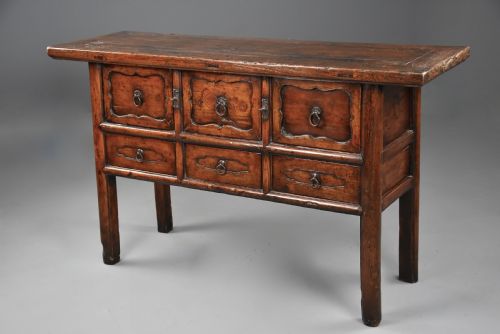
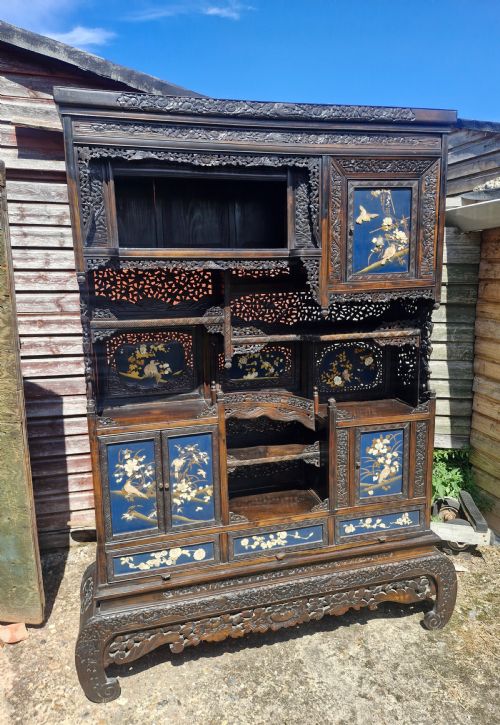
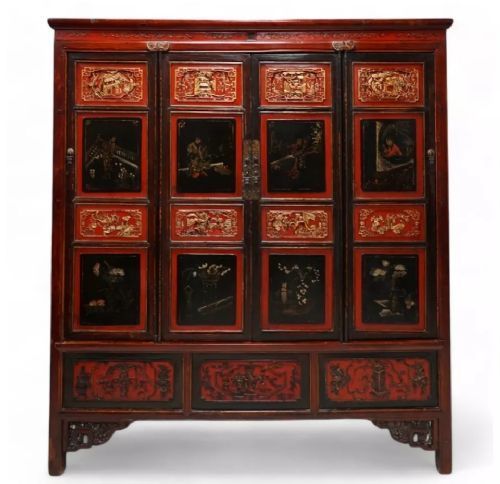
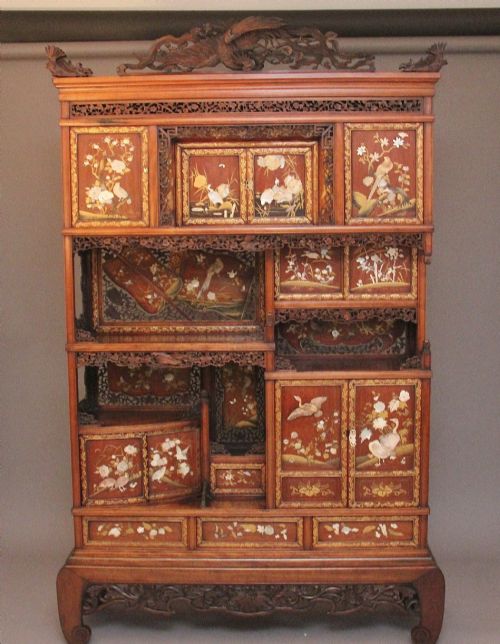
Carved Oriental Cabinet
A carved oriental cabinet brings intricate craftsmanship and rich texture into a room, offering both practical storage and a strong decorative focus.
Carved Oriental Cabinet
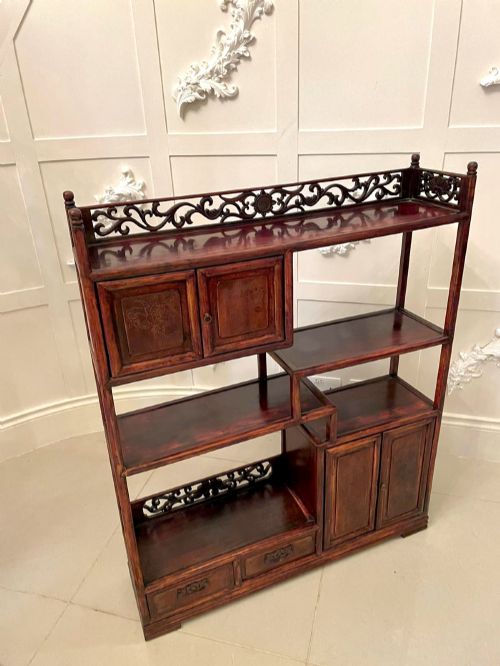
A carved oriental cabinet encompasses a diverse group of storage furniture spanning several centuries and distinct regional traditions. Buyers searching for a carved oriental cabinet typically encounter pieces originating from China and Japan, alongside European interpretations influenced by Eastern design.
The selection ranges from large display cabinets and wedding chests to compact shodona cabinets and sideboards. Nineteenth-century examples, particularly from the Meiji period and the Qing Dynasty, dominate the available forms.
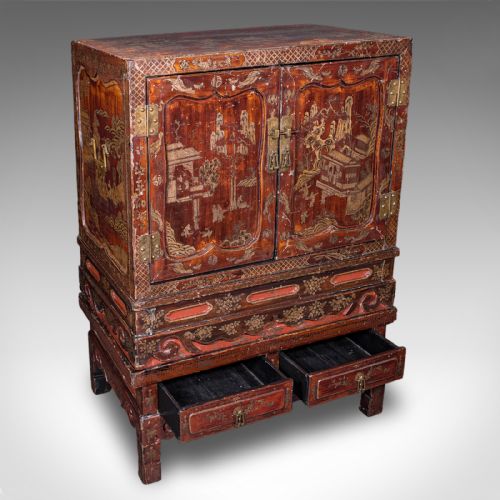
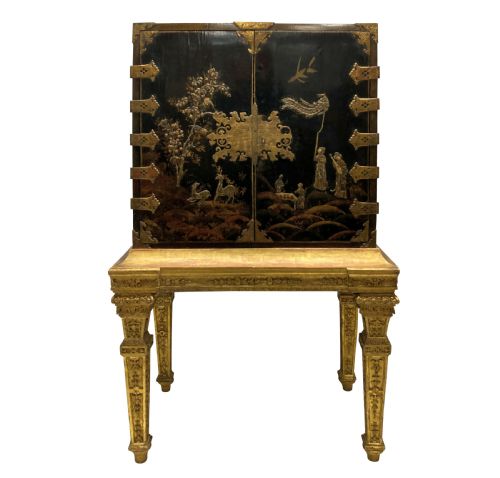
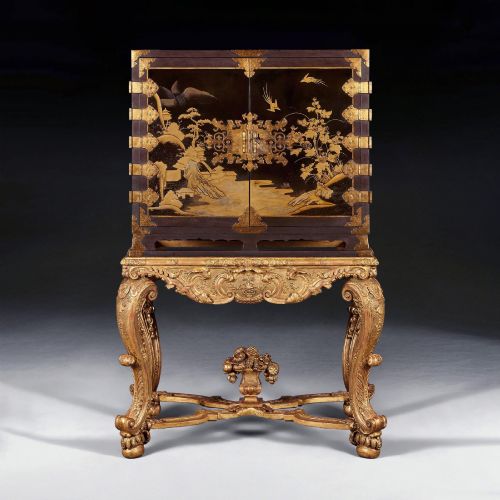
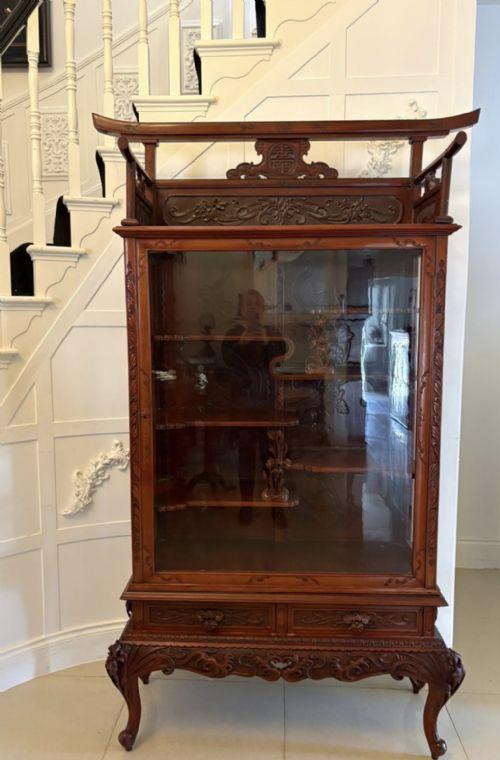
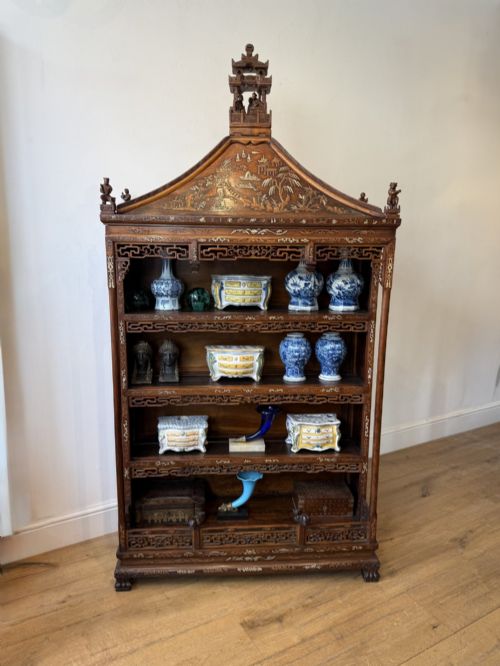
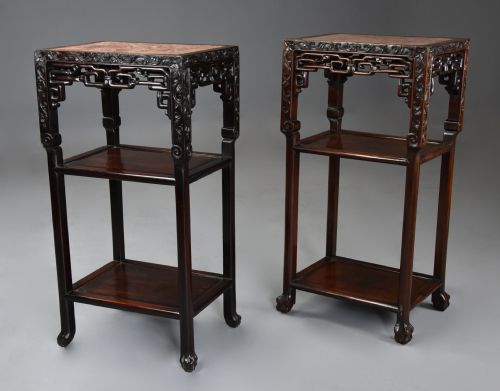
Many items incorporate stands, allowing smaller cupboards to sit elevated on carved timber or giltwood bases. Alongside traditional closed storage, the inventory includes display pieces designed to showcase porcelain and curiosities.
Materials and Construction Techniques
Cabinetmakers utilised dense timbers such as hardwood, padauk, elm, and walnut for the primary structure, often applying deep relief carving directly to the wood. Lacquer finishes in red, black, and green provide a smooth, durable surface that frequently serves as a base for gilding or intricate paintings.
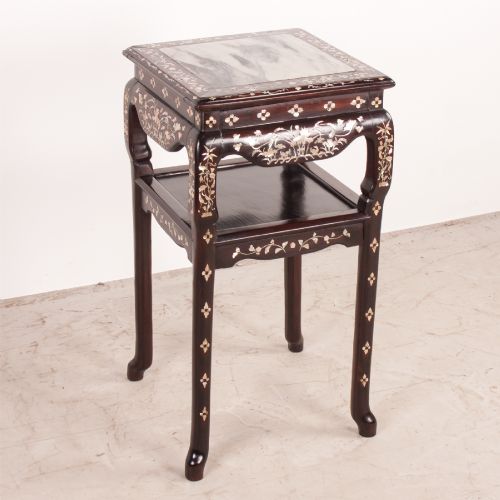
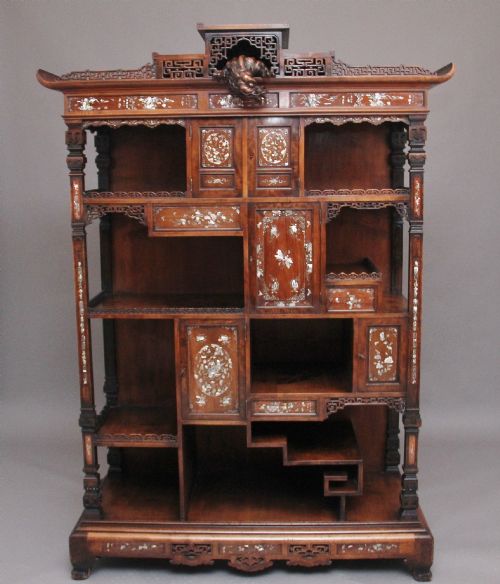
Surface ornamentation relies heavily on contrasting materials set into the timber or lacquer. Mother of pearl inlay, bone, and marble panels appear regularly, secured by brass hardware and hinges that punctuate the dark or brightly coloured exteriors.
Materials recorded across the inventory include hardwood, lacquer, bone, marble, brass, mother of pearl, and bamboo.
Assessing Craftsmanship and Execution
The distinction between standard execution and superior work rests on the depth and precision of the carving. Master carvers achieved crisp undercutting and balanced composition, whereas lesser examples rely on shallow, repetitive stamping.
Material selection also dictates standing, with genuine hardwood frames and high-grade natural lacquer commanding greater respect than softer woods finished with synthetic paints. The integration of structural elements, such as fitted stands and joinery stability, marks the difference between utilitarian workshop output and atelier production.
Gabriel Viardot
The Carved Oriental Cabinet Glossary
- Shodana
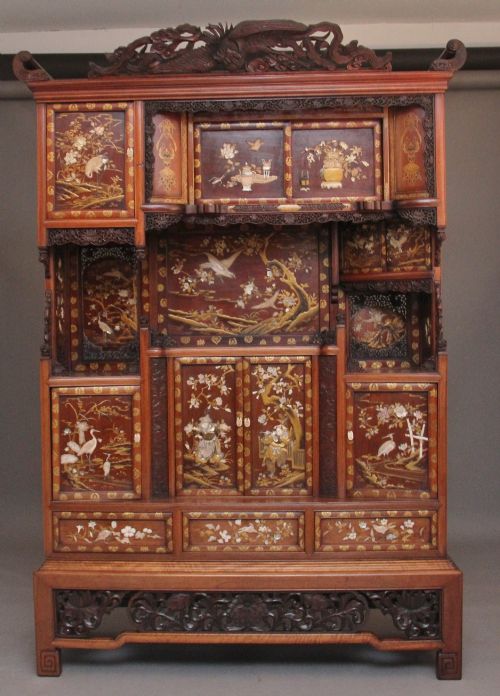
- A Japanese tiered display cabinet featuring asymmetrical shelving and small cupboards designed for displaying art objects. These pieces often incorporate sliding doors and delicate lattice work.
- Chinoiserie
- The European interpretation and imitation of Chinese and East Asian artistic traditions, popular during various periods including the seventeenth and nineteenth centuries. This style applies oriental motifs to Western furniture forms.
- Japonisme
- A late nineteenth-century Western fascination with Japanese art and aesthetics, which heavily influenced European cabinetmakers like Gabriel Viardot. It manifests in asymmetric designs, naturalistic motifs, and ebonised finishes.
- Qing Dynasty
- The final imperial dynasty of China, lasting from 1644 until 1912, known for prolific furniture production utilising rich hardwoods and intricate carving. Pieces from this era often feature traditional symbolic motifs.
- Meiji Period
- A period of Japanese history spanning from 1868 to 1912, marked by the opening of trade with the West and the export of highly decorative works of art. Cabinets from this era frequently exhibit exceptional ivory and mother of pearl detail.
Carved Oriental Cabinet: Frequently Asked Questions
What is a shodana cabinet?
A shodana is a traditional Japanese display cabinet characterised by asymmetrical shelving, small cupboards, and sliding doors. Makers designed them specifically to hold small decorative objects and scholar's items.
These pieces often stand on dedicated bases and showcase advanced woodworking joinery without relying on metal nails. Their stepped interiors provide varied compartments for diverse collections.
How do I care for a lacquered cabinet?
Lacquered surfaces require gentle maintenance using a soft, dry microfibre cloth to remove dust. Avoid chemical cleaners, excessive moisture, and direct sunlight, which can cause the finish to fade or crack.
Maintaining a stable room temperature prevents the underlying wood from expanding and stressing the lacquer layer. Wax should only be applied if the specific finish type confirms it is appropriate.
What is the difference between Chinese and Japanese cabinets?
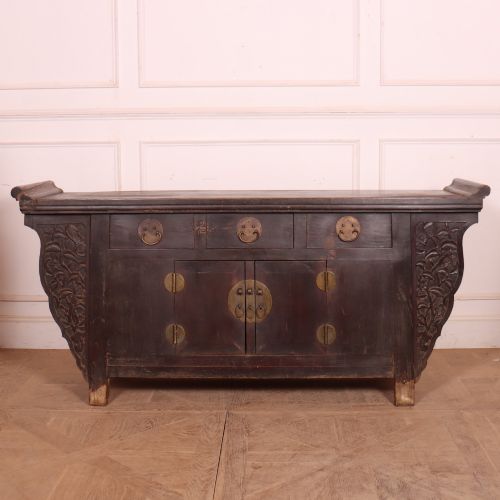
Chinese cabinets generally emphasise symmetry, heavy hardwood construction, and deeply carved symbolic motifs related to longevity and status. Wedding cabinets and sideboards represent typical forms within this tradition.
Japanese cabinets, particularly from the Meiji period, often favour asymmetry, mixed metals, lacquerwork, and delicate inlaid panels. Their scale tends toward smaller display units and multi-tiered shodana structures.