


Carved Oak X Frame Chair
A carved oak x frame chair brings structured architectural form and sturdy timber into a room, drawing on centuries of folding chair lineage.
Carved Oak X Frame Chair
When you search for a carved oak x frame chair, you encounter a distinct seating form defined by intersecting supports that create a folding or curule profile. These pieces emerge predominantly in Victorian, Edwardian, and early twentieth century manifestations, heavily influenced by Gothic Revival and Renaissance Revival aesthetics.
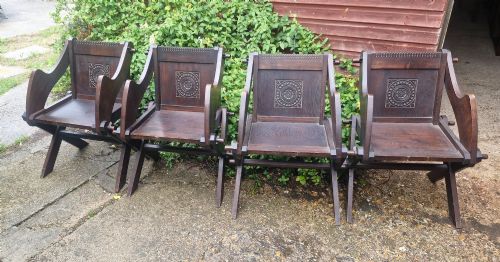
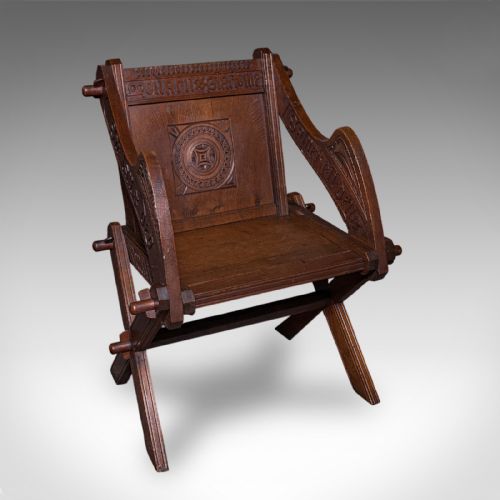
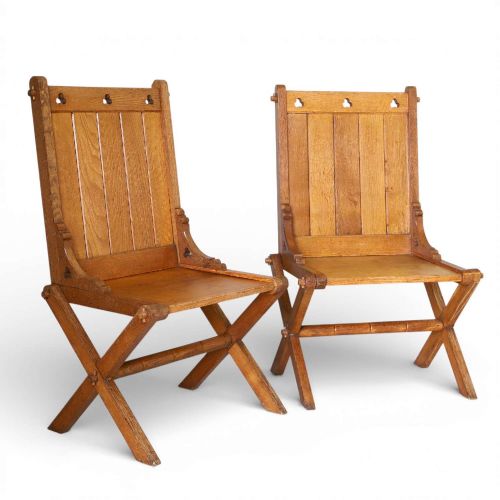
The Glastonbury chair stands out as the most common specific iteration within this category, often rendered in English or Welsh oak with trefoil details and panelled seats. Alongside these ecclesiastical and monastic interpretations, you find desk chairs, dining chairs, and occasional armchairs sharing the signature intersecting frame.
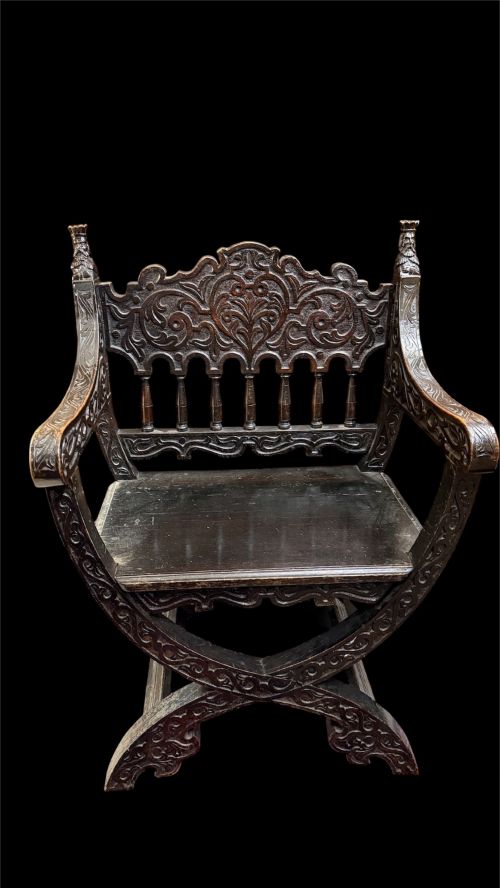
Originating from historical precedents such as Dante and Curule seats, these examples balance rigid structural geometry with carved ornamentation. They appear singly or in matched pairs, serving as functional seating with a deliberate nod to medieval or classical design.
How they were made
The construction relies fundamentally on solid oak, selected for its dense grain and capacity to support load-bearing structural joints. Craftsmen utilised pegged mortise and tenon joinery alongside cross-framing mechanics to assemble the intersecting x-form supports.
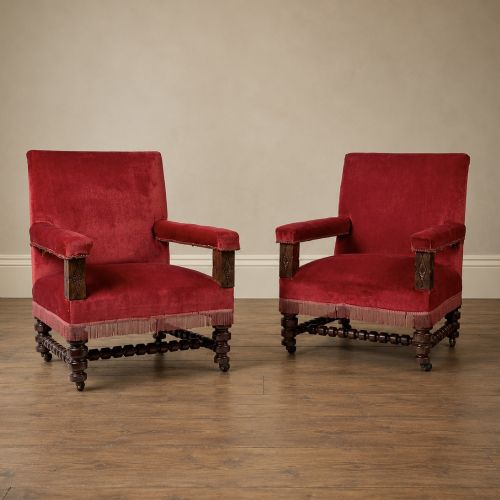
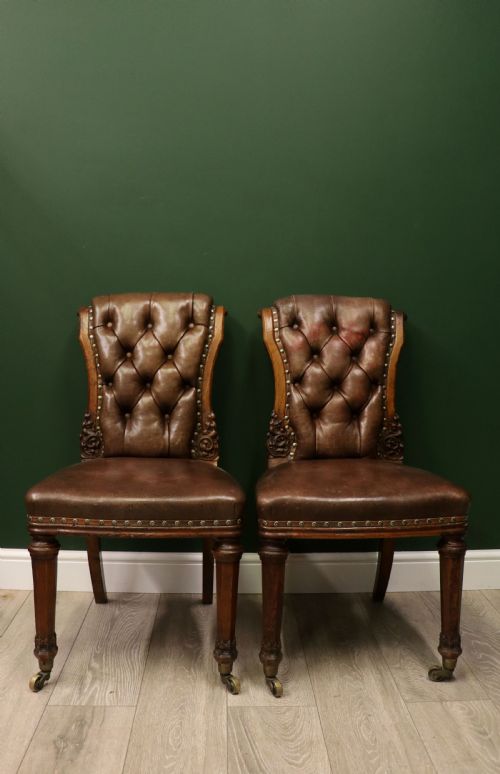
Surface ornamentation involved hand-carving techniques, producing motifs like trefoils, fluting, and linenfold panels directly into the timber. Supplementary materials such as brass fittings, leather, velvet, and textile upholstery were integrated to provide cushioning and contrast against the dark oak frame.
Listings feature oak construction combined with leather, velvet, and brass across Victorian, Edwardian, and 1930s periods.
What varies in quality
Quality rests significantly on the depth and crispness of the hand-carved detailing, distinguishing spirited artisan work from later mass production. The integrity of the intersecting x-frame joints dictates the structural longevity and stability of the piece under daily use.
Selection of timber grain and the execution of period-appropriate upholstery methods, whether using leather or velvet over webbing and stuffing, determine the overall finish and historical fidelity of the chair.
The Carved Oak X Frame Chair Glossary
- Glastonbury chair
- An ecclesiastical style of armchair featuring a sloping panel back and an intersecting x-frame base, popularized during the Gothic Revival. These seats often display carved inscriptions or religious motifs.
- Curule chair
- An ancient Roman magistrate seat design characterised by curved legs shaped like a broad letter X. Renaissance Revival makers reinterpreted this form with elaborate oak carving.
- Trefoil
- A graphic ornamentation consisting of three overlapping lobes resembling a clover leaf. This motif appears frequently in the pierced splats and crest rails of Gothic Revival furniture.
- Elbow seat
- A traditional descriptor for an armchair providing low, supportive arm rests integrated directly into the structural frame. These chairs function well at desks or as occasional seating.
- Barley twist
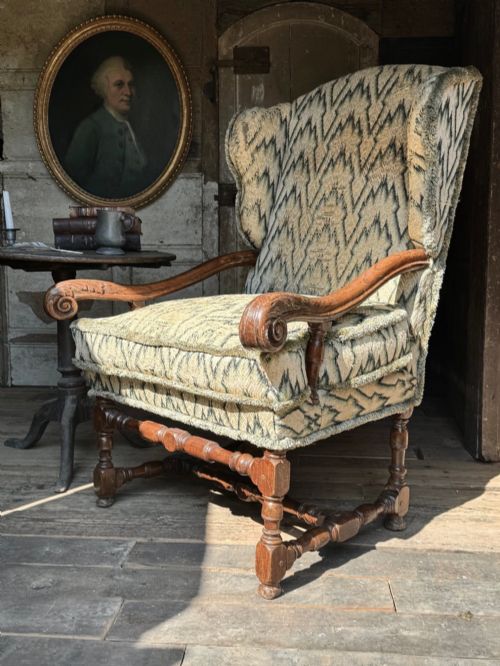
- A type of furniture turning resembling a rope wound spirally around a cylindrical shaft. This decorative woodworking technique appears frequently on the stretchers and uprights of oak seating.
Carved Oak X Frame Chair: Frequently Asked Questions
Where did x frame chairs originate?
The x frame design dates back to ancient civilisations, including Egypt and Rome, where folding camp stools signified status and portability. Revival periods in the nineteenth century reinterpreted these ancient forms into heavy oak armchairs.
Victorian cabinetmakers adapted the medieval folding mechanism into fixed domestic seating, drawing inspiration from ecclesiastical thrones and Renaissance precedents.
Are these chairs comfortable for daily use?
The comfort level varies depending on whether the seat is solid timber or fitted with an upholstered drop-in pad, leather, or velvet cushion. Models with padded upholstery offer softer seating for extended periods.
Solid oak variations function well as desk chairs, hall chairs, or occasional accent pieces where posture and architectural presence take precedence over deep cushioning.
What is Renaissance Revival style?
Renaissance Revival draws on fifteenth and sixteenth-century European art and architecture, incorporating classical symmetry, bold moulding, and robust carved ornament. In oak seating, this translates to weighty frames and figurative motifs.
Pieces from this movement often feature curule or X-shaped supports reminiscent of Italian palazzos, adapted for Victorian and Edwardian domestic interiors.