

Carved Oak Style Chairs
Carved oak style chairs bring centuries of historic revivals and solid timber into a room, offering robust seating built to endure.
Carved Oak Style Chairs
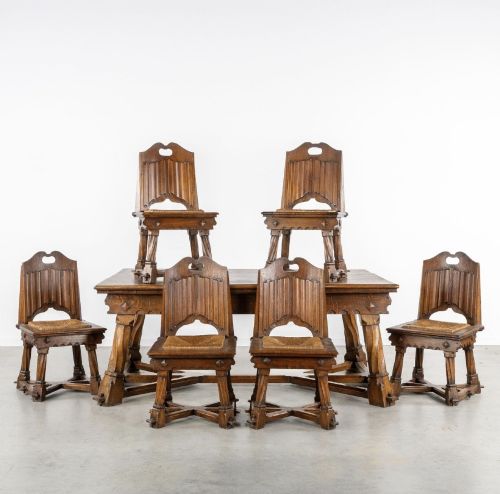
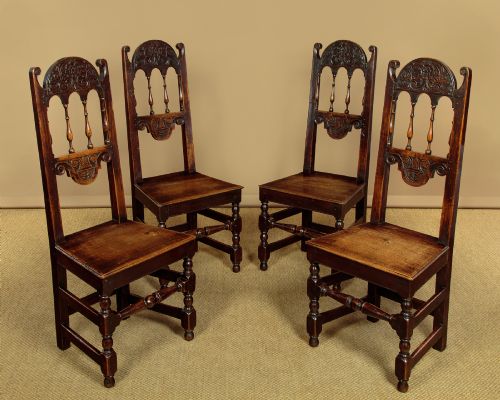
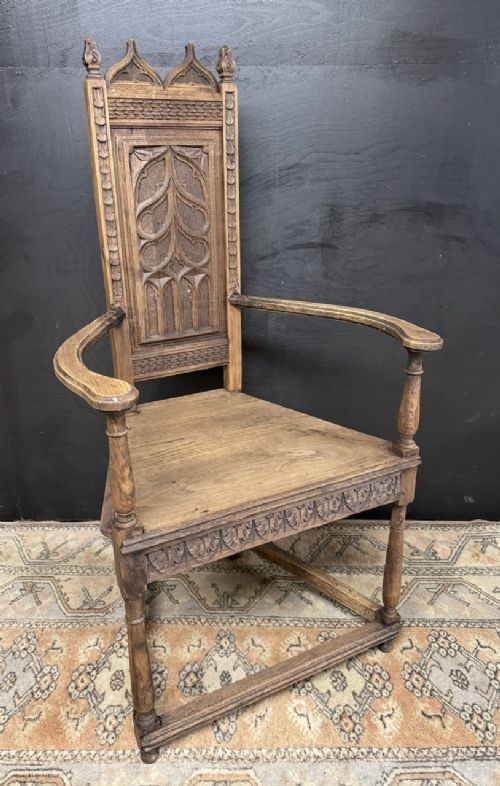
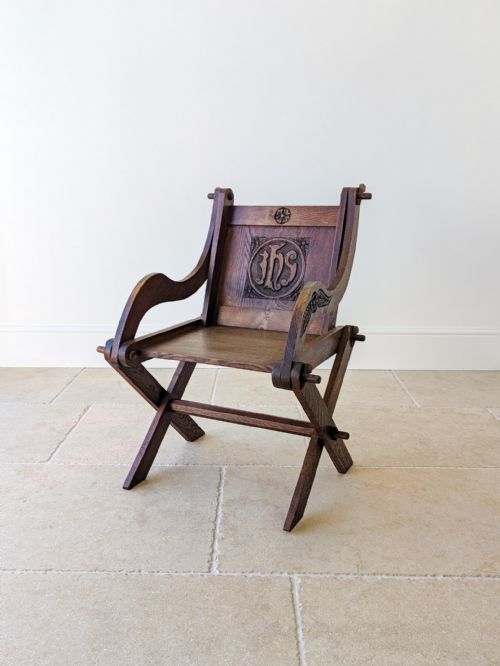
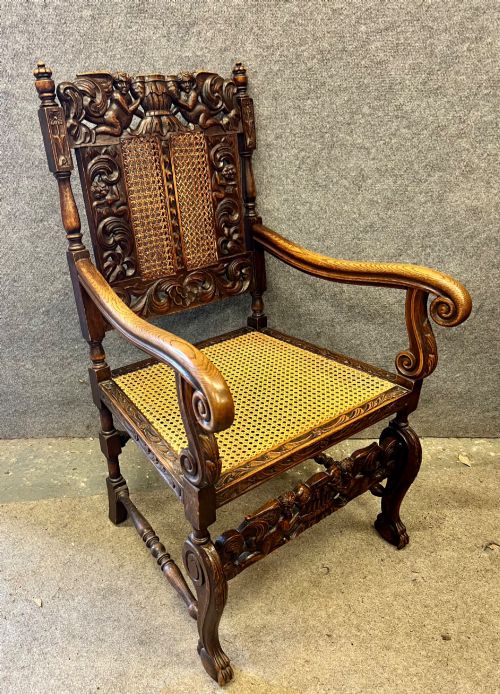
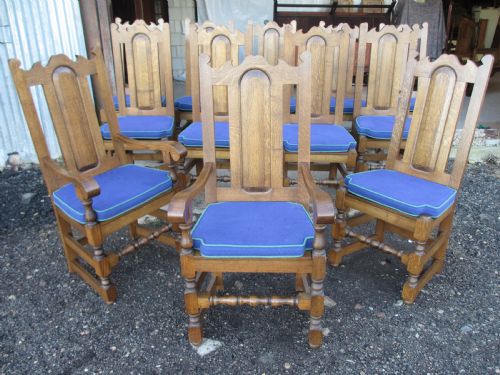
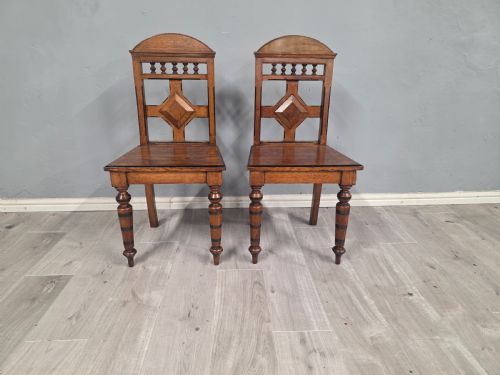
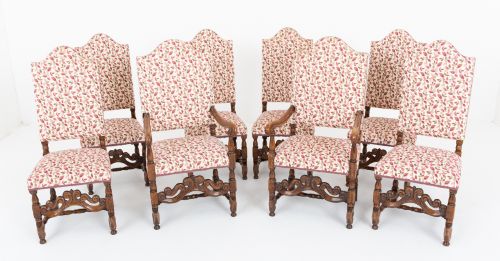
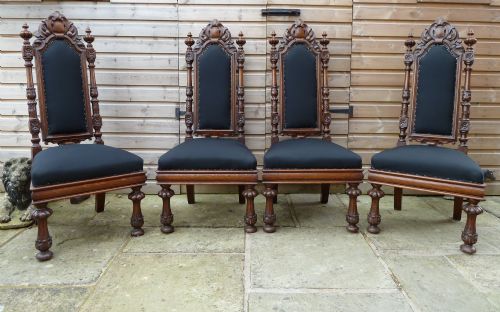
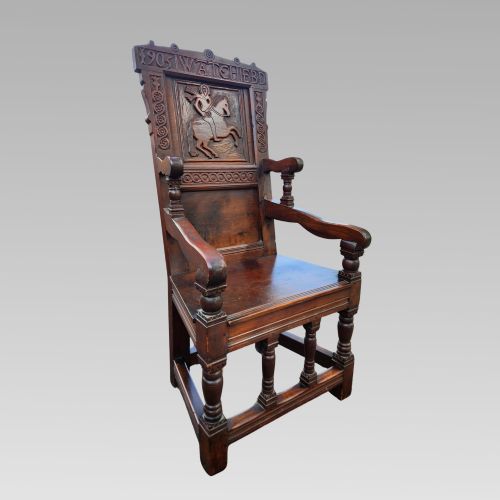
When buyers search for carved oak style chairs, they look at heavy timber seating spanning from the seventeenth century through various nineteenth and twentieth-century revival movements. The pieces available include wainscot armchairs, high-backed dining sets, and hall chairs influenced by Jacobean, Gothic, and Carolean designs.
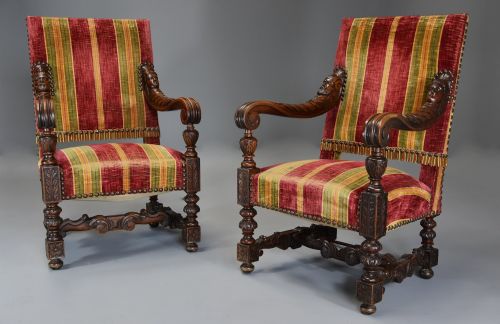
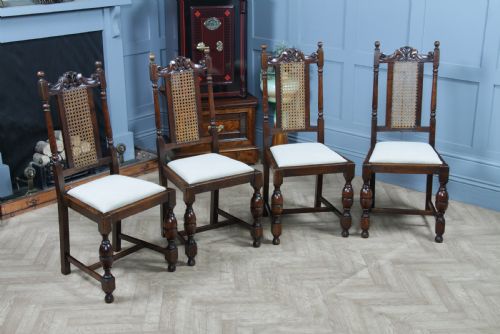
The inventory on this page draws heavily from Victorian and early twentieth-century interpretations, alongside genuine eighteenth-century examples and earlier periods. Common forms range from single armchairs to complete sets of dining chairs featuring elaborate relief carving on the timber frames.
Materials and construction methods
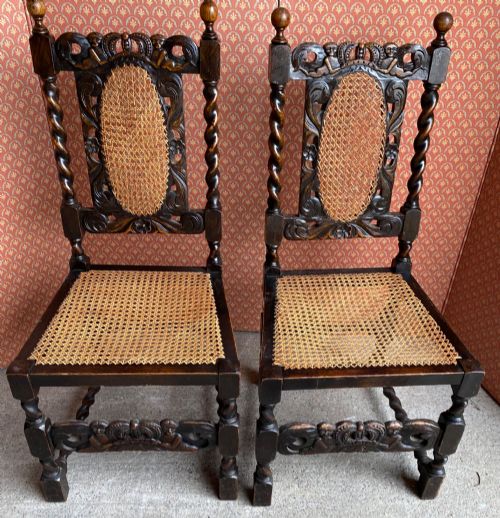
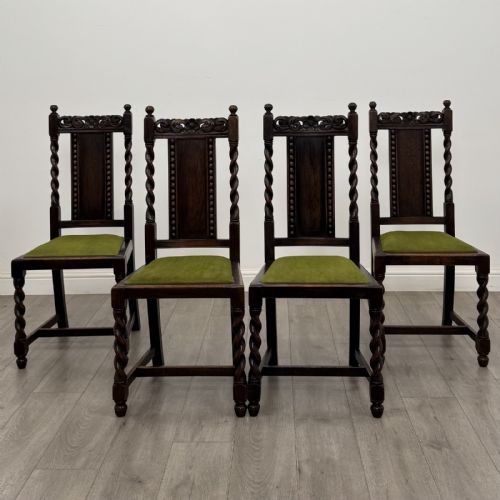
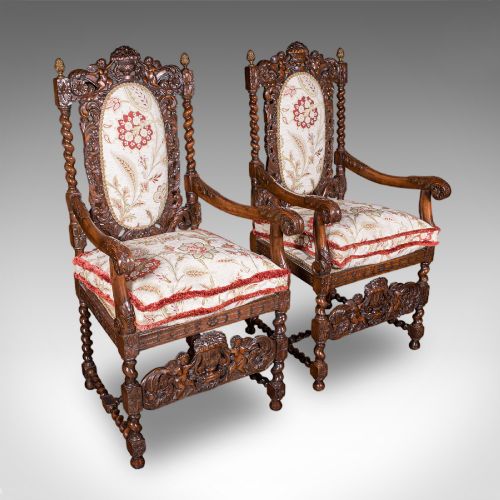
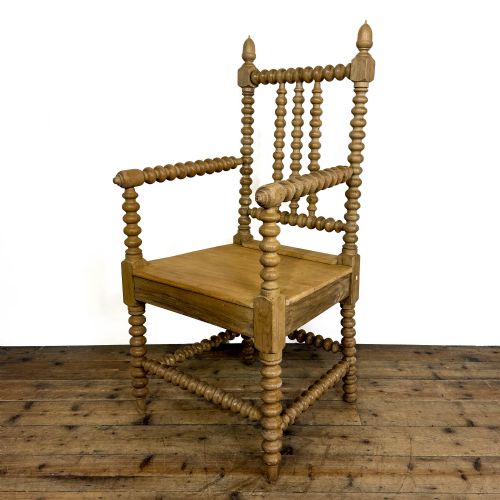
Makers built these chairs primarily using solid oak, sometimes referred to in golden or dark tones, shaped with mortise and tenon joinery. Woodworkers applied hand-carved relief work, panel backs, and turned elements such as barley twist supports to give the frames decorative depth.
Upholstery materials appear frequently alongside the timber, utilising fabrics like velvet, leather, and patterned textiles secured with brass detailing. Cane and cross-frame configurations also occur, providing contrasting textures to the heavy wooden framework.
Carved Oak Style Chairs Retail Price Guide 2026
Typical asking prices for carved oak style chairs among the pieces listed under this phrase on Sellingantiques today, from the lower quarter to the upper quarter. They describe what is for sale here now, not the wider market.
Object types include wainscot armchairs, refectory dining sets, hall benches, and side chairs executed in Gothic and Jacobean revival styles.
Assessing quality and execution
Quality in these chairs rests upon the crispness of the wood carving and the integrity of the timber joints. Superior examples display deep, deliberate chisel work that retains sharp relief, whereas lesser pieces show soft, mechanical moulding or shallow surface stamping.
The selection of the oak itself dictates the standard of the piece, with quarter-sawn grain and substantial timber thickness separating fine cabinetmaking from lighter commercial reproductions. Original upholstery integration and stable structural frames further define the better specimens.
Bruce Talbert·Gillows·Zoffany·Thomas Hope
The Carved Oak Style Chairs Glossary
- Wainscot chair
- A heavy wooden armchair with a paneled back, solid wooden seat, and turned legs, originating in the sixteenth and seventeenth centuries.
- Carolean style
- A revival design echoing the Restoration period of the late seventeenth century, characterised by rich crown and scroll carvings.
- Barley twist
- A turned wooden furniture leg or stretcher shaped to resemble a spiraling helix.
- Sgabello
- A light, portable wooden chair of Italian Renaissance origin, featuring a high back and trestle supports instead of legs.
- Gothic Revival
- A nineteenth-century architectural and furniture movement utilising pointed arches, tracery, and medieval motifs.
Carved Oak Style Chairs: Frequently Asked Questions
How do I spot a reproduction?
Examine the tooling marks on the wood and the overall uniformity of the timber ageing. Machine-cut edges and modern fixings indicate later revival pieces.
Genuine older pieces show hand-cut joinery, timber shrinkage, and wear patterns consistent with extended use over generations.
Are these chairs suitable for daily use?
Solid oak construction provides immense structural strength, making most of these chairs durable enough for regular seating at a dining table.
One should check the stability of the joints and the condition of any upholstered surfaces before putting antique chairs into heavy service.
What is a wainscot chair?
A wainscot chair is an enclosed wooden armchair featuring a solid panel back and armrests, designed during periods when timber was costly and drafts were common.
These pieces typically sit lower than modern armchairs and serve well as accent seating in hallways or studies.
How do I care for oak furniture?
Maintain the timber by keeping it away from direct heat sources and sudden humidity changes that cause the oak to split. Apply suitable wax polish sparingly to nourish the grain without building up a sticky residue.
Avoid commercial liquid sprays containing silicone, which can penetrate porous antique finishes and damage the wood over time.