


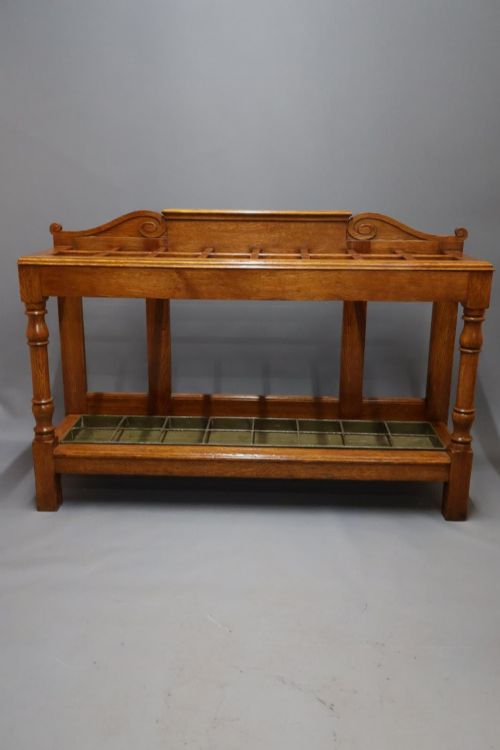

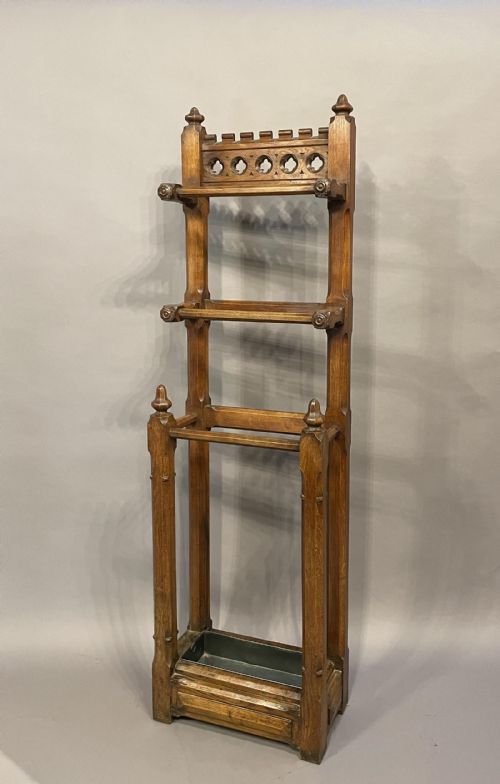


Carved Oak Stick Stand
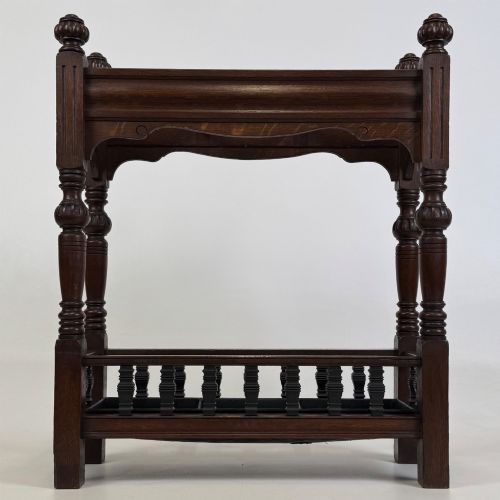
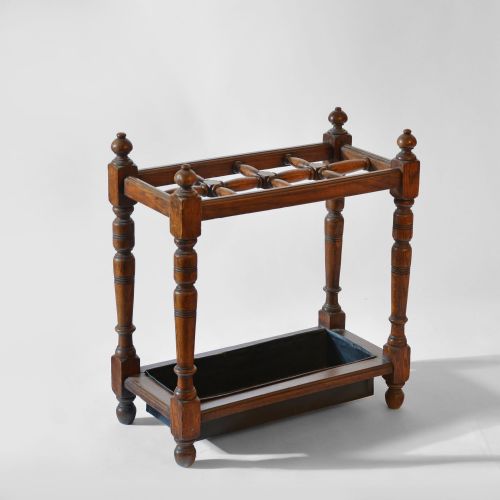
A carved oak stick stand grounds a hallway with robust utility, offering solid timber architecture designed to catch the everyday clutter of umbrellas and walking sticks.
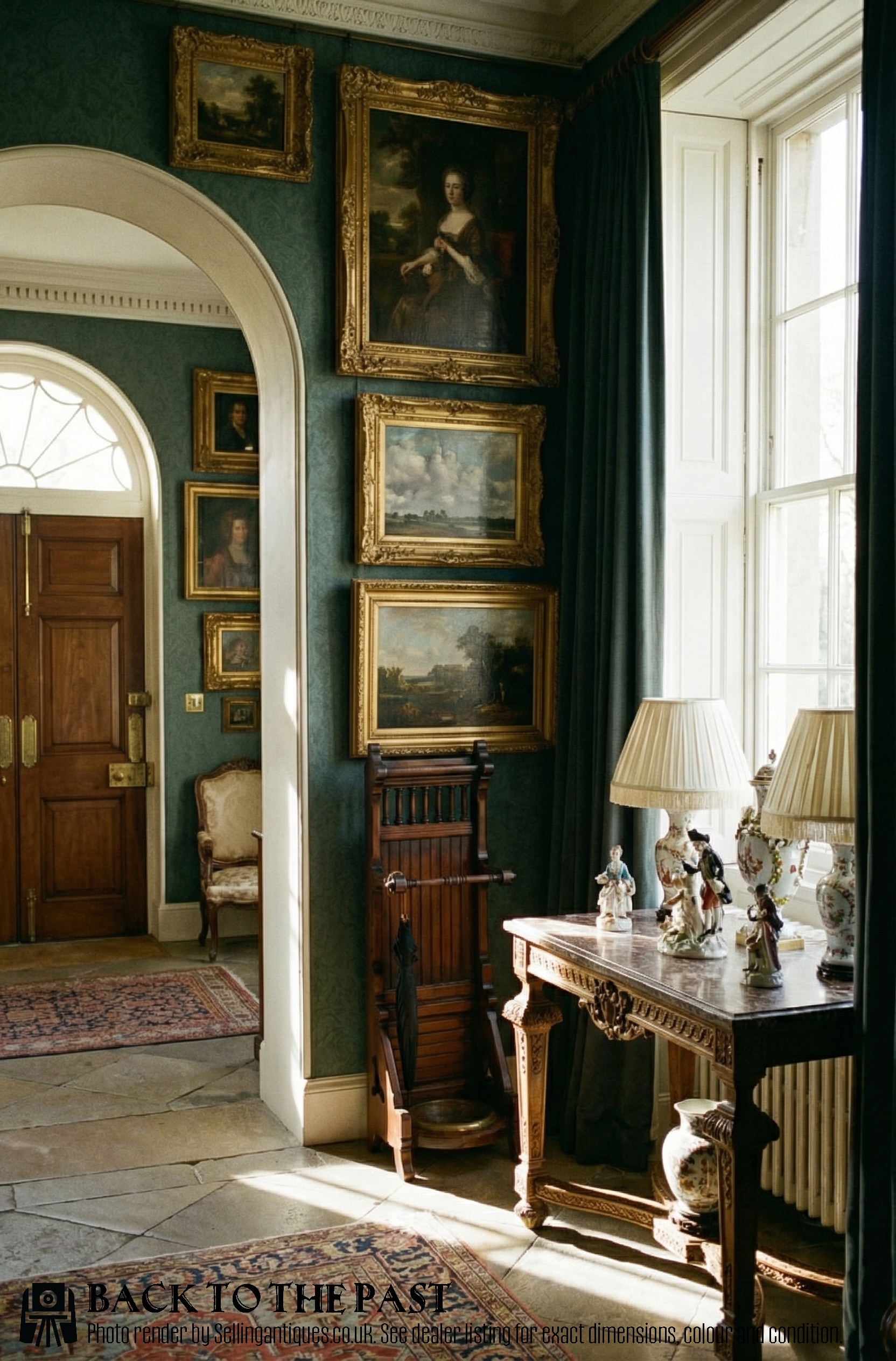
Carved Oak Stick Stand
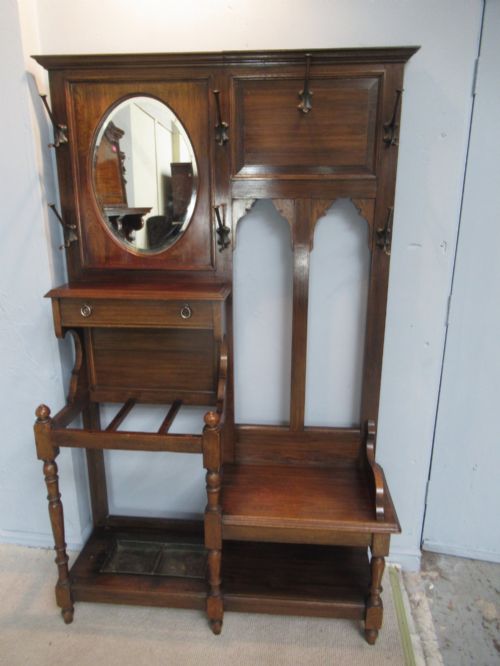
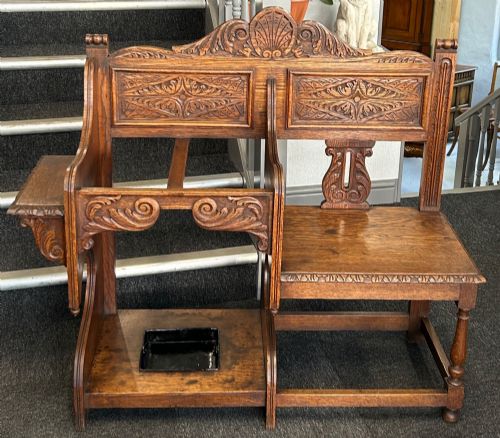
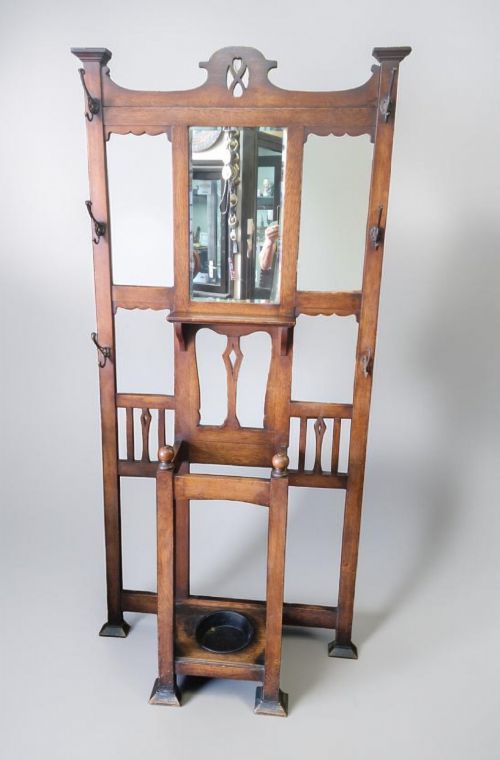
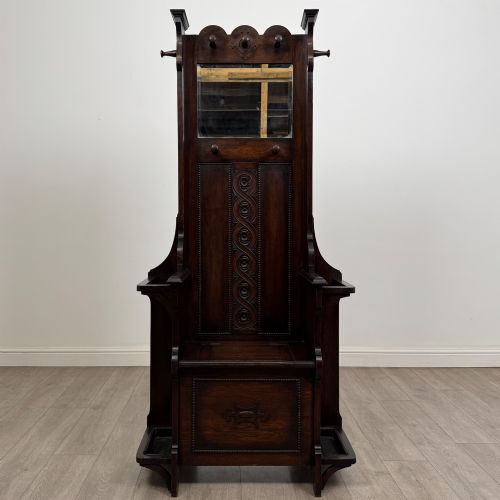
A carved oak stick stand is a practical hallway furnishing designed to hold wet umbrellas and walking sticks, appearing frequently in Victorian and Edwardian variations. These pieces often manifest as dedicated umbrella holders or form part of larger hall stands equipped with mirrors, coat hooks, and integrated seating.
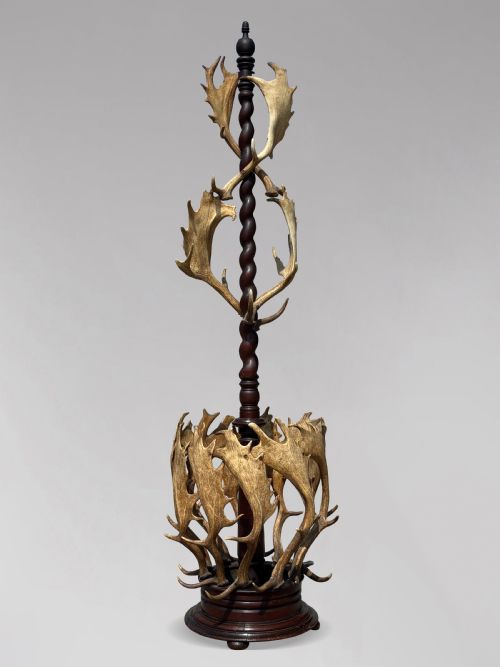
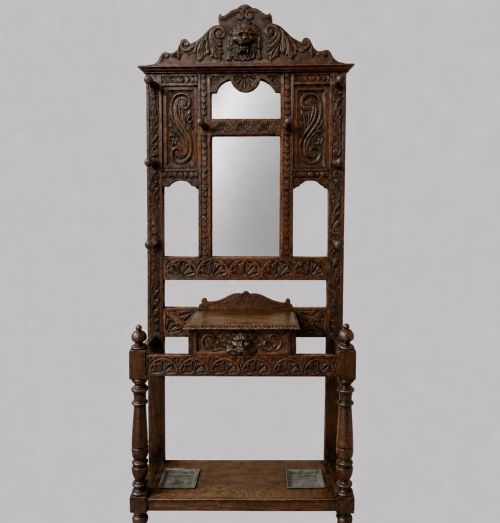
Many examples incorporate regional motifs, such as the prominent Green Man carvings seen across nineteenth-century British and continental European workshops. Others lean towards structural turnings like barley twist supports and bobbin framing to add visual texture to the dense timber.
Materials and Construction Techniques
Solid oak provides the primary structural body for these furnishings, chosen for its density and capacity to hold deep hand-carved detailing. Workshops utilised quarter-sawn oak to expose characteristic medullary rays while ensuring the timber resisted warping from damp walking sticks.
Metal components play a crucial supporting role, with cast iron and brass trays fitted at the base to catch water run-off from umbrellas. Bronze and iron elements also appear in structural brackets, framing, and coat hooks, contrasting against the dark grain of the carved wood.
Carved Oak Stick Stand Retail Price Guide 2026
Typical asking prices for carved oak stick stand among the pieces listed under this phrase on Sellingantiques today, from the lower quarter to the upper quarter. They describe what is for sale here now, not the wider market.
A persistent woodland spirit peers out from the hallway, watching over the umbrellas.
Distinctions in Quality
Quality rests in the crispness and depth of the timber carving, distinguishing master craftsmanship from straightforward production pieces. Deeply undercut foliage, expressive Green Man faces, and fluid Art Nouveau lines indicate a maker who spent significant time detailing the oak carcass.
The integration of functional hardware dictates the grade of the piece, where original brass drip trays, cast iron liners, and heavy copper barrels elevate the utility. Secondary details like caned panels, bevelled mirror glass, and sturdy turned barley twist columns show a higher tier of domestic manufacturing.
J Parker of Woodstock
The Carved Oak Stick Stand Glossary
- Green Man
- A sculptural motif depicting a human face emerging from or entwined with foliage and vines. This ancient symbol recurs frequently in nineteenth-century architectural woodwork and hallway furniture.
- Barley Twist
- A cylindrical furniture leg or column carved in a spiral resembling a twisted barley stalk. This decorative turning technique appears widely on supports and uprights across the Victorian and Edwardian periods.
- Hall Stand
- A large multi-functional hallway furnishing combining coat hooks, a hat shelf, a central mirror, and integrated umbrella wells. Many examples incorporate a small bench seat or glove box beneath the mirror.
- Demi-Lune
- A half-moon shape with a curved front and a flat back designed to sit flush against a wall. This footprint allows larger umbrella stands to occupy narrow hallways without obstructing thoroughfares.
- Coopered
- A method of construction using tapered staves of wood joined edge-to-edge to form a cylindrical vessel. Barrel stick stands utilise this technique with metal binding hoops.
Carved Oak Stick Stand: Frequently Asked Questions
How were these stands used in period homes?
In Victorian and Edwardian hallways, these stands provided an organised drop-off point for outdoor gear just inside the front door. Residents placed wet umbrellas in the built-in wells and hung hats and coats on nearby wooden pegs.
Larger combination pieces offered a seated place to pull on riding boots while keeping walking sticks close at hand for country strolls.
How do I distinguish Victorian from Edwardian pieces?
Victorian examples generally feature heavier proportions, darker finishes, and dense ornamentation such as Gothic Revival motifs or bold Green Man carvings. The woodwork tends to feel substantial and imposing.
Edwardian stands often show lighter oak tones, simplified Arts and Crafts framing, or flowing Art Nouveau lines that reflect a shift toward airier domestic interiors.
How do I care for an antique oak hall stand?
Maintain the timber by applying a traditional beeswax polish sparingly to nourish the dry oak surface and preserve the grain. Avoid placing wet items directly onto unprotected wood by ensuring the original metal or ceramic drip tray remains in place at the base.
Keep the piece away from direct heat sources and radiators to prevent the solid oak panels from splitting or warping over time.