
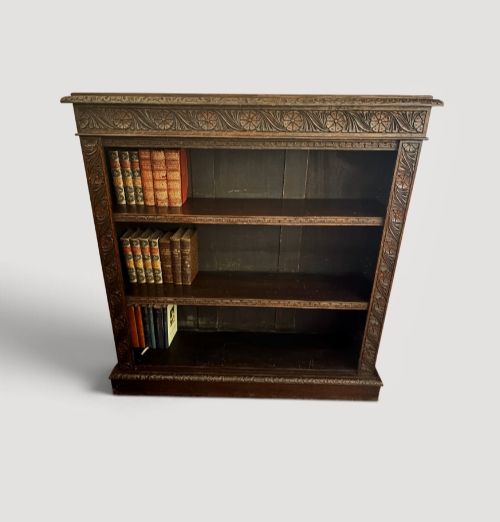
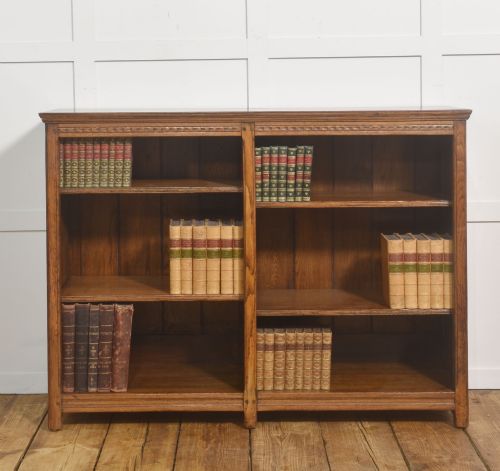
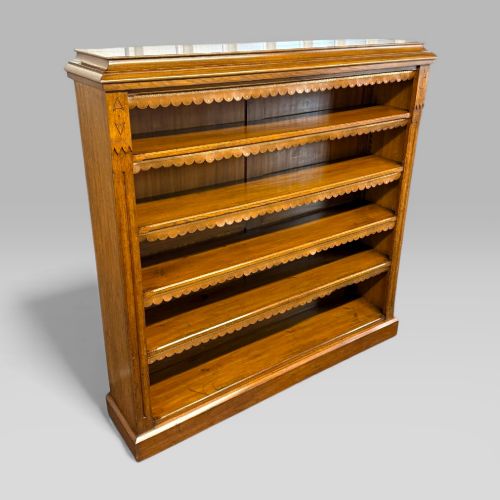
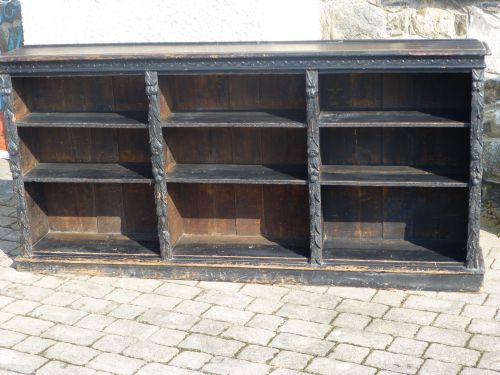
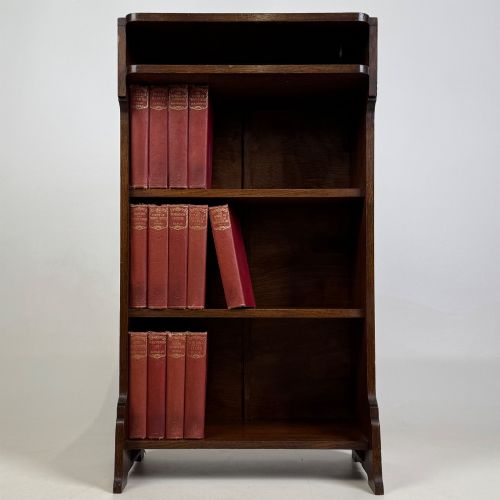
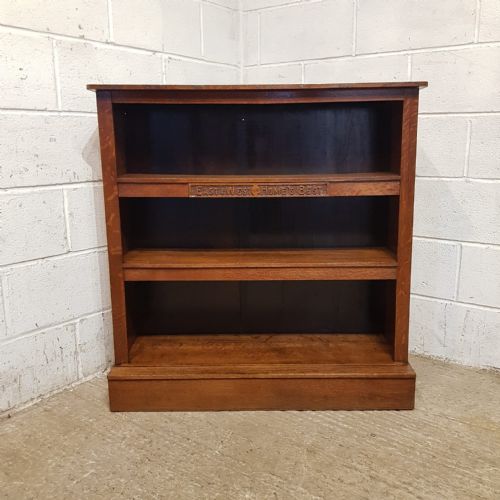
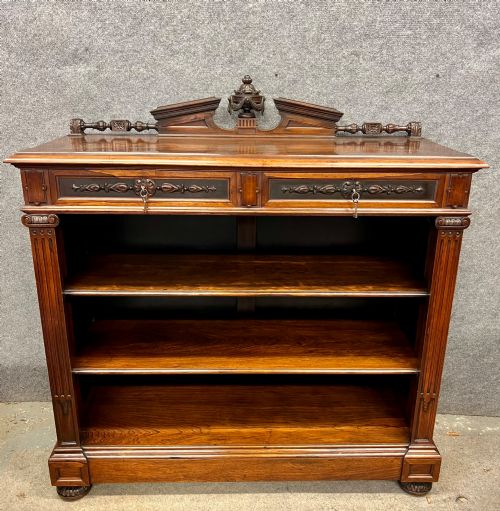
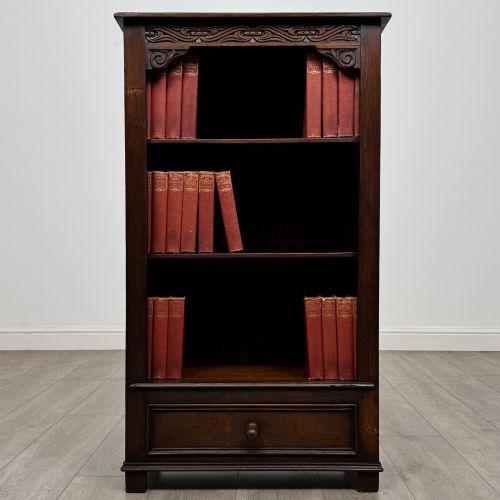

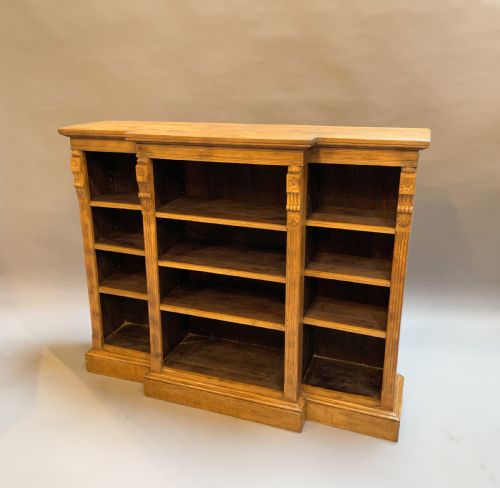


Carved Oak Shelf Unit
A carved oak shelf unit brings warmth and architectural presence to a room, offering practical storage disguised as traditional craftsmanship.
Carved Oak Shelf Unit
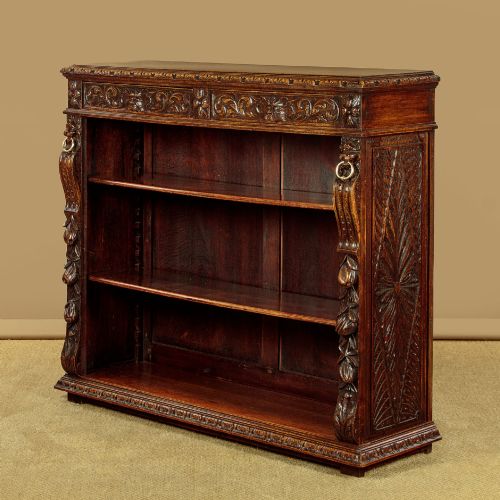
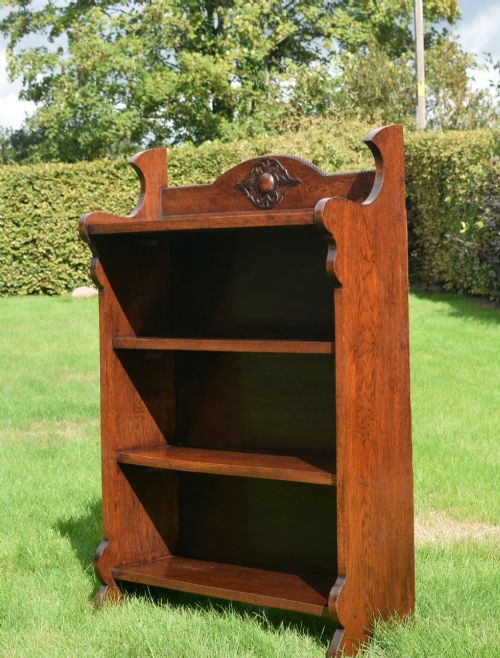
A carved oak shelf unit combines utilitarian storage with surface decoration, appearing most frequently in forms such as open bookcases, wall shelves, and dressers. These items span periods from the eighteenth century through to the 1930s, capturing shifts in domestic taste from heavy revivalism to simpler utility.
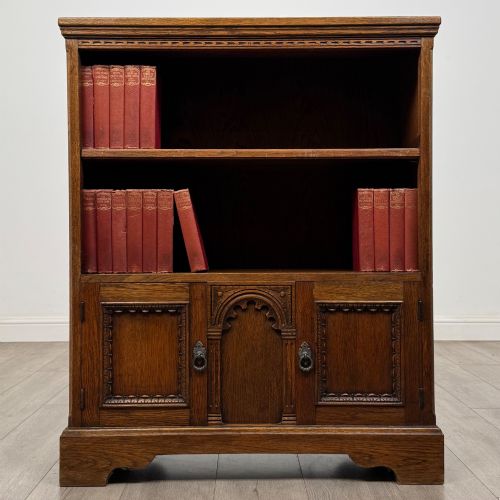
Buyers browsing this selection will encounter Victorian and Edwardian examples most often, alongside pieces reflecting the Arts and Crafts movement or Jacobean and Gothic revivals. Forms range from compact wall-hanging shelves to tall library bookcases and dwarf bookcases fitted with adjustable shelving.
How they were made
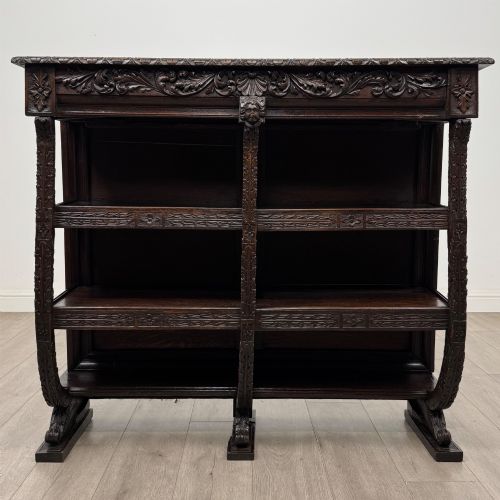
Makers relied primarily on solid oak, occasionally incorporating secondary timbers like beech or mahogany alongside brass and other metal hardware. Surfaces frequently display carved enrichment, fret-cutting, and architectural mouldings executed by hand.
Construction methods vary from straightforward pegged joinery on earlier items to adjustable shelf mechanisms found in later nineteenth and twentieth-century library pieces. Certain examples incorporate ebonised finishes or specific decorative motifs such as the green man.
Keep an eye out for the occasional green man glaring from the oak grain.
What varies in quality
Depth of carving and crispness of detail separate standard production pieces from finer cabinet work, particularly in items featuring Gothic or Arts and Crafts ornamentation. The selection of timber grain and the integrity of structural joints also dictate the standing of an individual piece.
Proportion and utility influence overall merit, with adjustable shelving systems and balanced architectural lines indicating superior domestic furniture manufacture.
The Carved Oak Shelf Unit Glossary
- Breakfront
- A cabinet or bookcase whose central section projects forward from the flanking wings. This configuration adds architectural depth to larger furniture pieces.
- Dwarf bookcase
- A low-standing bookcase designed to sit beneath window height or leave wall space clear above. These items often feature adjustable shelves for versatile book storage.
- Fret-cut
- Woodwork pierced or perforated with a fretsaw to create decorative flat patterns. This technique appears on lighter display shelves and waterfall bookcases.
- Green man
- A sculptural architectural motif depicting a face carved with leaves, vines, or branches issuing from the mouth. It appears frequently on revivalist carved oak furniture.
- Plate rack
- A wall-mounted or freestanding rack fitted with narrow shelves and vertical slats or grooves to display plates upright. These serve functional storage and decorative display roles.
Carved Oak Shelf Unit: Frequently Asked Questions
What periods do these shelf units come from?
These pieces originate primarily from the nineteenth and early twentieth centuries, spanning Victorian, Edwardian, and Arts and Crafts eras, with occasional eighteenth-century and 1930s examples.
Design styles shift noticeably across these decades, moving from ornate Gothic and Jacobean revivals toward cleaner functional forms.
Are the shelves adjustable?
Many of the open bookcases and library units included here feature adjustable shelving systems to accommodate books of varying heights. This practical adaptation became increasingly common toward the end of the nineteenth century.
Fixed shelves remain more typical on smaller wall-hanging units and specific period dressers.
How do I identify a Gothic Revival piece?
Gothic Revival items typically display pointed arch motifs, heavy mouldings, and architectural tracery carved directly into the oak framework. These details echo medieval ecclesiastical and domestic architecture.
Such pieces frequently date from the Victorian period when medievalism strongly influenced cabinet makers.
What is an Arts and Crafts shelf unit?
Arts and Crafts pieces emphasise honest construction, visible grain, and restrained ornamentation rather than heavy historical revivalism. They often utilise solid oak with simple geometric carving or subtle fretwork.
These items generally date from around the turn of the twentieth century.
How can I use wall hanging shelves safely?
Wall-hanging shelves require secure mounting directly into solid masonry or wall studs to support the weight of timber and stored objects safely. Smaller units utilise integrated hanging brackets designed for domestic loads.
Larger configurations need professional fixing to ensure stability.