


Carved Oak Plate Shelf
These carved oak plate shelf pieces bring rich timber grain and traditional storage to farmhouse kitchens.
Carved Oak Plate Shelf
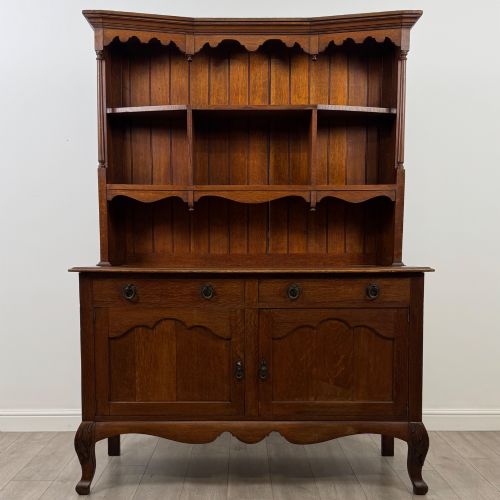
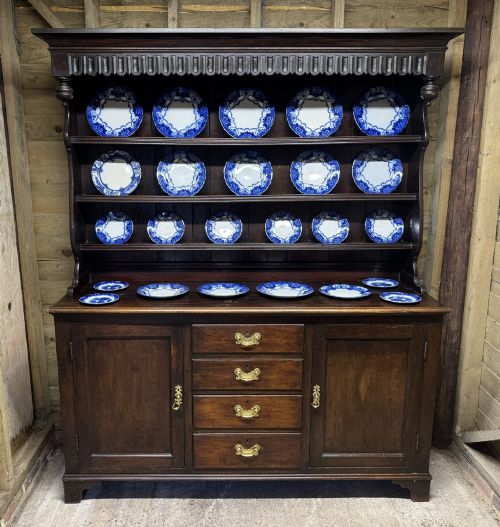
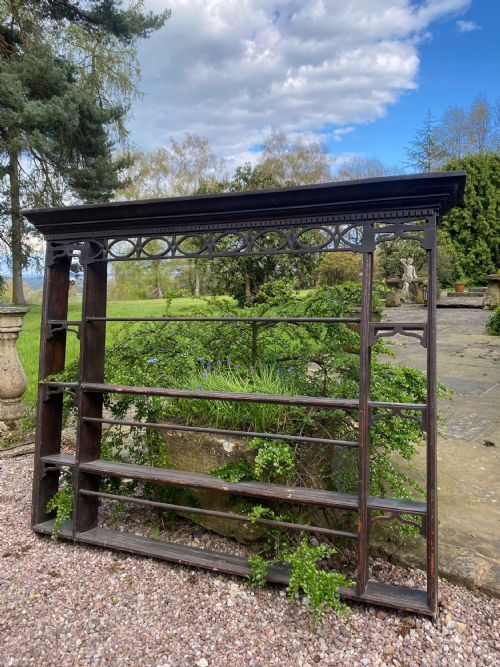
A carved oak plate shelf provides traditional open storage for ceramics and earthenware, taking the form of wall-mounted racks or the upper sections of large country dressers. The pieces found here range from compact seventeenth-century wall ledges to expansive eighteenth-century Welsh dressers and Georgian hanging shelves.
Buyers seeking this phrase encounter sturdy vernacular furniture shaped by centuries of domestic use, often featuring pegged joints and rich patinated timber surfaces. Examples span multiple eras including the Georgian period, Victorian times, and the Arts and Crafts movement.
The primary forms on this page include simple wall shelves, hanging delft racks, and two-part Welsh dressers incorporating plate display grooves. Most items rely on solid oak construction, sometimes paired with secondary timbers like pine or mahogany.
How they were made
Makers built these plate shelves using solid oak planks, frequently joined with exposed pegs and traditional mortise and tenon techniques. Secondary woods such as pine appear in backing boards or internal shelving components on select regional pieces.
Surface ornamentation relies on hand carving, chip carving, and applied architectural details such as Corinthian columns or Jacobean-style mouldings. Finishes develop naturally through decades of beeswax polishing and kitchen use, though some Edwardian and revival pieces utilise stained oak.
One seventeenth-century shelf bears the quiet marks of long-vanished monarchs carved directly into the timber.
What varies in quality
The distinction between standard utility pieces and finer examples rests on the depth and crispness of the hand carving, along with the architectural ambition of the cornices and plate rails. Earlier seventeenth and eighteenth-century pieces often display superior timber selection with dense medullary rays in the oak.
Proportion and structural integrity dictate the standing of a piece, as alterations from old dresser bases or missing components alter the original form. Richness of patina and the survival of original brass hanging hardware or hooks also separate ordinary examples from exceptional ones.
The Carved Oak Plate Shelf Glossary
- Delft rack
- An open wall-mounted shelving unit specifically designed for displaying ceramic plates and platters upright. These items feature narrow shelves with protective lips or plate grooves.
- Welsh dresser
- A large kitchen storage unit combining a base cupboard or drawer section with an open plate shelf superstructure. The regional examples on this page date from the eighteenth and nineteenth centuries.
- Pegged joint
- A traditional method of securing timber framing using wooden dowels instead of metal fasteners. This technique is typical of early oak vernacular furniture.
- Patina
- The deep surface sheen and colour acquired by aged wood through decades of handling, cleaning, and exposure to light. It serves as an indicator of genuine age.
- Cornice
- The decorative moulded projection running along the top edge of a plate shelf or dresser. Finer examples incorporate dentil moulding or hand-carved friezes.
Carved Oak Plate Shelf: Frequently Asked Questions
How do I hang a heavy oak shelf?
These solid timber shelves require secure fixing directly into masonry or substantial wall studs to support the weight of heavy ceramics.
Professional installation is recommended due to the dense nature of old oak and the considerable load of displayed tableware.
Are these shelves suitable for modern kitchens?
The rustic timber tones and practical open storage suit contemporary spaces just as well as traditional country homes.
They provide accessible storage for everyday tableware while introducing historical character to plain walls.
How do I clean antique oak?
Maintenance requires only a soft cloth and occasional application of traditional beeswax to nourish the dry timber.
Modern liquid polishes and abrasive cleaners should be avoided because they strip the historic patina.
How do I date an oak plate shelf?
Dating relies on examining construction methods, tool marks, timber preparation, and the style of any carved ornamentation.
Hand-riven boards, pegged joinery, and Georgian architectural details provide clear chronological markers.