


Carved Oak Frieze Drawer
These carved oak frieze drawer pieces are functional storage elements and tables built to last centuries, offering robust construction and rich grain.
Carved Oak Frieze Drawer
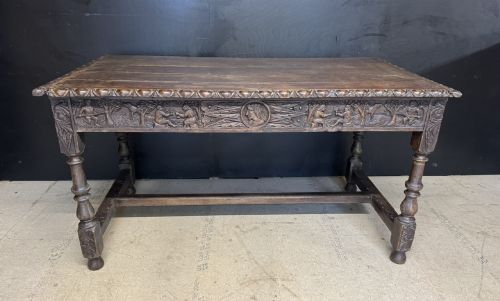
The version you are most likely to meet on this page is a nineteenth-century side table or a dining table integrating carved woodwork into the upper rail. These items combine practical drawer storage with the heavy, durable timber character typical of revival and traditional farmhouse aesthetics.
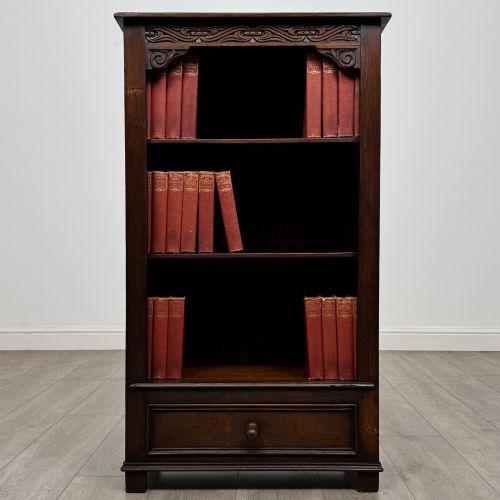
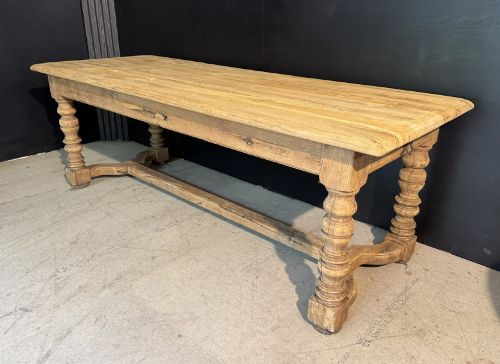
Originating largely from British and European workshops, these items demonstrate how functional storage compartments were embellished with decorative carving. The forms vary from large refectory tables and bookcases to smaller bible boxes and console tables, each incorporating the characteristic frieze construction.
How they were made
Makers built these pieces primarily using solid oak timbers, occasionally supplementing structural interiors or secondary surfaces with pine. The primary wood was selected for its dense grain and durability, allowing artisans to carve deep relief patterns directly into the structural rails without compromising strength.
Metal components such as iron and brass hardware were utilised for handles, hinges, and structural reinforcement on drawers and chests. These hardware additions complemented the dark, polished oak surfaces while providing the mechanical function necessary for daily use.
Some Victorian tables hide carved stags' heads on the back gallery, surprising anyone who looks behind the furniture.
What varies in quality
The depth and crispness of the relief carving set superior examples apart from simpler work. Finer items exhibit sharply defined motifs and smooth drawer movement, whereas lesser pieces show shallower, more mechanical tool marks.
Timber selection and secondary wood usage also distinguish the grade of a piece. High-tier examples maintain uniform oak construction throughout, while standard items integrate pine or other secondary woods in concealed areas.
The Carved Oak Frieze Drawer Glossary
- Frieze
- The horizontal structural band situated directly beneath the top surface of a table or chest. This area frequently carries the carved decoration that defines the piece.
- Mule chest
- A storage chest featuring one or more drawers built into the base beneath the main compartment. They bridge the gap between traditional coffers and modern drawer chests.
- Refectory table
- A long, narrow dining table traditionally used in communal dining halls. Surviving examples often incorporate heavy timber frames and deep frieze rails.
- Bible box
- A small, portable desk or box designed to hold sacred texts and writing materials. Many include internal drawers and carved exterior panels.
Carved Oak Frieze Drawer: Frequently Asked Questions
What is a frieze drawer?
A frieze drawer is a storage compartment built into the upper horizontal band of a table, desk, or chest. Its front panel often carries the primary decorative carving of the piece.
These drawers were designed to keep small items close at hand while maintaining the clean architectural lines of the furniture.
How do I date an oak piece?
Dating relies on examining construction techniques, tool marks, and hardware types used in the assembly. Seventeenth and eighteenth-century items often show hand-riven timbers and pegged joints, whereas later revival pieces display machine-cut elements.
Style revivals, such as Jacobean or Gothic revivals in the nineteenth century, deliberately imitated older eras, making joint analysis essential for accurate dating.
Where were these pieces used?
These items served functional roles in domestic and institutional settings, including dining rooms, libraries, and hallways. Tables provided surfaces for writing or dining, while chests secured household linens and valuables.
The inclusion of a drawer kept essential tools or documents organised within arm's reach of the user.
How do I maintain oak furniture?
Maintain oak surfaces by keeping them away from direct heat sources and extreme humidity fluctuations that cause timber to split. Regular dusting with a soft cloth preserves the finish without requiring heavy chemical polishes.
Applying traditional wax occasionally helps nourish the grain and protect the aged patina of the wood.