

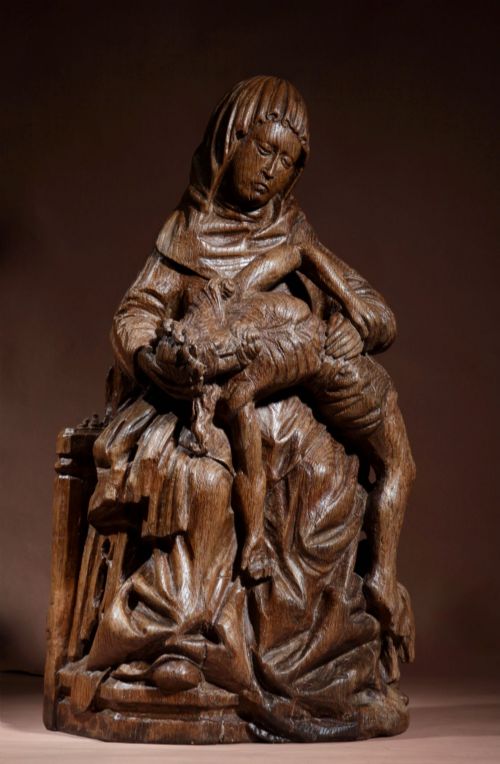
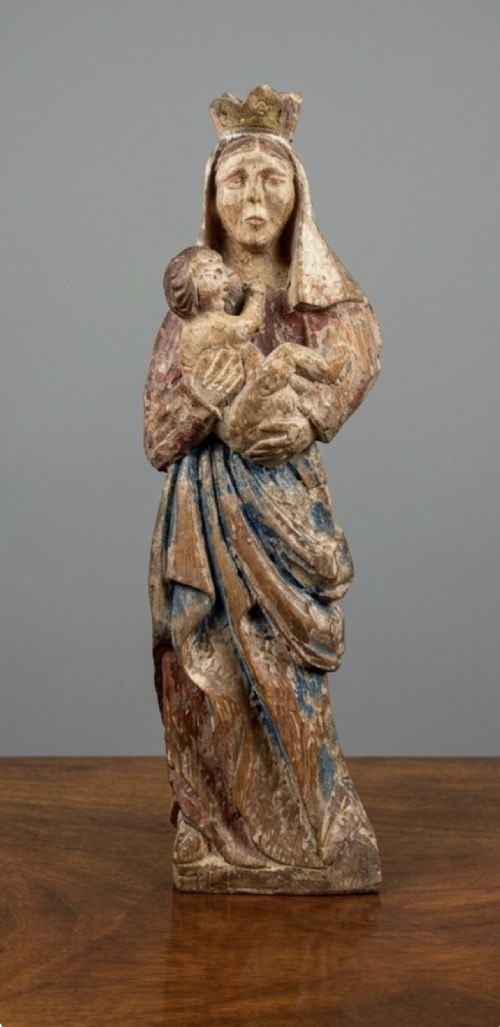


Carved Oak Figure Mary
A carved oak figure mary brings centuries of devotion into a room, offering the quiet gravity of medieval craftsmanship.
Carved Oak Figure Mary
Collectors encounter figures shaped by Gothic, Renaissance, and eighteenth-century European styles, ranging from intimate wall sculptures to large freestanding statues. Pieces hail from regions such as South Germany and the Low Countries, reflecting diverse European ecclesiastical traditions.
The inventory on this page highlights the enduring appeal of oak and carved wood, showing how artisans across different eras interpreted religious devotion through sculpture.
Materials and Construction
Many works incorporate gesso, gold leaf, and polychrome paint, adding layers of colour and gilded detail to the wooden surface. These embellishments enhanced the visual drama of religious sculptures intended for contemplation.
Carved Oak Figure Mary Retail Price Guide 2026
Typical asking prices for carved oak figure mary among the pieces listed under this phrase on Sellingantiques today, from the lower quarter to the upper quarter. They describe what is for sale here now, not the wider market.
Even after centuries, a well-carved fold of wooden drapery can still trick the eye into thinking it is heavy cloth.
Assessing Quality in Carved Figures
Quality rests upon the expressive depth of the carving and the preservation of original surface treatments such as polychrome paint and gesso. Master carvers achieved remarkable emotion in the faces and hands of figures like the Pieta, distinguishing superior works from simpler productions.
The age of the timber and the subtlety of the stylistic details, whether Gothic or Renaissance, dictate the artistic merit of the piece. Intact surface layers and sophisticated drapery indicate higher tier craftsmanship.
The Carved Oak Figure Mary Glossary
- Pieta
- A subject in Christian art depicting the Virgin Mary supporting the dead body of Christ. This iconic scene appears frequently in medieval and Renaissance sculpture.
- Polychrome
- Decorated in a variety of colours. Many wooden figures feature layers of paint applied over gesso to create lifelike depictions.
- Gesso
- A plaster mixture used as a smooth base for paint or gold leaf on wood. It provides a prepared surface for fine decorative work.
- Gothic
- An architectural and artistic style prevalent in Europe during the middle ages, characterised by vertical lines and naturalistic representation.
- Virgin of the Annunciation
- A specific iconographic depiction of Mary at the moment she learns she will bear Jesus. Statues capture her in contemplative or surprised posture.
Carved Oak Figure Mary: Frequently Asked Questions
What periods do these carved figures come from?
The listings encompass works spanning from the pre-sixteenth century and the sixteenth century through to the eighteenth and nineteenth centuries, ending around 1900. Earlier examples often embody Gothic or Renaissance traditions.
Later pieces frequently reflect nineteenth-century revivals of these historical styles, demonstrating an ongoing appreciation for antique ecclesiastical art.
How were these figures originally used?
These sculptures served as focal points for private devotion or ecclesiastical worship in churches, domestic shrines, and chapels across Europe. They helped worshippers connect with sacred narratives through visual and tactile representation.
Many functioned as wall sculptures or freestanding statues designed to inspire reverence and contemplation in sacred spaces.
What materials are typically found on these sculptures?
Oak and general carved wood form the structural foundation of nearly every piece. Artisans often applied gesso and gold leaf to enhance specific areas of the sculpture.
Polychrome paint was frequently used to add colour to the garments and faces, though much of this pigment may weather or wear over the centuries.
How do I identify a Gothic figure?
Gothic sculptures typically exhibit distinct drapery patterns with sharp, vertical folds that emphasise the height and solemnity of the figure. The facial expressions tend to be serene yet deeply emotional, particularly in scenes like the Pieta.
Examining the grain of the oak and the style of the carving helps connect the piece to medieval workshops in regions like South Germany and the Low Countries.