


Carved Oak Entryway Chair
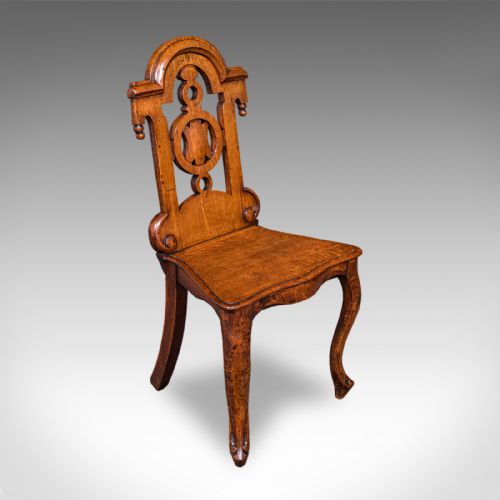
A carved oak entryway chair stands ready in the hall, offering sturdy function and rich period character.
Carved Oak Entryway Chair
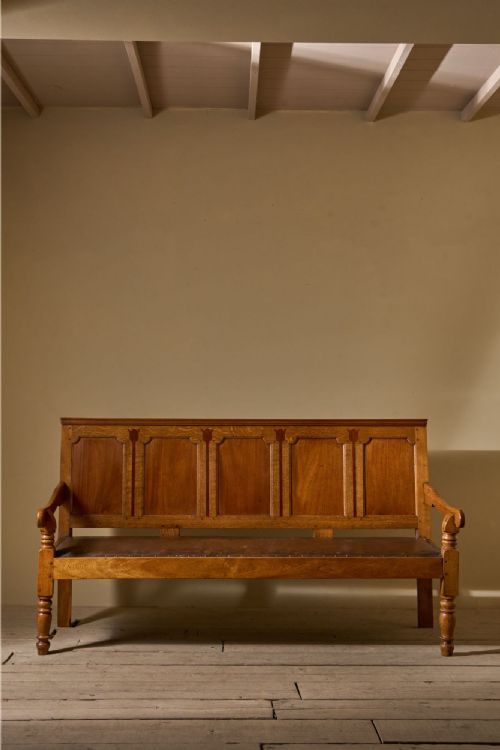
A carved oak entryway chair serves as functional hall seating, encompassing regional variations from tall upright hall chairs to benches with storage. These pieces bridge domestic practicality and decorative presence in entrance spaces.
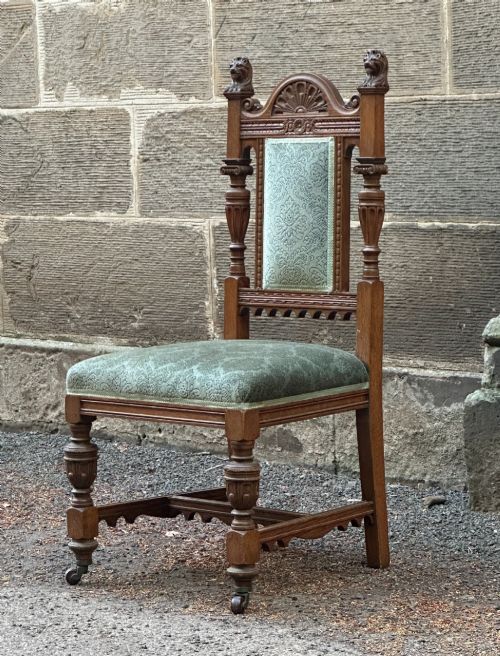
Victorian and nineteenth-century examples dominate the selections here, frequently appearing alongside earlier Georgian, Regency, and eighteenth-century pieces. Buyers encounter both single seats and matched pairs designed for grand hallways.
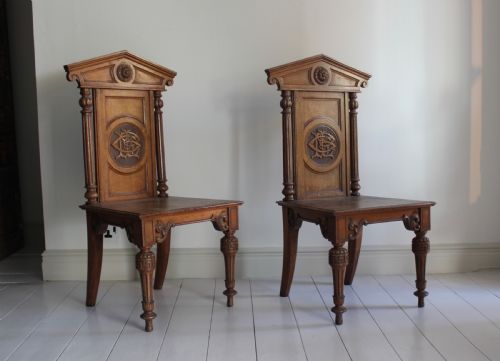
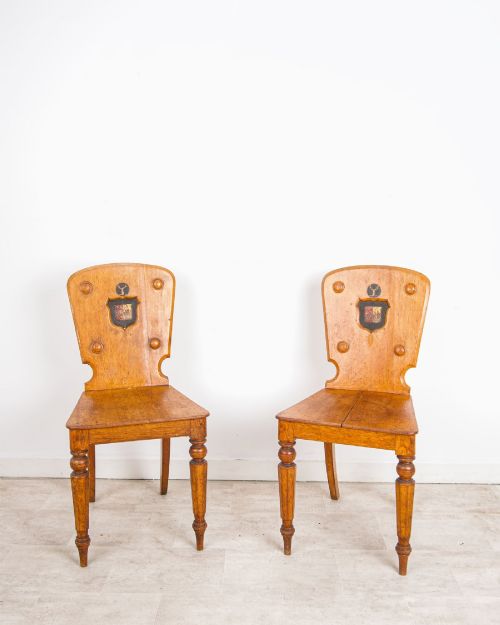
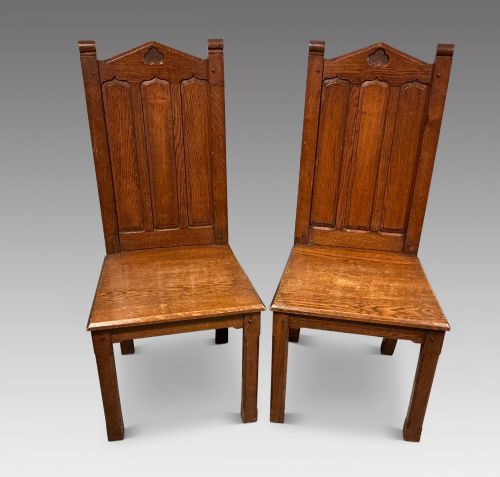
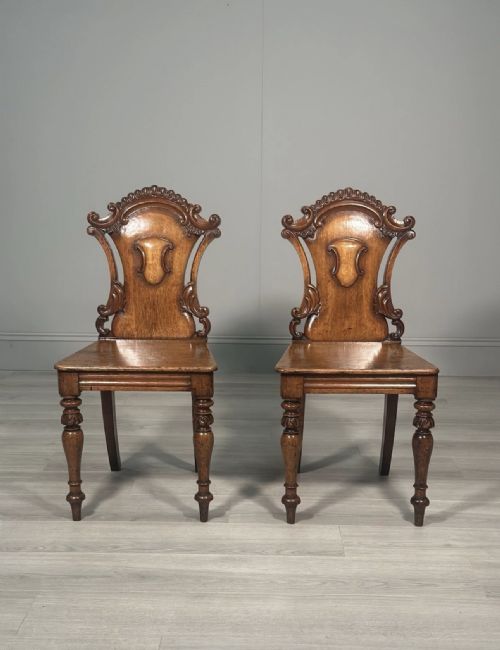
The aesthetic vocabulary leans heavily towards Gothic Revival, Jacobean Revival, and classical influences, often featuring heraldic shield backs or intricate relief carving.
Defining Quality in Carved Seating
The depth and crispness of the carving distinguish finer examples from standard production, particularly where heraldic shields or tulip motifs appear. High-grade specimens display deliberate chisel work rather than soft, mechanical moulding.
Structural integrity and timber selection dictate the upper tier of the range, where tight grain and seasoned solid oak ensure lasting stability. Original surface patination and untouched timber finishes carry greater weight among collectors than heavily restored examples.
One nineteenth-century seat proudly bears the designation whimsical, reminding us that Victorian craftsmen occasionally indulged their sense of humour.
Bruce Talbert·Gillows
The Carved Oak Entryway Chair Glossary
- Hall chair
- A rigid wooden seat traditionally placed in a hallway or entryway, typically featuring a solid wooden seat and an elaborately carved back rather than upholstery.
- Sgabello
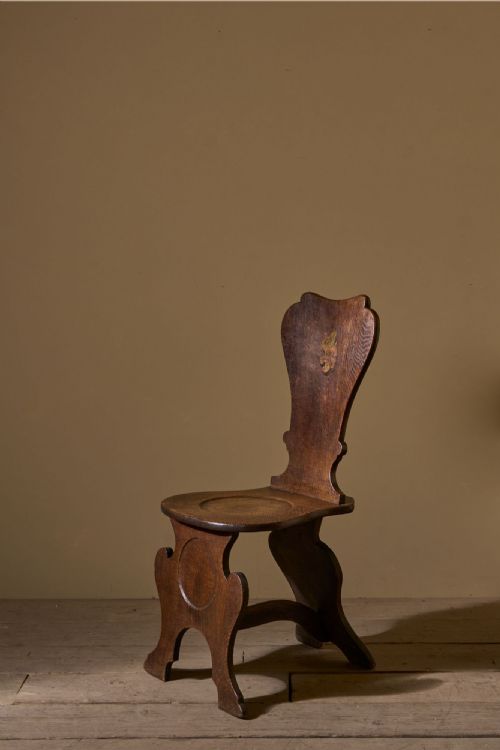
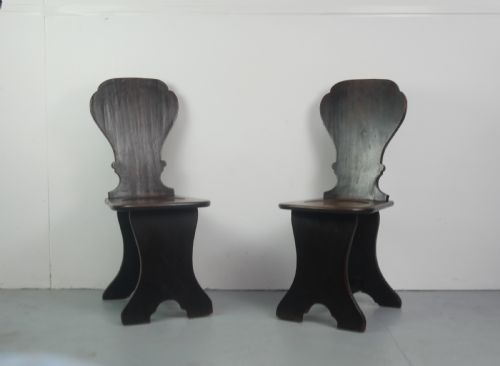
- A Renaissance-style chair form featuring a wooden seat supported by trestle-like slab legs, often utilised as a decorative hall seat.
- Shield back
- A chair back shaped in the form of a heraldic shield, frequently carved with crests, coats of arms, or geometric tracery.
- Gothic Revival
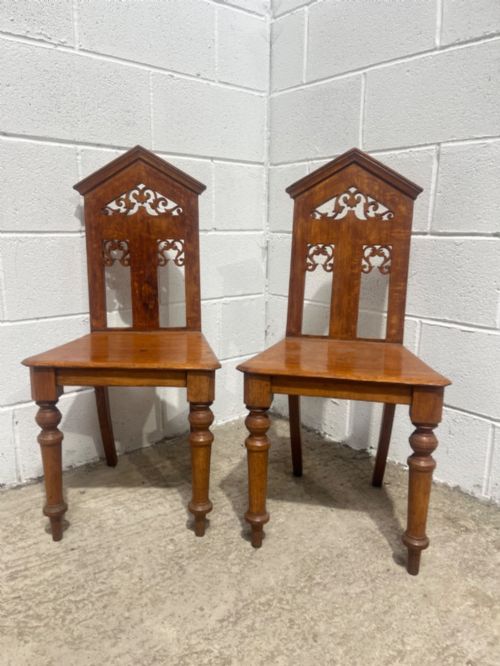
- An architectural and decorative style drawing inspiration from medieval design, characterised by pointed arches, trefoils, and heavy carved ornamentation.
- Carolean
- A revival style referencing the reign of Charles II, known for scrolling woodwork, elaborate cresting, and turned stretchers.
Carved Oak Entryway Chair: Frequently Asked Questions
What is an entryway chair?
An entryway chair is a rigid wooden seat designed for a hallway or reception space, intended for brief seating rather than long-term lounging. These pieces prioritise striking visual backs and compact footprints to fit narrow architectural spaces.
They function as both practical furniture and decorative statements near the front door, often matching architectural revival styles of their respective periods.
How do I date a carved oak hall chair?
Dating relies on examining the carving style, construction joints, and wood patination. Georgian and Regency examples often feature cleaner classical lines, whereas Victorian pieces lean heavily into Gothic or Jacobean revivals with deep relief work.
Secondary indicators include tool marks, timber shrinkage, and the specific type of revivalism popular during the nineteenth century.
Were these chairs used daily?
These seats served busy entrance halls where guests waited or coats were shed, meaning they faced regular use despite their formal appearance. Solid oak construction ensured they withstood the constant traffic of a period household.
Many survive in pairs because they were positioned symmetrically against hallway walls as part of a formal decorative scheme.
What is a monks bench?
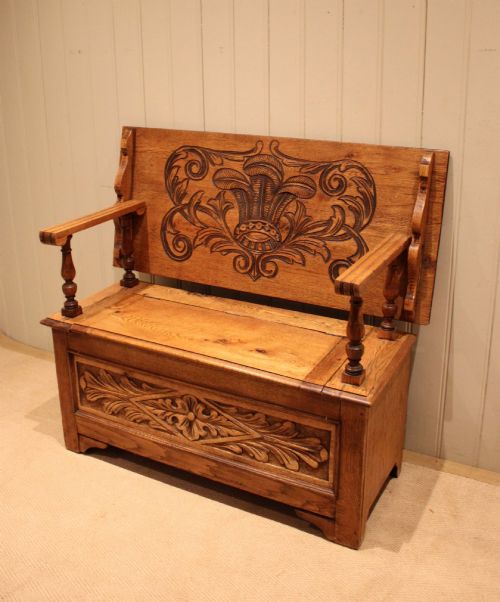
A monks bench is a multifunctional hallway piece that typically converts between a seat with a high back and a small table. This clever design saved space in traditional entranceways while providing concealed storage beneath the seat.
Examples from the early twentieth century often display golden solid oak and heavy traditional carving inspired by earlier Jacobean forms.