
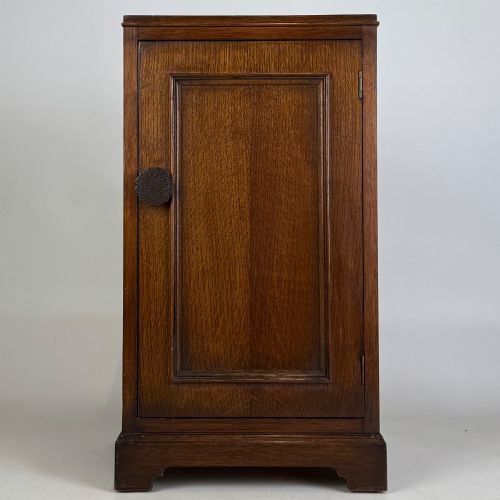
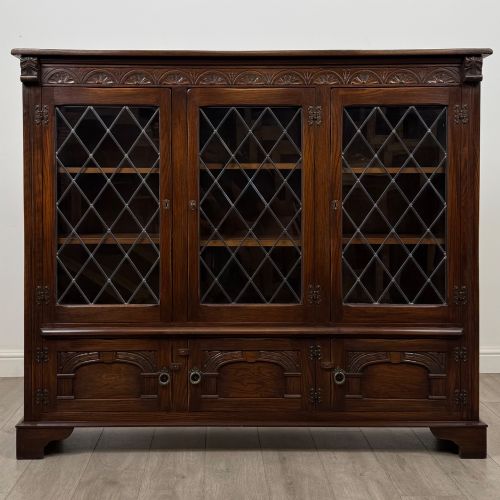
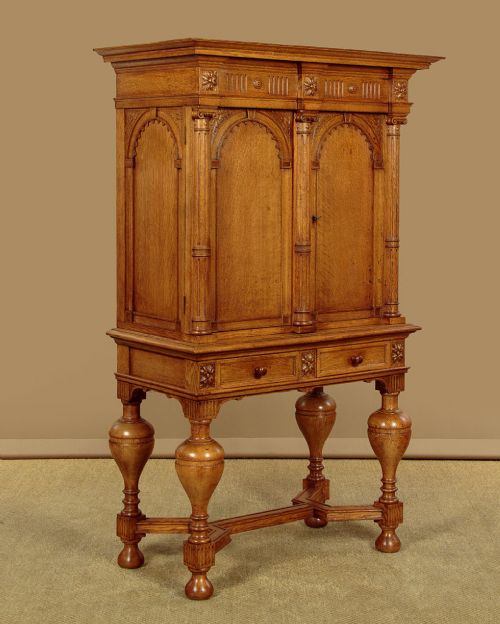
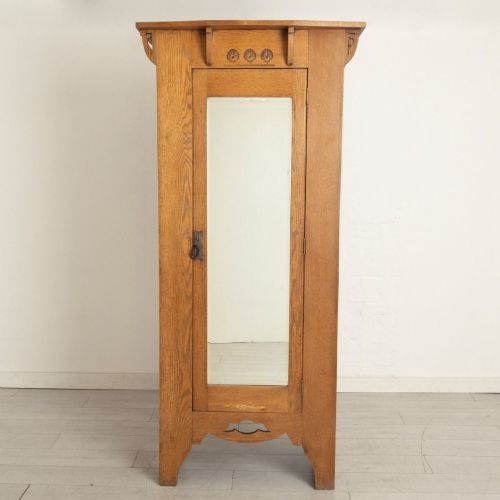
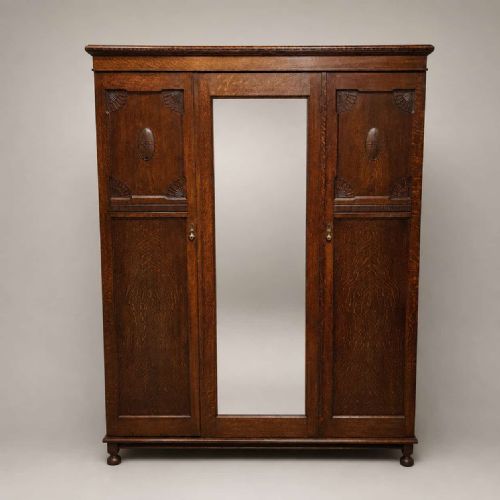
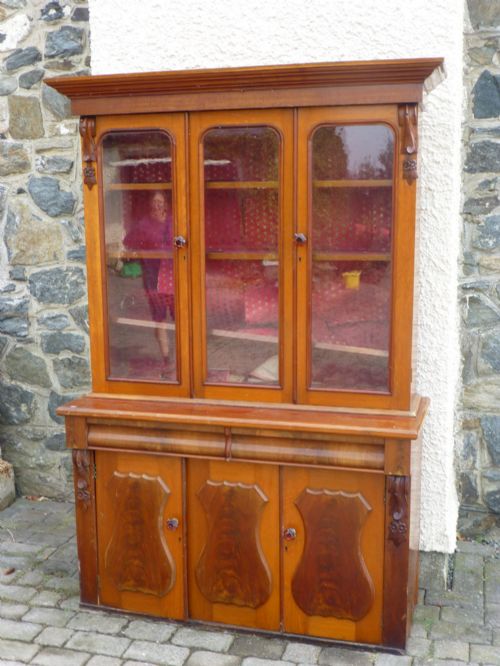
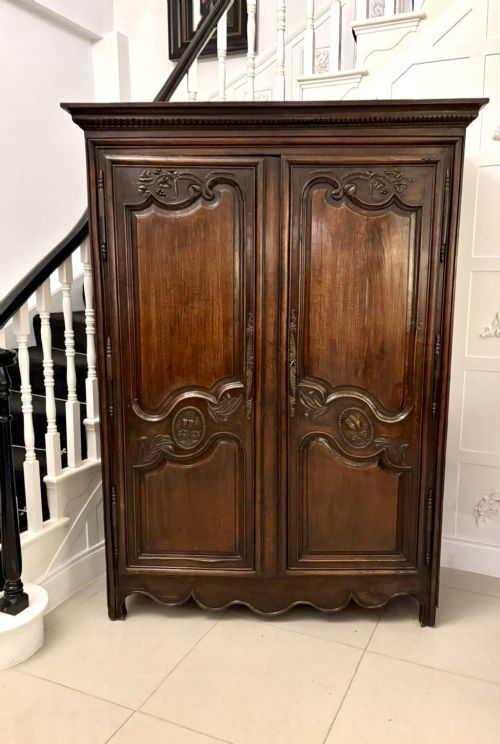
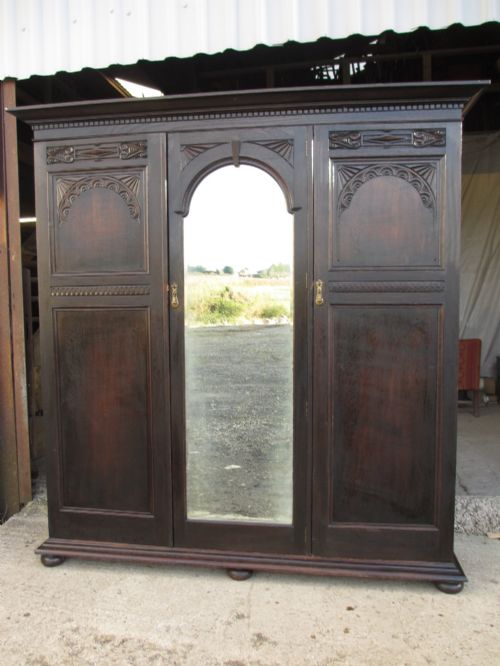
Carved Oak Doors
Carved oak doors deliver solid presence and rich grain, bringing depth to wardrobes, cupboards and cabinets across various historic periods.
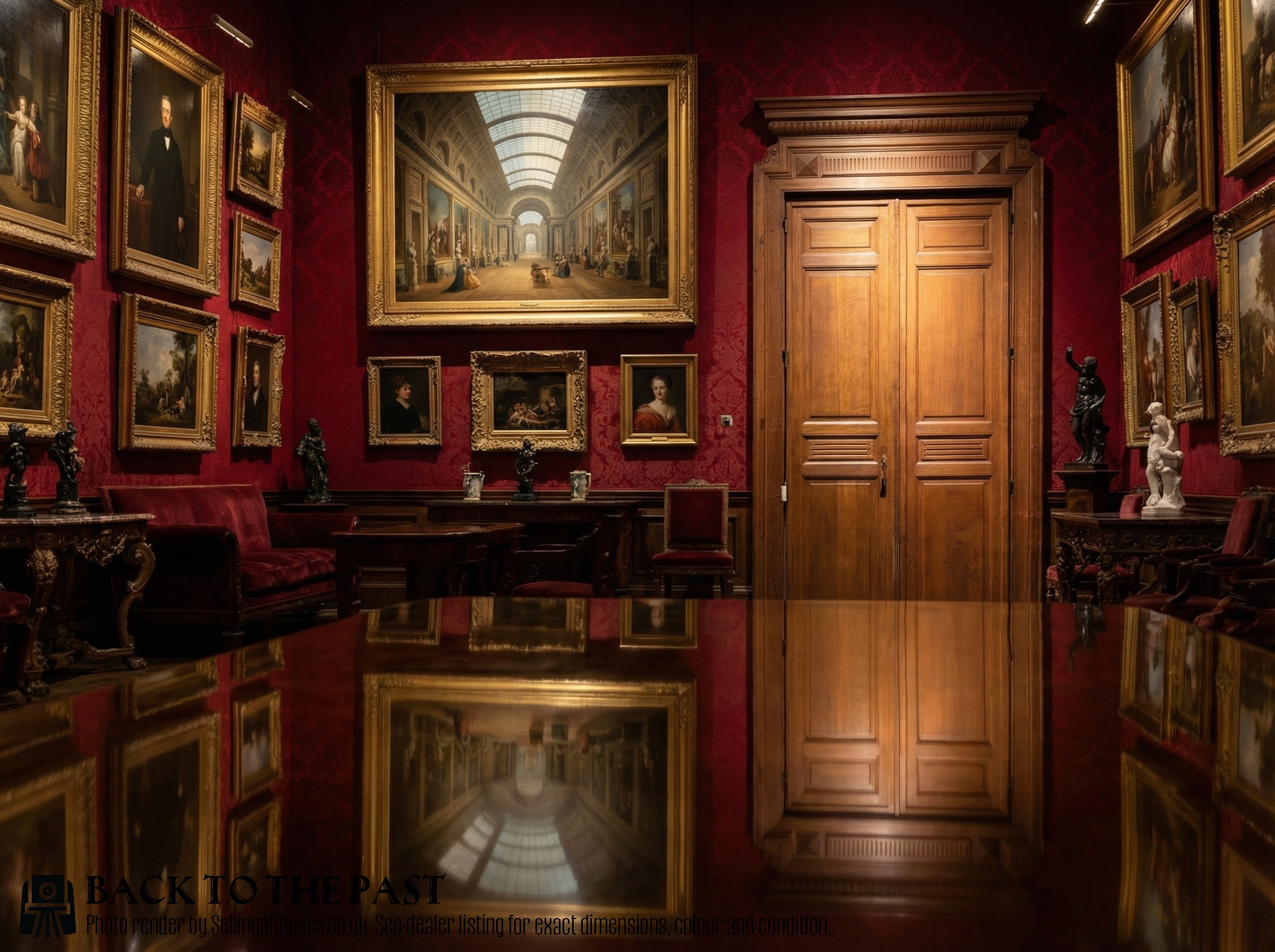
Carved Oak Doors
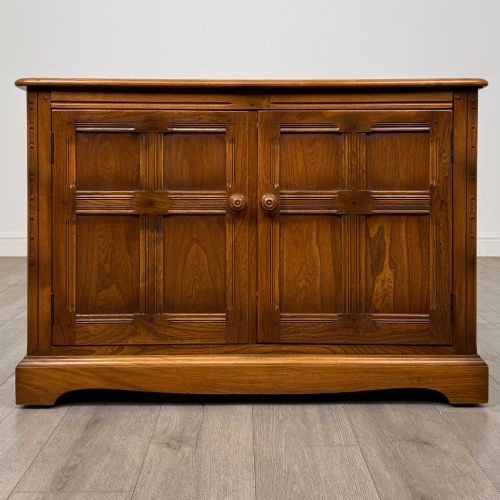
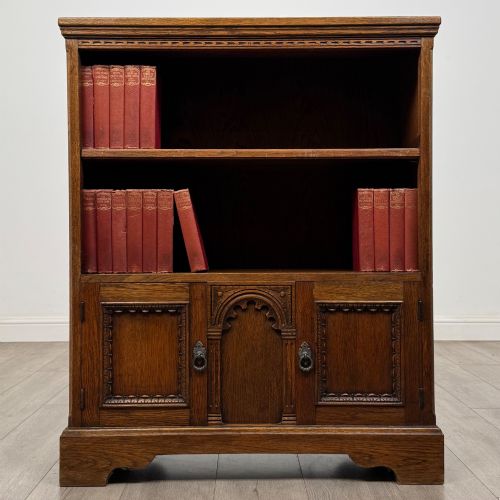
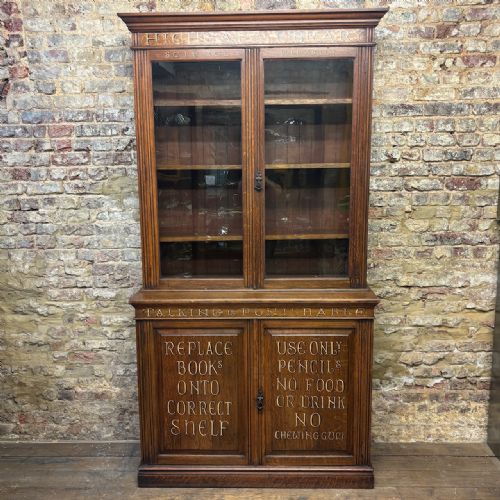
When you search carved oak doors, you encounter architectural panels and cabinet closures drawn from centuries of cabinetmaking. These architectural elements appear primarily integrated into larger storage forms such as wardrobes, sideboards, bookcases and armoires.
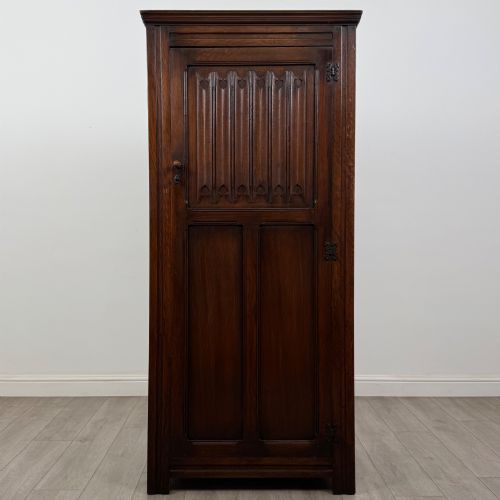
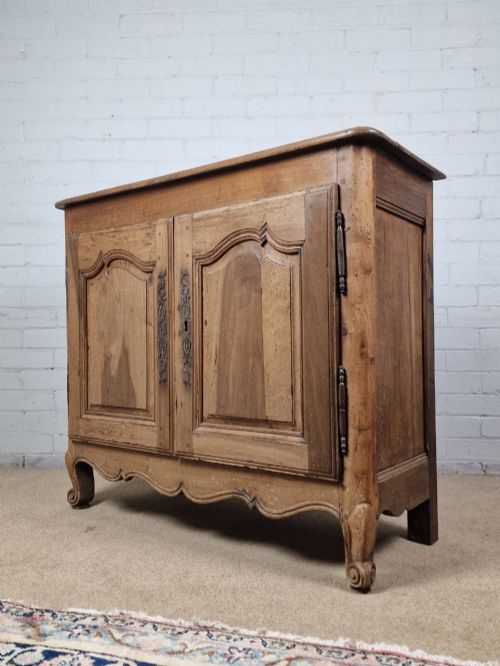
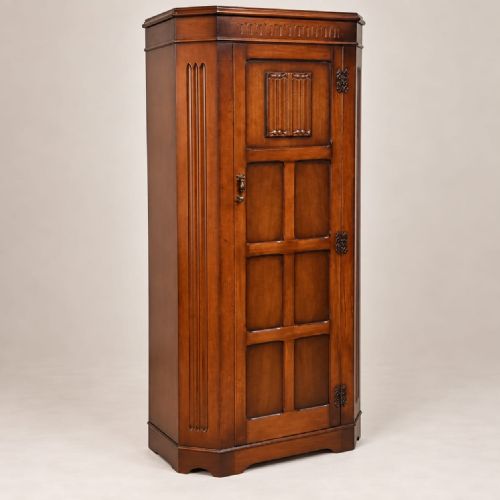
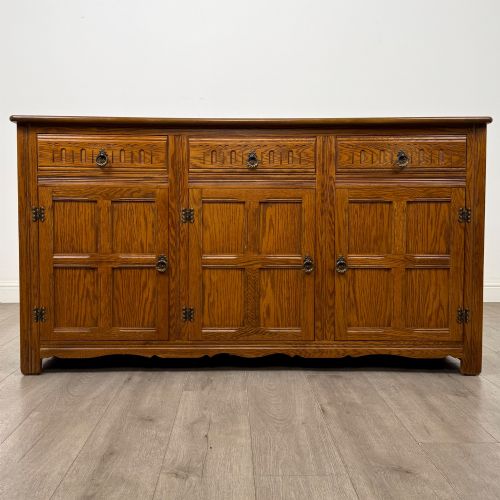
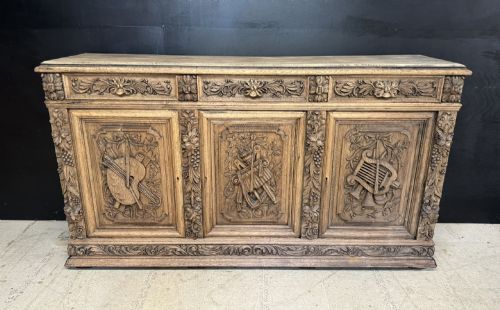
The pieces on this page span from the seventeenth century through the Edwardian era and the 1930s, reflecting diverse regional tastes including French Provincial and English Arts and Crafts. Wardrobes and cupboards dominate the selection, often featuring deep relief carving or linenfold panels.
Makers utilised heavy timber to construct substantial furniture pieces where the doors serve as the principal decorative surface. Buyers select these items to anchor a room with architectural weight and historic character.
How they were made
Cabinetmakers built these panels using solid oak timber, frequently framing the main structure with mortise and tenon joints to withstand seasonal movement. Secondary woods like mahogany or walnut occasionally appear in backing boards or internal shelving.
Surface decoration relies heavily on hand chiselling, producing deep relief work, floral motifs, or linenfold textures directly into the timber. Hardware components forged from brass, iron and wrought iron secure the heavy panels, complemented by glass inserts in glazed bookcase and display cabinet doors.
What varies in quality
The crispness and depth of the hand carving separate standard production work from exceptional craftsmanship. Superior examples display undercut detailing and smooth timber selection without excessive knotting or splitting.
Structural integrity depends on the original framing and the weight distribution across hinges and pivots. Better items maintain robust panel alignment and substantial brass or iron hardware that supports the heavy oak leaves over decades of use.
Maple and Co
The Carved Oak Doors Glossary
- Linenfold
- A style of wood carving representing folded linen or parchment. This motif frequently decorates Tudor and revival cupboard panels.
- Enfilade
- A suite of rooms or a long sideboard with multiple cabinet doors in a line. French examples often feature extensive carved oak panels.
- Armoire
- A large wardrobe or cupboard with doors enclosing shelving or hanging space. Continental variants frequently showcase heavy architectural mouldings.
- Golden oak
- A warm, lighter timber tone popular in Edwardian and Arts and Crafts furniture. This finish highlights the natural medullary rays in quarter-sawn boards.
- Pediment
- A crown or decorative architectural structure surmounting a cabinet or overdoor. These elements often incorporate carved panels and display shelves.
Carved Oak Doors: Frequently Asked Questions
How do I identify Jacobean revival doors?
Jacobean revival pieces display geometric mouldings, strapwork, and deep panel sinking reminiscent of seventeenth-century joinery. These elements often appear on nineteenth-century sideboards and cabinets.
The timber selection tends to be darker oak with heavy hand finishing to emulate centuries of ageing. Look for symmetrical panel layouts and punchwork backgrounds behind the primary carvings.
Are these doors suitable for modern wardrobes?
Historic carved oak doors offer exceptional rigidity and durability, making them well suited for integration into fitted bedroom cabinetry or freestanding wardrobes. Their solid construction handles daily wear reliably.
Buyers should verify the exact dimensions and hinge placements before planning architectural alterations. The heavy weight of the timber requires robust framing supports.
What is golden oak furniture?
Golden oak refers to a bright, warm timber finish that became widespread during the Edwardian period and the Arts and Crafts movement. This treatment emphasises the natural grain patterns of the wood.
Pieces in golden oak often feature simpler hardware in brass or wrought iron to complement the lighter surface tone. They contrast with the darker, heavier finishes of earlier Victorian and seventeenth-century items.
How do I care for antique oak panels?
Maintain antique oak by applying quality beeswax periodically to nourish the dry timber and preserve the historic patina. Avoid placing pieces near direct heat sources to prevent wood splitting.
Dust regularly with a soft, dry cloth rather than using harsh chemical polishes. Proper humidity control keeps the joints stable and prevents the carved panels from warping.