
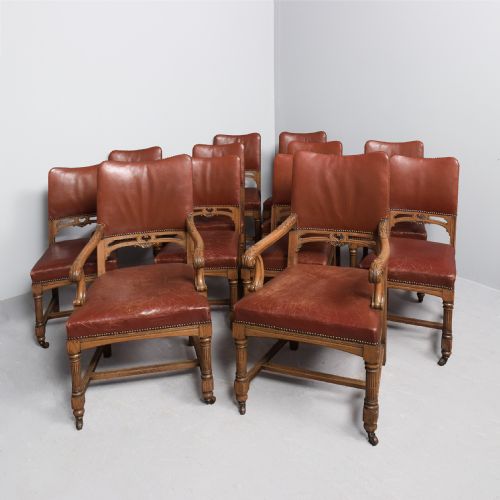
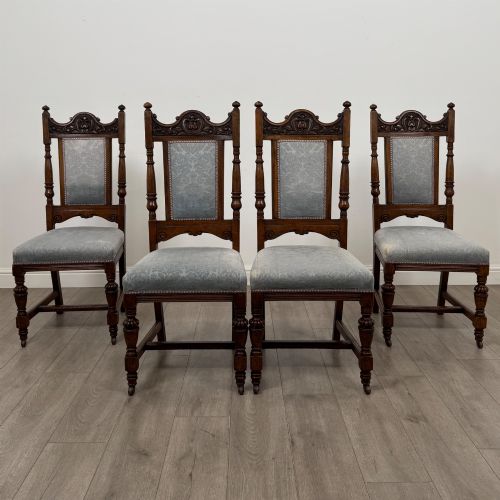
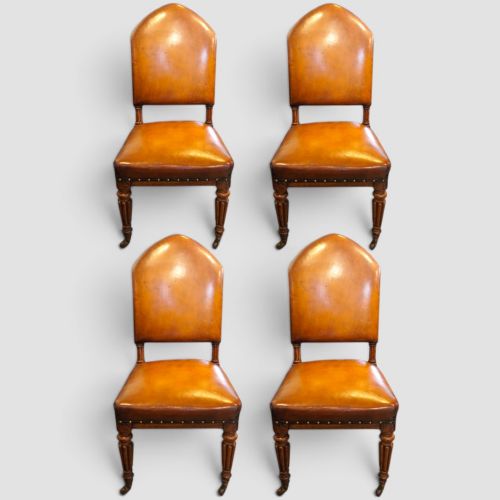
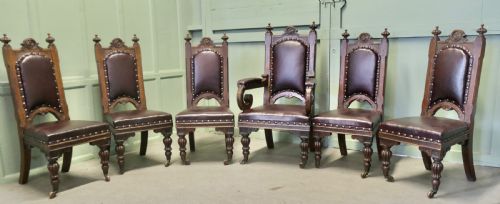

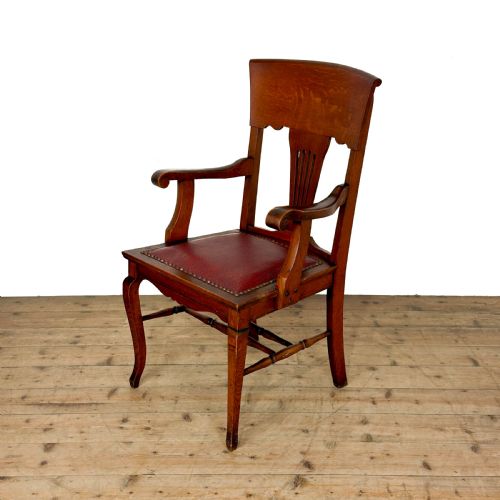


Carved Oak Desk Seat
A carved oak desk seat is a sturdy working chair built to last generations, offering robust support and rich historic character for a study.
Carved Oak Desk Seat
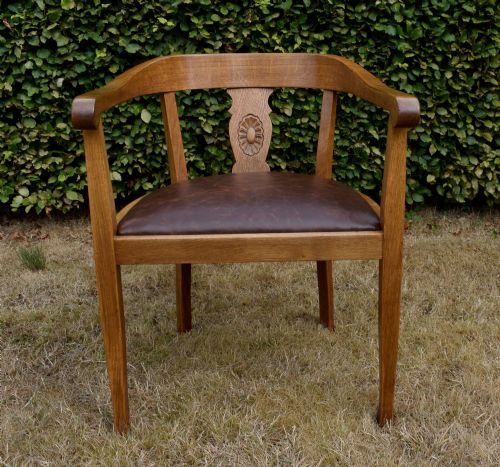
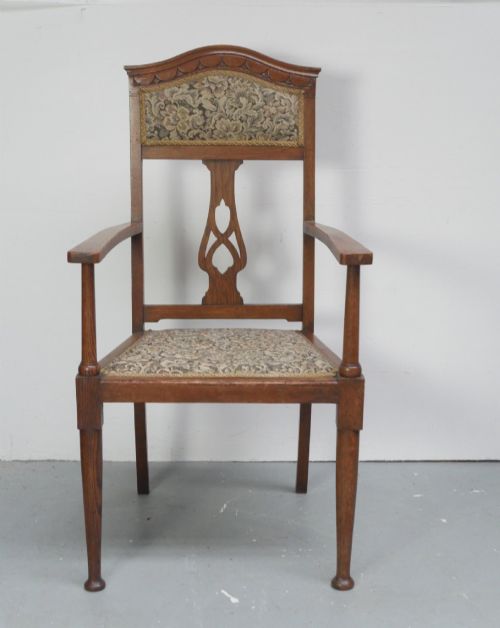
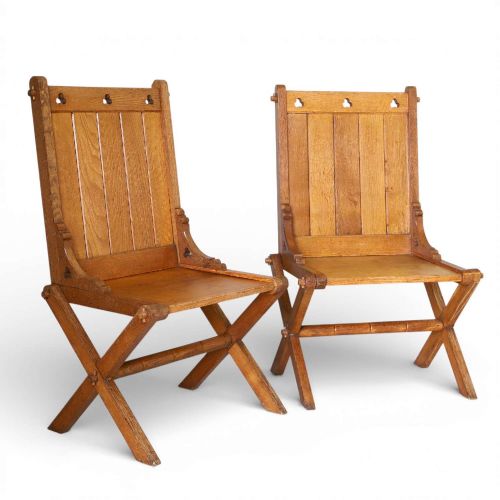
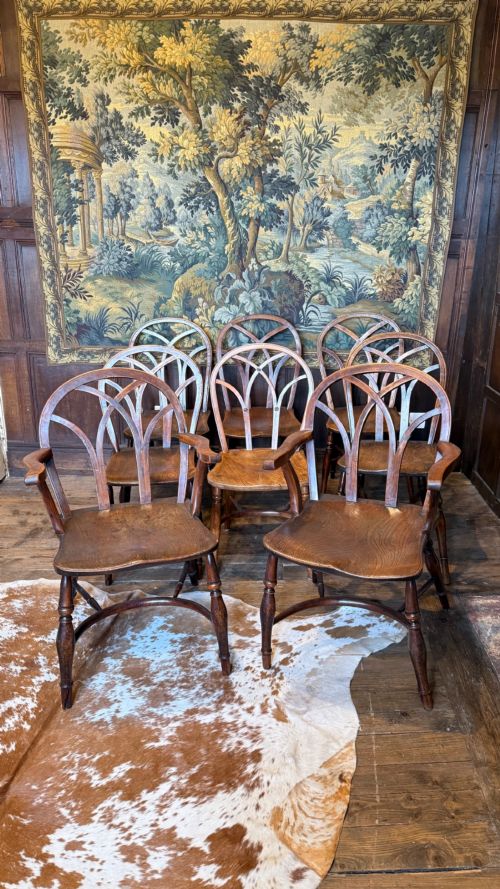
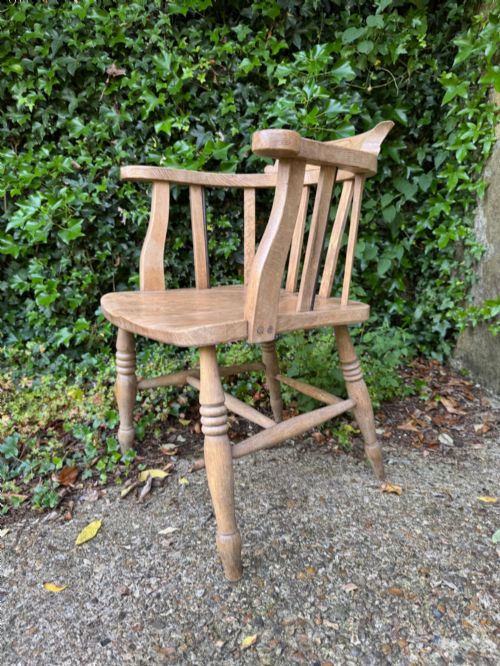
A carved oak desk seat provides a solid and enduring place to sit while working, appearing frequently in forms such as swivel desk chairs, library armchairs, and Captain's chairs. These functional seats emerge predominantly from the nineteenth and early twentieth centuries, spanning periods from Victorian Gothic Revival to Edwardian design.
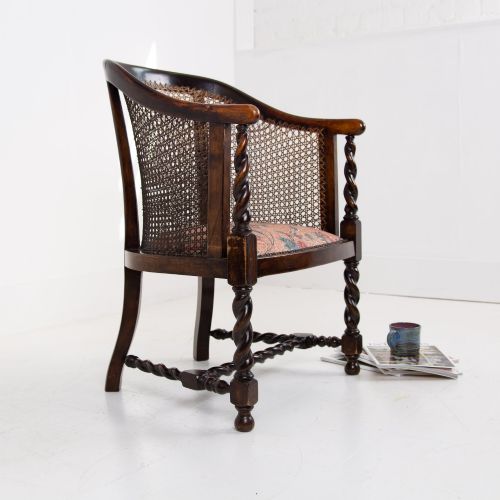
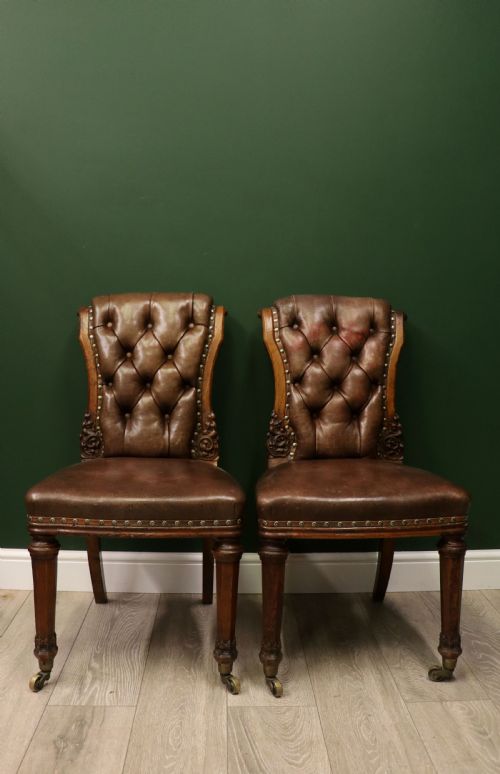
Buyers encounter variations ranging from simple solid timber seats to versions fitted with leather, brass studs, or fabric upholstery. The selection includes high-back Gothic revival pieces, low corner chairs, and adjustable swivel models designed specifically for office or library use.
Materials and construction methods
Makers built these working seats primarily using solid oak timbers, often complemented by secondary woods like elm and supported with metal, brass, and iron hardware. Upholstered variants incorporated leather, velvet, textile, and fabric inserts secured with brass studs along the seat edges.
Joinery relied on traditional framing and turning techniques, with carved ornamentation applied directly to the solid wood panels, splats, and cross-frames. Swivel mechanisms and adjustable height components on later nineteenth and early twentieth-century models utilised sturdy metal screws and iron bases.
Several examples incorporate rotating swivel mechanisms that let Victorian clerks spin around in circles long before modern office chairs existed.
Distinctions in craftsmanship and design
Quality in a carved oak desk seat rests upon the crispness and depth of the timber carving, the integrity of the joinery, and the retention of original components such as leather upholstery and brass fittings. Finer examples display meticulous attention to detail in trefoil motifs, turned spindles, and structural frames.
The degree of specialisation in the form also separates standard seating from superior library and office pieces, particularly where mechanical height adjustment or revolving swivel mechanisms operate smoothly alongside generous proportions and robust structural design.
Gillows·Bruce James Talbert
The Carved Oak Desk Seat Glossary
- Gothic Revival
- A nineteenth-century style drawing inspiration from medieval architecture, characterised by pointed arches, trefoil details, and heavy carved tracery.
- Swivel Desk Chair
- A rotating working chair equipped with an adjustable height mechanism, allowing movement and convenience at a desk.
- Captain's Chair
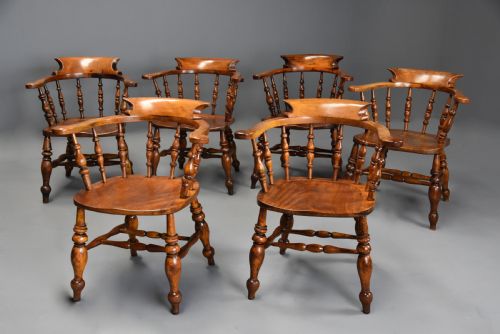
- A sturdy wooden armchair featuring a rounded spindle back and a solid saddle or flat seat, traditionally used in offices and libraries.
- Curule
- An ancient X-frame chair design, also known as a Dante or Savonarola chair, featuring intersecting curved legs.
- Corner Chair
- An armchair with a diagonal orientation designed to fit neatly into the corner of a room or behind a small writing table.
Carved Oak Desk Seat: Frequently Asked Questions
What is a carved oak desk seat?
A carved oak desk seat is a sturdy wooden chair designed for working at a table or bureau, featuring decorative carving upon its timber frame. These pieces combine utility with period craftsmanship.
They appear in various formats, including swivel mechanisms, library armchairs, and Captain's chairs, spanning several decades of nineteenth and twentieth-century design.
How do I date a carved oak desk seat?
Dating involves examining the construction methods, timber patination, and stylistic details present in the frame. Victorian and Edwardian examples often display Gothic Revival motifs or simple turned spindles.
Earlier seventeenth-century items show distinct hand-tool marks and joined panel construction, while twentieth-century versions may include mechanical swivel ironwork and adjustable height screws.
Were these seats used only at desks?
While many served writers and officials at writing tables, similar forms functioned as library chairs, smoking room seats, or hall furniture. Their robust build suited them to constant daily use.
Design variations like corner chairs and swivel models allowed owners to utilise them in multiple domestic and professional settings.
How do I care for an oak desk seat?
Maintaining these wooden seats requires regular dusting with a soft cloth and occasional treatment with appropriate wax to nourish the dry oak. Leather inserts benefit from specialised leather balms to prevent cracking.
Keeping the furniture away from direct heat sources and sudden temperature changes preserves the structural integrity of the timber and any applied upholstery.