

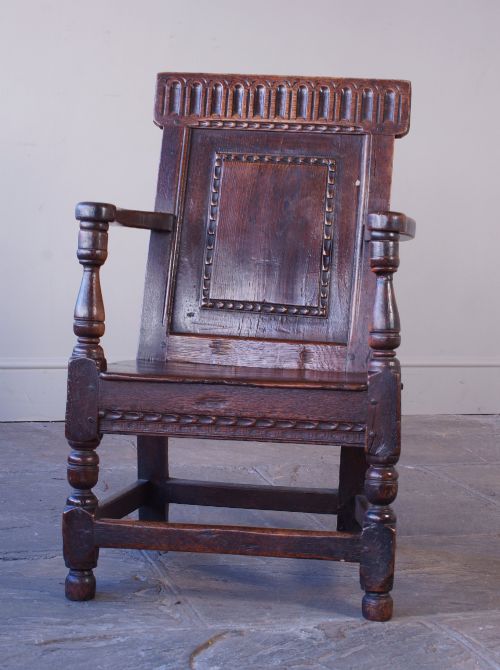


Carved Oak Child Chair
Carved oak child chair examples are scaled-down seating pieces built from sturdy timber, offering historical charm and practical utility for collectors today.
Carved Oak Child Chair
A carved oak child chair is a diminutive seating piece constructed primarily from oak, spanning periods from the seventeenth century through to the early twentieth century. These domestic items mirror the stylistic shifts of adult furniture, encompassing styles such as Jacobean, Georgian, and Arts and Crafts.
The inventory on this page ranges from early joined highchairs on stands to rustic Windsor armchairs, wainscot armchairs, and simple rush-seat variants. Collectors frequently encounter nineteenth-century interpretations alongside much older seventeenth-century survivals bearing carved ornamentation.
Forms include side chairs, armchairs, highchairs, and occasional stools, reflecting the varied domestic requirements of past households. Each piece demonstrates how cabinetmakers scaled down standard joinery techniques to create durable seating for younger family members.
Materials and construction methods
Makers utilised solid oak for the primary framework of these chairs, employing traditional joinery methods such as mortise and tenon construction to ensure structural rigidity. Surfaces often display hand-carved detailing, panel work, or initials and dates applied by the original craftsmen.
Seating areas incorporate a variety of traditional materials depending on the period and style, including woven rush, rattan cane, leather, fabric, and velvet. Auxiliary components occasionally feature hardwood framing, brass tacks, or natural wood forms to complete the construction.
Carved Oak Child Chair Retail Price Guide 2026
Typical asking prices for carved oak child chair among the pieces listed under this phrase on Sellingantiques today, from the lower quarter to the upper quarter. They describe what is for sale here now, not the wider market.
One seventeenth-century highchair preserves the tangible mark of its maker through carved initials R.D. and the date 1688.
Distinctions in craftsmanship and survival
The quality of a carved oak child chair depends on the crispness of the original hand-carved ornament and the integrity of the structural joinery. Pieces that retain their early surface patination and original seating materials hold greater architectural interest than those with extensive modern replacements.
The Carved Oak Child Chair Glossary
- Joinery
- The method of connecting pieces of wood using wooden joints like mortise and tenon without relying on metal nails. This technique defines the sturdy construction of early oak furniture.
- Wainscot
- A heavy wooden armchair style characterised by a panelled back and solid wooden seat, popular in the seventeenth century. Miniature versions were built for children of prominent families.
- Bergere
- An enclosed upholstered armchair featuring cane panels on the back and sides. Nineteenth-century examples often adapted this French style for children's seating.
- Rush
- Dried marsh grasses twisted into cords and hand-woven to create traditional chair seats. This material appears frequently on country and Victorian child chairs.
- Windsor
- A chair constructed with a solid wooden seat into which the legs and back spindles are directly inserted. Children's variants utilise this same pegged architecture.
Carved Oak Child Chair: Frequently Asked Questions
What periods do these chairs cover?
The selection spans from the seventeenth century through the Victorian era and into the early twentieth century.
Craftsmanship styles shift across these eras from early joined oak and wainscot forms to later Windsor, Arts and Crafts, and Georgian revival pieces.
How were child highchairs used?
Historical highchairs provided a raised, secure seating position for infants at the family dining table.
Many early examples utilised integrated wooden stands or frame structures to elevate the child well above floor level.
What seat materials should I expect?
Surviving examples feature a wide range of original and replaced seating surfaces.
Common materials include hand-woven rush, rattan cane, solid oak, leather, fabric, and velvet depending on the specific period and style.
How do I identify a seventeenth-century piece?
Seventeenth-century examples typically display heavy joined oak construction, hand-carved ornamentation, and sometimes inscribed dates or initials.
These early pieces often take the form of wainscot armchairs or joined highchairs rather than later vernacular styles.