


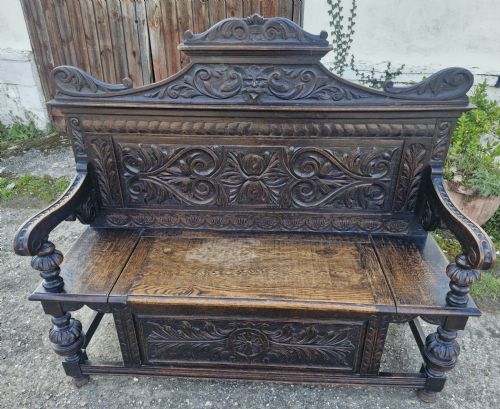


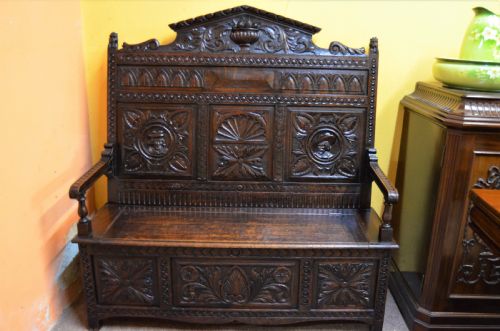


Carved Oak Chest Seat
A carved oak chest seat offers sturdy storage and a sturdy seat, combining utility with robust historic character.
Carved Oak Chest Seat
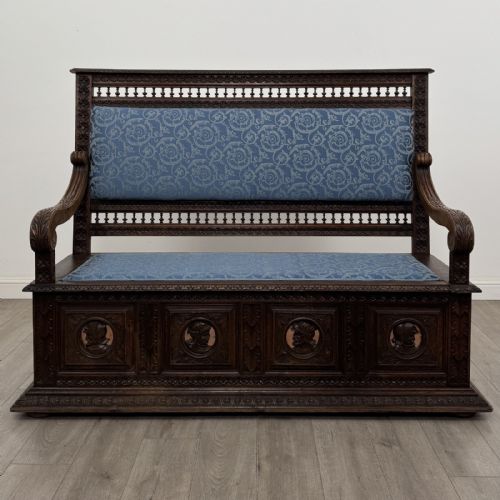
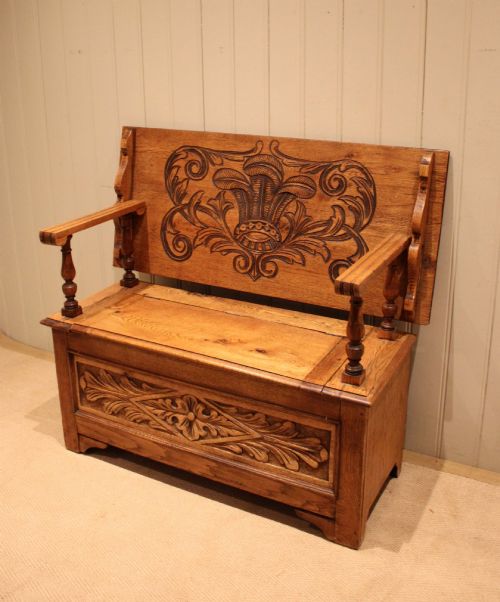
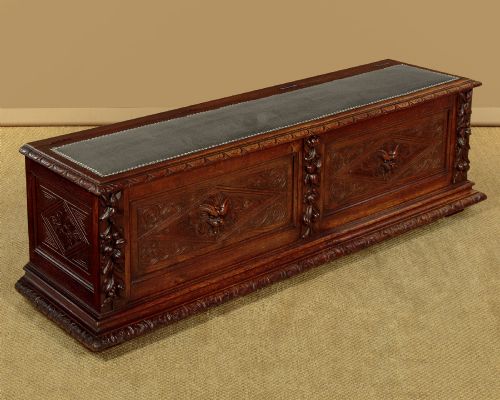
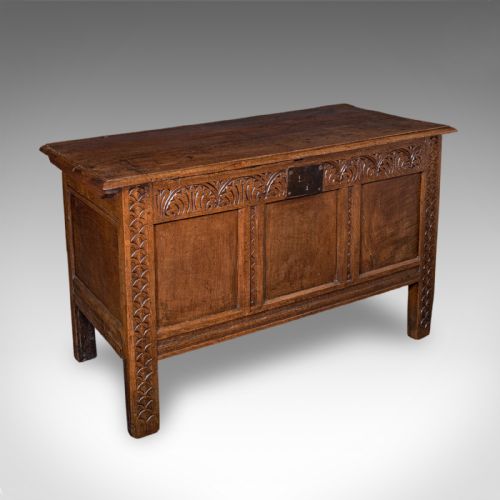
A carved oak chest seat brings together heavy timber storage and practical seating in forms ranging from monks benches and settles to coffers and ottomans. These items serve multiple purposes in hallways and living spaces, functioning simultaneously as a trunk for linens or household goods and a bench for sitting.
The versions met most frequently on this page span the Victorian period, the Edwardian era, and the eighteenth century, alongside revivalist pieces from around nineteen hundred. Common configurations include hall settles with folding backs, hinged coffers adapted for window seats, and enclosed box stools.
Originating predominantly from English workshops, these pieces showcase traditional forms like the William III coffer or the Jacobean Revival monks bench. Their dual functionality makes them enduringly practical for modern homes seeking traditional storage solutions.
Assessing quality and craftsmanship
Quality rests upon the selection of timber and the depth of the carving. Superior examples exhibit heavy, well-figured solid oak with crisp, deeply cut relief work rather than shallow or mechanical surface ornamentation.
Construction integrity distinguishes better pieces, visible in the snug fit of panelled lids, the original weight of iron and brass hardware, and the stability of conversion mechanisms in convertible monks benches and settles.
Carved Oak Chest Seat Retail Price Guide 2026
Typical asking prices for carved oak chest seat among the pieces listed under this phrase on Sellingantiques today, from the lower quarter to the upper quarter. They describe what is for sale here now, not the wider market.
Several pieces feature staring Green Man carvings, quietly watching over the hallway from the back of the bench.
The Carved Oak Chest Seat Glossary
- Coffer
- A large wooden chest traditionally used for storing valuables, linens, or documents. Many examples feature hinged lids and elaborate front carvings.
- Monks Bench
- A convertible piece of furniture featuring a hinged back that folds down over the arms to transform a hall seat into a table.
- Settle
- A wooden bench with a high solid back, solid arms, and a box base designed to keep out draughts in older hallways.
- Green Man
- A sculptural architectural ornament depicting a human face disgorged from foliage, commonly found carved into Victorian oak furniture.
- William III
- A late seventeenth-century English design period characterised by heavy proportions, rich carved details, and robust architectural mouldings.
Carved Oak Chest Seat: Frequently Asked Questions
What is a monks bench?
A monks bench is a dual-purpose item of furniture that converts from a hall seat with a high back into a small table by pivoting or folding the backrest downwards.
This clever design allowed compact living spaces to utilise a single heavy timber object for both seating and dining or writing tasks.
Where should I place a hall settle?
A hall settle works best against a solid wall in an entrance hallway, mudroom, or large landing where its high back provides shelter from draughts.
Because these pieces incorporate storage within the base, they also serve as a practical place to store shoes, blankets, or everyday accessories.
How do I care for solid oak furniture?
Solid oak benefits from application of natural beeswax or furniture polish applied sparingly and buffed with a soft cloth to nourish the wood grain.
Keep these heavy timber pieces away from direct heat sources and drastic humidity changes to prevent the solid oak panels from splitting.
How do I tell Victorian revival from older pieces?
Victorian revival pieces often display machine-assisted precision in their joinery and brighter golden oak tones compared to the darker, patinated surfaces of genuine seventeenth-century timber.
Examining the interior construction, tool marks, and hardware fixings helps determine whether a piece dates to the original period or a later revival.