
Carved Marble Hall Table
A carved marble hall table brings weight and proportion to an entrance, combining solid stone with shaped timber.
Carved Marble Hall Table
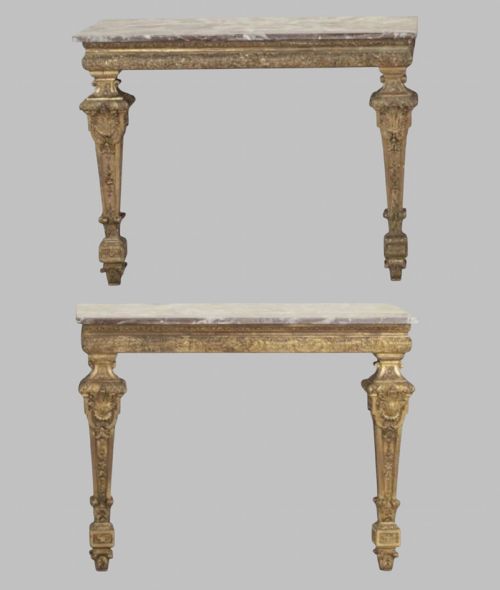
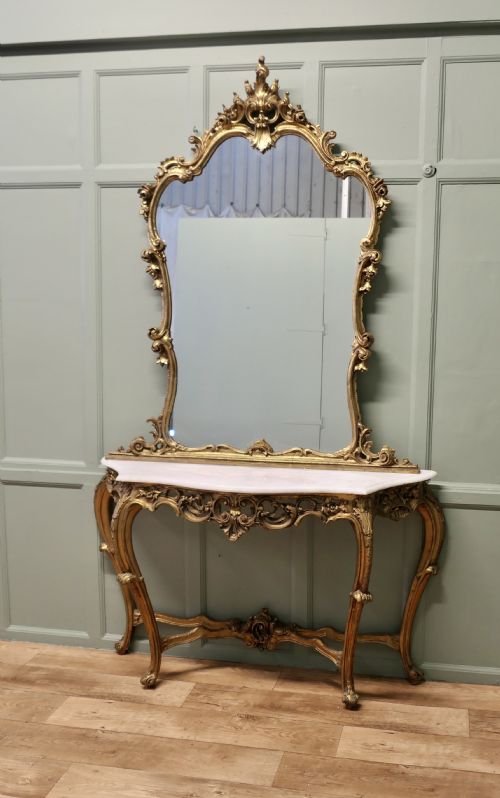
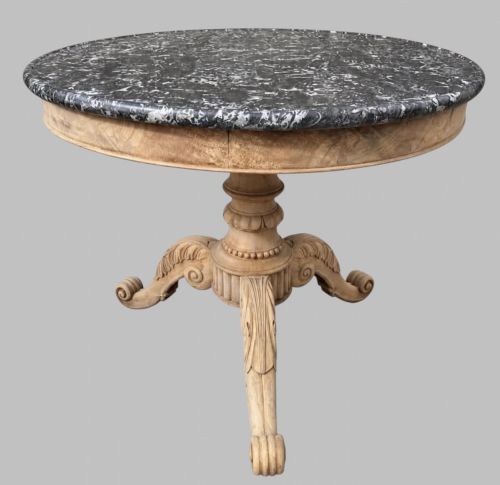
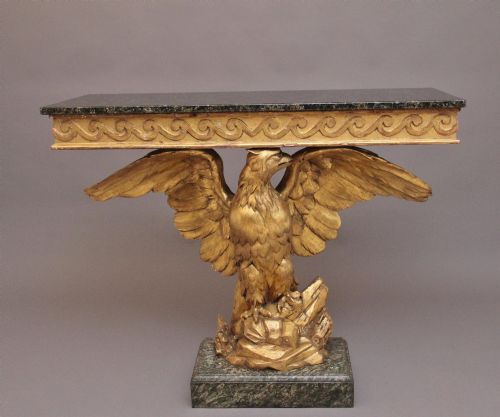
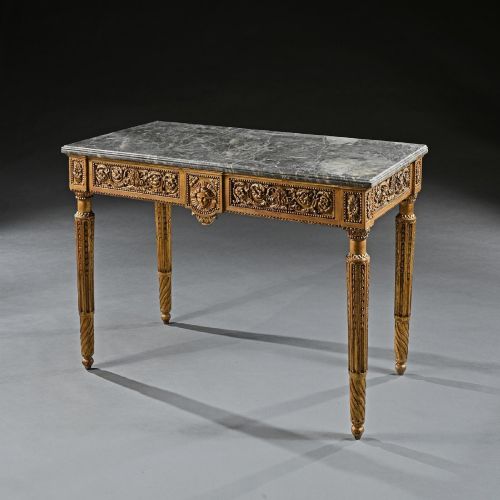
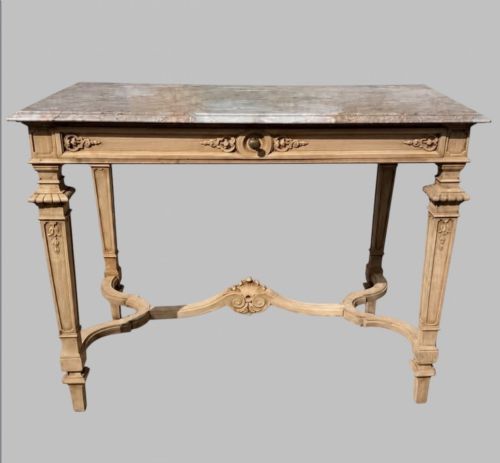
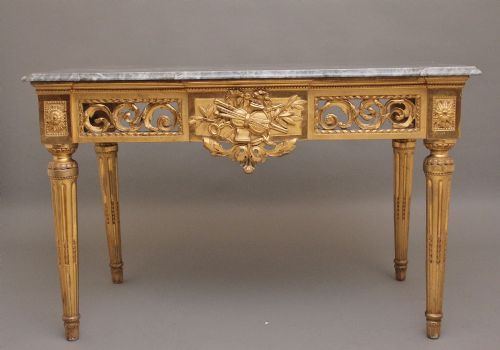
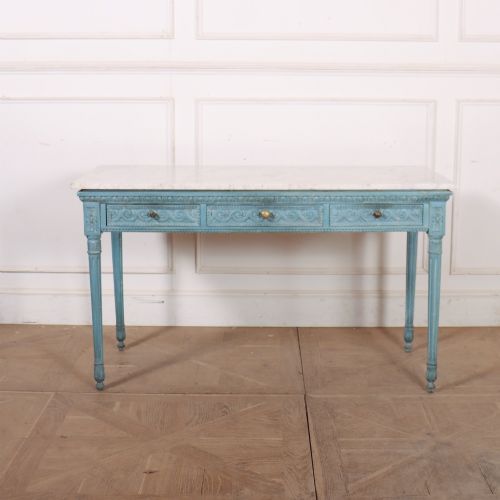
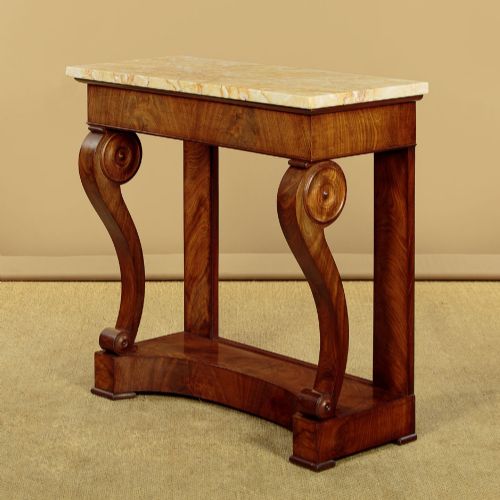
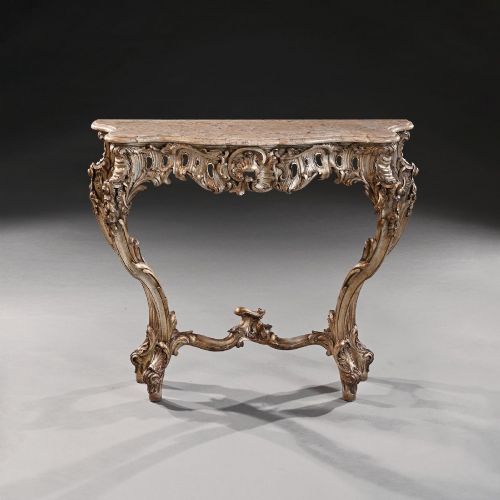
When you search for a carved marble hall table, you are looking at substantial antique console, centre, and side tables designed to stand against walls or anchor principal rooms. These pieces combine heavy stone tops with carved wooden bases originating from the eighteenth, nineteenth, and early twentieth centuries. Italian and French workshops dominate the forms, moving through styles like Neoclassical, Rococo Revival, and Regency.
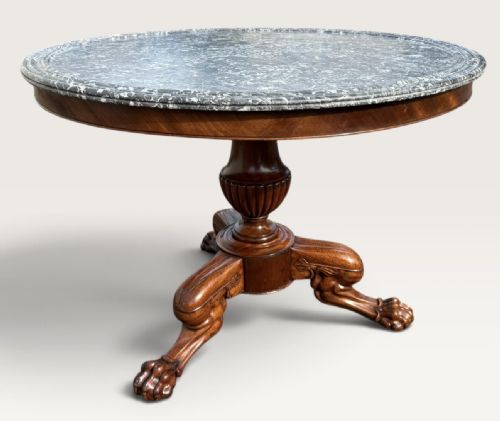
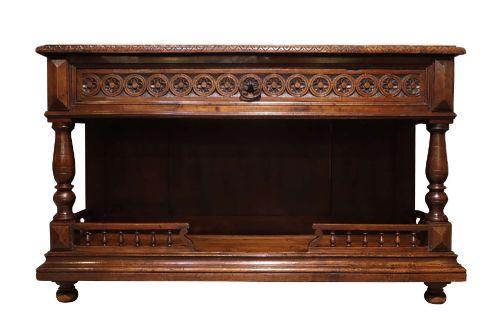
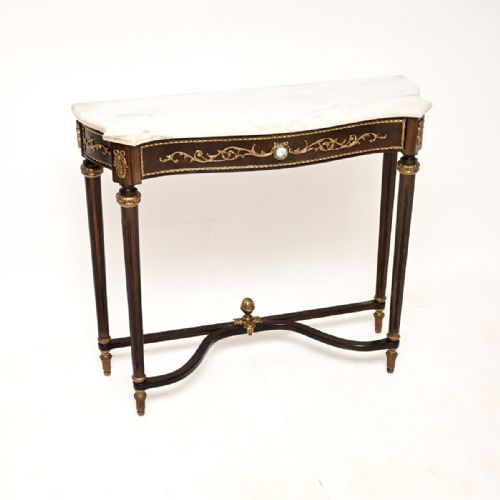
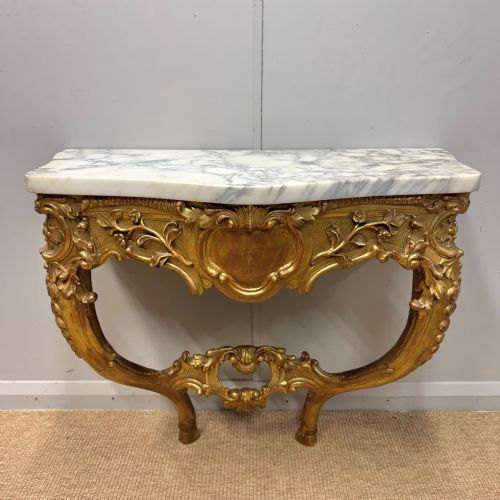
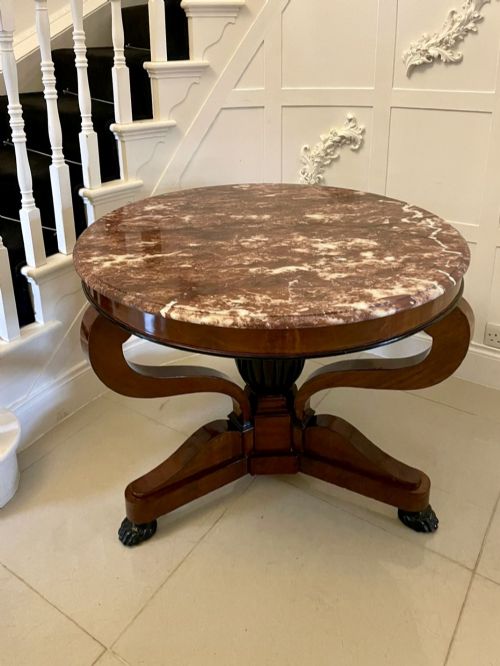
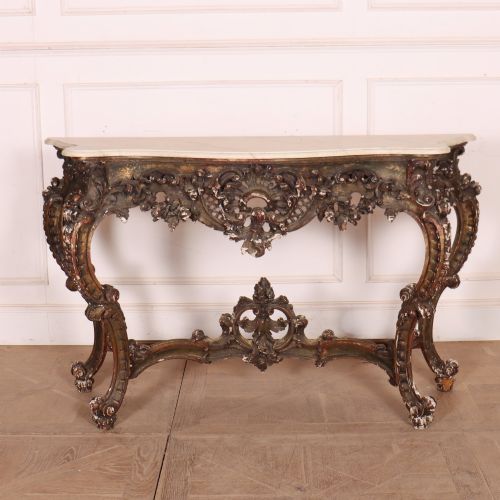
The version you are most likely to meet on this page is a nineteenth-century console table featuring a shaped marble slab resting on a giltwood, mahogany, or walnut frame. Many carry serpentine fronts or carved supports, while others take the form of freestanding gueridon and centre tables with inset stone. They range from restrained oak country house furniture to highly ornamented gilt and gesso creations.
How they were made
Makers shaped the heavy stone tops by hand, polishing the marble or onyx to a smooth finish before mounting them onto timber carcases. The wooden bases relied on traditional joinery in mahogany, walnut, and oak, often reinforced with gesso layers prepared for gilding. Gold leaf and silver gilt were applied over bole to create reflective surfaces on the carved wooden frames.
Carving involved deep relief work executed directly into solid wood or applied composition ornament on gesso. Frames utilised structural timbers like oak or mahogany for stability, supporting the immense downward pressure of a solid marble slab without warping over decades of use.
The listings show console and centre tables spanning the eighteenth, nineteenth, and early twentieth centuries, constructed in marble, giltwood, mahogany, and walnut.
What varies in quality
The depth and crispness of the wood carving separate standard production from exceptional examples, as skilled carvers achieved sharper undercut foliage and more fluid scrollwork. The quality of the marble top also dictates value, with thicker, highly figured slabs of Siena or rouge marble marking superior pieces.
Construction methods reveal the standard of the workshop, particularly the integration of the marble slab with the frame and the integrity of the original gilding. Heavy, dense secondary timbers and stable mortise-and-tenon joints distinguish master cabinet work from simpler provincial items.
Amleto Bertoni
The Carved Marble Hall Table Glossary
- Console Table
- A table designed to stand against a wall, frequently secured to it with brackets because the front legs carry the main load. They often feature elaborate front aprons and flat backs.
- Gueridon
- A small circular table on a central pillar or tripod base, frequently fitted with an inset marble top. Originating in France, these pieces serve as centre tables in principal rooms.
- Giltwood
- Timber coated with fine gold leaf applied over a prepared gesso and bole ground. This finish provides a bright, reflective surface characteristic of formal eighteenth and nineteenth-century furniture.
- Serpentine
- A curved furniture front shaped in a continuous undulating line with a convex centre flanked by concave ends. This contour requires precise timber cutting and stone shaping.
- Neoclassical
- A style drawing inspiration from classical antiquity, featuring restrained symmetry, carved columns, and geometric enrichment. It dominated European design during the late eighteenth and early nineteenth centuries.
Carved Marble Hall Table: Frequently Asked Questions
How were console tables used originally?
Console tables stood against walls in grand reception rooms and hallways, serving as decorative surfaces for lamps, urns, and ornaments. Because many were top-heavy with solid stone, they frequently relied on wall fixings or brackets for stability.
In period interiors, they established the decorative tone of an entrance hall or salon before guests moved further into the property.
Are marble tops original to the tables?
Most marble slabs on these tables are original to their frames, cut and fitted specifically for the piece during manufacture. The weight and exact edge profile usually match the rebates in the wooden carcase.
Replacements do occur due to historic damage, so examining the underside for matching wear and fitting helps confirm the original pairing.
How do I care for antique marble?
Marble requires gentle cleaning with warm water and a soft cloth, avoiding acidic substances like vinegar or lemon juice that etch the polished surface. Periodic waxing protects the stone from stains and preserves its natural sheen.
Care should also be taken with heavy objects placed on the surface to prevent scratching the softer varieties of decorative marble.
How do I tell Italian from French pieces?
Italian tables often display bolder, deeply undercut giltwood carving with an emphasis on theatrical Neoclassical or Rococo forms. French examples tend to balance elaborate carved ornament with precise cabinetwork in walnut, mahogany, or painted finishes.
Regional variations in timber choice and decorative motifs help identify the specific workshop tradition behind each piece.