




Carved Mahogany Stick Stand
A carved mahogany stick stand brings traditional British entrance hall furniture into daily service with timber character.
Carved Mahogany Stick Stand
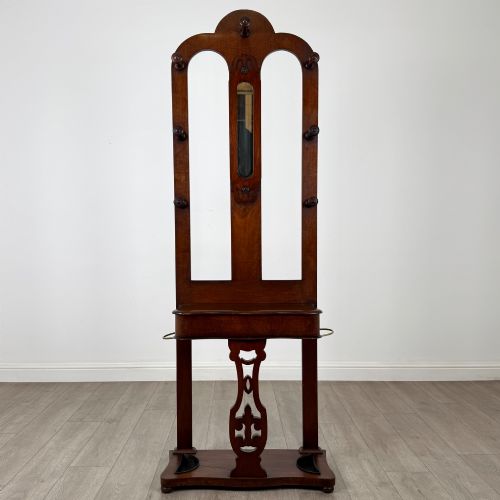
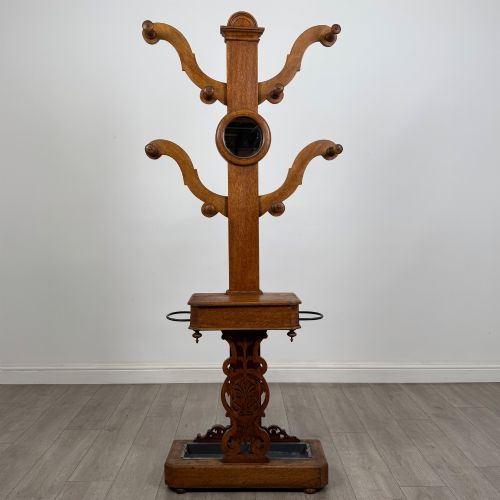
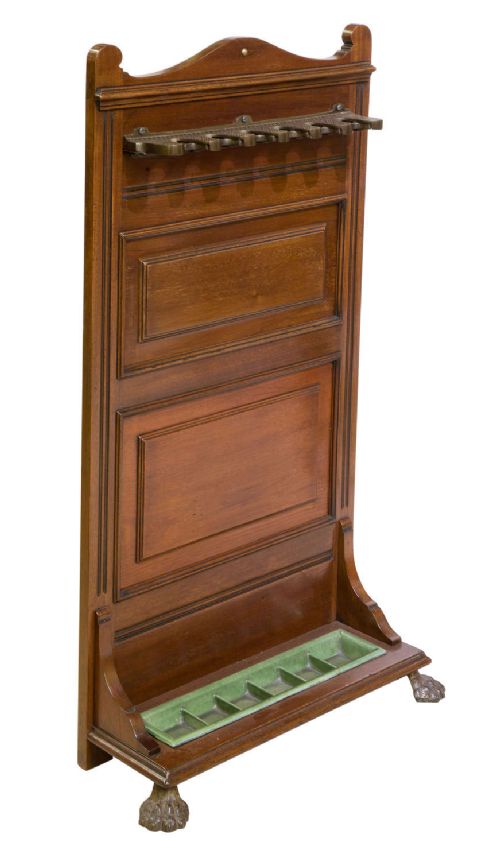
A carved mahogany stick stand meets visitors in the hallway as a practical piece of entrance furniture. These items range from large Victorian hall stands incorporating mirrors and marble shelves down to specific umbrella and cue stands.
The versions most commonly met on this page belong to the Victorian era and the nineteenth century. Makers constructed them from rich timbers to hold walking sticks, umbrellas, and hats near the front door.
How they were made
Cabinet makers utilised solid and veneered mahogany timber, shaping the wood through traditional joinery and carving techniques. Metal elements such as brass or cast iron frequently appear in drip trays, hooks, and sconces to manage moisture from wet umbrellas.
Additional materials like marble and glass appear in specific components such as shelves and mirrors. Felt finishes occasionally line internal surfaces to protect the timber from wear.
Listings feature items primarily from the Victorian period alongside nineteenth-century pieces, constructed in mahogany with brass, marble, and cast iron.
What varies in quality
The distinction between standard and superior examples lies in the depth of the carving and the selection of the mahogany timber. Pieces displaying crisp hand-carved detailing and well-figured wood command greater attention.
Structural complexity also dictates standing quality. Elaborate architectural forms featuring integrated mirrors, marble shelves, and original brass hardware represent a higher tier of nineteenth-century craftsmanship than simpler utilitarian frames.
The Carved Mahogany Stick Stand Glossary
- Mahogany
- A durable tropical hardwood prized for its reddish-brown colour and fine grain. Cabinet makers selected this timber for its stability and rich appearance in formal furniture.
- Victorian
- The period spanning the reign of Queen Victoria, characterised by diverse revival styles and robust manufacturing. Pieces from this era often incorporate heavy ornamentation and practical hallway storage.
- Regency
- An early nineteenth-century design period known for classical restraint and elegant proportions. Items from this time display refined lines and sophisticated decorative motifs.
- Arts and Crafts
- A movement prioritising traditional craftsmanship and simple forms over mass production. Objects from this origin show honest construction and understated detailing.
Carved Mahogany Stick Stand: Frequently Asked Questions
What is a carved mahogany stick stand used for?
These items serve primarily in entrance halls to organise walking sticks, umbrellas, and occasionally hats and coats. Their design keeps everyday outdoor accessories tidy and accessible near the entrance.
Beyond basic storage, larger versions combine mirrors and shelves to provide a functional greeting point for guests arriving at the home.
How do I care for mahogany entrance furniture?
Maintain the timber by dusting regularly with a soft, dry cloth to prevent dirt accumulation. Avoid placing the stand in direct sunlight or near heat sources to protect the polished finish.
Check metal drip trays periodically and empty any collected moisture to preserve the surrounding wood from water damage.
How can I tell a Victorian stick stand apart?
Victorian examples frequently display darker timber tones, substantial proportions, and decorative carving influenced by historical revivals. They often incorporate functional additions like brass or cast iron umbrella wells.
Examining the construction methods and the wear patterns on the base helps confirm nineteenth-century origin.
Where should I place a hall stand at home?
Position the piece in a hallway or entrance vestibule where outerwear and walking sticks accumulate naturally. Ensure adequate floor space so the stand remains stable when holding heavy items.
Keep the item away from damp exterior walls to protect the timber and any integrated mirror backing over time.