


Carved Mahogany Corner Unit
A carved mahogany corner unit brings forgotten room angles to life with rich timber and period display space.
Carved Mahogany Corner Unit
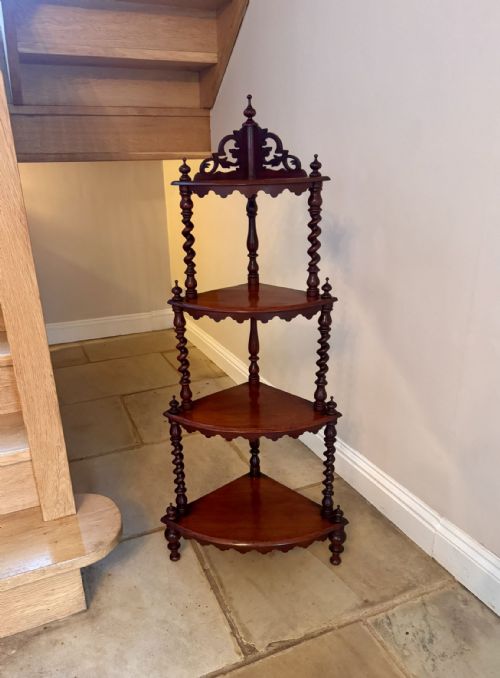
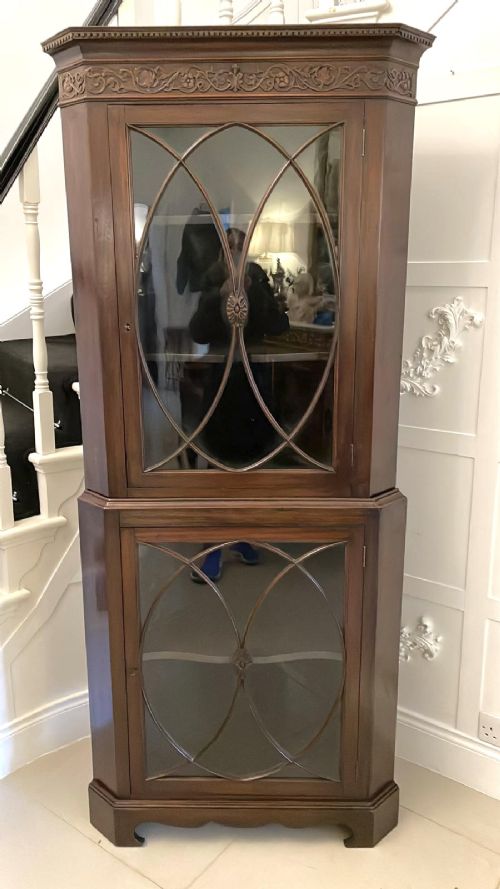
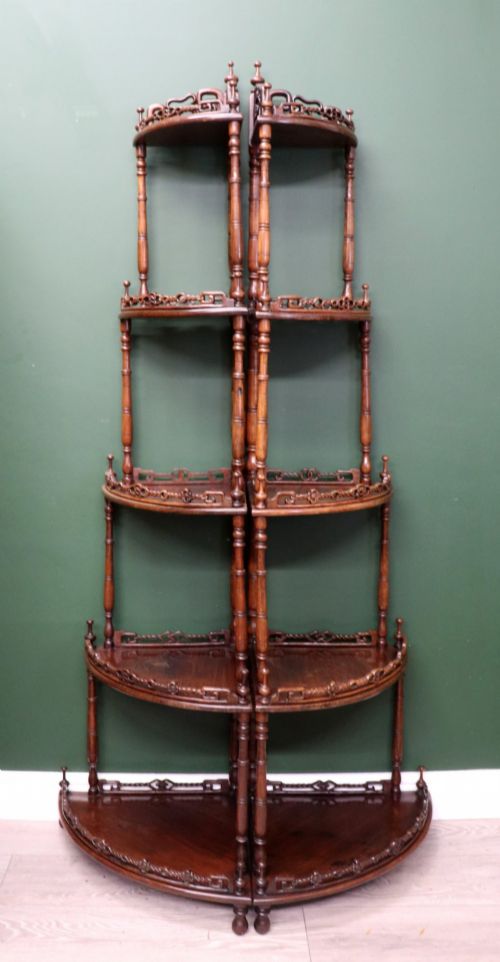
A carved mahogany corner unit spans practical corner cupboards, shelved etageres, and glazed display cabinets originating from the nineteenth century. These items maximise awkward junctions in a room while providing surfaces for storage or display.
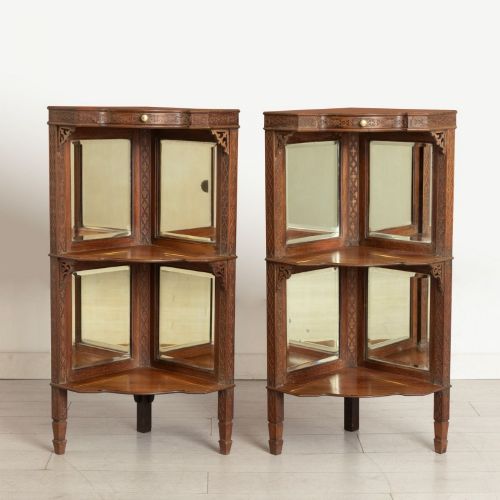
The variations appearing here draw on Victorian, Georgian Revival, and Anglo-Moorish styles, utilising mahogany alongside walnut, brass, and mirror glass. Buyers meet single cupboards on stands as well as matched pairs of open shelf units.
How they were made
Makers shaped these items primarily from solid and veneered mahogany, frequently incorporating ebonised wood details, marquetry inlay, and glass panels. Cabinets often feature astragal glazing bars and brass hardware.
Joinery techniques span traditional carcase construction for cupboards and delicate fretwork or turned supports for open whatnots and etageres.
Several corner units come in matched pairs, perfect for people who believe corners deserve equal treatment.
What varies in quality
Quality rests upon the crispness of the timber carving, the depth of the mahogany grain, and the integration of secondary woods like walnut. Pieces by documented makers display a higher standard of joinery and more ambitious ornamental programmes.
The refinement of inlay work, the clarity of mirror glass, and the execution of structural details such as stands and glazing bars separate standard production from superior examples.
Edwards & Roberts·Goodhall, Lamb and Heighway·Liberty & Co.
The Carved Mahogany Corner Unit Glossary
- Astragal
- A moulding profile, often used in glazing bars to divide glass panes within cabinet doors. It adds structural division and visual lightness.
- Whatnot
- An open set of tiered shelves designed for displaying ornaments and books. These pieces fit neatly into room corners.
- Ebonised
- Wood treated to imitate ebony, creating a dark, glossy finish. This technique highlights carved details through tonal contrast.
- Marquetry
- Decorative veneer work arranged in geometric or floral patterns. It adorns the surfaces of cabinets and tabletops.
- Etagere
- A piece of furniture consisting of a series of open shelves for display. They emerged in various forms during the nineteenth century.
Carved Mahogany Corner Unit: Frequently Asked Questions
What fits inside a corner cabinet?
These units accommodate books, glassware, and small ornaments within triangular or angled shelves.
Cupboard versions conceal tableware or documents behind solid doors while display variations showcase collections behind glass.
How do I date a corner unit?
Dating relies on stylistic markers, timber selection, and construction methods associated with nineteenth-century periods.
Victorian pieces often feature heavy carving and ebonised details, whereas revival items emulate earlier Georgian proportions.
Where should I place a whatnot?
Whatnots suit empty room junctions where standard rectangular furniture proves too bulky.
Open shelf versions serve well in drawing rooms or studies for displaying decorative ceramics and small volumes.
Are these units difficult to install?
Corner units anchor securely against two intersecting walls to maintain stability.
Some tall cupboards utilise stands or require wall fixings to ensure safety in busy spaces.