
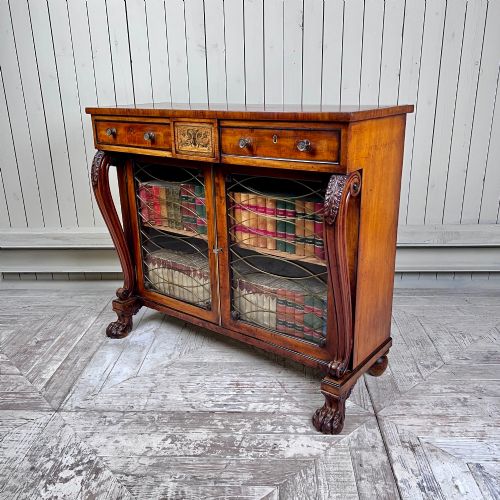
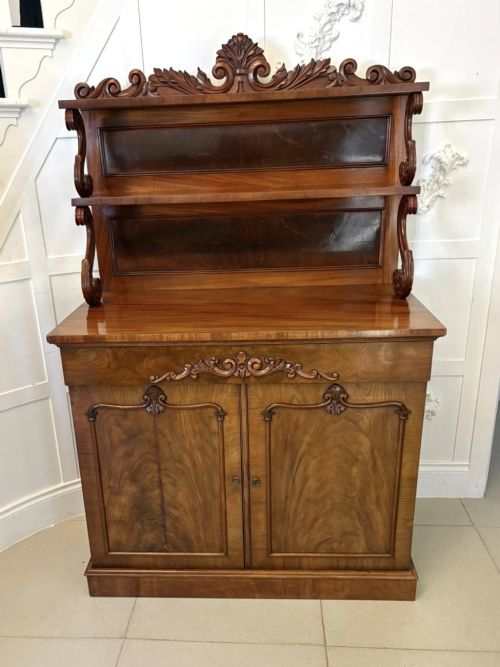
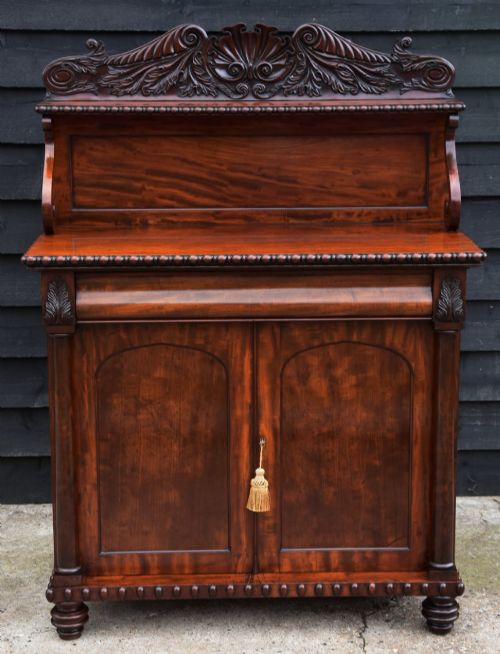
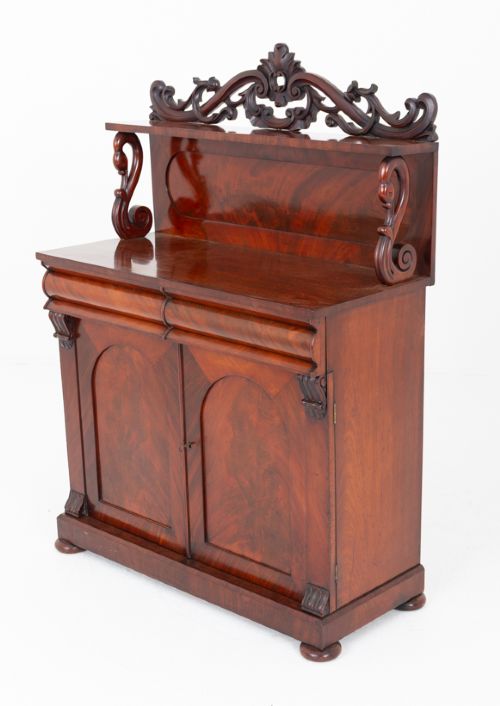
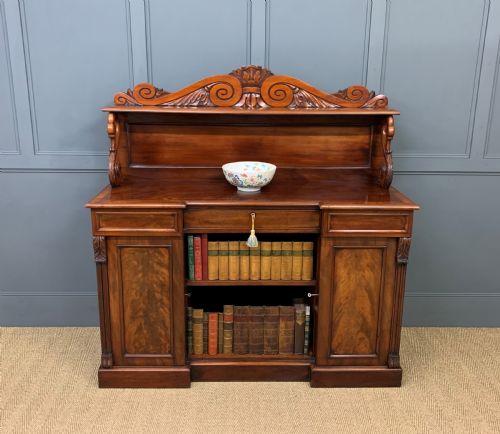
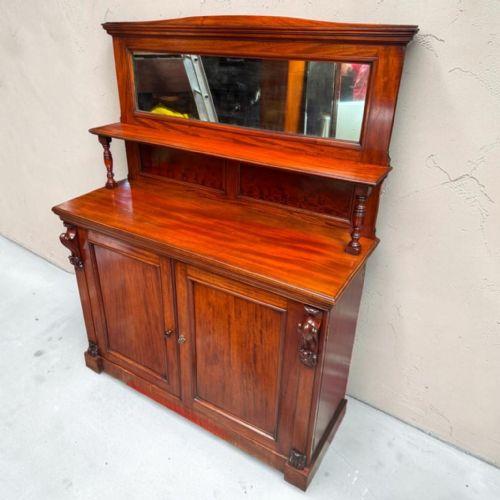
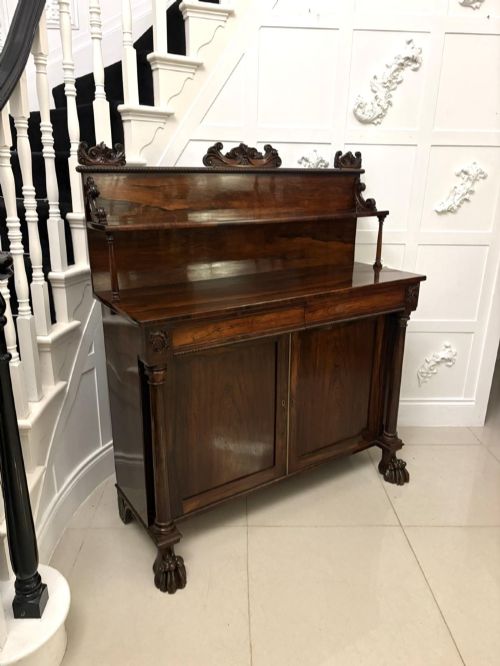
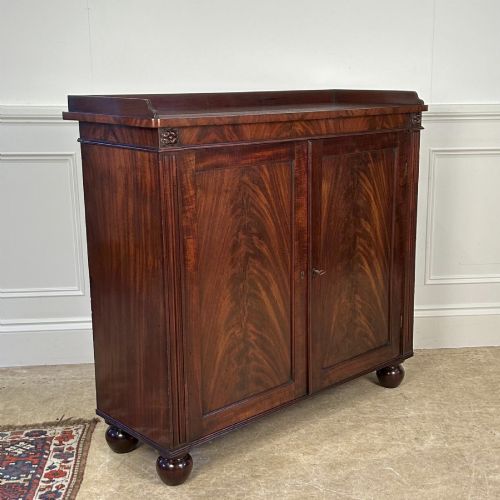
Carved Mahogany Chiffonier Sideboard
A carved mahogany chiffonier sideboard delivers low-profile storage with architectural presence, combining timber and glass in a single foundational piece.
Carved Mahogany Chiffonier Sideboard
A carved mahogany chiffonier sideboard provides enclosed lower storage paired with surface display or upper shelving, appearing frequently across nineteenth-century and Victorian iterations. These low-profile cabinets serve as functional room anchors, uniting sideboards and chiffoniers into adaptable furniture forms.
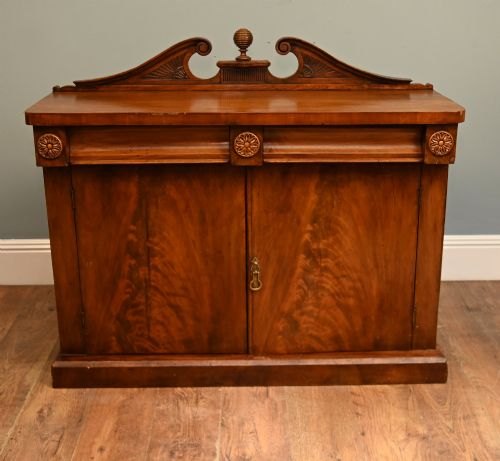
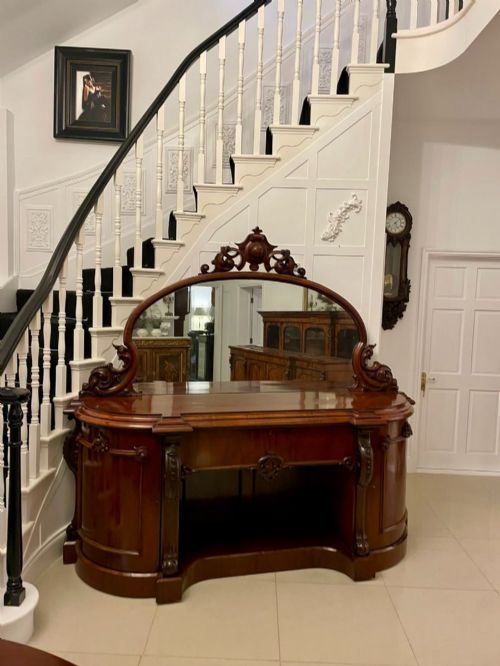
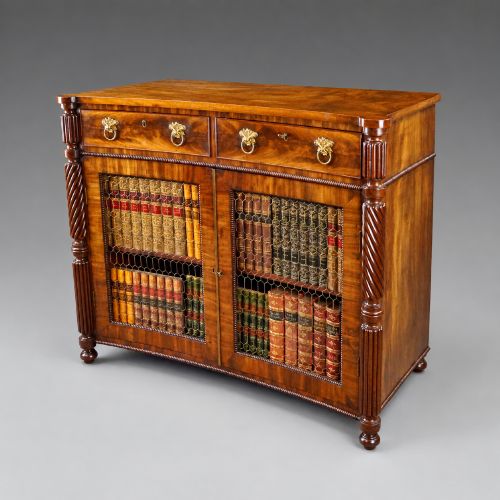
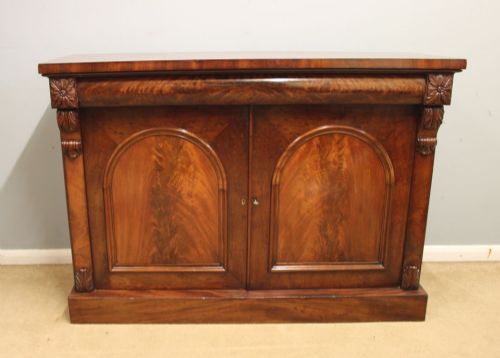
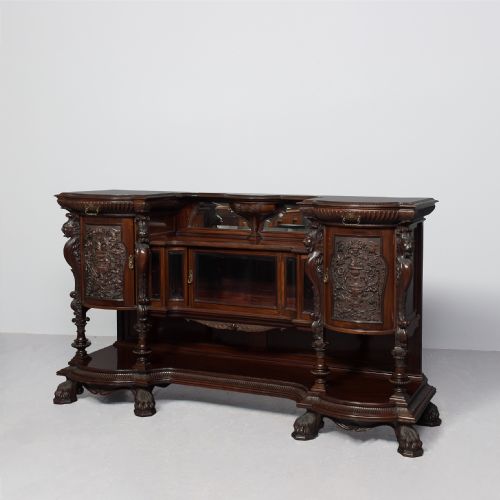
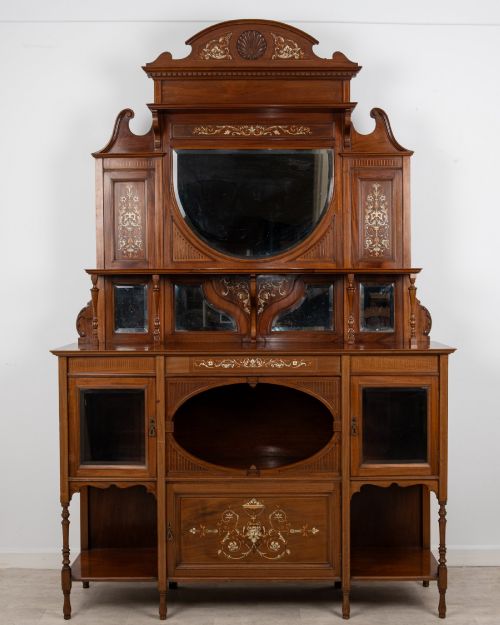
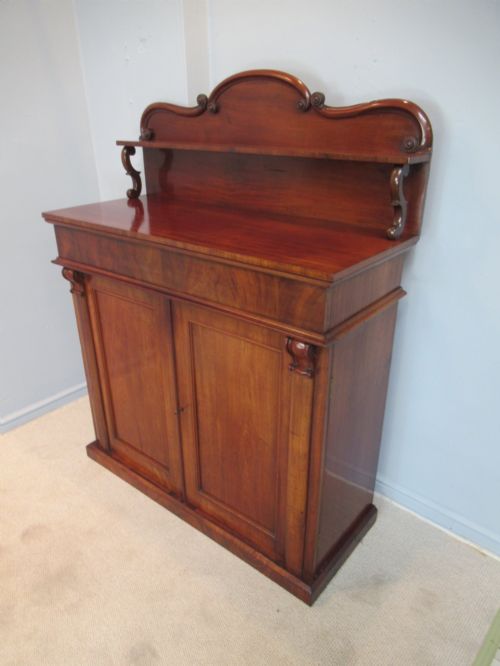
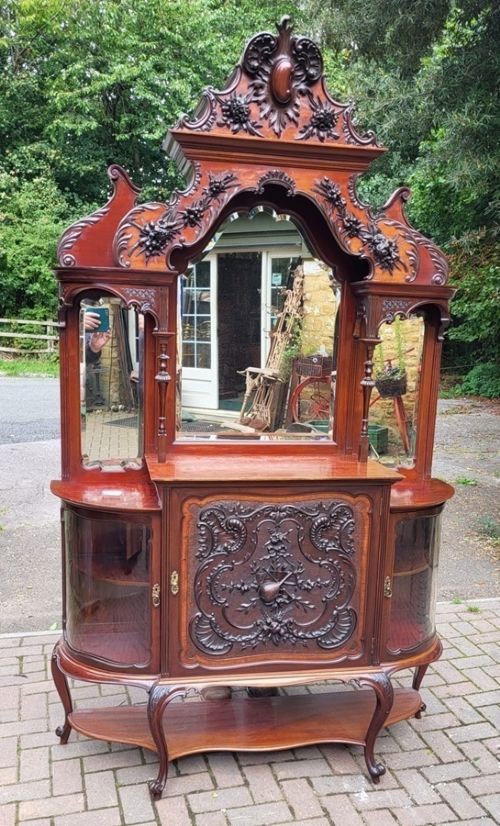
The selections visible here span Regency, William IV, and Victorian periods, often incorporating mirror-backs or bookcase tops. Buyers encounter everything from compact side cabinets to large breakfront pedestals constructed in solid timber or veneer.
How they were made
Construction relies heavily on mahogany and flame mahogany veneer applied over supportive secondary timbers, yielding rich figure patterns across the primary surfaces. Cabinetmakers utilised brass and ebony inlay to accent door panels and structural borders.
Mirrored glass and glass panels integrate into the upper sections of many examples, while hand-carved wooden details define the pediments and door frames. Joinery methods encompass traditional drawer framing and secure carcase assembly.
Listings demonstrate a strong predominance of Victorian and Regency periods, utilising mahogany, flame mahogany veneer, and mirrored glass.
What varies in quality
The choice of timber grain fundamentally dictates visual distinction, with highly figured flame mahogany veneers representing superior cabinetmaking ambition over plain surfaces. Crispness of hand-carved detail and the integration of mirror-glass backplates further separate standard utilitarian pieces from exceptional examples.
Original hardware such as brass inlays and fitted interior components preserve the integrity of the design, whereas replaced elements alter the historical continuity. Structural solidity within the plinth bases and door alignment indicate the standard of construction.
Gillows
The Carved Mahogany Chiffonier Sideboard Glossary
- Chiffonier
- A low cabinet equipped with drawers and cupboards, often featuring a raised shelf or mirror back. This form evolved during the nineteenth century to store tableware and display decorative objects.
- Flame mahogany
- A veneer cut from the fork of the mahogany tree where branches meet the trunk. The technique produces a flickering, highly decorative grain pattern highly prized by cabinetmakers.
- Breakfront
- A piece of furniture whose central section projects forward from the flanking cupboards. The configuration creates visual depth and architectural rhythm across the front elevation.
- Pedestal sideboard
- A large dining room cabinet featuring substantial flanking cupboard columns supporting a central surface. These heavy forms dominate the room with formal nineteenth-century utility.
Carved Mahogany Chiffonier Sideboard: Frequently Asked Questions
What is a carved mahogany chiffonier sideboard used for?
These cabinets function as dining room servers or principal living area storage pieces, providing concealed cupboard space behind panelled doors. The upper surfaces and mirror-backs hold display items, books, and decorative ceramics.
The enclosed lower compartments accommodate linens, glassware, or dining accessories, keeping everyday items organised out of sight while maintaining an elegant room presence.
How do I identify a Regency period piece?
Regency examples typically display restrained classical lines, often incorporating brass inlay, ebony stringing, and simplified turned columns. The timber choice leans toward rich mahogany with minimal excessive carving compared to later Victorian iterations.
Proportions remain balanced and architectural, reflecting early nineteenth-century design tastes that prioritized clean geometric forms over ornate surface embellishment.
Are mirror-backed sideboards Victorian?
Mirror-backed variants become prominent during the Victorian era, particularly from the mid-nineteenth century onwards when glass production allowed for larger sheets. These mirrors amplify light within the room and create a sense of extended depth behind displayed objects.
Cabinets dated around the 1850s to 1880s frequently integrate these mirrored superstructures alongside carved pediments and shelf tiers.
How do I care for antique mahogany wood?
Maintenance requires keeping the timber away from direct heat sources and strong sunlight to prevent veneer drying or fading. Regular dusting with a soft, dry cloth preserves the polished surface without the buildup of heavy silicone polishes.
Occasional application of appropriate wax feeds the grain and protects the nineteenth-century finish against atmospheric moisture changes.